
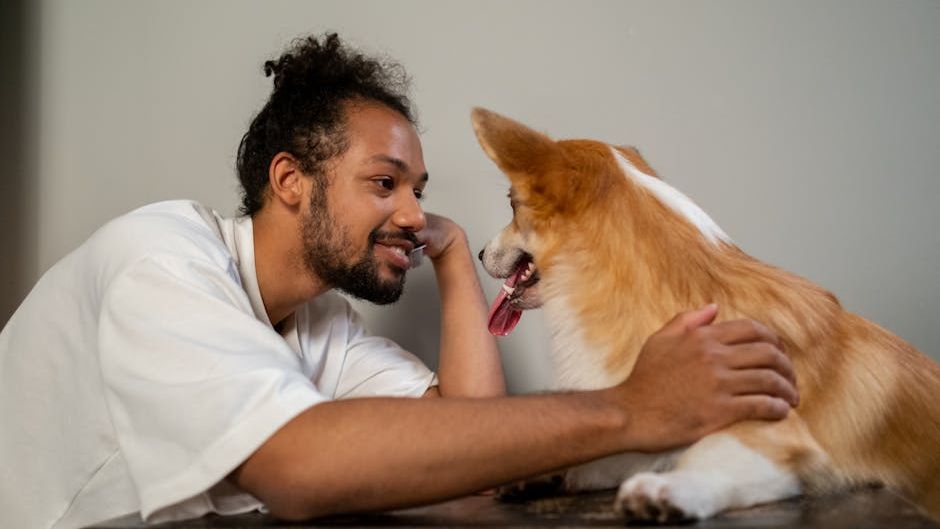
#1. The Science of Emotional Contagion: How Your Dog Absorbs What You Feel

Dogs don’t just love you. In a very real, measurable sense, they tune into you. Research has established that a dog’s emotional state is directly influenced by its owner’s through a phenomenon called emotional contagion, and dogs can detect and mirror human emotions, particularly anxiety, fear, and stress. This isn’t poetic language. It’s physiology.
When your cortisol levels rise, your dog’s cortisol typically follows suit, creating parallel stress responses in both of you. A landmark study revealed, for the first time, an interspecific synchronization in long-term stress levels, investigating 58 dog-human pairs and analyzing their hair cortisol concentrations across two separate seasons.
Researchers found that regardless of the dogs’ individual personalities, their cortisol levels were higher when their owner’s levels were high, and lower when their owner’s levels were low. The implication is significant. Your chronic emotional state is not kept from your dog. It is shared with them, biochemically and behaviorally, day after day.
The converse of the warm, joyful bond is equally true: an owner’s stress and anxiety can become the dog’s stress and anxiety, and this interspecies emotional contagion has a psychological, physiological, and behavioral basis. For people who carry unresolved feelings around loss, rejection, or abandonment, that emotional background noise is always present.
#2. Attachment Theory Doesn’t Stop at the Human-to-Human Relationship

Attachment theory, developed by psychologist John Bowlby, was originally conceived to explain the bond between infants and their caregivers. Research has since traced its evolution and ethological foundations into the study of human-dog relationships, examining different types of attachment in the context of emotional regulation and separation-related behaviors.
Different attachment styles in owners have been shown to influence anxiety and separation-related behaviors in their dogs. The parallel is striking. Just as a child raised with an inconsistent or emotionally avoidant caregiver can develop an insecure attachment style, a dog living with a psychologically dysregulated owner may develop its own version of relational insecurity.
Separation-related disorder in dogs is a common behavioral problem characterized by severe physiological and behavioral signs occurring during the owner’s absence, and dogs show similar attachment behavior toward their owners as children show toward their parents. That framing matters enormously, because it means the caregiving dynamic flows in both directions.
Both humans and dogs appear to include individuals who have a lower threshold for activation of the attachment system and who show a separation response that is developmentally inadequate, with extreme degree and consequences. When an owner who already struggles with fears of abandonment brings a dog into that emotional environment, the stage may be set for both to amplify each other’s anxiety.
#3. Avoidant Attachment in Owners and What It Does to Dogs
One of the more counterintuitive findings in the research is this: it’s not the overly anxious owner who most predictably contributes to a dog’s separation disorder. Some studies suggest that the owner’s attachment avoidance may play a notable role in the development of separation-related problems in dogs. Avoidant attachment, rooted in a person’s own history of emotional unavailability from caregivers, can manifest as emotional distance, inconsistency, and a reduced ability to respond sensitively to a dog’s needs.
People who lean toward an avoidant attachment style are more likely to maintain the relationship for only a short period, less likely to invest substantially in the pet through veterinary care or training, and more likely to keep their dog at a physical and emotional distance, which is consistent with an avoidant caregiving pattern and the developmental responses that follow.
This pattern is consistent with what researchers describe as a caretaker avoidant attachment style and the developmental response to such a style. A dog that receives warmth one day and emotional withdrawal the next has no way to develop a stable, secure foundation. It learns, instead, to remain perpetually vigilant about whether its person will come back or emotionally disconnect.
Dogs with separation-related disorder do not use their owner as a secure base and cannot be easily calmed after the owner returns, leading researchers to suggest these dogs have an attachment style analogous to the insecure-anxious attachment style observed in human infants. Their bond is neither too strong nor too weak, but too unstable.
#4. The Dog Isn’t Just Anxious; It’s Responding to an Insecure Environment
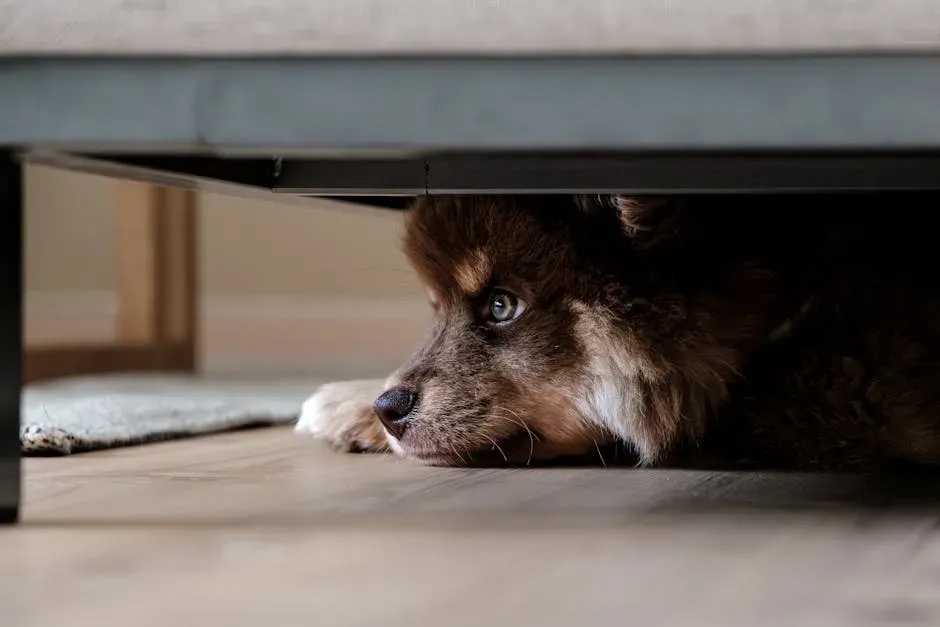
Separation anxiety in dogs should be seen as a symptom of underlying frustrations rather than simply a diagnosis, and understanding these root causes is key to effective treatment, according to animal behaviour specialists. This reframes the whole conversation. The dog isn’t broken. The dog is responding.
Although the unwanted behavior is first triggered by the owner’s departure, it arises because of a combination of risk factors that may include the dog’s temperament, the type of relationship it has with the owner, and how the two of them interact. For owners carrying abandonment issues, those daily interactions often contain subtle but persistent emotional instability that the dog registers and absorbs.
Owner mental health problems may feed back negatively onto their dogs’ behavior, as dogs can mirror their owners’ emotions. Owners who perceive their dogs’ behavior as more problematic have also been found to have poorer mental health, feel less satisfied with their dogs, and have a greater intent to abandon them. It becomes a painful cycle: the human’s unresolved distress shapes the dog’s anxiety, the dog’s anxiety worsens the human’s distress, and the relationship deteriorates from both ends.
Research involving over 1,500 dog owners found associations between owner psychology and a range of dog behavior problems, including separation problems, persistent barking, and house-soiling when left alone. None of these behaviors arise in isolation. They reflect the emotional climate of the home.
#5. Breaking the Cycle: What Awareness Actually Changes
According to Bowlby’s foundational work, securely attached children have the confidence that their attachment figure will be available and accessible if needed, making them less anxious during separation. The same logic applies to dogs. A dog whose owner is emotionally consistent, responsive, and present is far more likely to develop genuine security around separation. That security doesn’t come from tricks or training alone.
Separation-related disorder can dissipate on its own if the trigger stimulus is removed or desensitized over time, and a dog may not suffer on a long-term basis if consistent training, routines, lifestyle changes, or medication are in place. Still, behavioral tools work best when the emotional foundation of the relationship is also being addressed.
Research has shown that an owner’s state of anxiety is contagious to their dog and that this emotional contagion can be tracked through measurable changes in the dog’s behavior and memory performance. That being said, the reverse is also possible: owners who actively work on their own emotional regulation, who seek support for trauma or attachment-related anxiety, tend to create calmer home environments that dogs can genuinely settle into.
Research from the University of Edinburgh has shown that many owners misinterpret their dog’s mirroring behaviors, attributing them to unrelated factors rather than recognizing the emotional connection at play. Awareness, then, is not a small thing. Recognizing that your inner world has an outer effect on your dog is the first honest step toward change for both of you.
Conclusion

The uncomfortable truth is that our dogs are not blank slates shaped only by training and breed. They’re sensitive, emotionally attuned beings who live inside our psychological weather every single day. If you’re someone who has spent years managing a deep fear of being left or unloved, there’s a real chance your dog is quietly carrying some of that weight too.
That’s not a reason for guilt. It’s a reason for honesty. The research doesn’t indict struggling pet owners. It invites them into a different kind of self-awareness, one where healing yourself may be one of the most powerful things you can do for your dog. A calmer, more securely attached owner doesn’t just benefit from their dog. They give their dog something genuinely rare: a person who feels safe to come back to.
In the end, the relationship between humans and dogs has always been a mirror. The question is whether we’re willing to look at what it’s actually reflecting.


