

#1. Dogs Are Wired for Emotional Connection, Not Just Companionship

As the human-dog relationship has evolved from utilitarian functions to emotionally significant bonds, researchers have increasingly applied attachment theory, initially developed by John Bowlby to explain bonds between children and their caregivers, to investigate the relational dynamics between dogs and their human companions. This isn’t just a warm analogy. It’s a framework backed by behavioral science.
The growing field of anthrozoology has acknowledged that dogs form attachments in ways comparable to humans, and these bonds are essential not just for providing emotional security to the dog, but also for promoting overall well-being and encouraging exploratory behaviors. A dog that feels securely attached to its owner is, in very practical terms, a healthier and more confident animal.
Under conditions of novelty, such as an unfamiliar place and unfamiliar persons, the presence of the attachment figure supports exploration and play, the so-called “secure base” phenomenon. When the dog is alarmed, play and exploration are supplanted by attachment behaviors, reemerging once safety is signaled by the return of the attachment figure. Think about what that means for a dog left in an unfamiliar environment with no emotional anchor.
#2. Your Stress Is Your Dog’s Stress, Literally
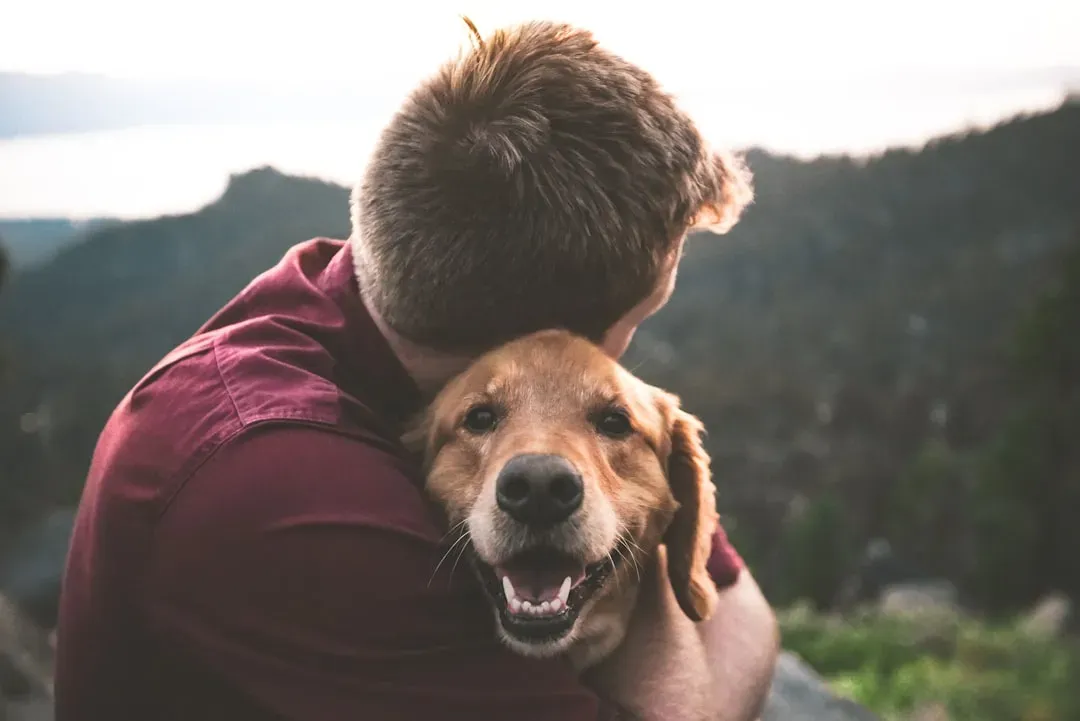
Researchers revealed, for the first time, an interspecific synchronization in long-term stress levels, studying 58 dog-human dyads and analyzing their hair cortisol concentrations at two separate occasions, reflecting levels during previous summer and winter months. The results were striking. Cortisol, the body’s primary stress hormone, didn’t just rise in one species and stay put in the other.
The owner’s personality rather than the dog’s personality affected hair cortisol concentration, strongly suggesting that it is the dogs who mirror the stress levels of their owners. These results were the first demonstration of a long-term synchronization in stress levels between members of two different species. Put plainly: a chronically stressed household produces a chronically stressed dog, regardless of how well it’s fed.
The long-term cortisol levels of pet dogs mirror those of their owners, and this finding was unrelated to exertion or exercise, suggesting that the cortisol levels were a product of psychological, rather than physical, stress. This is a genuinely important distinction. The dog isn’t reacting to what it’s doing. It’s reacting to how you feel.
#3. Chronic Emotional Stress Has Real Physical Consequences for Dogs

Fear is an emotion needed to survive, but when prolonged and frequent, it causes suffering in both humans and animals. The most common forms of canine anxiety include general fearfulness, noise sensitivity, and separation anxiety, which are responsible for a large proportion of behavioral problems. These aren’t just inconvenient behaviors. They’re signs of a system under strain.
Chronic stress leads to shortened lifespan on a systemic level, and emotional or physical stress is associated with higher oxidative stress, lower telomerase activity, and shorter telomere length, which in turn leads to earlier cell death and aging. The biology here is uncomfortable to sit with: unmanaged emotional distress in dogs may be quietly accelerating their physical decline.
In recent years, there has been a growing interest in the accurate assessment of dog welfare. It is widely recognized in animal welfare science that the absence of negative emotions is not enough to constitute good welfare, yet most research has focused on assessing and minimizing negative emotional states rather than actively promoting positive ones. The bar, in other words, needs to be raised well beyond “not suffering.”
#4. Dogs Pick Up on Emotional Signals With Remarkable Precision

Emotional contagion refers to the process by which emotions can spread from one individual to another, resulting in a shared emotional experience. This fascinating phenomenon has been observed not only in humans but also in dogs, suggesting a powerful emotional connection between these two species. Emotional contagion involves the unconscious mimicry of emotional expressions, vocalizations, and behaviors between individuals. Dogs aren’t performing empathy. They’re wired for it.
Research suggested that the owner’s state of anxiety was contagious to their dog, and emotional contagion could be tracked by measuring changes in the dog’s memory performance. Human crying was also found to elicit an increase in cortisol levels in both dogs and humans, together with submissive and alerting behavior in dogs. Dogs are, in effect, constantly reading the emotional temperature of the room, and responding to it.
Evidence suggests that owners’ trait anxiety contributes to their dogs’ fear- and anxiety-related behavior to some degree, and research improves our understanding of the path linking owners’ trait anxiety and dogs’ behavioral problems. Specifically, results suggest that dogs’ “empathic trait,” meaning their emotional reactivity to their owners’ emotions above a particular threshold, may explain the strength of this association. Some dogs are more emotionally reactive than others, but the link is consistent.
#5. Emotional Stability in Dogs Requires Active, Intentional Support

The body language of dogs and their facial expressions can be used to instantly determine emotional states of different valence. Chronic psychological stress is a health problem that may not be as obvious as acute stress, but it equally requires attention and correction. The quiet dog sitting in the corner isn’t necessarily a calm dog. Visible distress is just one end of a wide spectrum.
Higher reported dog behavioral problems relate to worse mental health for dog owners, with more dog fear and anxiety linking to increased owner depression and anxiety. Fear and anxiety in dogs partially mediate the relationship between anxious attachment and owner anxiety and depression. These findings support evidence that pet challenges could increase burden and influence owner mental health, suggesting that tailored support for pet behavioral issues could alleviate psychological distress. The emotional health of the dog and the emotional health of the owner are genuinely intertwined, not just poetically, but measurably.
Those working with or handling dogs should rely on positive reinforcement methods and avoid using positive punishment and negative reinforcement as much as possible. Giving dogs a baseline experience of security could make it far easier for them to thrive in human families. Consistency, calm presence, and predictable positive interaction aren’t extras. They’re the foundation.
Conclusion: Rethinking What It Means to Care for a Dog

There is a certain quiet arrogance in assuming that a dog is content simply because it isn’t visibly distressed. Science is now making clear that emotional stability in dogs is not a bonus, not a luxury, and not a projection of human sentimentality. It is a measurable, physiologically real dimension of animal welfare that we have, for a long time, significantly underestimated.
The evidence is not subtle. Dogs synchronize their stress hormones with ours. They process emotional abandonment in ways that echo infant attachment theory. Chronic anxiety shortens their cellular lifespan. Specific forms of positive interaction can activate stronger relaxation, emotional stability, and creativity in dogs, while interactions with dogs can decrease stress and induce positive emotional responses in both species. The relationship, when it’s healthy, works both ways.
The honest truth is that caring for a dog’s emotional world doesn’t require extraordinary effort. It requires presence, consistency, and the willingness to understand that a well-fed dog living in an emotionally chaotic environment is not, by any measure of modern behavioral science, a fully cared-for dog. That shift in perspective, small as it may seem, could change everything for the animal sleeping at your feet.


