
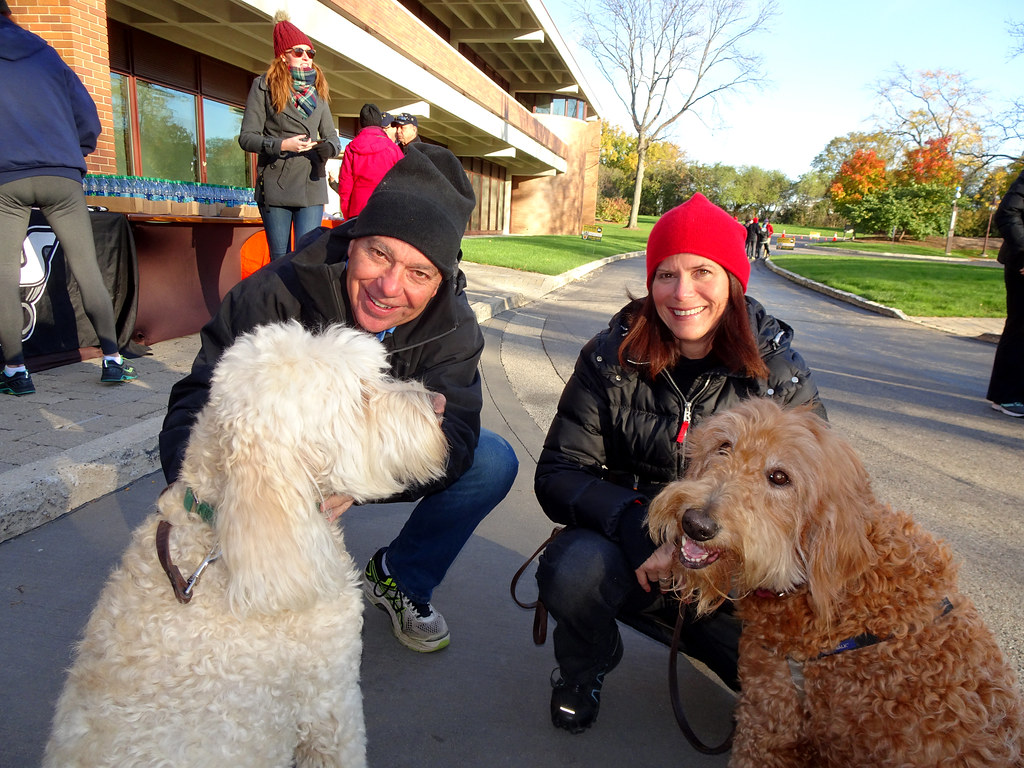
If you have ever had a rough day and noticed your dog quietly come over, lean against you, or simply sit and stare at you with those deep, knowing eyes, it might not be your imagination. Science is catching up to what dog owners have suspected for years: our dogs can sense our stress, and they can do it long before we slam a door, raise our voice, or burst into tears.
What is genuinely wild is that this is not just an emotional connection or some mystical sixth sense. Researchers have found that dogs can actually smell stress by detecting changes in our body chemistry, especially the hormone cortisol that shows up in our sweat and breath. Once you realize your dog might be reading your inner state like a living bio-sensor, the way you look at that casual nose nudge on a bad day changes completely.
How Dogs Turn Smells Into Emotional Data

Imagine living in a world where every breeze carries an emotional headline, and every person you pass leaves a trail of invisible information behind them. That is roughly the kind of sensory universe dogs inhabit. Their noses are built on a completely different level than ours, with many times more scent receptors and a larger part of the brain dedicated purely to processing smells.
When you are stressed, your body chemistry shifts: your heart rate goes up, your breathing changes, and your sweat composition changes as cortisol levels rise. Dogs can pick up on these tiny shifts in scent the way we might notice someone wearing a strong perfume. To them, your stress has a smell, just as clear and distinct as coffee or rain on hot asphalt is to you.
The Science Behind Cortisol and the “Smell of Stress”

Cortisol is often called the stress hormone, and for good reason. When your brain thinks you are under pressure or in danger, it signals your body to release cortisol as part of that classic fight, flight, or freeze response. You might still be sitting at your desk or scrolling on your phone, but your internal chemistry is already in emergency mode.
That chemical shift does not stay neatly tucked away inside your body. Cortisol-related changes show up in your sweat and even in your breath. Dogs, with their incredibly sensitive noses, can detect those subtle differences. So while you may think you are hiding your stress pretty well, your dog probably knew something was off the moment your body started ramping up behind the scenes.
What Experiments Have Actually Shown So Far

In controlled experiments, researchers have collected sweat and breath samples from people before and after they performed tasks specifically designed to induce stress, such as difficult mental challenges under time pressure. These samples were then presented to trained dogs to see if the animals could distinguish between “calm” and “stressed” scents from the very same person. The dogs were not guessing; many were able to correctly identify the stress samples at rates far beyond random chance.
These results line up with what we already know from other scent-detection work in dogs, like their ability to assist with diabetes, epilepsy, and even certain cancers. Stress detection is becoming another piece of the puzzle, showing that canine noses can zero in on very specific biological markers. It is not magic or just a “vibe” – it is biology, refined through generations of evolution and, more recently, careful scientific training.
Why Your Dog Knows You Are Stressed Before You Do

Here is the unsettling and strangely comforting part: your dog may sense your stress before your conscious mind has fully caught up. You might feel only mildly uneasy or distracted, but your cortisol may already be on the rise. Your dog smells that shift right away, like noticing the first few drops of rain before the storm.
Over time, dogs can learn to connect that smell with what usually happens next: maybe you pace, talk faster, snap at people, or shut down completely. So when your dog suddenly becomes clingy, stares at you intensely, or tries to climb into your lap on a day you think you are “fine,” they may be reacting to an early warning sign your own body is broadcasting. In a way, they sometimes know you are struggling before you are ready to admit it to yourself.
Emotional Support on Four Legs: How Dogs Respond to Our Stress

Once a dog detects that something is wrong, many will naturally adjust their behavior. Some become extra affectionate and physically close, leaning against you, nudging your hand, or refusing to leave your side. Others become calmer and quieter, almost as if they are trying not to add to the emotional noise in the room. Their response can feel like a customized emotional support plan tailored just for you.
I have had days where I thought I was just “a bit off,” only to realize how wound up I really was when my dog shadowed me from room to room like a furry little satellite. It is humbling to realize an animal can read your inner storm from a single whiff of your skin and choose, over and over again, to stay close and soften the blow. Whether or not we call them therapy animals, many family dogs are already doing quiet emotional labor every single day.
From Living Room to Lab: Future Uses of Canine Stress Detection
The idea that dogs can smell stress is not just heartwarming; it is also opening doors to serious practical applications. Researchers and clinicians are starting to imagine dogs working alongside mental health professionals, helping to flag rising stress levels before a panic attack, dissociative episode, or meltdown occurs. That kind of early warning system could be life-changing for people with anxiety disorders, PTSD, or chronic stress conditions.
There is also growing interest in how dogs could help in high-pressure environments like schools, hospitals, and workplaces. Imagine a trained dog subtly alerting a handler when a student is about to be overwhelmed, or when a nurse’s stress is silently spiking halfway through a brutal shift. It sounds futuristic, but it is really just a more intentional use of what dogs are already naturally capable of doing in our homes every day.
What This Means for Your Relationship With Your Dog

Knowing that your dog can smell your stress adds a new layer of responsibility and tenderness to the relationship. Your bad day is not invisible to them; it washes over their world in a wave of scent. They are not just reacting to your tone of voice or your body language, they are literally breathing in your emotional state and deciding how to respond.
That can be a powerful reminder to pause and check in with yourself when your dog starts acting differently around you. It can also be a nudge to create more calm moments together, whether that is a slow walk, a quiet cuddle on the couch, or just a few minutes of intentional breathing while your dog naps at your feet. If they are going to carry some of your emotional load in their nose and nervous system, the least we can do is meet them halfway.
Opinionated Conclusion: Dogs Are Doing More Emotional Work Than We Admit

When you put all of this together, it becomes hard to see dogs as “just pets” anymore. They are not only reading our facial expressions and body language, they are decoding our hormones, quietly tracking our internal storms, and responding in ways that often make our lives more bearable. In my view, we seriously underestimate how much emotional work the average dog does for the humans it lives with.
As the science on cortisol and stress detection keeps growing, I think we will look back and realize that our dogs were early-warning systems, informal therapists, and loyal guardians of our mental health all along. Maybe the real question is not whether dogs can smell our stress, but whether we are willing to listen when they show us they have sensed it. Now that you know what your dog’s nose might be picking up, what will you do the next time they come sit beside you, uninvited, on a day you swear you are “fine”?


