
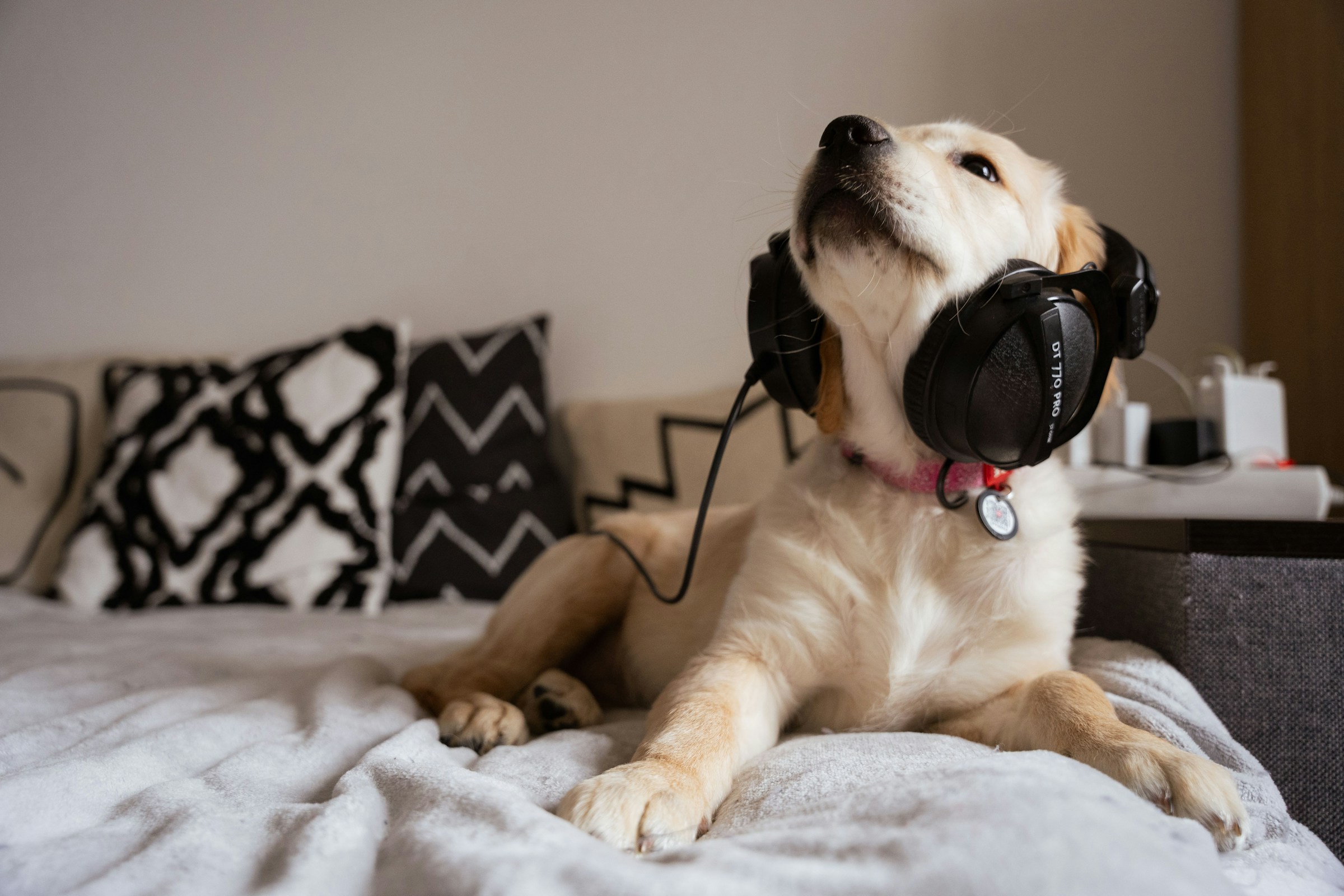
If you have ever said something to your dog from another room and watched them spring to attention, you probably felt they somehow knew it was you. Modern research suggests that feeling is not just in your head. Dogs really can pick out the voices of the humans they know, even when they cannot see who is talking.
Far from being simple “sit and stay” learners, dogs are turning out to be surprisingly sophisticated listeners. Scientists are now uncovering how deeply they tune into our speech patterns, emotional tone, and vocal fingerprints. The big question is no longer whether dogs recognize us by voice, but how far this ability goes – and what it says about the bond we share with them.
A Surprising Discovery: Dogs Know You By Voice Alone

It might sound obvious that your dog knows your voice, but for a long time, this was just an assumption pet owners made without hard proof. Recent studies have put that assumption to the test, using careful experiments to see if dogs can actually match a voice to the right person when vision is taken out of the equation. The results are striking: many dogs can pick out their human’s voice from recordings, even when several people are speaking.
Imagine standing behind a screen with a group of strangers while your dog listens to different voices. Without seeing you, your dog still turns toward where your voice is coming from or shows more excitement when they hear you compared to others. That behavior is not random; it reflects recognition in a similar way that you would recognize a friend’s voice across a crowded room. In other words, your voice is part of your dog’s mental picture of who you are.
How Scientists Actually Tested Dogs’ Voice Recognition
Researchers generally do not just ask owners whether their dogs know their voices; they build careful experiments to rule out simple explanations. In many studies, dogs are placed in a room and played audio clips of their guardian speaking neutral phrases, mixed in with voices from unfamiliar people. The researchers then track where the dog looks, how fast they respond, and whether they show specific signs of recognition, like tail wagging, moving toward a door, or orienting toward a hidden speaker.
In some setups, the scientists present a mismatch: one person’s body and a different person’s voice. If the dog hesitates or looks confused when the voice does not match the person they see, that is a strong sign they expected those cues to line up. It is like when you see an actor dubbed with the wrong voice in a movie and your brain protests. When dogs pause, double-take, or search around for the “right” human, it suggests they were actively trying to match voice to person.
What Exactly Are Dogs Hearing When They Hear Us?
Humans recognize familiar voices based on pitch, rhythm, accent, and a hundred tiny acoustic details we barely notice consciously. Dogs, it turns out, are tuned into many of these features too. Studies using sound analysis show that dogs respond especially strongly to individual patterns in pitch and tone that make each person’s voice unique. They are not just reacting to the words themselves but to the whole sound signature that says “this is my person.”
Even more intriguing, dogs also seem to latch onto the emotional coloring in our voices. A cheerful, singsong “good girl” lights up different responses than a flat or tense “come here,” even if the words are similar. When you talk to your dog like you would to a baby, with exaggerated ups and downs in pitch, many dogs show more engagement and approach more quickly. It is as if your voice is a soundtrack of your mood, and your dog has learned to read the emotional subtitles.
Beyond Familiarity: Do Dogs Understand Meaning Or Just Sound?
This is where things get tricky – and where we have to be careful not to oversell what the science actually shows. Yes, dogs can recognize a familiar human voice, and they can associate that voice with good or bad experiences. But that does not necessarily mean they understand our speech the way another human would. For many dogs, “sit” may be less a word in the linguistic sense and more a distinctive noise pattern that predicts a treat or a certain action.
That said, some clever experiments suggest dogs are not just mindlessly reacting to sounds. Many dogs can reliably distinguish between words they know and similar-sounding nonsense words, especially when spoken by their guardian. Some dogs even show different brain responses when they hear praise words versus neutral words, and when those words are said in a warm tone versus a flat tone. The most honest conclusion right now is that dogs operate in a gray zone: they clearly recognize voice identity and some word patterns, but they are not decoding sentences the way humans do.
Why Evolution Made Dogs Such Good Human Listeners
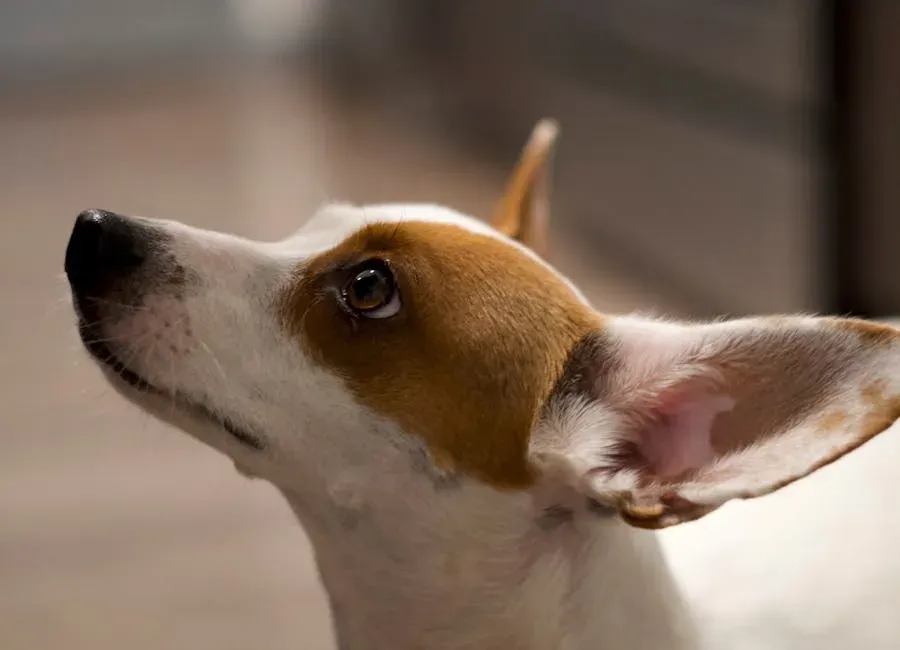
Dogs did not evolve in a vacuum; they evolved alongside us. Over thousands of years, dogs that were better at reading human signals – our gestures, facial expressions, and yes, our voices – likely had an advantage. They got more food, more protection, and more chances to stick around and pass on their genes. It is not that dogs grew to love language, but that being able to interpret humans became a survival skill.
This long coevolution probably tuned dogs’ brains to be especially sensitive to human vocal cues in a way that even their wolf ancestors are not. While wolves can certainly hear and respond to sounds, research suggests they are less naturally inclined to treat human voices as socially meaningful. Your dog, on the other hand, lives in a world where your voice predicts walks, meals, playtime, and comfort. Over generations, that social importance may have carved out a special place for human voices in the canine mind.
What This Means For Everyday Dog Owners

Knowing that dogs can distinguish familiar human voices should change how we think about the way we talk to them. If your voice is a key part of your dog’s emotional world, then the tone, consistency, and predictability of how you speak really matter. Snapping at your dog one minute and cooing at them the next can be confusing, not because they understand your words, but because your vocal signals are all over the place.
On the flip side, this research also validates some of the things dog lovers already do intuitively. Talking to your dog on the phone or through a video call might actually be meaningful for them, especially if your voice is very familiar and associated with positive experiences. Even when you are in another room, a calm, steady voice can reassure a nervous dog. To them, it is not just background noise; it is a recognizable anchor in a sometimes overwhelming environment.
How To Talk To Your Dog In A Way Their Brain Loves
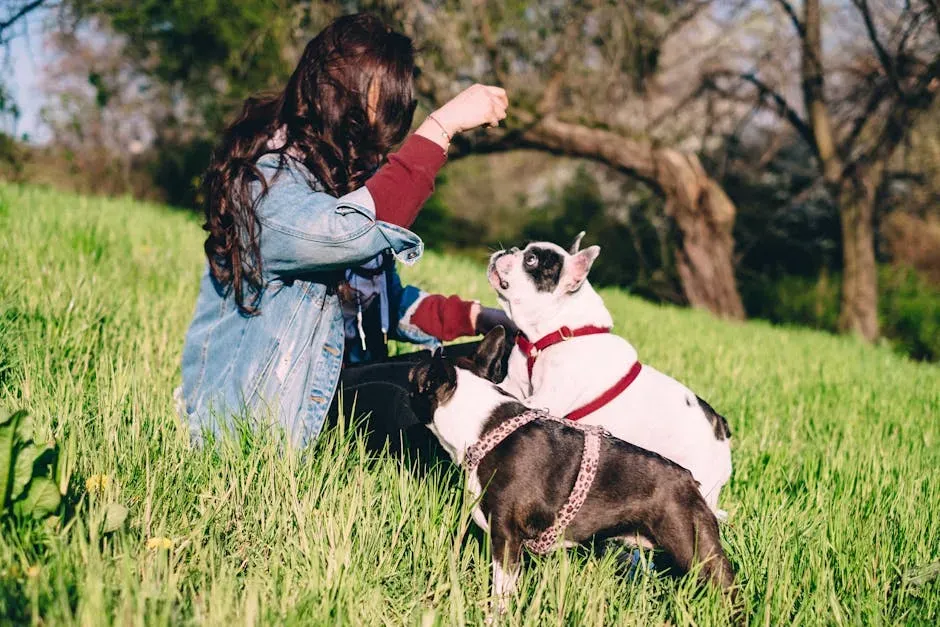
If you want to lean into what the science suggests, think about three key elements when talking to your dog: tone, consistency, and clarity. A warm, upbeat tone tends to be more inviting and easier for dogs to link with good things, while a sharp, harsh tone can create anxiety if overused. Keeping common cues like “sit,” “stay,” and “come” consistent in both wording and delivery helps your dog build solid associations with those sound patterns over time.
You do not need to sound like a children’s television host every second, but exaggerating your intonation a bit does seem to help many dogs engage. Short, simple phrases with clear rises and falls in pitch are like high-contrast images for their ears. Think of your voice as a tool, not just a habit: you can intentionally use it to signal calm, play, or seriousness, instead of hoping your dog somehow reads your mind.
An Opinionated Take: We Owe Dogs More Than Cute Talk
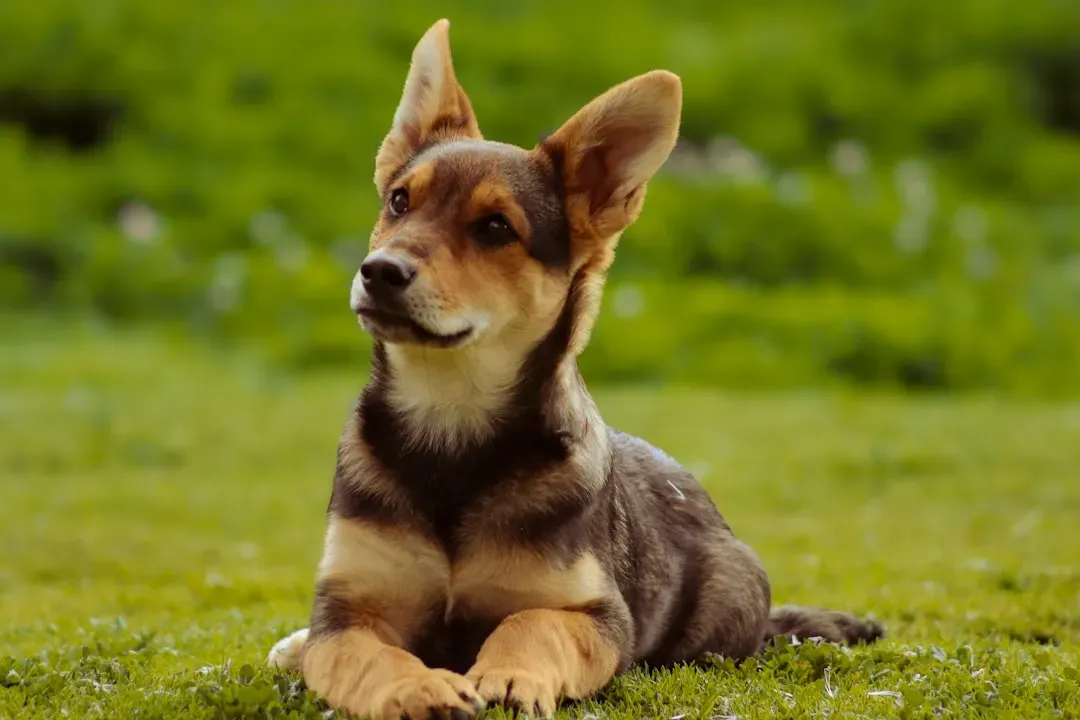
In my view, this research is more than just a fun fact to toss around at the dog park. If dogs are genuinely distinguishing and tracking our voices, then they are investing real cognitive and emotional energy in understanding us. That makes it hard to justify treating them like furry accessories or background decoration in our homes. We are not just talking at them; they are listening, learning, and forming expectations about who we are through the sounds we make.
To me, the ability of a dog to follow a familiar voice through a crowd or perk up when you call their name from another room is a quiet kind of devotion. It reveals a level of attention and attachment that we often underestimate. The least we can do is meet that effort halfway: speak to them with intention, respect the depth of their perception, and remember that every word, every tone, is slowly shaping the relationship. When your dog tilts their head at your voice, they are not just being cute – they are reminding you that you matter to them in ways you might not have guessed.


