

Have you ever tried to act totally fine in front of your dog while your stomach is in knots, only to notice them suddenly glued to your side? It turns out that might not be your imagination or wishful thinking. A growing body of research suggests dogs can detect shifts in our emotions with nothing more than their nose – even when we keep our faces neutral and our actions calm.
This idea is both heartwarming and a little unsettling. If a dog can smell your stress, sadness, or joy before you say a word, what does that really mean about the bond between humans and dogs? And how far does this emotional radar go? Let’s dig into what science actually shows, where things are still uncertain, and why your dog might know how you feel before you do.
How Scientists Test Whether Dogs Can Smell Our Feelings

It sounds like something from a feel-good movie, but the studies behind this are pretty methodical. Researchers typically collect human sweat samples or breath samples in different emotional states – such as calm and stressed – and then present these to trained dogs under controlled conditions. The humans often watch emotional videos or complete stressful tasks, like timed mental challenges, while samples are taken so scientists can compare “relaxed” versus “stressed” scent profiles.
The key point is that dogs are often tested while the person is not visibly reacting in front of them. In some experiments, dogs only get scent samples, not any face, voice, or body language. When dogs consistently distinguish between calm and stress-related samples, even when everything else is controlled, it strongly suggests they are picking up on chemical changes alone rather than reading our behavior.
The Nose That Makes It Possible: Why Dogs Are Scent Superheroes
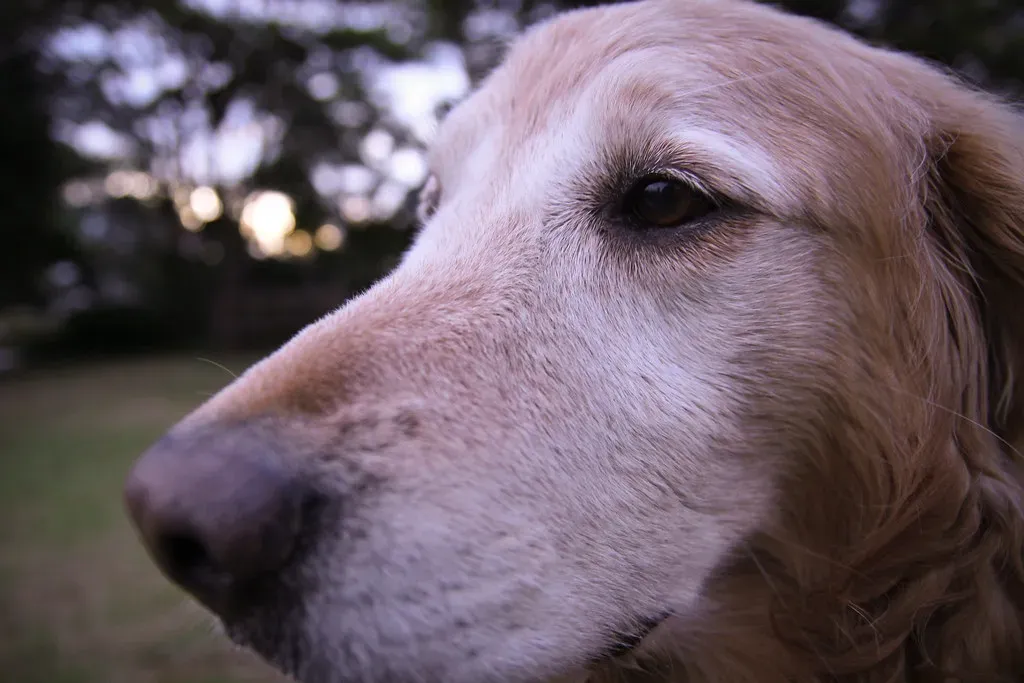
To understand how this works, you have to appreciate just how extreme a dog’s nose is. Depending on the breed, dogs can have hundreds of millions of scent receptors, far more than humans. They also have specialized nasal structures and a dedicated part of the brain that processes smell with incredible precision. For a dog, scent is not just a sense – it is their primary way of mapping the world, like a constantly updating 3D information stream.
When your body responds to stress, fear, excitement, or happiness, it changes things like sweat composition, hormone levels, and tiny volatile compounds released through your skin and breath. To us, those changes are invisible and odorless. To a dog, they can be as striking as a bold color change on a screen. This is the same ability that allows dogs to detect medical changes like some low blood sugar episodes or certain types of seizures; emotional shifts seem to be part of the same overall sensory toolkit.
Stress, Fear, and Calm: What We Know So Far

Most of the stronger research so far focuses on stress and fear rather than the full rainbow of emotions. In several studies, dogs exposed to human stress-related scent samples show measurable changes in behavior and physiology. They might become more alert, seek proximity, or display signs of mild stress themselves, suggesting that they are not only detecting the scent but reacting to it emotionally or behaviorally.
At the same time, when dogs are presented with calmer scent samples from the same person, their behavior tends to be more relaxed. Importantly, these shifts have been observed even when the dog cannot see the human’s face or body, or when the human’s visible behavior is kept steady. That said, the science is still clearer about “stress versus calm” than about more subtle states like mild sadness, embarrassment, or complex blends of emotions, so we should not overstate what is proven.
Can Dogs Really Tell Emotions Apart – or Just Arousal Levels?

Here is where things get a bit more nuanced, and honestly, more interesting. It is one thing to say dogs can smell that something has changed; it is another to claim they can tell sadness from anger, or anxiety from excitement, just through scent. Right now, a fair reading of the evidence is that dogs are very good at detecting changes in arousal – how physiologically “activated” we are – more than labeling specific emotions in a human sense purely from smell.
Stress, fear, and intense excitement all ramp up bodily systems in similar ways, even though they feel very different subjectively. Dogs may be picking up on the body’s overall stress chemistry rather than a neat emotional vocabulary. That said, when you combine scent with everything else dogs notice – our posture, voice tone, patterns of movement, and habits built over years – they may end up with a very sophisticated picture of what is going on with us, even if each individual signal is pretty simple.
When Behavior Stays Calm but Dogs Still React

What makes this research especially striking is that dogs can respond to our emotional shifts even when we are trying to stay composed. Think about moments when you keep your face neutral during a tough phone call, or hold it together in front of kids while internally panicking. Many people report that their dog will quietly come over, lean against their leg, or stare at them more intensely in moments like that, even when nothing obvious has changed.
Studies using only scent samples support the idea that dogs do not need our visible signals to notice that something is off. In real life, though, they are getting a mix of scent and extremely subtle behavioral cues that we barely register in ourselves. Maybe your breathing is a little sharper, your micro-movements are a touch more rigid, or your routine is just a bit out of sync. For a dog that has watched you move through thousands of days, those small shifts, combined with a change in how you smell, might be as obvious as a flashing sign.
What This Means for the Human–Dog Bond

If dogs truly pick up emotional changes through scent, it says something powerful about what the human–dog relationship has become over thousands of years. We did not just domesticate a wild animal; we effectively invited a species into the most private layers of our lives, right down to our invisible chemistry. It makes sense, then, that dogs are so commonly used as emotional support animals, therapy dogs, and companions for people dealing with anxiety, trauma, or chronic stress.
On a more personal level, this might explain why being around a dog often feels comforting even when you do not want to talk about what is wrong. The dog does not need details or explanations; they are reading a set of signals that bypass words entirely. In a world that constantly demands us to perform, justify, and present a certain version of ourselves, a creature that simply senses and responds can feel like a rare kind of honesty.
The Limits of the Science – and the Myths We Should Avoid

As compelling as all of this is, it is important not to turn it into a magical story that goes beyond what the data supports. We do not currently have solid proof that dogs can smell every specific emotion we name in everyday life, or that they understand those states the way humans do. Much of the strongest evidence still revolves around stress-related changes and clear physiological shifts, not fine-grained emotional dictionaries.
There is also a risk in assuming that if a dog can smell our emotions, they automatically want to support us or comfort us every time. Some dogs may become anxious themselves, avoidant, or overstimulated by our stress. Others may ignore subtle changes entirely if they have not been socialized or trained to respond. The science points to a fascinating capacity, but how that capacity plays out depends on the individual dog, their history, their training, and the relationship they have with their human.
How This Knowledge Could Shape Future Training and Care

Looking ahead, the idea that dogs can reliably detect emotional changes through scent could reshape how we train and work with them. Service and support dogs might be trained not only on visible cues like panic behaviors or physical signs of distress, but also on specific scent profiles tied to human emotional states. This is already happening in limited ways for medical alert tasks, and emotional states could be the next frontier.
Even for ordinary pet owners, understanding that your dog may be reacting to something you cannot see can change how you interpret their behavior. Instead of viewing clinginess, restlessness, or sudden concern as random, you might start to consider what your body is signaling at that moment. That awareness can encourage more compassion on both sides: patience for the dog who is trying to respond to confusing input, and kindness toward yourself for what you are quietly carrying.
Opinionated Conclusion: Dogs Smell the Truth We Try to Hide

To me, the most striking part of all this research is not just that dogs can smell our emotional shifts, but that they often notice them before we consciously admit them to ourselves. In a culture that constantly tells us to keep it together, push through, and hide the mess, our dogs quietly insist on a different reality: your body is telling a story, and they are listening. That can be a little unnerving, but it is also profoundly grounding.
We should resist the urge to turn dogs into mystical mind-readers, yet we should also stop underestimating them as simple, happy companions. They are, in many ways, sensitive bio-detectors living right beside us, tuned into the tiniest changes in our chemistry and patterns. Maybe the most respectful thing we can do is to take their reactions seriously, honor the information they are giving us, and let that nudge us toward more honesty about how we feel. If your dog seems to know your mood before you do, maybe the real question is not how they do it – but whether you are ready to listen.


