

#1: The Golden Retriever – The Original Emotional Anchor

There’s a reason the Golden Retriever keeps appearing at the top of nearly every mental health professional’s list. Known for their friendly and gentle nature, Golden Retrievers are highly sociable and compassionate dogs who have a natural instinct to comfort and connect with people, and they tend to be very easy to train and are one of the most reliable breeds out there. That combination of warmth and reliability is something therapists actively look for when making a recommendation.
Golden Retrievers are patient and often serve as therapy dogs in clinical settings, and their calm presence can help reduce blood pressure and stress levels. For clients managing chronic anxiety, depression, or loneliness, that kind of steady, non-judgmental companionship can be genuinely transformative. They are very aligned with their owner’s emotions most of the time, and Golden Retrievers are an especially good choice as therapy dogs for children or young adults, thanks to their loving and calm nature.
#2: The Labrador Retriever – The Science-Backed Stress Buster

Labrador Retrievers aren’t just beloved family dogs. They’re arguably the most thoroughly studied breed in the context of mental health support, and the evidence backing them is hard to ignore. Labrador Retrievers remain the top emotional support dog choice due to their proven ability to reduce anxiety and depression through deep pressure therapy. That ability to provide physical pressure during moments of panic or overwhelm is something few other breeds can match as naturally.
The Labrador retriever is always a good choice when you need a canine companion, regardless of the reason. They’re easy to train, big enough to apply pressure for deep pressure therapy, and smart enough to not bark whenever they see something, and while they’re medium-sized dogs, they’re also not high-energy, so you can get away with having one in a smaller apartment. For clients dealing with PTSD or severe, recurring anxiety episodes, therapists often point to the Lab’s unique combination of calm intelligence and physical capability as a reason to seriously consider this breed first.
#3: The Poodle – The Hypoallergenic Healer

The Poodle tends to get underestimated in the emotional support conversation, largely overshadowed by its glamorous show-dog reputation. In clinical circles, though, it’s a genuinely smart recommendation. Poodles are highly intelligent and have a calm and composed demeanor. They are not only hypoallergenic but also adaptable, making them a great choice for those with allergies. Poodles come in various sizes, from standard to miniature, allowing individuals to choose a size that fits their living situation, and their keen intelligence enables them to provide both emotional support and assist with various tasks.
The size flexibility alone makes Poodles especially practical. The Poodle comes in three different size categories: standard, toy, and miniature. There are some slight variances in temperament between the three sizes, but for the most part, poodles are smart, affectionate, and good with children. Another nice thing about poodles is that they do not shed very much at all, and they are considered hypoallergenic, making them one of the least likely breeds to irritate those with allergies. For clients living in smaller spaces or anyone who already manages physical health concerns alongside mental health challenges, a Poodle often turns out to be the practical and emotionally satisfying solution.
#4: The Cavalier King Charles Spaniel – The Empath in Fur

If there’s one breed that seems purpose-built for emotional support, it’s the Cavalier King Charles Spaniel. The Cavalier King Charles Spaniel was originally bred to be a comfort and companion dog, a heritage that carries real weight when you’re talking about therapeutic use. Cavaliers are famously gentle, making them excellent companions for individuals struggling with anxiety, depression, PTSD, or other mental health conditions, and they are adaptable to various environments, naturally adjusting their energy levels to match yours.
What sets Cavaliers apart in the eyes of many therapists is their remarkable emotional attunement. Many Cavalier owners report that their dogs seem to “just know” when they’re feeling down, and this isn’t just anecdotal – science shows that dogs are capable of recognizing human emotions through facial expressions, tone of voice, and body language. Beyond that, mental health professionals often recommend structure and daily routine as part of managing conditions like anxiety and depression, and Cavaliers help establish this naturally, with daily walks, playtime, grooming, and feeding schedules encouraging their owners to stay active and engaged, even on days when motivation is low.
#5: The Greyhound – The Unlikely Calm Companion
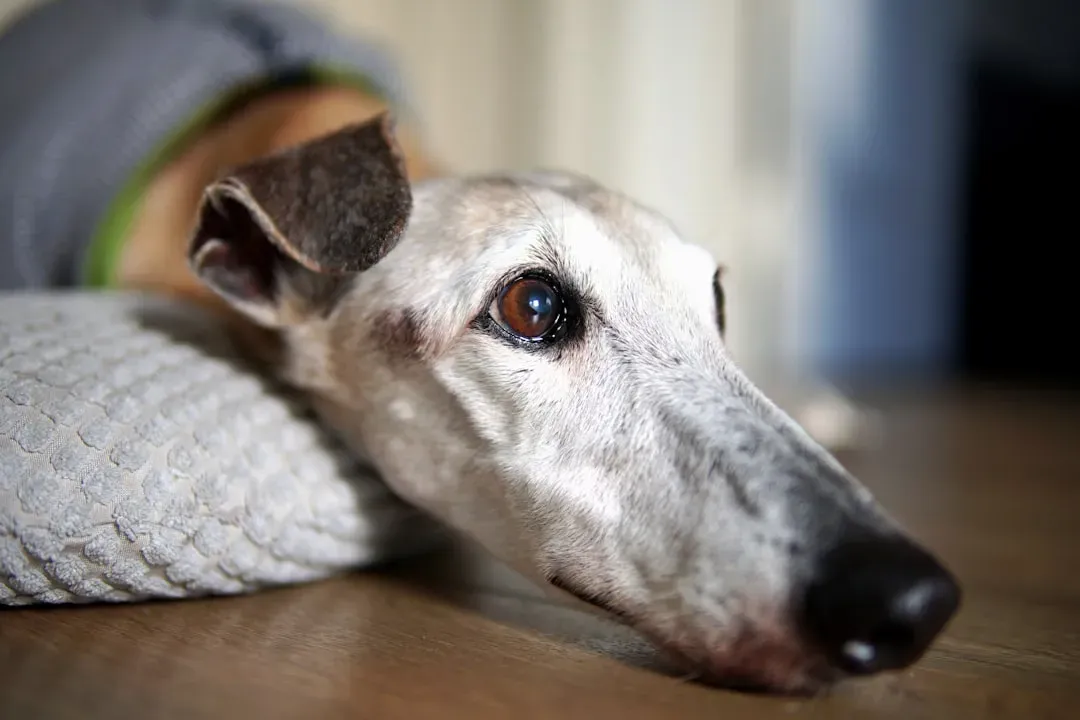
Most people picture speed when they think of Greyhounds. Therapists are starting to picture something quite different. These sprinter dogs are often overlooked due to their reputation as racers, but many retired Greyhounds make fantastic therapy dogs. They are actually very low-energy inside the home, preferring to settle in a quiet corner, which is why they are popularly known as “45-mph couch potatoes.” That quiet, undemanding presence makes them surprisingly well-suited to people who find high-energy animals overwhelming.
For those requiring calm companionship, Greyhounds provide a gentle, soothing presence without overwhelming energy levels, particularly beneficial in trauma recovery. They are generally very quiet and affectionate, and are very sensitive to their owners’ moods. If you are sad, the Greyhound will sense it and will try to offer comfort by leaning against you. For individuals recovering from trauma or burnout who simply need a quiet, grounding presence in the room, a Greyhound’s low-key nature can be genuinely restorative in ways that busier breeds simply aren’t.
#6: The Standard Poodle Cross (Doodle Breeds) – The Modern Mental Health Match

Doodle breeds, particularly the Goldendoodle and Labradoodle, sit at the intersection of everything therapists tend to value in an emotional support animal. Versatile breeds like Golden Retrievers and Standard Poodles demonstrate remarkable adaptability across different living situations, and their popular crosses carry those same qualities in a typically hypoallergenic, people-loving package. Scientific studies show these breeds excel at lowering cortisol levels and increasing oxytocin release through the human-animal bond, and while basic obedience training helps, their natural therapeutic presence delivers measurable mental health benefits.
The social dimension is also worth noting. A Human Animal Bond Research Institute survey discovered roughly four in five pet owners feel less lonely with a pet, and Doodle breeds, with their approachable, fluffy appearance and social temperaments, tend to make their owners more socially engaged as well. Even though all dogs can offer support, the best emotional support dog breeds for anxiety and depression have traits that make them well suited for the role – these breeds tend to be gentle, laid-back, and sociable, and they’re also highly trainable and are all about pleasing their human. The Doodle ticks every one of those boxes, which is precisely why they keep coming up in mental health conversations.
Finding Your Right Match

Choosing an emotional support dog isn’t a one-size-fits-all decision, and good therapists know that. When choosing an emotional support dog, you need to consider both the breed’s size and natural temperament to ensure they match your living situation and emotional needs, as different breeds have varying training requirements and adaptability levels, which directly impact their effectiveness as support animals. A high-energy dog in a small apartment can add stress rather than relieve it, which is exactly the opposite of the goal.
Under federal law in the United States, to qualify as an emotional support animal, you require a prescription letter from a licensed mental health professional, such as a psychiatrist, psychologist, or therapist. Even though no training is legally required, it is strongly recommended that all emotional support dogs complete basic obedience training to ensure they are well-behaved and manageable, which reduces stress for both the owner and the dog. The paperwork matters, but the real work begins the moment you bring that dog home.
Conclusion: A Prescription Worth Taking Seriously

The idea that a dog could genuinely support your mental health used to sound like wishful thinking. The evidence increasingly says otherwise. Recent scientific research has established compelling evidence supporting the therapeutic benefits of emotional support animals in mental health treatment, with studies showing that the vast majority of individuals report improved mental health after obtaining one, with significant reductions in depression, anxiety, and loneliness symptoms. That’s not a soft finding – it’s a meaningful one.
What’s worth sitting with here is that the breeds showing up in these conversations aren’t chosen arbitrarily. Each one brings something distinct: the Golden’s warmth, the Lab’s physical grounding, the Poodle’s adaptability, the Cavalier’s emotional radar, the Greyhound’s quiet calm, and the Doodle’s infectious joy. The connection between humans and dogs is a powerful tool for managing mental health challenges like anxiety, depression, and PTSD, and an emotional support animal provides comfort and companionship that contributes significantly to therapeutic care.
Therapy takes many forms. Sometimes it’s a session on a couch. Sometimes it’s a warm weight settling next to you on a hard evening, reminding you without a single word that you’re not alone. That’s not a small thing. That might actually be the whole thing.


