
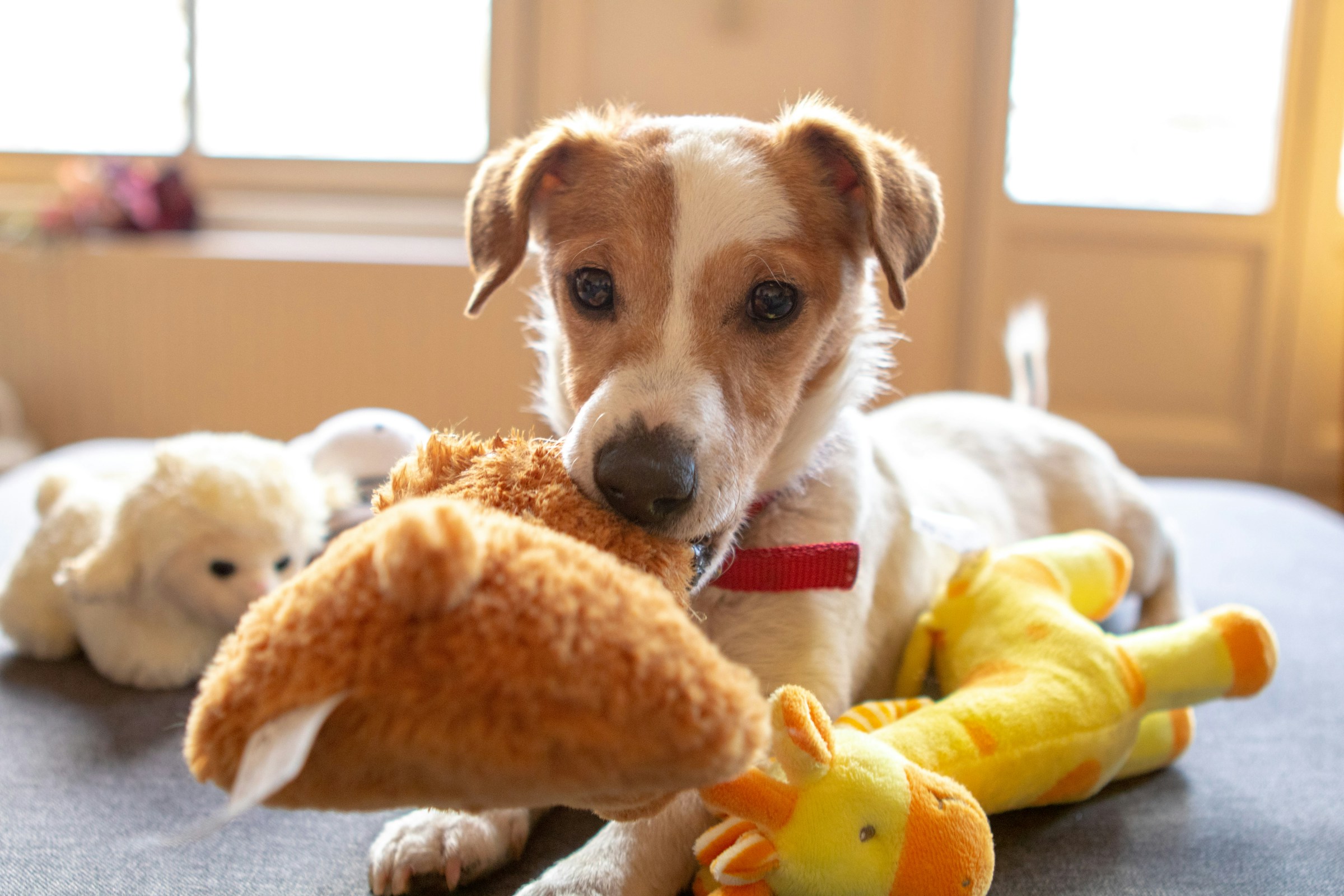
You probably think your dog trails you from the kitchen to the couch to the bathroom because you’re the one holding the treat bag. That’s the story most of us tell ourselves. It’s simple, it’s harmless, and it’s mostly wrong.
Behaviorists who study canine attachment say food explains almost none of it. What’s actually happening is something closer to what a toddler does with a parent – using you as a home base to check the world is safe. Once you know what to look for, you’ll start noticing it everywhere in your own living room, and it changes how you see every single follow, lean, and glance.
#1 – They Seek You Out During Loud Noises
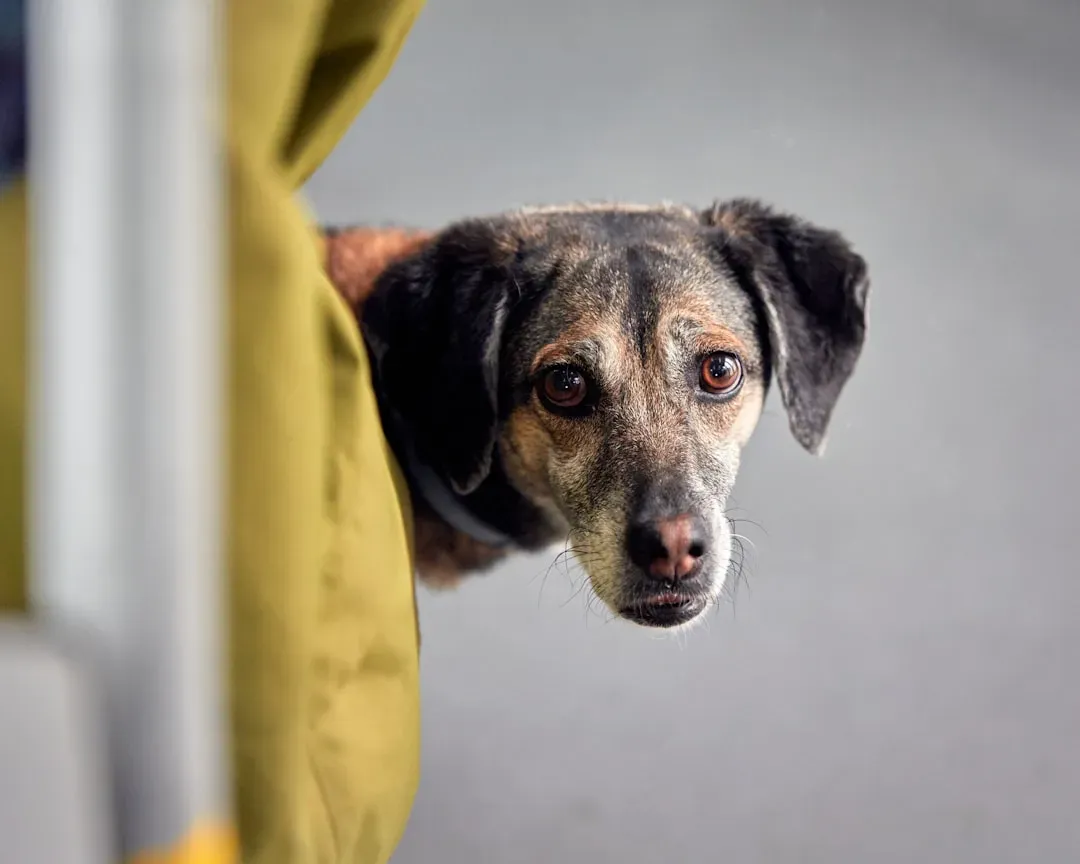
When thunder cracks or fireworks go off, a dog that sees you as safety doesn’t bolt for the closet. It bolts for you. It presses against your leg, tries to climb into your lap even if it’s sixty pounds, and burrows into whatever part of you it can reach.
Here’s the part that surprises most owners: food doesn’t even register in that moment. You could be holding a piece of chicken and your dog would ignore it completely, because what it actually wants is contact with your body, not a snack. That single detail is the clearest proof that this reaction has nothing to do with meals and everything to do with trust.
Fast Facts
- Common storm-stress signals include trembling, panting, pacing, and drooling
- Physical contact-seeking often outweighs food-seeking during moments of fear
- Some dogs hide instead, but attachment-driven dogs usually seek their person first
- Calm, steady touch can help settle a stressed dog within minutes
#2 – They Sleep With Their Belly Exposed Near You
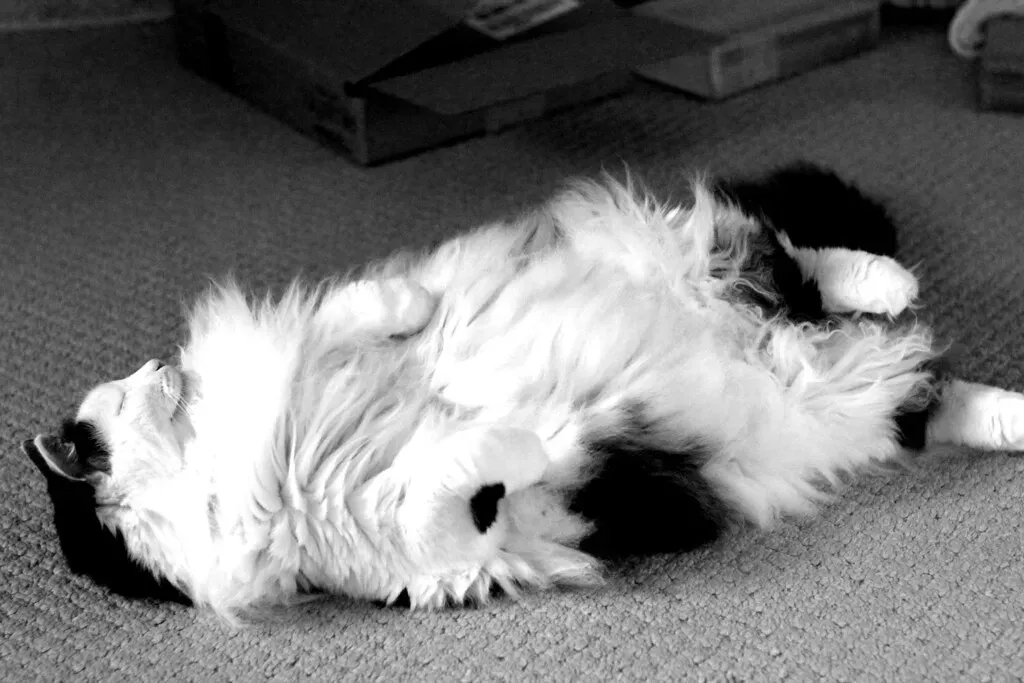
Watch where your dog chooses to fully relax. If it’s flopped on its back with its belly up, legs loose, right next to your side of the bed or your favorite spot on the couch, that’s not an accident. That posture leaves every vital organ completely undefended.
A dog will never do that near someone it merely tolerates for dinner. It’s a full-body statement of “I don’t need to be on guard here.” Owners often miss it because they assume any nap looks the same, but the belly-up sprawl shows up almost exclusively in the presence of the one person the dog has decided is safe.
#3 – They Bring You Their Favorite Toy Without Being Asked
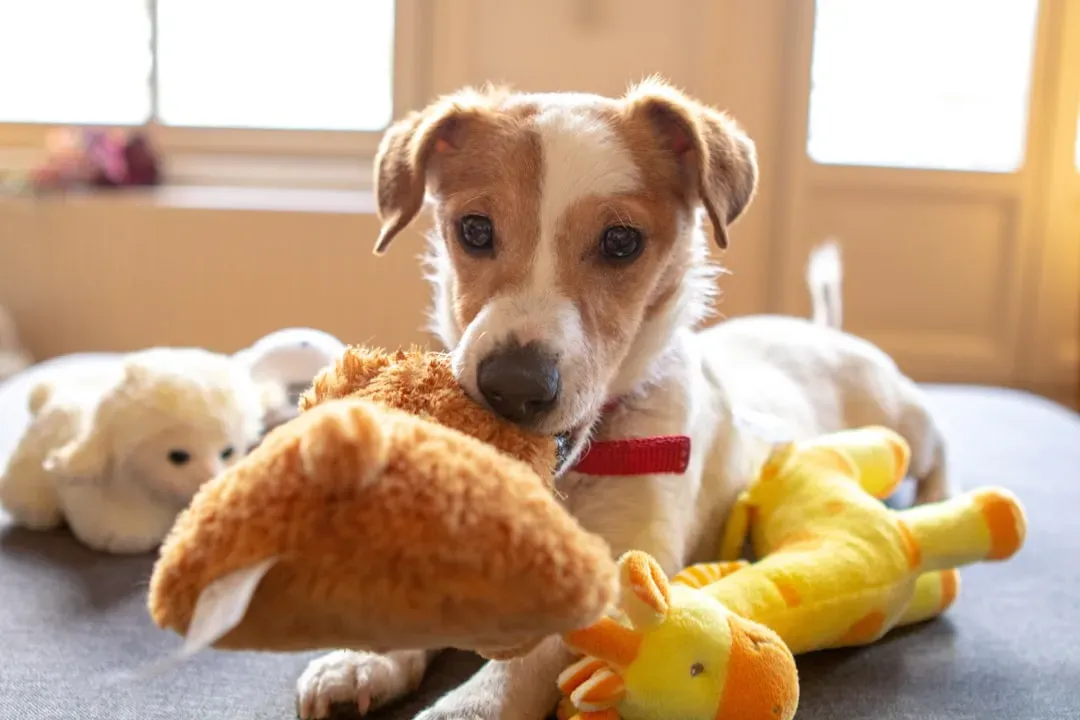
There’s a specific kind of dog behavior that has nothing to do with wanting to play fetch. Your dog trots over, unprompted, and drops its most treasured toy at your feet – not to trade it for food, but to hand it over for safekeeping.
This habit gets stronger, not weaker, during stressful stretches like moving houses or a change in routine. The dog isn’t hoping for a snack in exchange. It’s asking you to hold onto a piece of its world because it trusts you with the things that matter most to it.
#4 – Their Heart Rate Actually Drops When You Walk In
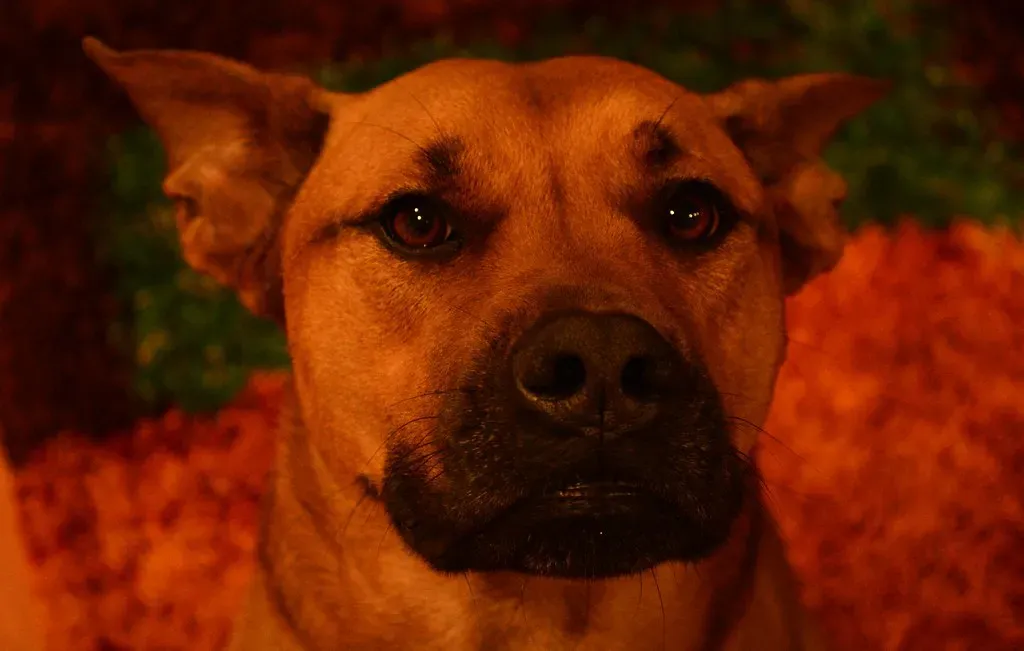
This one isn’t guesswork – it shows up on heart-rate monitors. The moment a dog’s chosen person enters the room, before any food, leash, or toy appears, the dog’s heart rate measurably slows and its muscles loosen.
Most people assume a dog’s excitement at the door is about anticipating a meal or a walk. In secure attachments, the opposite happens: the body calms down rather than revs up. That physiological shift is something a dog can’t fake and doesn’t perform for just anyone who feeds it.
Worth Knowing
- Mutual eye contact between dogs and their owners has been linked to a rise in oxytocin, often called the bonding hormone, in both species
- A slower heart rate and looser muscles are classic markers of a calm, rest-and-recover state rather than excitement
- This kind of physical calming response is a hallmark of secure attachment, not something trained through treats
#5 – They Turn Down Treats From Other People to Stay Near You
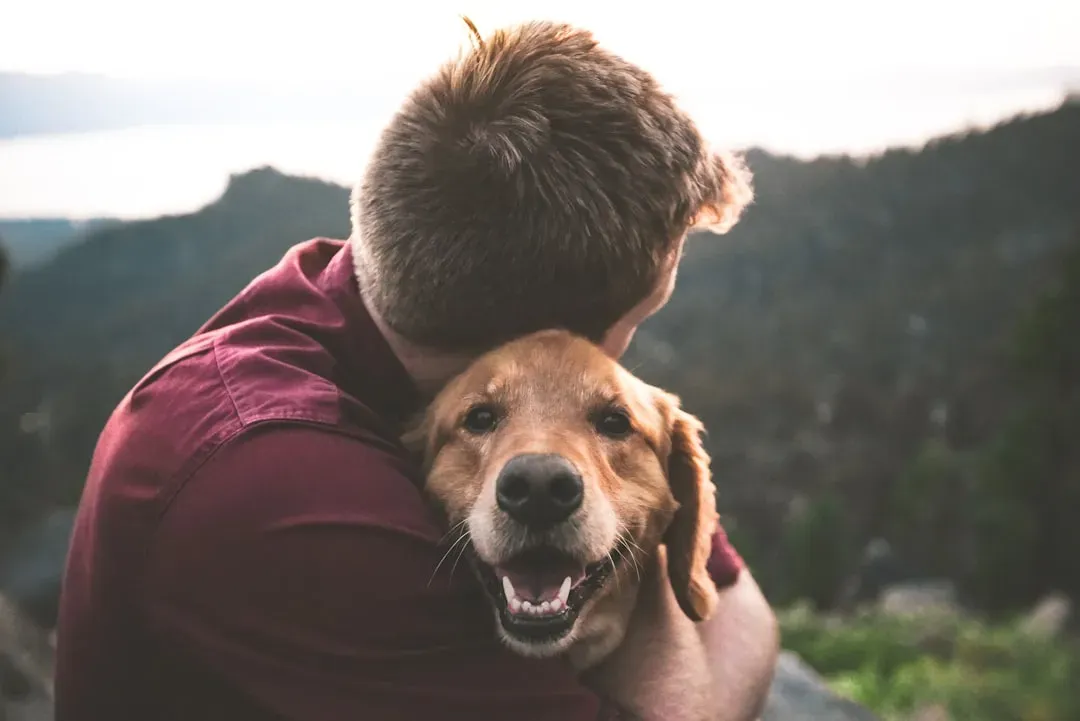
Put your dog in a room with a stranger holding out a piece of hot dog and watch what happens. A dog anchored to you will glance at the treat, then walk right past it to keep standing near you instead.
This gets even more obvious in unfamiliar places – a new house, a vet’s waiting room, a friend’s backyard. The dog isn’t rejecting food out of stubbornness. It’s choosing proximity to its safe person over an immediate reward, which is a trade almost no food-motivated relationship would survive.
#6 – They Mirror Your Mood Without Being Trained To
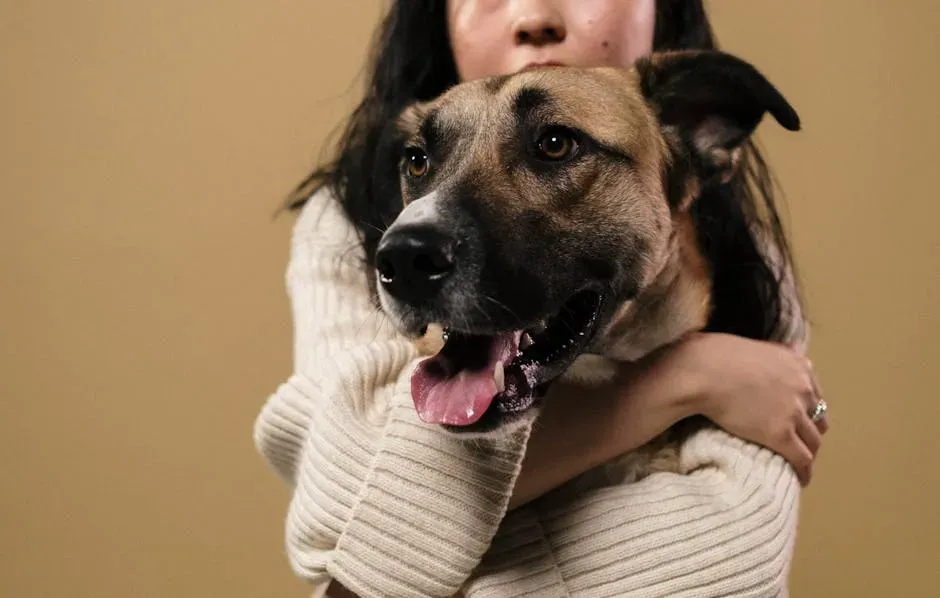
Dogs that are truly bonded to you start tracking your emotional weather without any command teaching them to. You come home tense after a bad day, and your dog gets quiet and watchful. You relax on the couch, and your dog exhales and settles too.
Trainers spend years teaching sit, stay, and come. Nobody teaches a dog to check in on your mood – it happens on its own in relationships built on real security. It’s one of the more unsettling signs, honestly, because it means your dog has been paying closer attention to your inner life than most people around you have.
#7 – They Rest Their Head on You During Quiet Moments
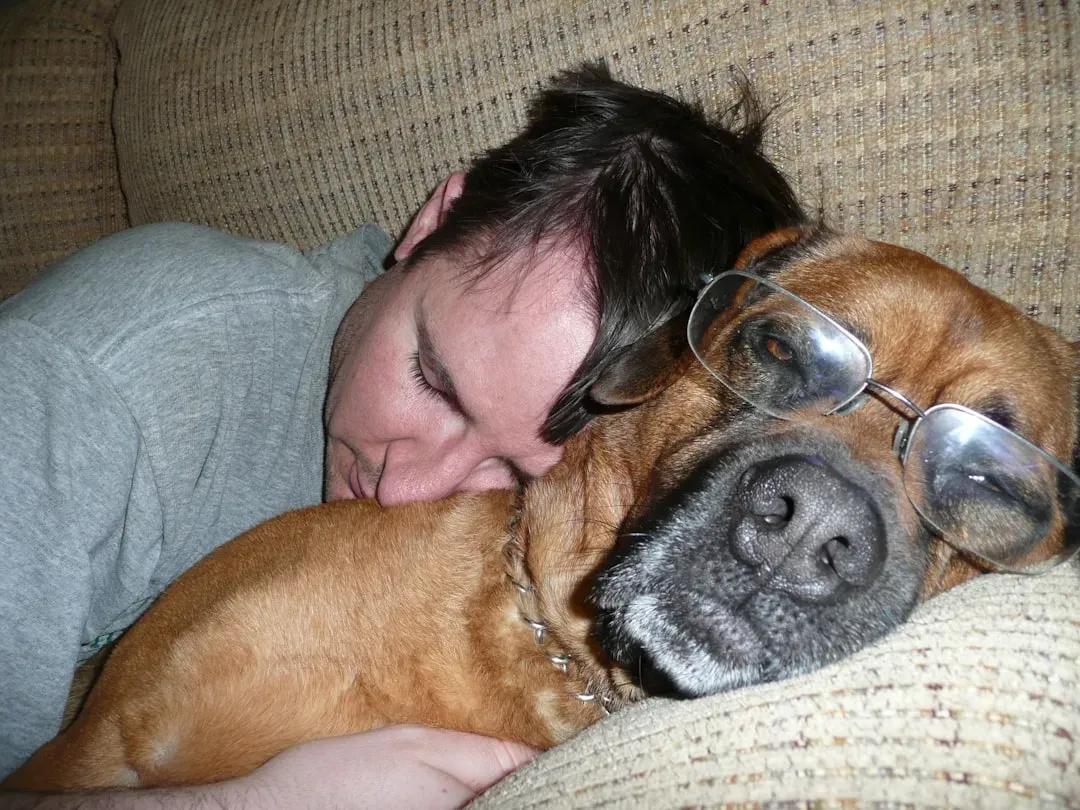
A dog resting its head on your knee or leaning its full weight into your side during a quiet afternoon isn’t angling for attention or food – it’s a deliberate act of weight-sharing reserved for people it trusts completely.
Owners frequently notice this behavior spikes right after any kind of separation, like a boarding stay or a longer day at work than usual. The head-resting becomes a fast way for the dog to restore its sense of balance, almost like it’s recalibrating just by touching you.
Dogs are not our whole life, but they make our lives whole.
Roger Caras
#8 – They Follow You to the Bathroom for No Reason at All
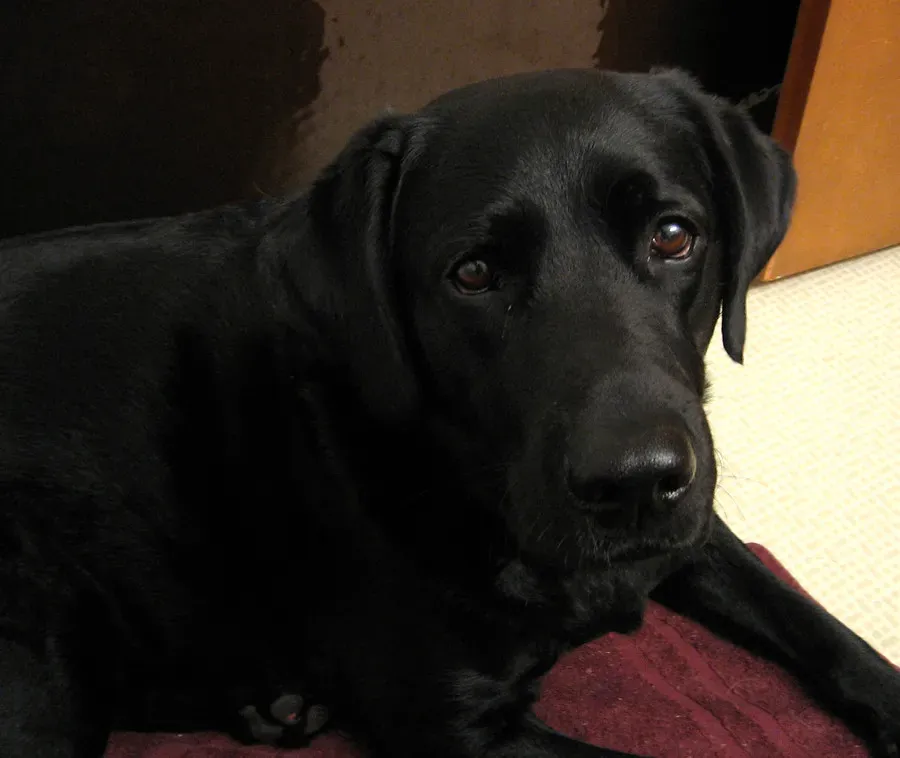
There is no food in the bathroom. Ever. So when your dog trails you in there and either waits outside the door or squeezes in to sit by your feet, it has completely ruled out hunger as a motive.
This is pure companionship, plain and simple – the dog wants visual or physical contact and doesn’t need an excuse to get it. It’s inconvenient, sure, but it’s also one of the most honest signals a dog can give you, because there’s genuinely nothing else to gain from it.
#9 – Their Tail Wags in a Slow, Low Sweep Only Around You
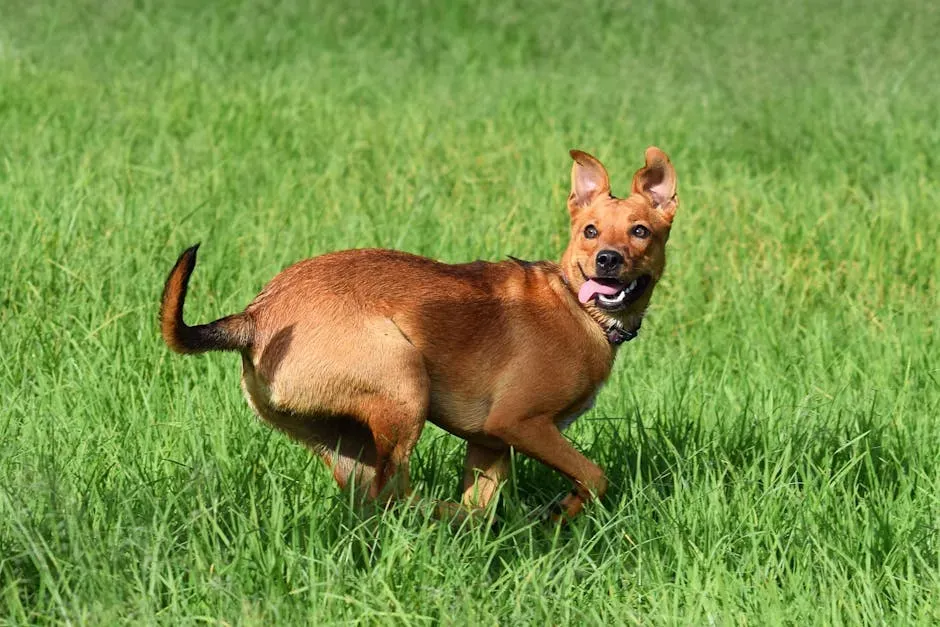
Not all wags mean the same thing. A high, fast, whip-like wag usually signals excitement about something incoming – a treat, a toy, a walk. But a slow, loose sweep at half-mast is a completely different signal, and it shows up almost exclusively around the one person a dog feels safest with.
Behaviorists distinguish this relaxed wag from anticipatory excitement because it stays consistent no matter the setting – calm at home, calm at the park, calm in the car. It’s contentment on autopilot, not a performance for a reward.
Quick Compare
- High, fast wag: excitement or anticipation of something incoming
- Slow, low sweep: calm affection, usually reserved for a trusted person
- Stiff, tucked wag: stress or uncertainty
- Loose, circular wag: pure joy, often at reunions
#10 – They Keep Glancing Back at You in New Places
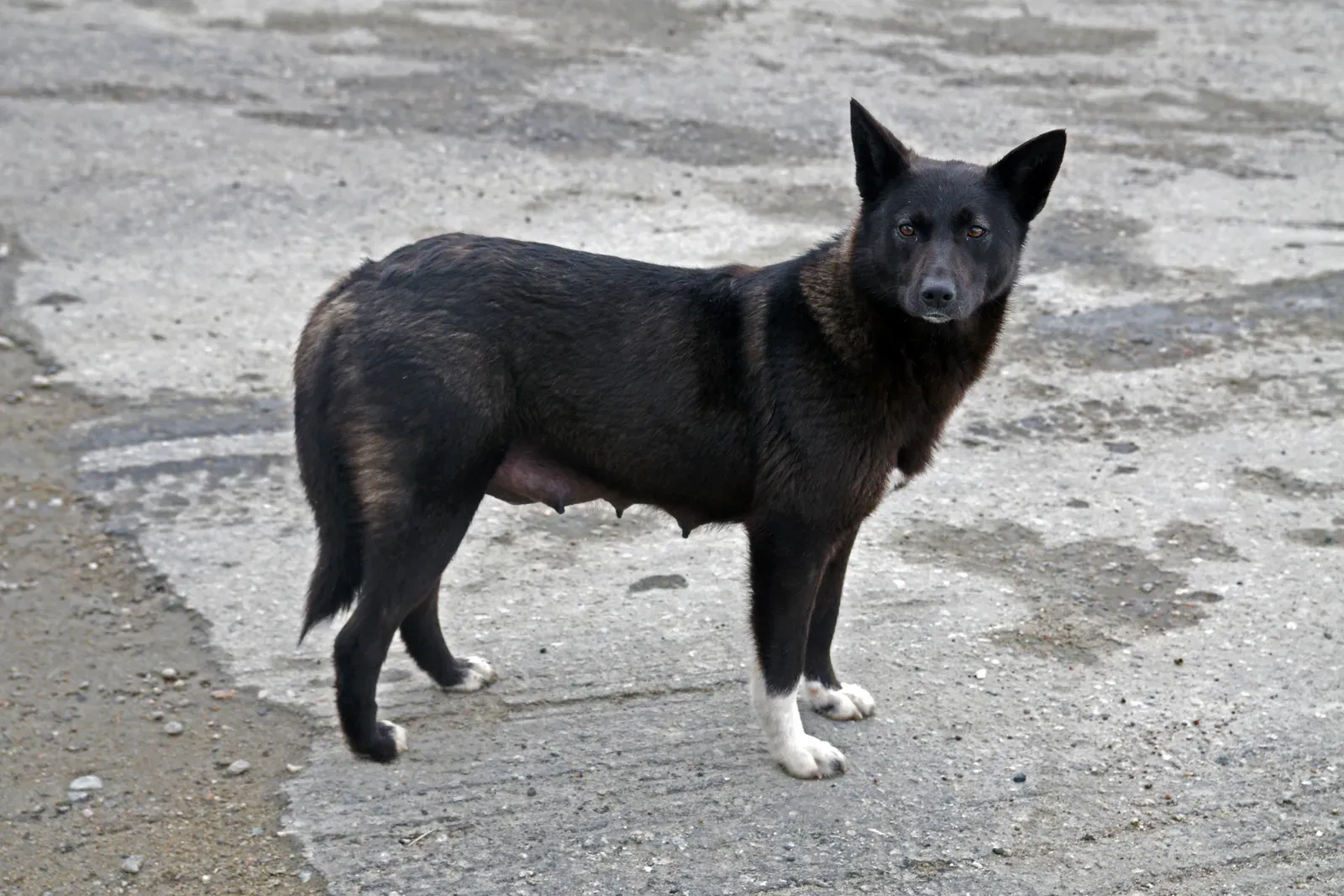
Take your dog somewhere unfamiliar and watch its eyes. A securely attached dog will keep checking back with you – at a new trail, a busy sidewalk, someone else’s backyard – before deciding how to react to what’s around it.
Most people read this as good training. It’s actually something deeper: the dog is using you as its emotional compass. And this check-in habit holds up even when there’s zero food involved, which means it’s guidance-seeking, not treat-seeking.
#11 – They Let You Handle Their Paws and Ears Without Flinching
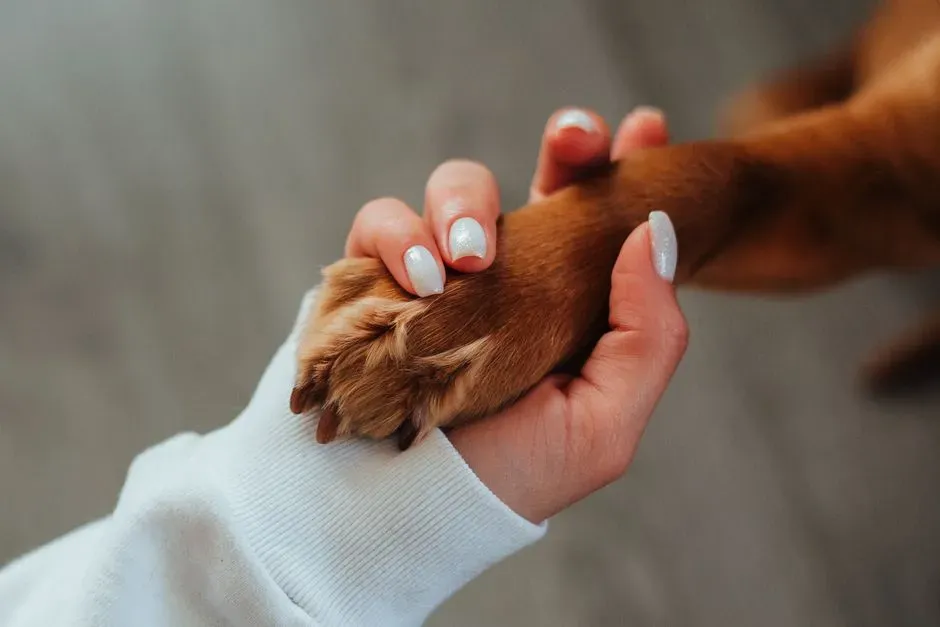
Paws and ears are sensitive, vulnerable spots most dogs guard instinctively. A dog that goes soft and loose while you handle them – no stiffening, no pulling away – is telling you your touch doesn’t register as a threat.
This kind of trust rarely extends to people the dog associates only with getting fed. Owners often notice the contrast directly at the vet, where a dog might tense up with the technician but stay completely relaxed the moment their person takes over.
#12 – They Greet You With a Full-Body Wiggle After Even Short Absences
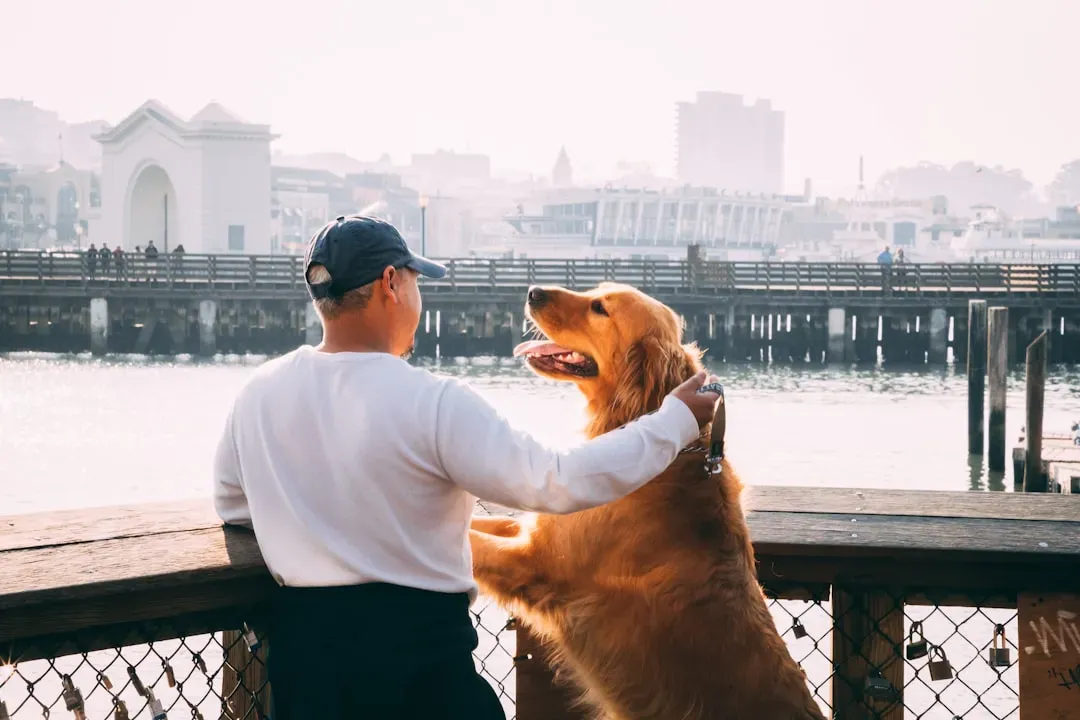
You step out to grab the mail and come back sixty seconds later to a dog acting like you’ve returned from war. The whole body gets involved – wagging, wiggling, sometimes a happy little groan or two.
Food plays almost no role in that reaction. What you’re seeing is relief, plain and immediate, because your presence is what restores the dog’s sense that everything is okay again. It’s a very different reaction from the polite tail-thump most dogs give someone they simply recognize but aren’t emotionally anchored to.
#13 – They Stay Close Even When Food Is Completely Out of the Picture
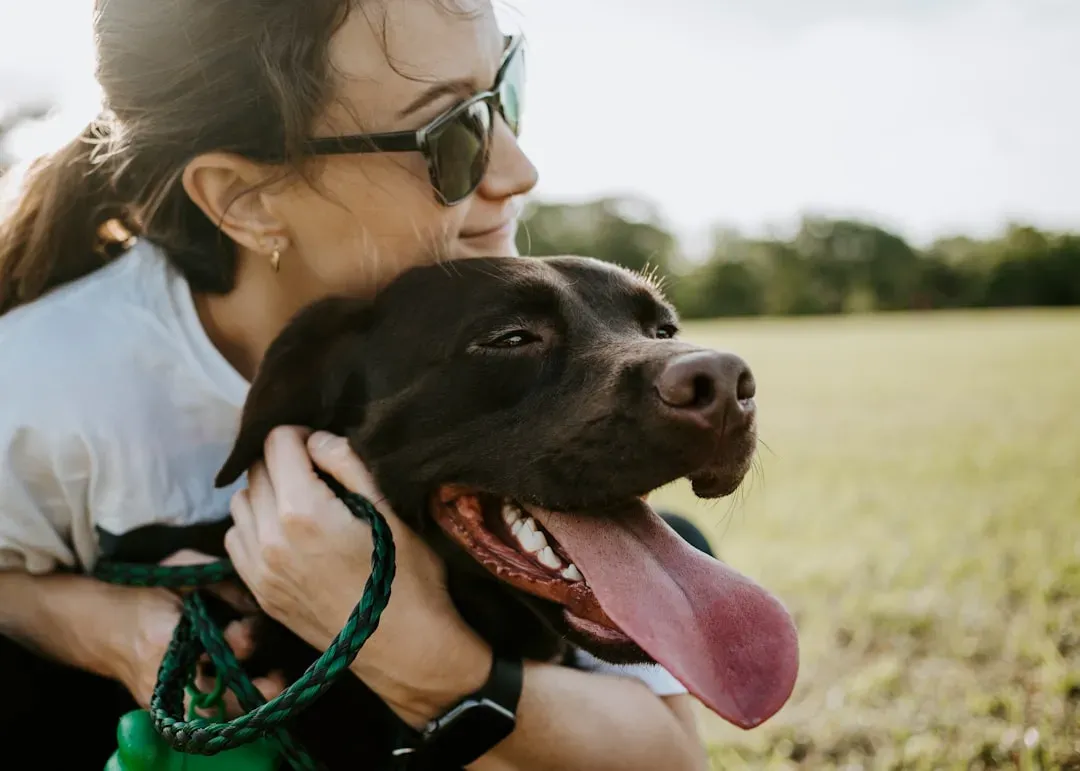
Here’s the real test. Take away the food bowl entirely – meals are done, treats are put away, there’s nothing left to gain – and watch what your dog does next. A dog that still shadows you room to room, still leans in for contact, still looks relaxed and content, has just proven the whole relationship was never about the food.
What’s genuinely surprising is that dogs with this kind of attachment often eat less directly from your hand and more from their own bowl independently, yet they stay physically closer to you overall. The transaction has quietly disappeared, and what’s left standing in its place is trust.
At a Glance
- Look for calm body language, not just excitement, when you walk in
- Notice whether your dog chooses closeness over treats
- Watch tail speed and height, not just the wag itself
- Pay attention to how quickly your dog settles after you leave and return
The Bottom Line
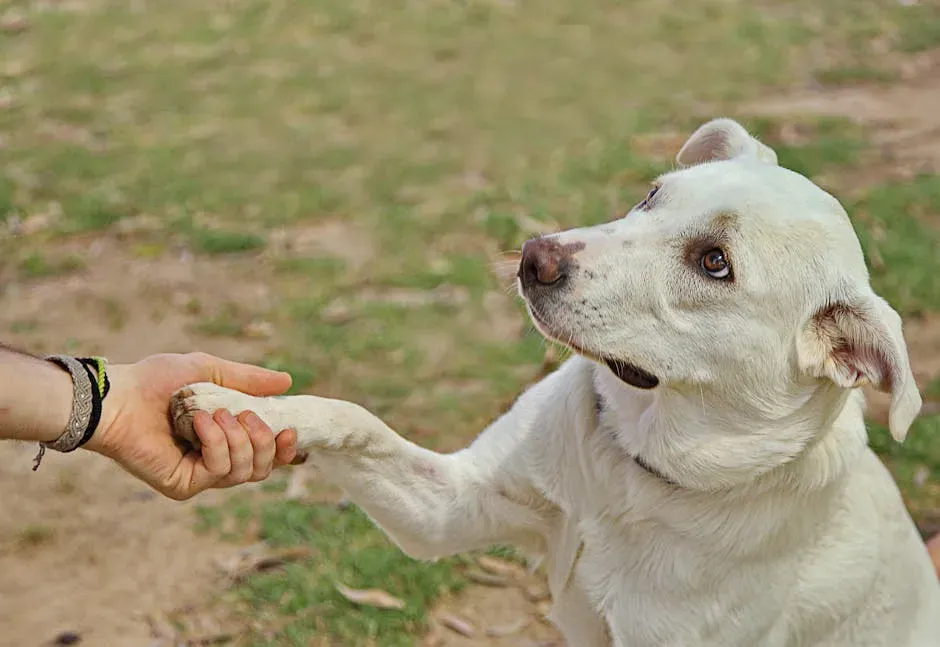
If your dog checks off even half of these thirteen signs, stop calling it a coincidence. You are not a walking dinner bell to that animal – you are its version of home base, the one steady thing it measures the rest of the world against.
Most owners never notice this because daily life blurs everything together: the walks, the meals, the couch time. But strip the food away, like sign #13 shows, and the truth holds up every single time. That’s not conditioning. That’s love, dog-shaped and completely sincere, and honestly, it’s the best compliment a dog can give anyone.


