
15 Quiet Signs a Dog Will Only Fall Deeply Asleep With One Person Nearby
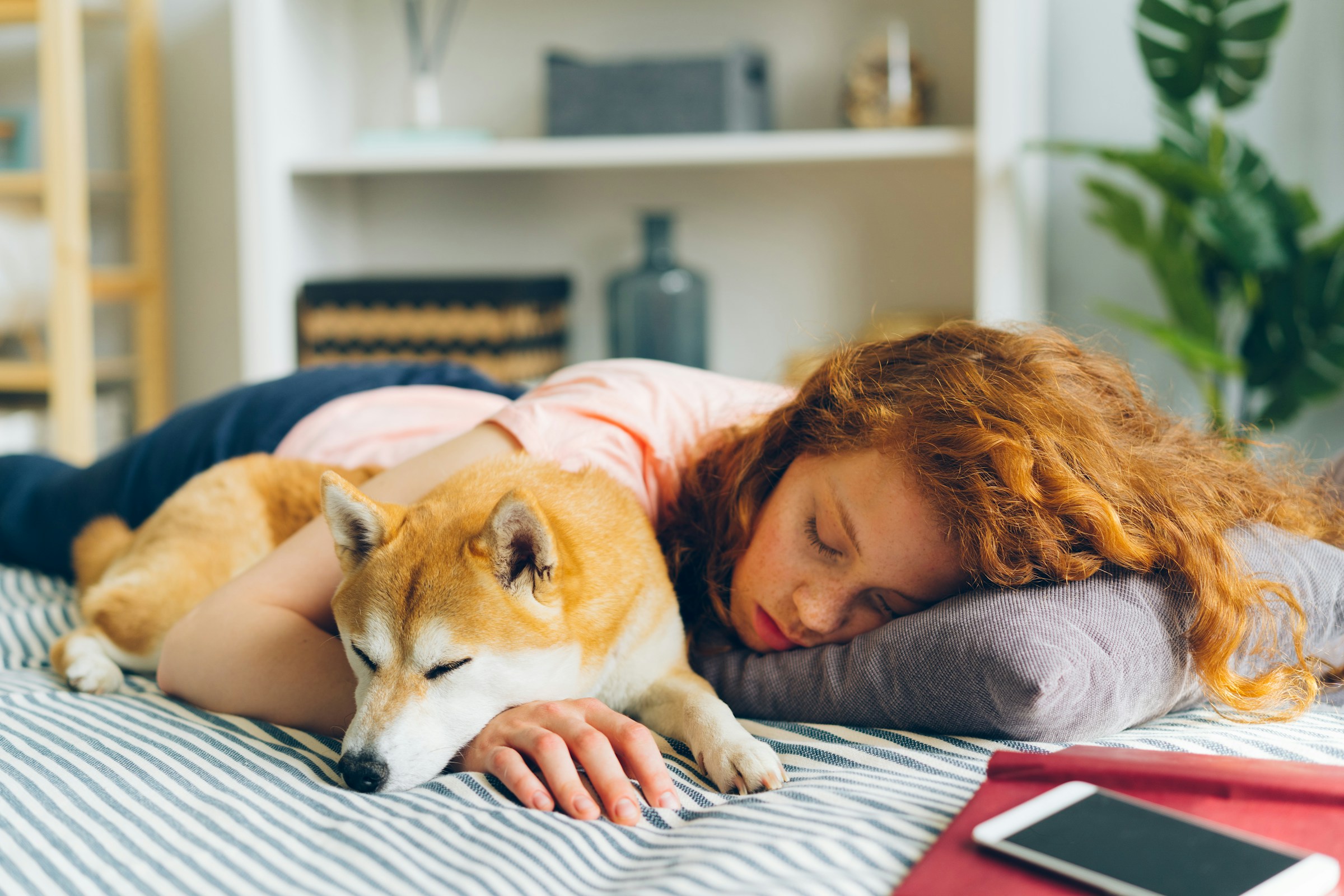
Most dog owners assume their pet loves everyone in the house equally. The tail wags for everyone, the belly flips over for anyone willing to rub it, so surely sleep works the same way, right? Veterinary behaviorists say that assumption falls apart the second you actually watch a dog sleep next to different people.
True deep sleep – the kind with twitching paws, slack jaws, and slow, rhythmic breathing – isn’t shared equally. It’s rationed out to exactly one person: the one a dog’s nervous system has quietly voted as “safe enough to fully shut down around.” Everyone else just gets a dog that’s resting with one eye open. Here are the 15 quiet, easy-to-miss signals that reveal who that person really is in your house.
#1 – They Only Fully Close Their Eyes Around One Person
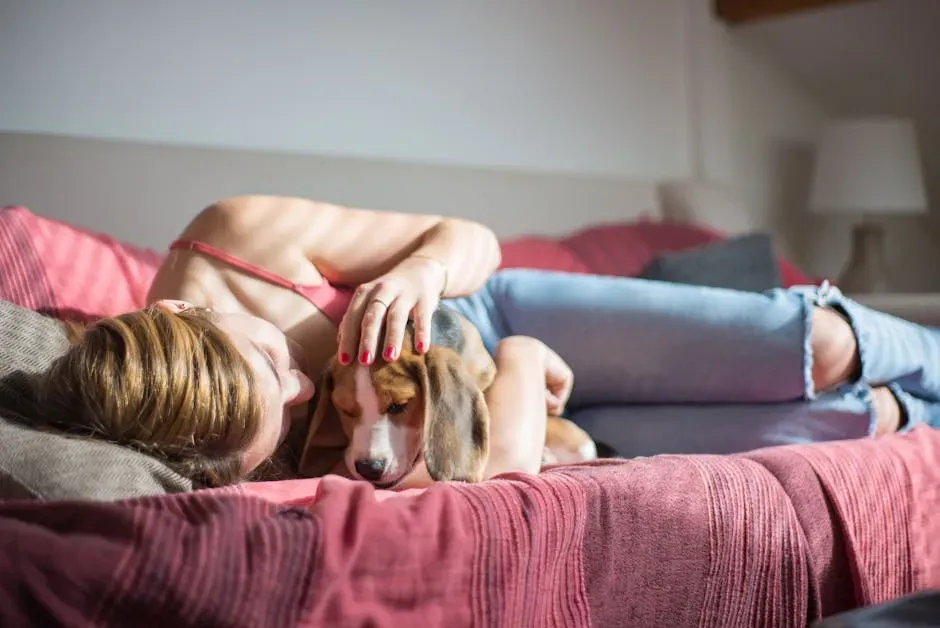
A dog that keeps its eyes half-open, even while lying down, is still monitoring its surroundings. This is a survival instinct passed down from wild canines who could never fully switch off in an unfamiliar or unsafe environment. When a dog finally shuts its eyes completely and stays that way for more than a few minutes, it’s a massive tell.
This total eye closure is one of the clearest physical markers of trust, according to behaviorists who study canine sleep cycles. If your dog only does this when you’re the one nearby, it’s not a coincidence – it means their nervous system has decided you are the safest presence in the room. Other family members might get a nap out of them, but only you get the full shutdown.
#2 – Their Breathing Slows Down Immediately When You Sit Beside Them
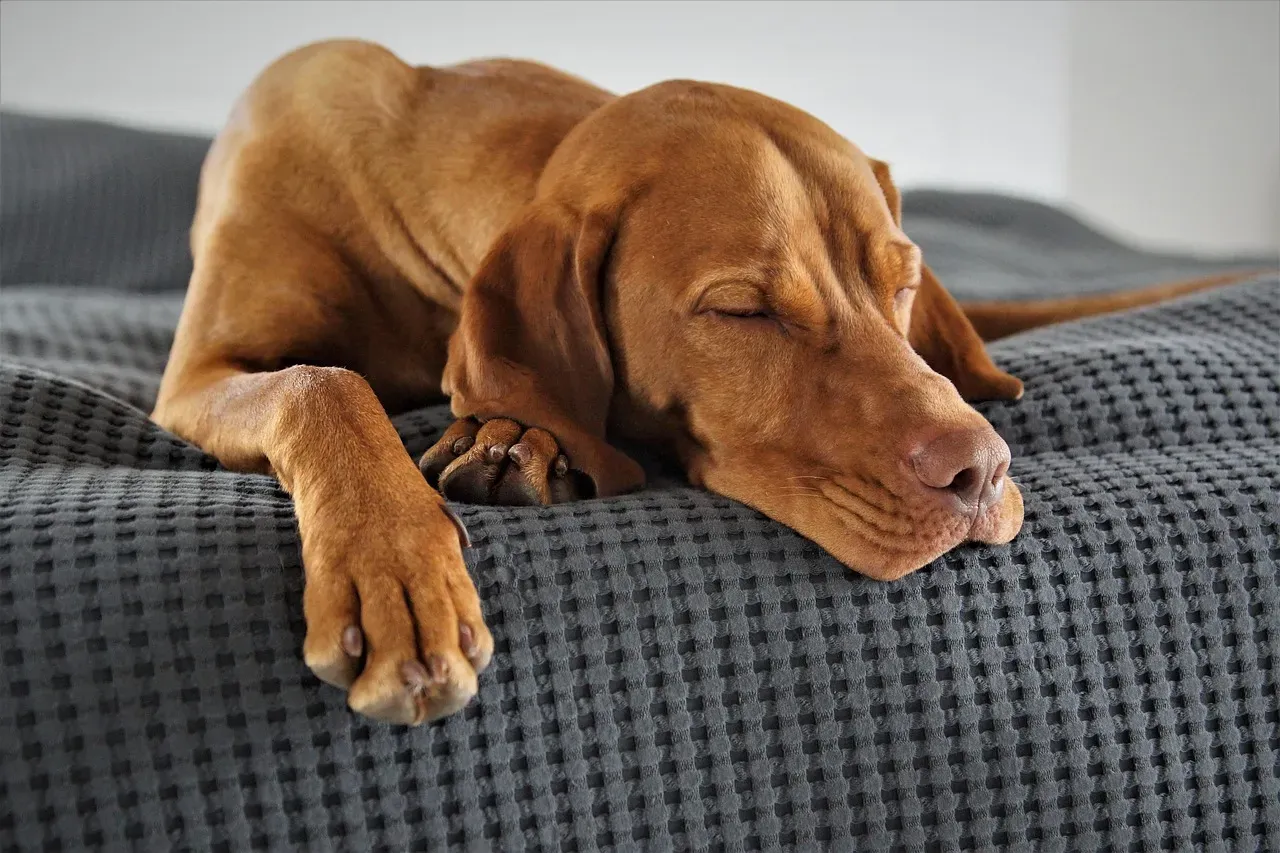
Watch a dog’s chest closely the next time they curl up near different people. With most people, their breathing stays quick and shallow, a subtle sign the body is still in a mild state of alertness. With their chosen person, that breathing rate drops noticeably within minutes.
This isn’t random. A dog’s respiratory rate is directly tied to its stress hormone levels, and a sudden slowdown signals a genuine physiological relaxation response. Vets who monitor resting heart and breath rates in clinical settings note this shift is one of the most reliable non-verbal cues of comfort. If your dog’s breathing visibly steadies the moment you sit down, their body is telling you something their behavior can’t always express.
Fast Facts
- Adult dogs typically sleep 12 to 14 hours a day, though only a portion of that is true deep sleep.
- REM sleep, marked by twitching paws and fluttering eyes, is the most vulnerable stage of a dog’s rest.
- A dog’s brain stays partially alert during light sleep, which is why so many naps end at the first sound.
- Full REM cycles are shorter and less frequent in dogs than in humans, making them precious when they happen.
#3 – They Twitch and Dream Only When You’re Close
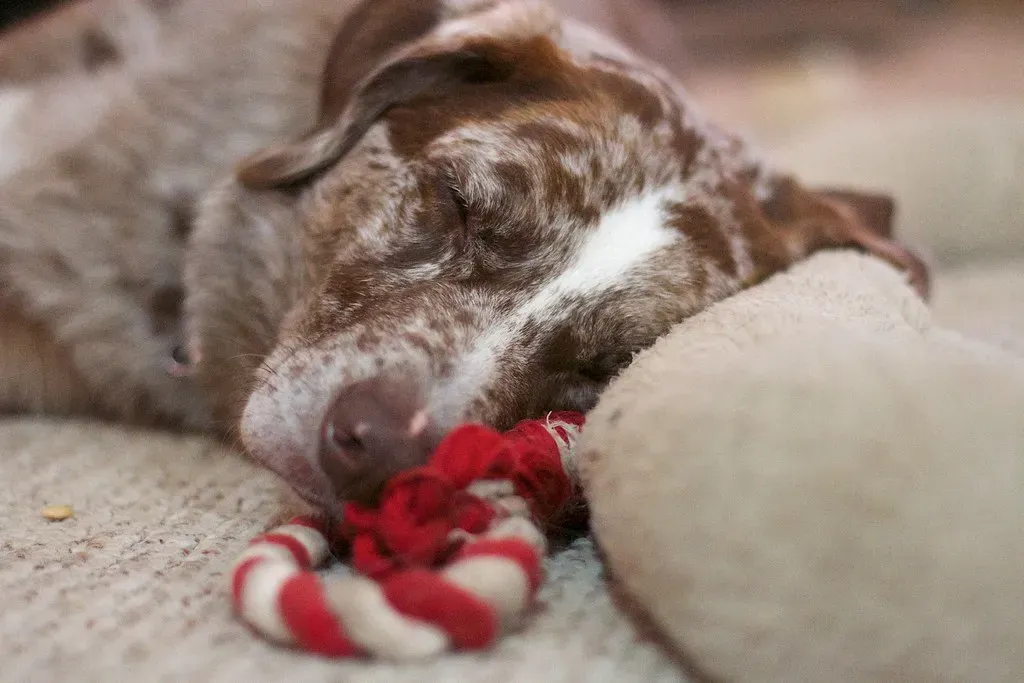
Dream sleep, known as REM sleep, is when dogs paddle their legs, huff, or twitch their whiskers. It’s also the deepest and most vulnerable stage of sleep an animal can enter, because the body is essentially paralyzed and unresponsive to threats for those few minutes.
Dogs are biologically wired to avoid entering this vulnerable state unless they feel completely protected. Many dogs never reach REM sleep in a room full of strangers or even loosely bonded family members – they simply won’t let their guard down that far. If your dog dreams almost exclusively when you’re the one nearby, it means they’ve unconsciously designated you as their protector during their most defenseless moments.
#4 – They Position Their Back Toward You, Not Their Face
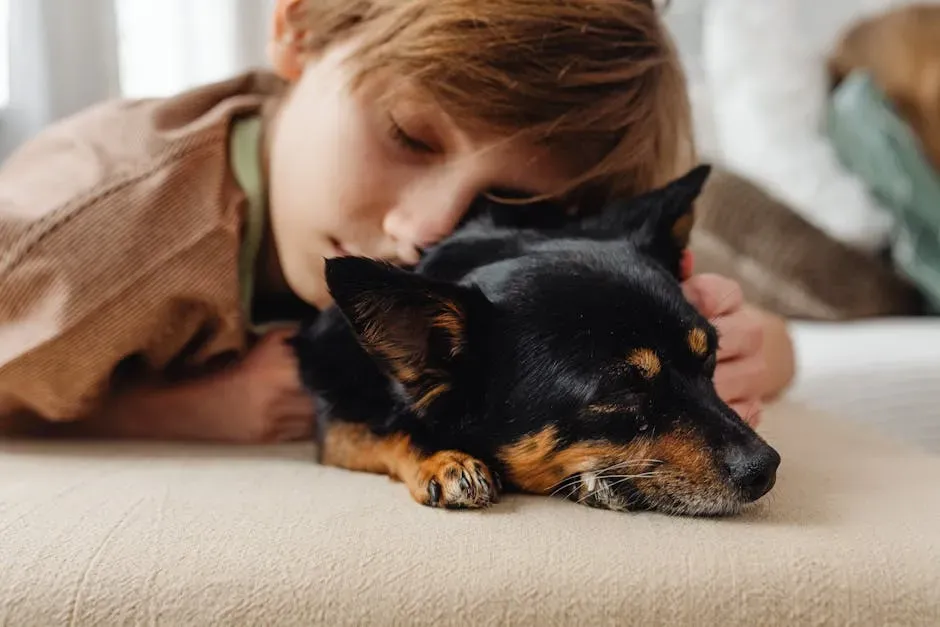
It sounds backwards, but a dog turning its back to you while sleeping is actually one of the highest compliments in the canine world. Facing away means they’ve stopped watching for danger from your direction entirely, essentially saying, “I trust you to watch my blind spot.”
Dogs that don’t fully trust a person will almost always sleep facing them, keeping the face and body oriented toward the perceived threat. Behaviorists note that back-to-you sleeping is a specific submission and trust posture, not a sign of disinterest. Owners often misread this as their dog being distant, when it’s actually the opposite – it’s a quiet, physical declaration of total safety.
#5 – Their Muscles Go Completely Limp, Not Just Relaxed
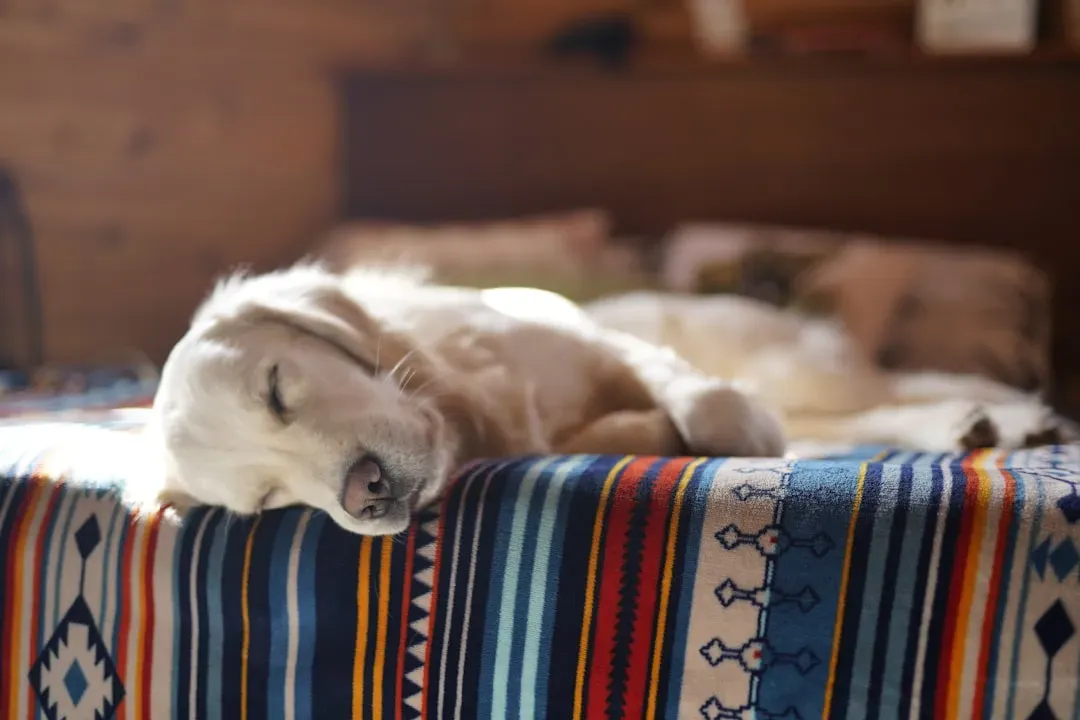
There’s a difference between a dog lying down and a dog whose body has gone fully slack. Tense muscles, even in a resting position, mean the dog is still ready to spring up at a moment’s notice. Total limpness – where legs flop, ears drop, and the jaw hangs loose – only happens during genuine, deep sleep.
Owners who’ve compared their dog’s sleep across different people often notice this limpness is inconsistent and person-specific. A dog’s muscle tone during sleep is controlled by the same nervous system that governs fight-or-flight, meaning full relaxation is a biological vote of confidence. If your dog goes completely floppy only in your lap or against your leg, their body has made its choice clear.
#6 – They Choose You Over a Softer Bed or Cushion
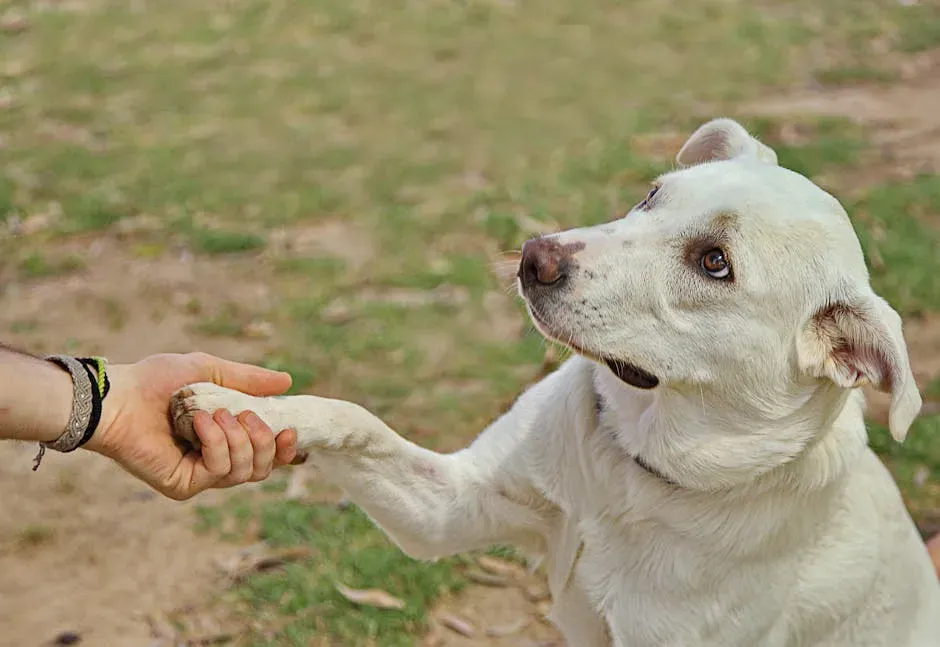
Dogs are practical animals, and comfort usually wins – unless trust overrides it. It’s a telling sign when a dog skips a plush dog bed or a cushioned couch spot to instead curl up on a hard floor next to one specific person.
This preference reveals something deeper than physical comfort. Proximity to a trusted person can outweigh physical comfort in a dog’s decision-making, according to canine behavior specialists who study attachment patterns. Dogs that consistently choose a lap, a foot, or a patch of floor next to their person over a genuinely comfortable bed are showing a clear hierarchy of needs – and emotional security tops the list.
#7 – They Sigh Deeply the Moment They Settle Near You
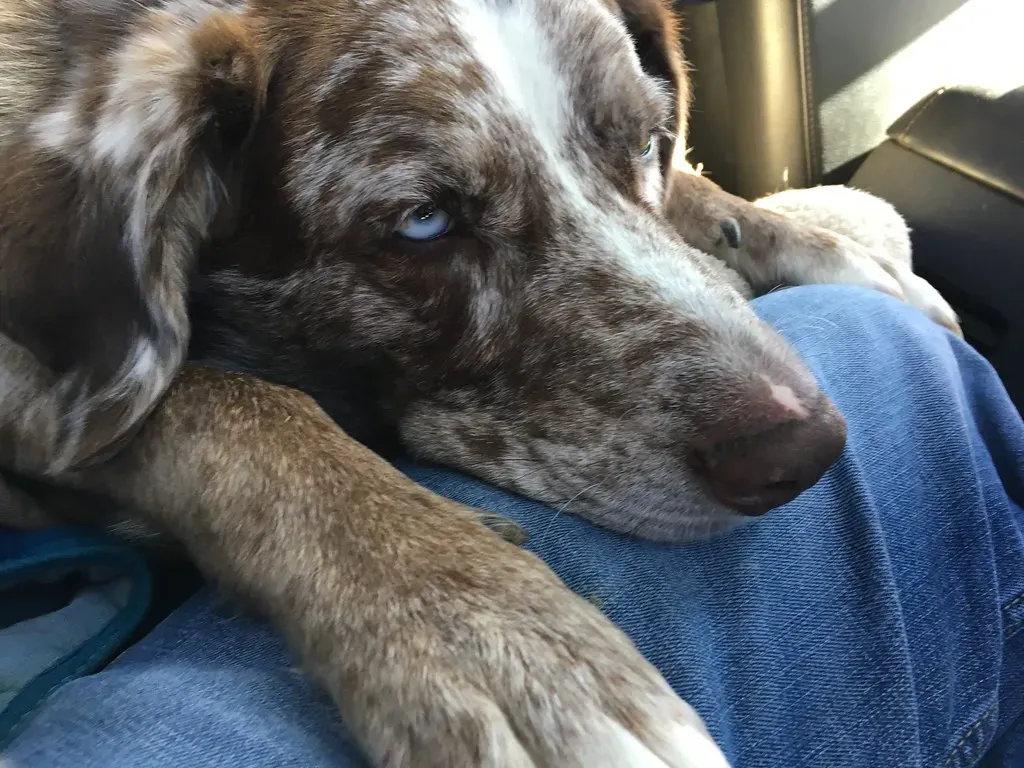
A long, audible sigh right before a dog drifts off isn’t just cute – it’s a release valve. That exhale often follows a drop in cortisol, the stress hormone, and signals the dog’s body is finally letting go of tension it didn’t even know it was holding.
Many owners notice this sigh happens almost exclusively in one specific spot: right next to their chosen person. This audible release is frequently absent when the same dog settles near less-trusted individuals, even if the dog appears calm on the surface. It’s a small sound with a big meaning – proof that your presence alone is enough to physically unwind them.
Quick Compare
- Breathing: Slows and steadies with their person vs. staying quick and shallow with others.
- Eyes: Fully closed and still vs. half-open and watchful.
- Body: Completely limp and heavy vs. tense enough to spring up in seconds.
- Waking: Slow blinks and stretching vs. a sudden, startled jolt.
#8 – Their Ears Relax Completely Instead of Staying Alert
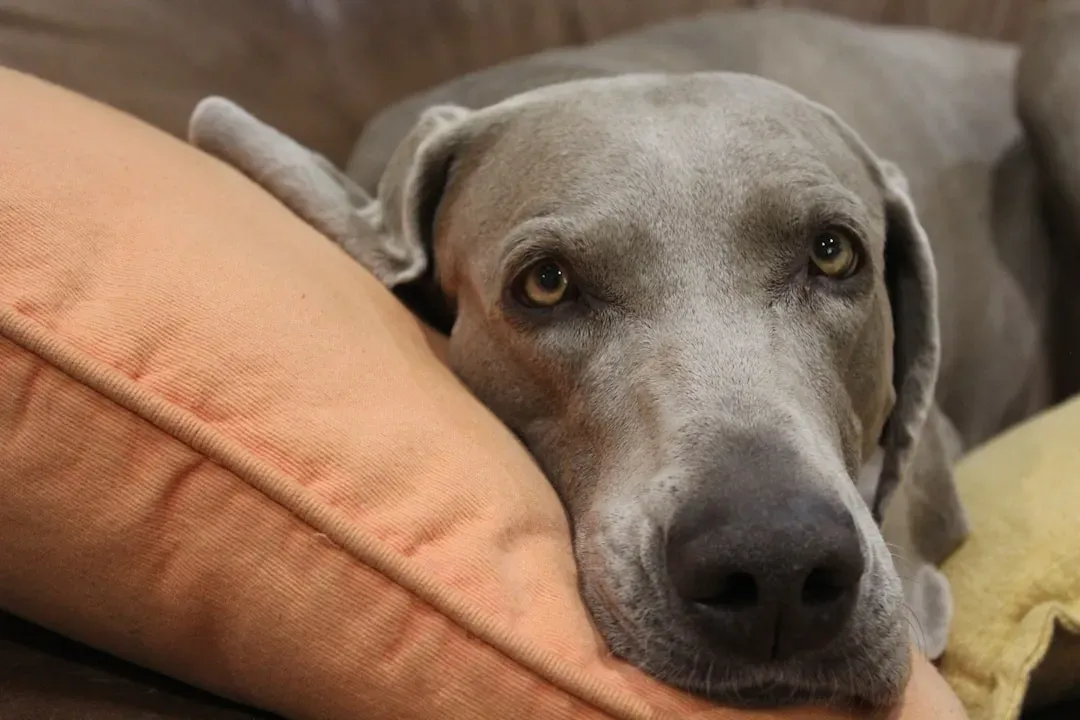
A dog’s ears are one of the most expressive parts of its body, constantly rotating to catch sounds even during rest. Alert ears, even slightly perked or angled, mean part of the brain is still on watch duty.
When a dog trusts the person beside them, the ears go soft and floppy, losing all tension. This ear relaxation is a subtle but consistent indicator used by trainers to gauge a dog’s comfort level in real time. If you’ve noticed your dog’s ears go from twitchy to totally slack only around you, that’s not a small detail – it’s a direct readout of their internal trust meter.
#9 – They Wake Up Calm With You, Startled With Others
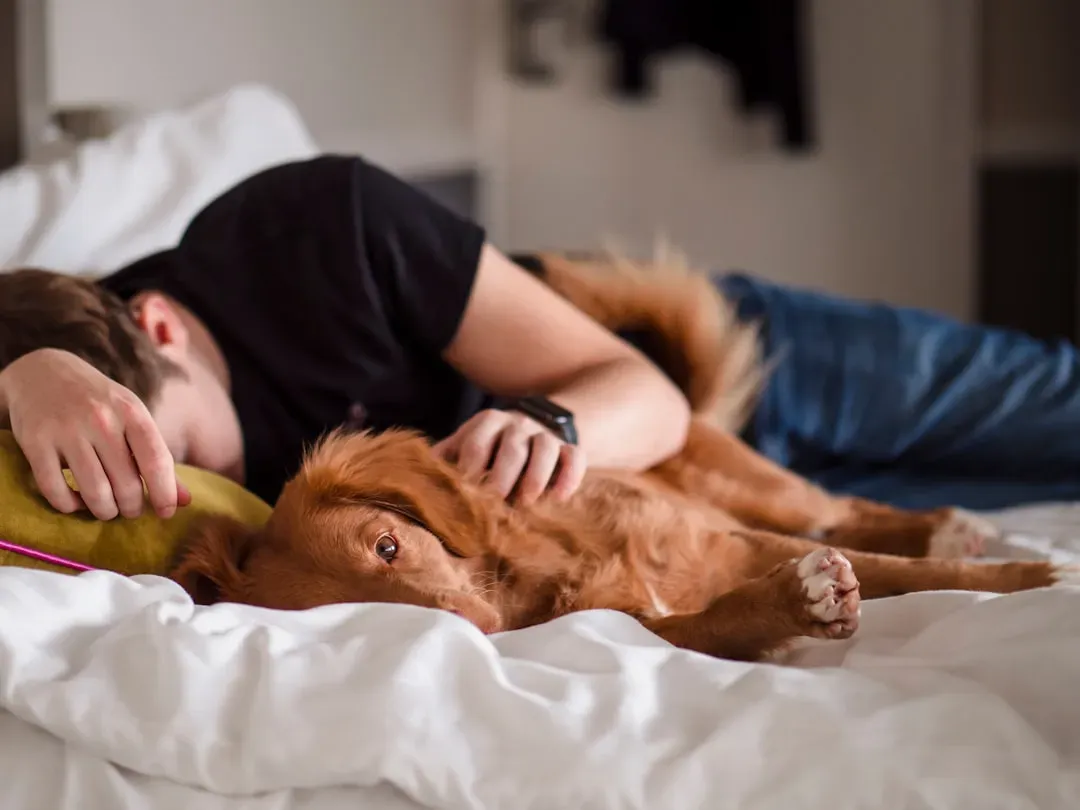
How a dog wakes up says just as much as how they fall asleep. A dog that’s been in a light, guarded rest will often jolt awake at the smallest sound or movement, especially around people it doesn’t fully trust.
With a chosen person, waking looks completely different – slow blinks, a stretch, maybe a sleepy sigh, with none of the startled alertness. This difference in waking behavior reflects how deeply the dog actually slept, not just whether their eyes were closed. If your dog wakes up groggy and unbothered around you but snaps to attention around others, it confirms just how much deeper their sleep with you really goes.
#10 – They Seek You Out Specifically When Tired, Not Just Bored
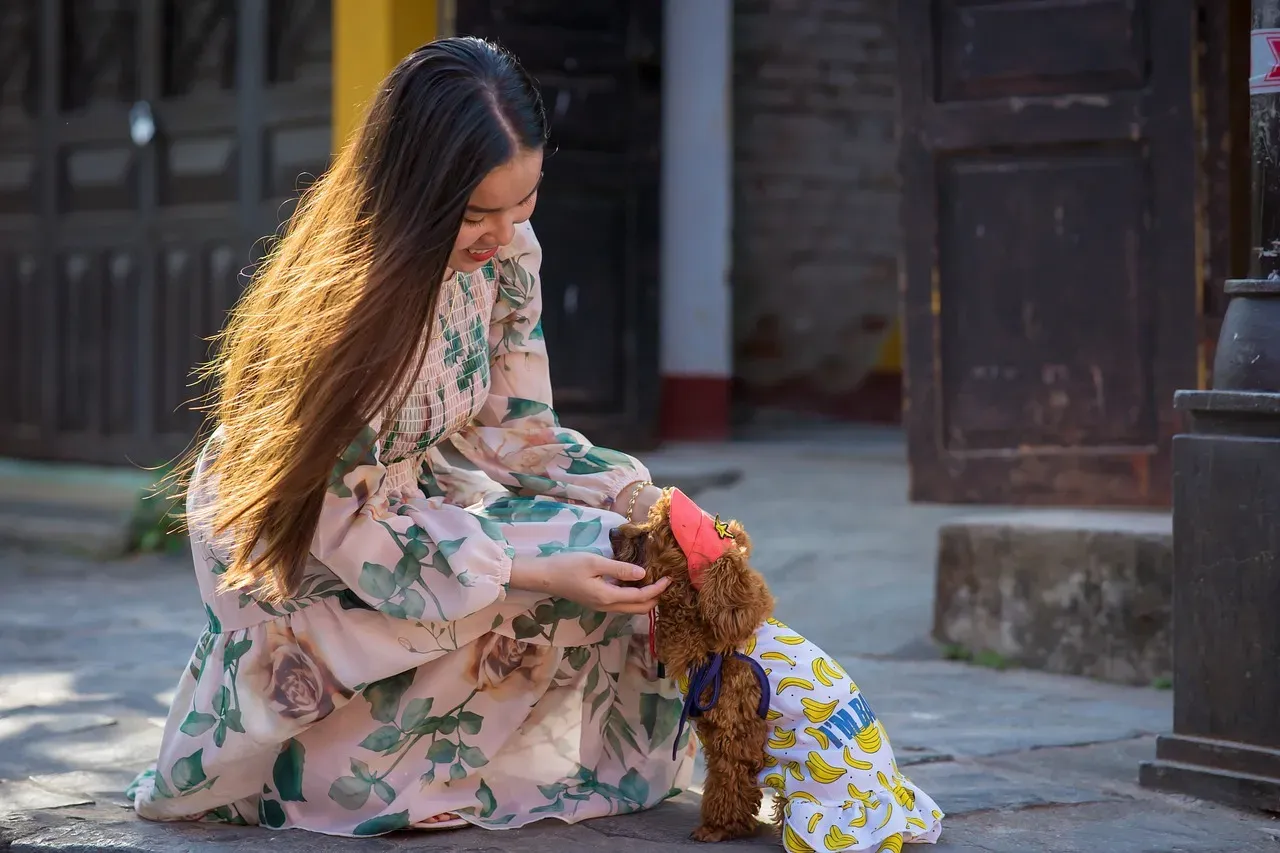
There’s a difference between a dog that wants attention and a dog that wants to sleep. Tired dogs looking for genuine rest tend to be far more selective about who they approach, often bypassing multiple people to reach one specific person.
This selectivity isn’t random affection-seeking – it’s purposeful. Dogs instinctively seek proximity to whoever makes them feel safest when their bodies are preparing to enter a vulnerable state like sleep. If your dog consistently walks past others in the room, yawning and heavy-eyed, just to flop down beside you, they’re not being needy. They’re following a survival instinct that says you’re the safest option available.
Worth Knowing
- Trust-based sleep habits usually build gradually, often over weeks of consistent, calm interaction rather than overnight.
- In multi-dog or multi-person households, a dog can still single out one person as its safest sleep partner, even with familiar faces all around.
- Rescue dogs and anxious dogs often take longer to reach this stage, but the eventual signs look identical once trust is established.
- A dog’s chosen person can shift over time if daily routines or caretaking patterns change significantly.
#11 – They Ignore Household Noise Only When You’re the One Nearby
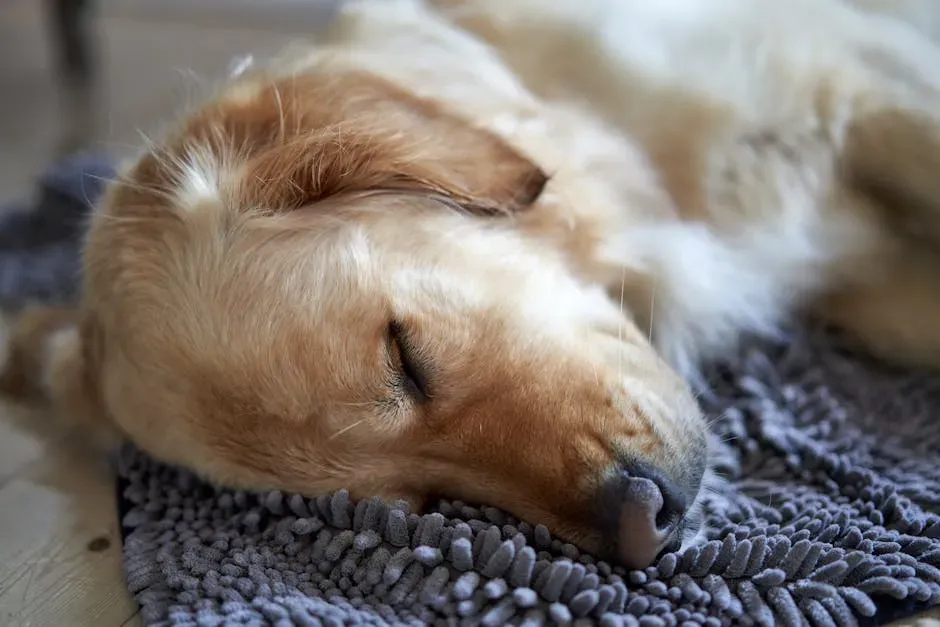
Doors closing, footsteps, the TV turning on – normally these small noises are enough to lift a resting dog’s head. But dogs in a true trust-based deep sleep will often sleep straight through disturbances that would otherwise wake them instantly.
This selective tuning-out is a direct result of how safe the dog feels in that moment. A dog’s brain filters environmental threats differently depending on perceived safety, which is why the exact same noise might startle them awake with one person and barely register with another. If your dog sleeps through chaos only when you’re close, their subconscious has already ruled you the designated lookout.
#12 – They Lean Their Full Body Weight Into You Before Sleeping
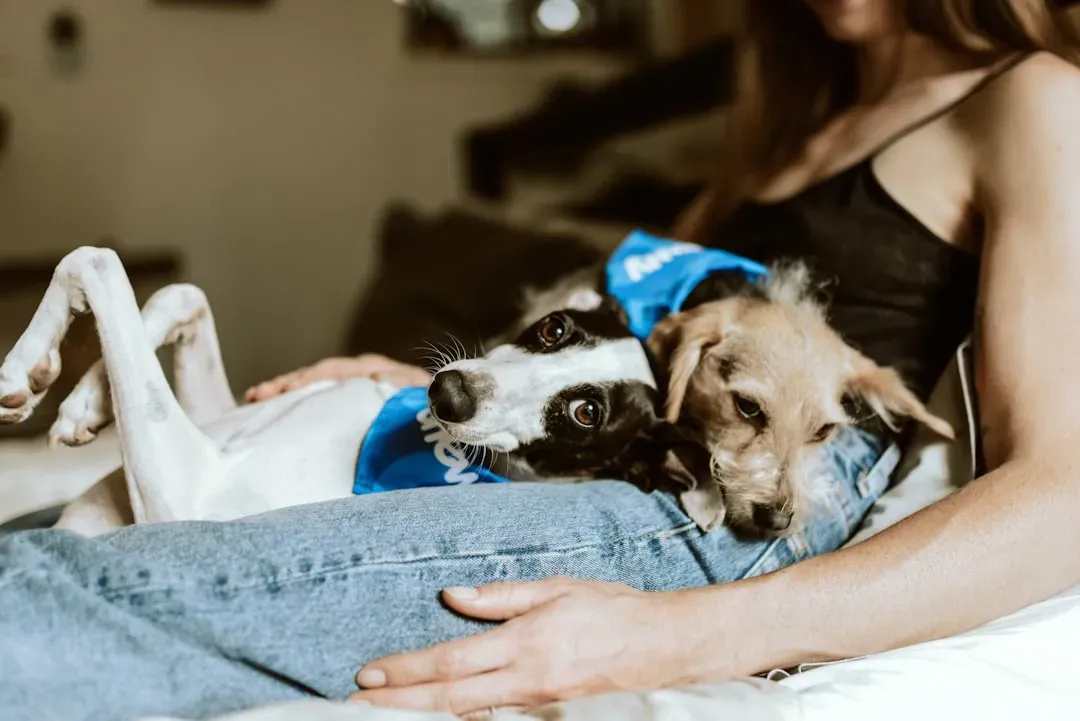
There’s a specific moment many owners recognize: the dog pressing its entire side or back into a leg or arm, gradually shifting more and more weight, until it’s basically using the person as a pillow. This isn’t accidental positioning – it’s a deliberate act of surrender.
Full-weight leaning is widely recognized among trainers as one of the strongest physical trust signals a dog can give. A dog that only does this with one specific person, while staying more self-supported around others, is drawing a clear emotional boundary. It’s their way of saying, “I don’t need to hold myself up around you.”
#13 – Their Tail Stays Loose and Still Instead of Tucked
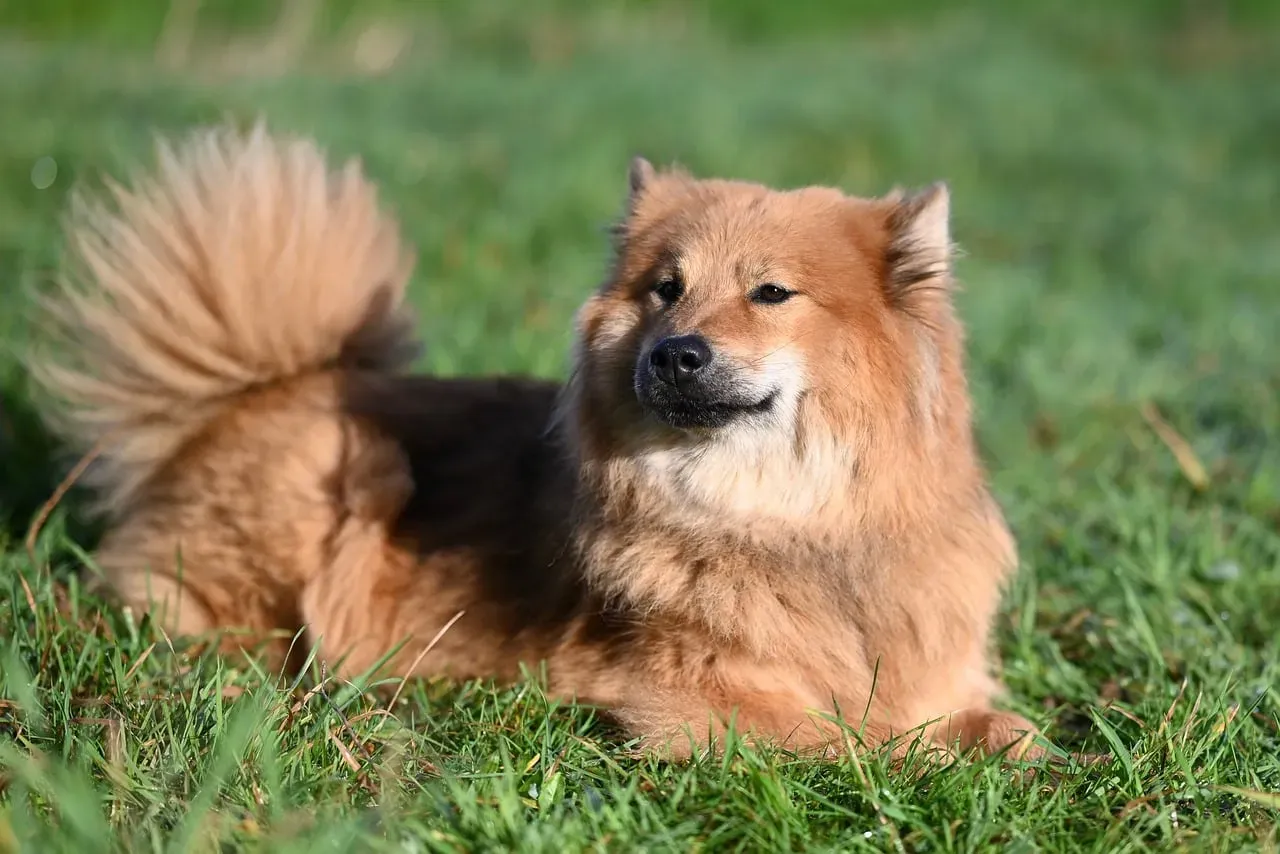
Even in sleep, a dog’s tail position can reveal underlying tension. A tucked or tightly curled tail, even in a resting dog, often signals lingering unease. A fully loose, relaxed tail lying flat or draped naturally is a different story entirely.
Owners who pay close attention often notice their dog’s tail position shifts depending on who’s nearby, even during near-identical sleeping positions. This tail relaxation pattern is consistent enough that some trainers use it as a quick, low-effort way to assess a dog’s comfort level with a specific person. A consistently loose tail around just one individual is a small detail with an outsized meaning.
Why It Stands Out
- It’s one of the few trust signals that can’t be encouraged with treats or toys – it has to be earned through consistency.
- It shows up in the dog’s body, not just its behavior, making it far harder to fake or misread.
- It tends to intensify rather than fade, unlike attention-seeking behaviors that plateau over time.
- It often predicts other trust behaviors, like calmer vet visits or less anxiety when that person is nearby.
#14 – They Return to the Same Spot Near You Repeatedly
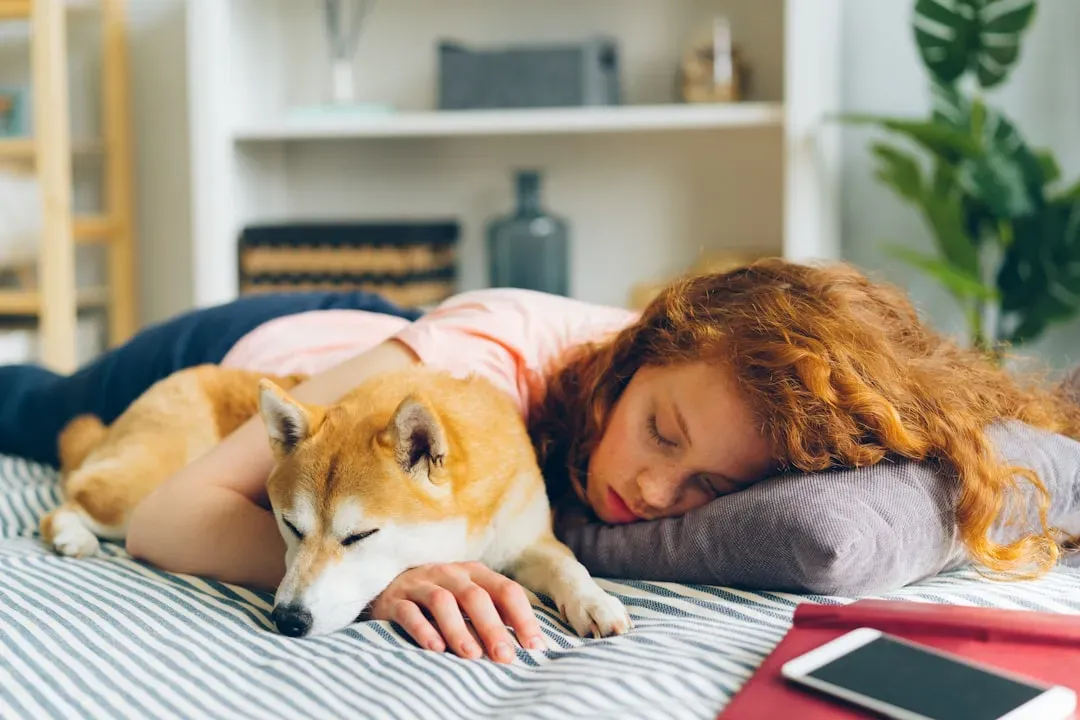
One nap next to a person could be coincidence. A consistent pattern, night after night or nap after nap, is not. Dogs that repeatedly choose the same specific spot near one person – regardless of where that person moves in the house – are demonstrating a clear, learned preference rather than random chance.
This behavior often intensifies over time rather than fading, which experts say reflects a strengthening bond. Repetition and consistency in resting location are considered stronger indicators of attachment than any single instance of closeness. If your dog trails you from room to room just to resettle beside you each time, that’s not clinginess – it’s a pattern built on trust that’s been reinforced repeatedly.
#15 – They Show Zero Resource Guarding Behavior With You Alone
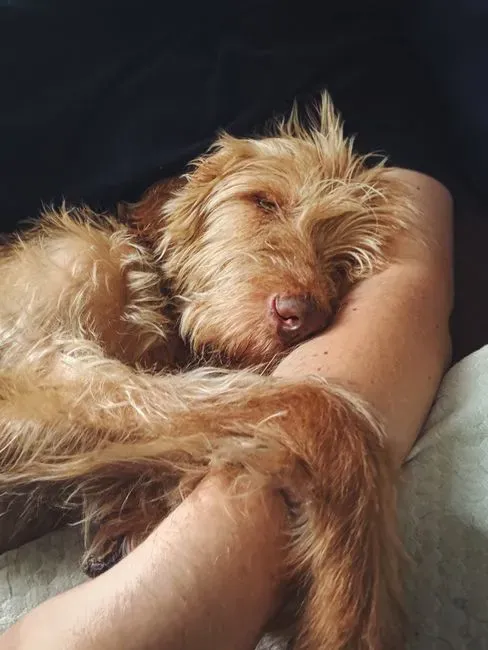
Some dogs, especially rescues or those with anxious tendencies, display subtle resource guarding even in sleep – stiffening, low growls, or curling protectively around themselves when approached. This tension often disappears entirely with one specific person, even if it persists with everyone else in the household.
This selective softening reveals a huge amount about the dog’s internal hierarchy of trust. A dog that allows one person to approach, touch, or move them during sleep without any defensive response has clearly ranked that person above perceived threats, even unconscious ones. It’s often the clearest, most telling sign of all – because it shows the dog’s guard isn’t just down, it’s completely gone.
The Bottom Line
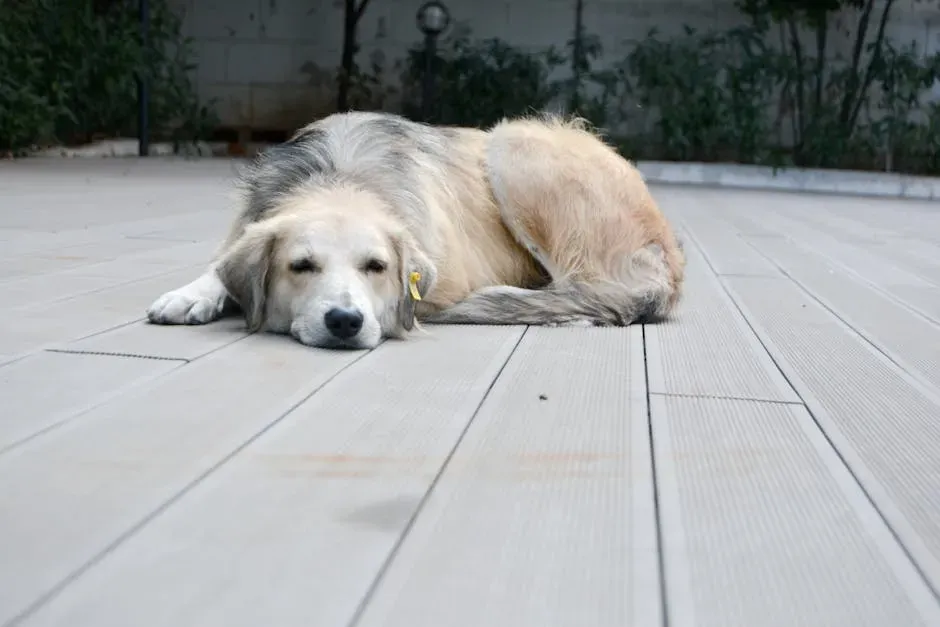
Here’s the part most dog owners never fully sit with: sleep is the single most honest behavior a dog can show you, and it can’t be faked, trained, or rushed into existence overnight. A dog’s deepest, most vulnerable rest is reserved almost exclusively for the person their nervous system has ranked as safest, and no amount of treats, toys, or forced cuddling can buy that kind of earned trust.
If you’re the one your dog fully collapses next to – eyes shut, muscles loose, breathing slow – that’s not a small thing. That’s a dog telling you, in the only language it has, that you’re the safest place it knows. Which of these signs does your dog show with you? Drop it in the comments – we’re curious how many people out there have a certified “chosen human” sleeping on their feet right now.