
Psychology Says Dogs Who Experienced Early Neglect Are Drawn to Humans Who Carry the Same Quiet Sadness
#1. What Early Neglect Actually Does to a Dog’s Inner World

Research published in Scientific Reports found that adverse experiences in the first six months of life, such as abuse and relinquishment, were significantly associated with increased aggression and fearfulness in adulthood, even when accounting for factors like sex and neuter status. This is not a minor behavioral quirk. It’s a rewiring that touches how a dog processes safety, threat, and connection for the rest of its life.
Previous canine studies have focused on situations of extreme adversity, such as dogs who were victims of abuse or neglect, providing strong evidence that traumatic experiences have a negative impact on fear and aggressive behavior, and that the first year of life is critical for development. The parallel to human developmental psychology is hard to ignore.
Dogs that have experienced abuse or neglect might develop anxiety due to their past, and these dogs typically show increased fear responses and might be fearful of specific people, objects, or situations. In practical terms, this means a neglected dog doesn’t just carry memories of pain. It carries a whole operating system shaped by the expectation of being let down.
#2. The Science of Emotional Contagion: Why Dogs Feel What You Feel
A study examining domestic dogs and humans tested their responses to auditory stimuli, including a crying infant, and found that cortisol levels in both humans and dogs increased significantly from baseline only after listening to crying. This wasn’t just a behavioral reaction. It was a shared physiological one, across species.
Emotional contagion, defined as emotional state-matching between individuals, has been shown in dogs even upon solely hearing negative emotional sounds of humans. Dogs expressed more behavioral indicators for arousal and negatively valenced states after hearing negative emotional sounds, a response pattern that indicates emotional state-matching, or emotional contagion, for negative sounds of humans. Put simply: your sadness becomes something the dog can feel in its body, not just observe.
Dogs have coexisted with humans for more than 30,000 years and are woven into human society as partners bonding with humans. They have acquired human-like communication skills and, likely as a result of the domestication process, the ability to read human emotions. This capacity isn’t accidental. It’s the result of tens of thousands of years of living side by side, learning to read us from the inside out.
#3. How Trauma Shapes a Dog’s Emotional Radar

The concept of the fawn response, alongside the more commonly known fight, flight, and freeze responses, represents a critical aspect of how both humans and animals react to trauma. The fawn response involves appeasing or pleasing behavior to avoid conflict or harm, often emerging when other responses have failed, and is particularly relevant in understanding certain behaviors in pets, especially those that have experienced trauma or neglect. A neglected dog doesn’t become indifferent to people. Often, it becomes hyperattuned to them.
Dogs that have experienced trauma, neglect, or frequent changes in their living environment during their critical socialization period may develop attachment issues. Insufficient exposure to various people, animals, and environments during a dog’s formative months can lead to fear and insecurity. What this produces, in many cases, is a dog that reads every room it enters with an almost forensic attentiveness, scanning for emotional cues before it decides whether to approach.
Dogs use their acute sense of smell to detect hormonal changes in humans, which helps them understand how people are feeling. When we’re stressed, we release cortisol, and dogs can sense this. Their keen observation skills also play a role, as they watch facial expressions and body language to gauge moods. A dog shaped by early loss has had those instincts sharpened by necessity, not choice.
#4. The Mirror Effect: Neglected Dogs and People Who Know Grief Quietly
Female college students with self-reported neglect during childhood reported a stronger attachment to companion animals compared to college students without self-reported neglect. The mirroring runs both ways. People who have known a particular kind of invisible pain tend to seek out, or be sought by, dogs who carry something similar.
The connection between a strong attachment to dogs and poor mental health may be partly due to these owners having an anxious attachment style towards other people, suggesting these owners may turn to their dogs for emotional support due to a lack of dependable human connections. This isn’t weakness. For many people, it’s the most honest relationship available to them, one without the fear of abandonment or judgment that often shadows human bonds.
Research findings revealed that the human-dog bond functions as a stable emotional anchor, promoting non-judgmental connection and emotional security. Participants reported experiencing greater emotional expression, enhanced social engagement, and improved psychological balance. Notably, people who tend to suppress their emotions around other humans often report feeling free to feel, fully, in the presence of their dogs.
#5. What This Bond Means, and What It Quietly Asks of Both of Them
Research has shown that when humans cry, their dogs also feel distress. Dogs not only feel distress when they see that their owners are sad but will also try to do something to help. The instinct is not passive. These dogs reach toward sadness rather than away from it, which is precisely what makes this particular bond feel so unusual to those inside it.
Dogs displayed more stress behaviors in the distress test than in the reading test, and evidence of emotional contagion supports the hypothesis that rescuing the distressed owner was an empathetically-motivated prosocial behavior. That’s a significant finding. The dog isn’t simply responding to a cue. Something closer to shared feeling appears to be involved.
Excessive reliance on companion animals might result in neglecting human social connections. It remains uncertain whether strong companion animal attachment induces depression and loneliness, or if individuals predisposed to these feelings are more likely to form close bonds with companion animals. This is the honest, unresolved question that both researchers and dog owners would do well to sit with. The bond can be genuinely healing. It can also, if it becomes a substitute for all human connection, carry its own risks.
Conclusion: Two Quiet Wounds, One Real Understanding
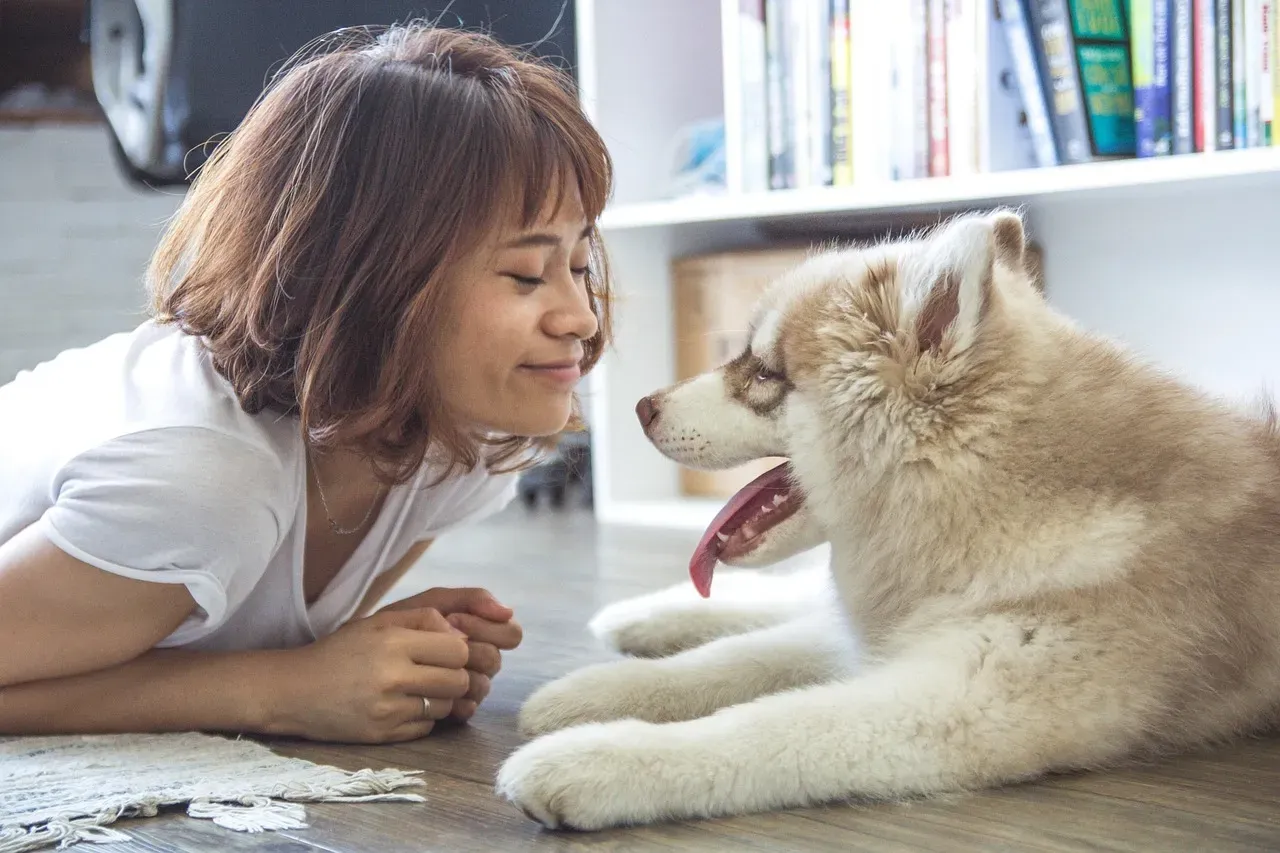
There’s something worth respecting in the idea that a dog who was never properly cared for still finds its way to the person in the room who needs gentleness the most. It’s not magic. The science points toward an evolved capacity for emotional attunement, shaped further by early trauma into something almost uncanny in its precision.
What this bond reveals, if you look at it honestly, is that grief recognizes grief. A dog who learned to read every human in a room for signs of danger ended up developing the very skill that makes it irreplaceable to someone who has quietly been doing the same thing their whole life. The neglected dog doesn’t fix the sad human. The sad human doesn’t fix the neglected dog. They just, sometimes, stop pretending they’re fine in each other’s company. That, in itself, might be enough.