
Psychology Says Dogs Can Sense When Their Owner Is About to Abandon Them – Here’s What They Do in Those Final 48 Hours
#1: They Begin Tracking Your Every Move
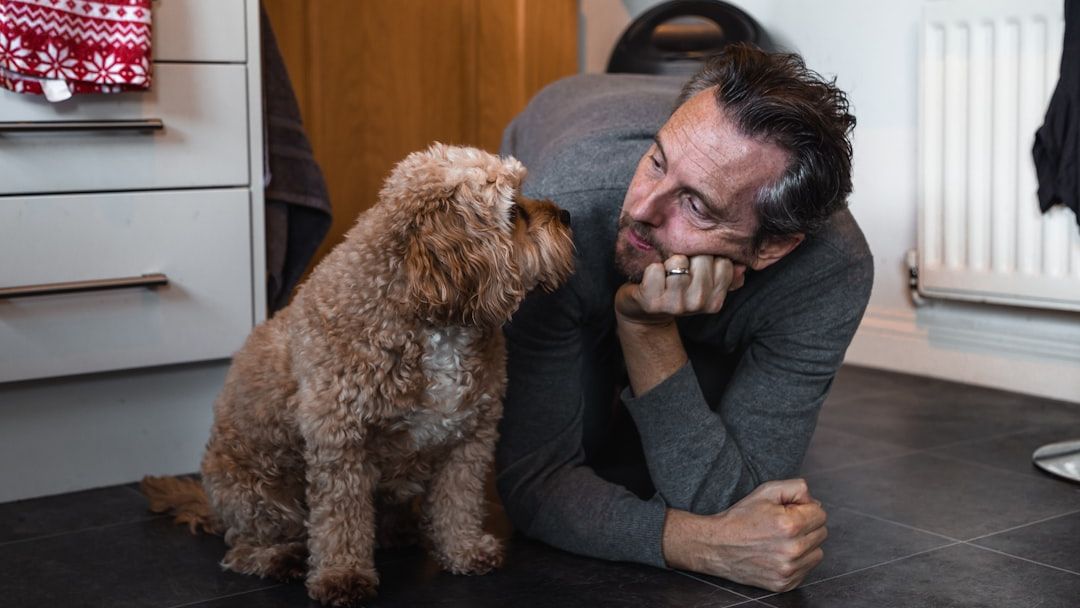
One of the first things many owners notice is a sudden, almost unsettling shift in how closely their dog shadows them. Most dogs with separation anxiety try to remain close to their owners, follow them from room to room, and rarely spend time outdoors alone. When this behavior intensifies suddenly, without an obvious cause, it’s often a sign that the dog has registered a shift in the household’s emotional atmosphere.
Dogs are highly social animals that develop a strong affectional bond with their human partners, showing specific patterns of attachment behavior. Abandonment and bond disruption represent a strongly traumatic experience for a dog, as they imply a radical change in the dog’s environmental and social conditions. This means a dog’s tracking behavior isn’t random affection overflow. It’s an attempt to stay close to the one stable anchor they know before that anchor disappears.
Dogs with separation anxiety show symptoms in the absence of their pet parent, and often prior to their departure. The following behavior, then, is less about clinginess and more about anticipation. Your dog is not just being sweet. They’re bracing.
#2: They Can Literally Smell the Change in You
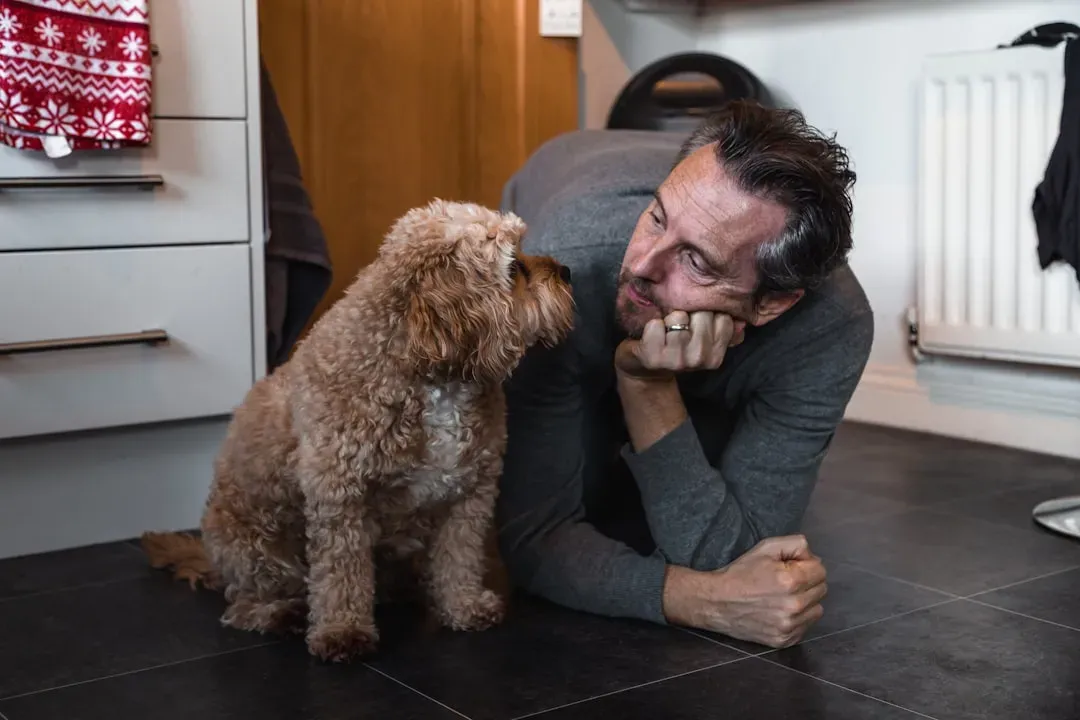
This is where things get genuinely remarkable. The idea that a dog can sense your mood isn’t folklore. There is evidence that dogs can detect an odour associated with acute stress in humans from breath and sweat alone, which provides a strong foundation for future investigations into areas such as emotional contagion. When an owner is wrestling with the decision to surrender or rehome a pet, the emotional stress involved is real and physiological.
Research reports that the long-term cortisol level of pet dogs mirrors that of their owners. This finding was unrelated to exertion or exercise, suggesting that the cortisol levels were a product of psychological, rather than physical, stress. In other words, when you’re under the kind of emotional pressure that comes with a difficult decision, your dog’s body is literally keeping pace with yours. They’re not guessing. They’re reading chemical signals that the human nose can’t detect.
Dogs exposed to a stressed person’s smell were slower to approach a new bowl, indicating that the dog was less optimistic about finding a reward there. This effect was not seen when dogs were exposed to the smell of a relaxed person. That measurable shift in a dog’s confidence and emotional outlook tells us that your inner state isn’t private, not to your dog.
#3: They Become Vocal and Restless in Unusual Ways

A dog that suddenly starts whining without provocation, howling at nothing, or barking in a way that seems directionless may be expressing something far more specific than boredom. Vocal responses such as whining, howling, and barking could precede departure and persist for a longer period in comparison to other behavioural responses presented preceding departure of the owner. This vocalization often confuses owners who interpret it as bad behavior or attention-seeking.
Both specific and non-specific behaviors have been observed, including destruction of objects, escape attempts, intensive vocalization and salivation, or inappropriate urination and defecation. These aren’t tantrums. They’re distress signals from an animal that has detected something wrong in its environment and has no language to ask about it directly.
Once separation anxiety is established, the behaviors are triggered by signs that the owner is about to leave. The challenge is that during the pre-abandonment period, even ordinary household routines can trigger these responses because the dog has already calibrated its alarm system to your shifting emotional baseline. Every car key lifted, every bag packed, becomes a potential trigger.
#4: They Seek Unusual Physical Contact and Comfort Behaviors

In those final hours or days, many dogs attempt to intensify physical closeness in ways that fall outside their normal habits. Dogs from adverse backgrounds engaged in greater contact and exhibited more relaxed behaviors and social referencing when their owners were present. This seeking of contact is an attachment behavior, a biological strategy for managing the anxiety that comes with perceived threat to a core bond.
Dogs are sensitive to human attentional states, respond discriminately to human visual and auditory emotional signals, and provide emotional comfort to humans. So that dog pressing its head into your lap, leaning hard against your leg, or pawing at you repeatedly isn’t just asking for pets. It may be performing its own version of an emotional check-in, trying to confirm that the bond is still intact.
Physiological and behavioral data suggest that dogs and owners synchronize their emotions. This synchronization runs deeper than most people realize. The physical contact a dog seeks during a high-stress period is partly self-soothing and partly an attempt to reestablish that emotional sync. When you pull away, even emotionally, they notice.
#5: They Lose Interest in Food, Play, and Normal Routine

A dog going off its food is often one of the more alarming signs that something is genuinely wrong. Many dogs become withdrawn after losing their family. They may lose interest in food, play, or interaction and display symptoms akin to clinical depression in humans. This pattern can begin before an abandonment actually occurs, particularly if the household tension has been building over days.
Confinement in a shelter environment is stressful for dogs, resulting in measurable behavioral and physiologic changes. They experience a new environment with new scents, sounds, unfamiliar people, and unfamiliar animals. They are also often separated from previous attachment figures. This stress can decrease welfare and contribute to behavior changes. The behavioral shutdown some dogs experience isn’t a phase. For many, it represents a fundamental disruption to everything their nervous system relied upon.
Dogs don’t understand why they’ve been left behind. They can’t comprehend that you’re facing financial hardship, that your landlord won’t allow pets, or that you’re dealing with a personal crisis. All they know is that the family they loved and trusted is gone, and they’re suddenly in a frightening, unfamiliar place. The withdrawal from play and food during the days before surrender is, in many ways, grief beginning before the loss has even officially happened.
A Final Thought Worth Sitting With

The science here isn’t meant to generate guilt, though for some readers, that may be an unavoidable side effect of reading it. What it does do is close the door on the comfortable belief that dogs don’t really understand what’s happening to them. They do. Not in language, not with abstract reasoning, but through chemistry, emotion, and the kind of deep attunement that comes from thousands of years of living alongside humans.
While many dogs do adapt to new environments over time, others may carry the trauma of being surrendered with them indefinitely. Rescue organizations often note that dogs with such histories can develop separation anxiety, display extreme clinginess, or become fearful in new situations. For some, the emotional scars may never fully heal without proper training and consistent emotional support.
If there is any honest takeaway from all of this, it’s that the bond between a dog and its owner is not decorative. It’s biochemical, it’s mutual, and it’s fragile in ways that matter. The behaviors described here aren’t pleas for attention. They’re a dog using every tool available to it, from scent detection to physical closeness to restless vocalization, to hold onto the one relationship that defines their world. Whether that changes a decision or simply reframes how we see our dogs, it’s worth knowing.