
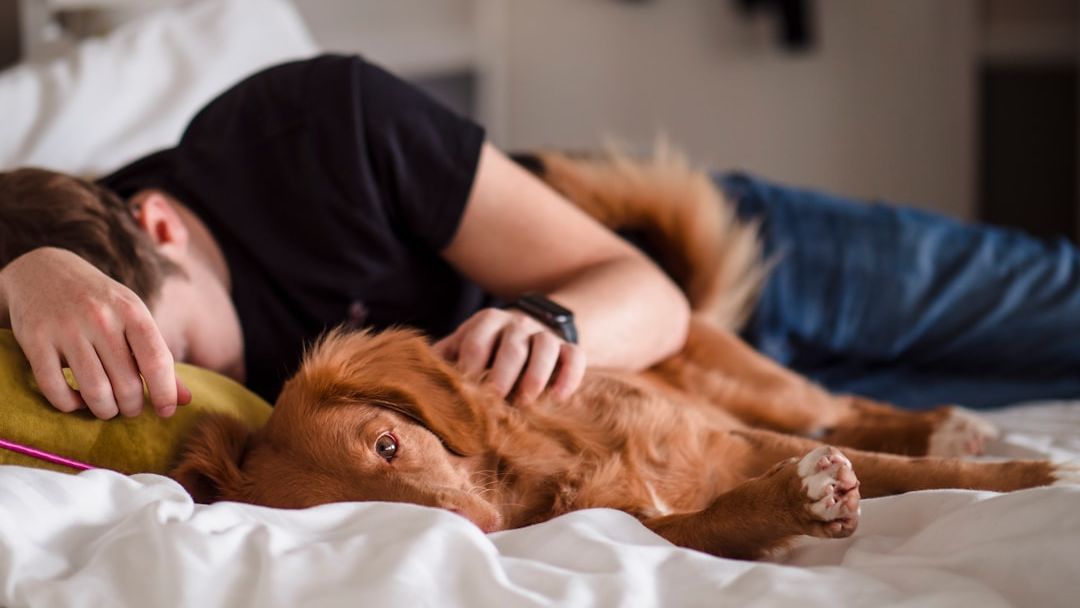
You probably think you know your dog pretty well. The way they follow you around, drop a toy at your feet, or curl up against your legs feels familiar, even comforting. But here’s what most dog owners never realize: a surprising number of those everyday moments aren’t about your dog at all. They’re about you. Your dog has been quietly reading you, worrying about you, and trying to help you – and it’s been hiding in plain sight the whole time.
Dogs can detect shifts in your cortisol levels, your breathing pattern, and your body language long before you consciously register that something’s wrong. What registers as a random quirk or a bid for attention is often something far more deliberate. The 15 behaviors below will completely change how you see the dog sitting next to you right now.
#15 – Following You Room to Room
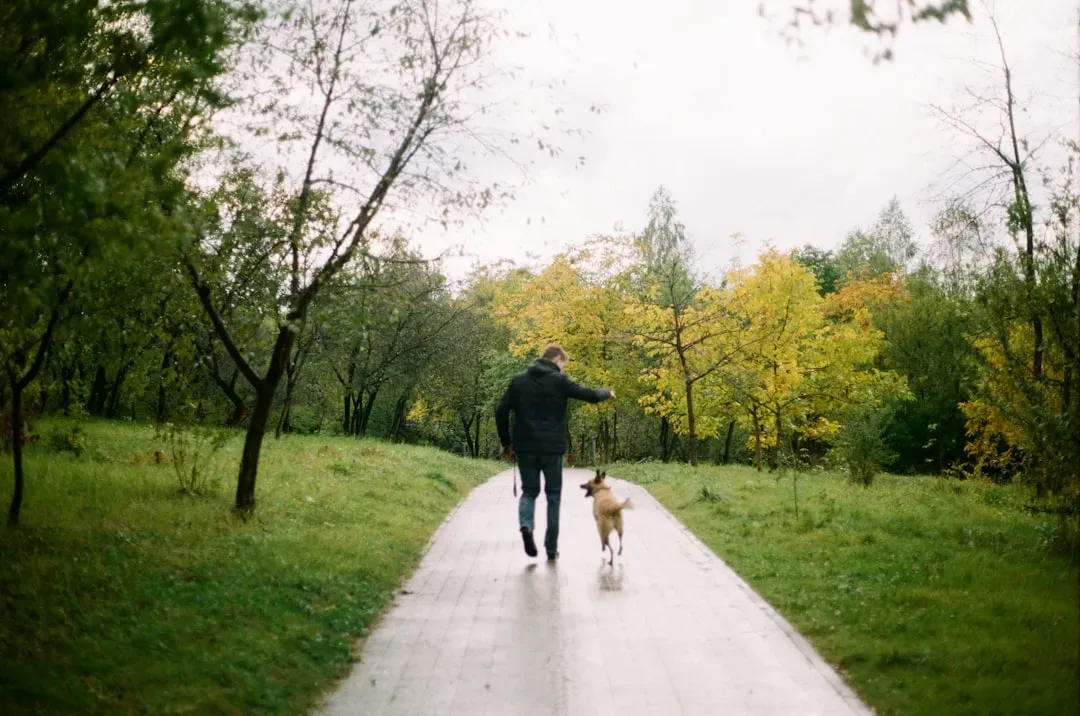
Most owners file this one under “separation anxiety” or sweet, clingy loyalty. But there’s a difference between a dog who panics when you leave the house and a dog who simply can’t stop trailing you from the kitchen to the bathroom and back again. The second type isn’t anxious about being alone – they’re anxious about you. They’ve picked up on something in your posture, your scent, or the rhythm of your breathing that doesn’t quite match your usual baseline.
Dogs can detect changes in cortisol levels through human sweat before a person consciously feels stressed. That velcro behavior – the nose practically at your heel with every step – is their version of keeping watch. They’re not bored. They’re monitoring. And once you start noticing when it happens versus when it doesn’t, the pattern becomes hard to unsee.
Fast Facts
- Research from the University of Bristol found that untrained dogs can distinguish stressed human scent from relaxed scent using breath and sweat samples alone.
- Dogs detect stress via volatile organic compounds (VOCs) – chemical changes tied to the body’s acute stress response.
- In studies, dogs exposed to a stressed stranger’s scent became more cautious and hesitant – even with no visual or audio cues present.
- Dogs co-evolved with humans for over 30,000 years, developing finely tuned sensitivity to our emotional states.
- This stress-detection ability appears even in dogs with no special training – it’s instinct, not a learned trick.
#14 – Offering Toys Unprompted
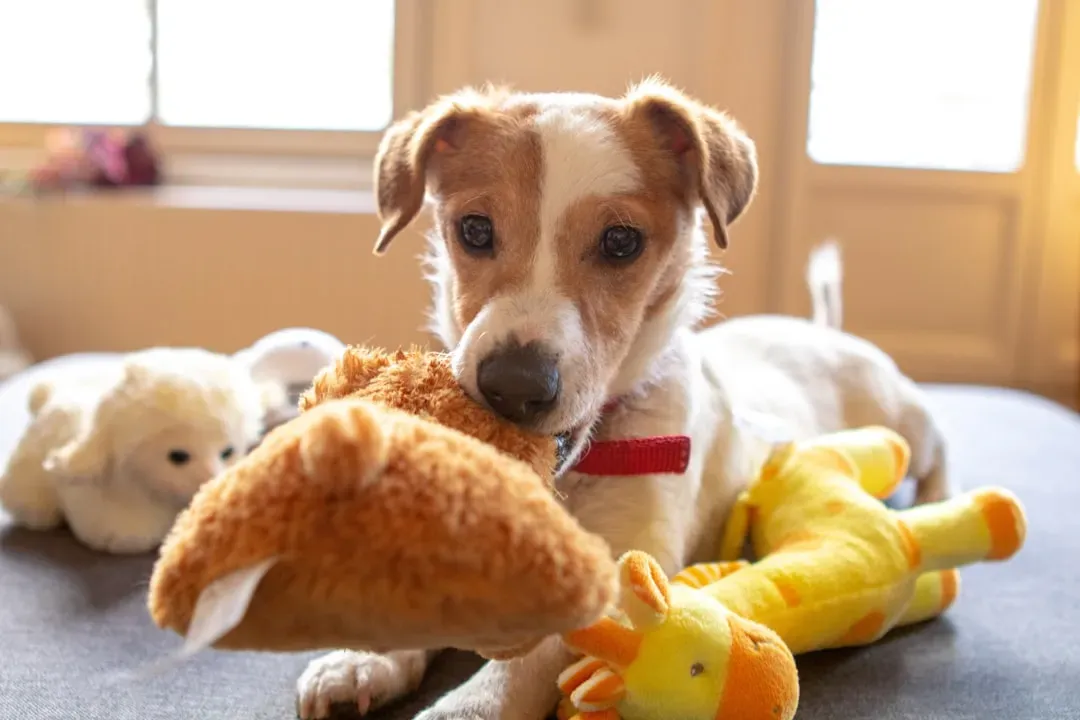
A dog dropping a tennis ball at your feet during a tense phone call looks adorable and a little goofy. It’s easy to laugh it off as a plea for attention. But watch the timing more carefully. These toy offerings tend to spike during arguments, after bad news, or in the heavy silence that follows a stressful day – not during the relaxed Sunday afternoons when a dog who simply wanted to play would have the most logical reason to ask.
Dogs learn – genuinely learn, through repetition – that play shifts human energy. When your face tightens and your voice changes, they go get the thing that has historically made you smile and brought the tension down. It’s not random. It’s a deliberate, caring attempt to fix what they can feel is wrong with you. The toy is their toolkit, and they’re using it on purpose.
#13 – Frequent Yawning Without Tiredness
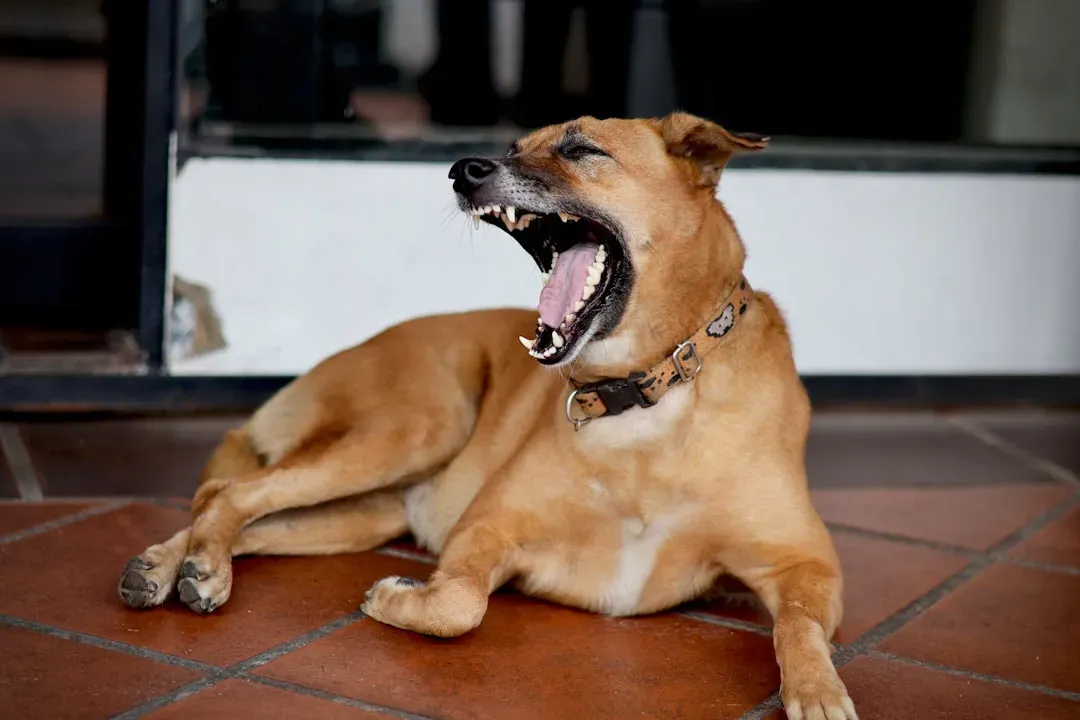
A yawn in a warm room seems completely unremarkable. But canine behaviorists have long identified yawning as a “calming signal” – a displacement behavior dogs use to release tension and communicate non-threat when the emotional temperature around them rises. When your dog yawns while you’re venting to a friend on the phone or sitting rigidly in front of a screen, they’re not bored. They’re uncomfortable because you are.
The tell is in the clustering. A dog who yawns from fatigue does it while settling down, stretching out, getting drowsy. A dog who yawns from concern does it in bursts tied to your emotional spikes – when your voice gets clipped, when you go quiet in that particular way, when the energy in the room shifts. Track it for a week and you’ll be surprised how rarely those yawns line up with actual tiredness.
Worth Knowing
- Canine behavior expert Turid Rugaas first catalogued yawning and lip licking as formal “calming signals” – a dog’s language for defusing social tension.
- A stress yawn often looks slightly exaggerated – mouth opened extra wide, tongue curled, sometimes followed by a small head shake.
- Studies confirm dogs show yawning contagion with humans, especially their own owners – more so than with strangers.
- Context is everything: yawning while settling into bed is tiredness; yawning while you argue on the phone is something else entirely.
#12 – Subtle Lip Licking in Your Presence
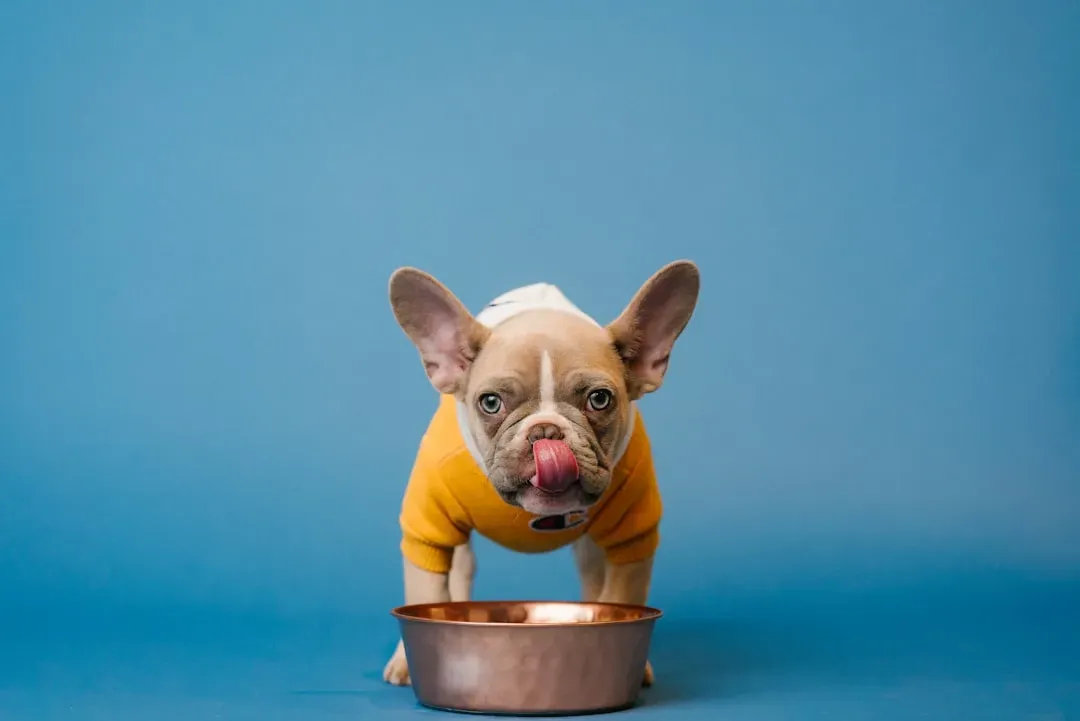
A quick tongue flick usually gets dismissed as leftover dinner interest or just a grooming tic. But when your dog lip-licks while sitting beside you on a quiet, food-free evening when you’re visibly upset, something else is happening. That flick is a self-soothing reflex and an appeasement signal rolled into one – the dog’s way of managing their own anxiety while also trying to signal to you that everything is okay, that they mean no harm, that things can calm down now.
The overlooked detail is how precisely it tracks with your micro-expressions. Dogs are extraordinarily good at reading human faces – research has shown they process emotional cues in human expressions in ways that are remarkably similar to how we do. When your jaw tightens or your brow furrows, your dog catches it before the moment fully registers on your face. The lip lick that follows isn’t coincidence. It’s a response to exactly that.
#11 – Leaning or Pressing Against Your Legs
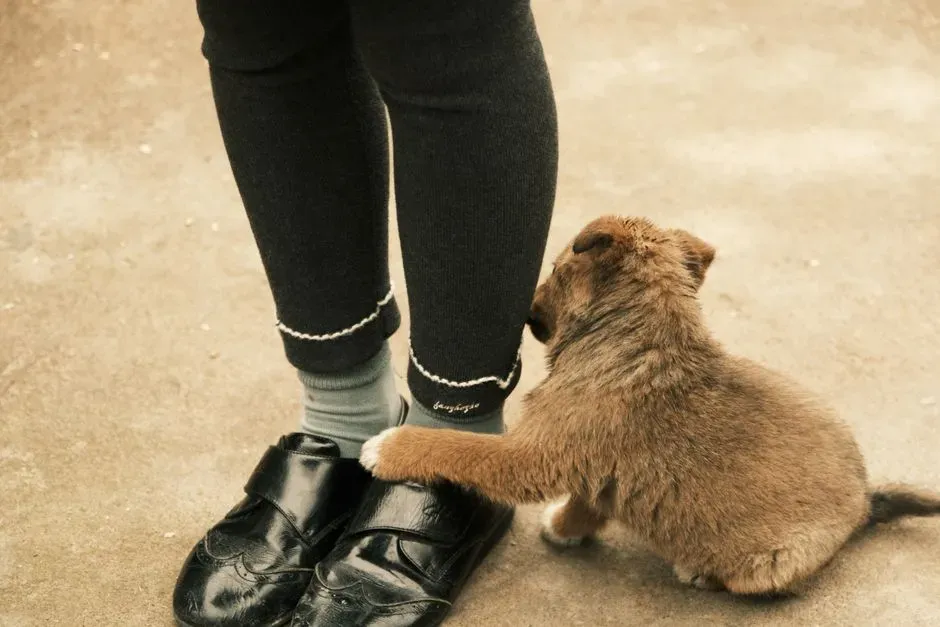
Leaning feels like your dog just wants warmth or pets, and sometimes that’s exactly what it is. But the version that appears on your worst days – the solid, quiet press of their full body weight against your legs when you haven’t asked for it and aren’t offering anything – that one has a different quality to it. It’s grounding. For both of you, actually. Physical closeness like this helps dogs regulate their own stress response while simultaneously offering you something steadying through touch.
It’s a deliberate choice, not laziness or coincidence. Dogs who lean during your low-energy or high-stress moments are positioning themselves to feel your heartbeat and your breathing and to stay close enough to respond if something changes. Studies have linked increased contact-seeking behavior in dogs to periods when their owners report higher anxiety levels. Your dog doesn’t need you to say a word. They already know.
#10 – Holding Prolonged Eye Contact With Whale Eye
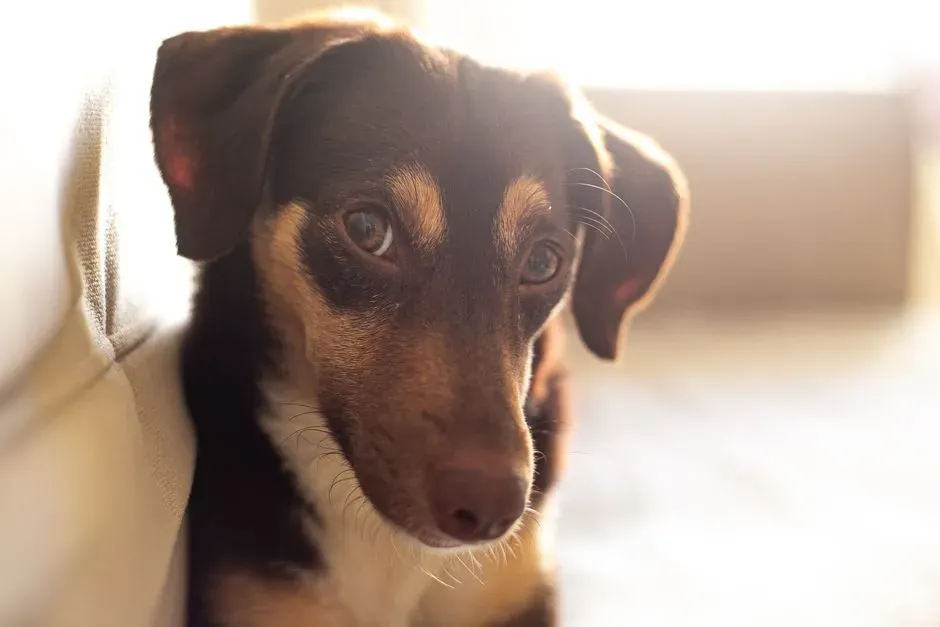
Steady eye contact from a dog is often read as affection, or occasionally as a dominance challenge, depending on who you ask. But there’s a specific version that means something different entirely: the long, unblinking stare where you can see the whites of their eyes – what’s called “whale eye” – paired with a stillness that feels almost watchful. That’s not begging for a treat. That’s heightened vigilance. Your dog is tracking you because they’ve detected something worth tracking.
The combination of the held stare plus the visible sclera appearing specifically in moments of human stress is what canine behavior specialists point to as the key distinction. It’s the visual equivalent of a friend leaning slightly forward and asking, “Are you actually okay?” in a quiet room. They’re not waiting for a command. They’re monitoring your face for information, running a constant scan, and staying ready to respond to whatever comes next.
At a Glance: Worried-Watch vs. Normal Eye Contact
- Normal gaze: Soft eyes, relaxed body, often breaks away, paired with a loose tail or relaxed mouth.
- Worried watch: Sustained, unblinking, whites of the eyes visible, body stiff or very still.
- When it happens: Worried-watch stares cluster around raised voices, heavy silences, or tense body language – not treat time.
- What follows: Often a check-in behavior – a paw tap, a lean, or a move to stay physically closer to you.
#9 – Pacing Nearby Instead of Settling
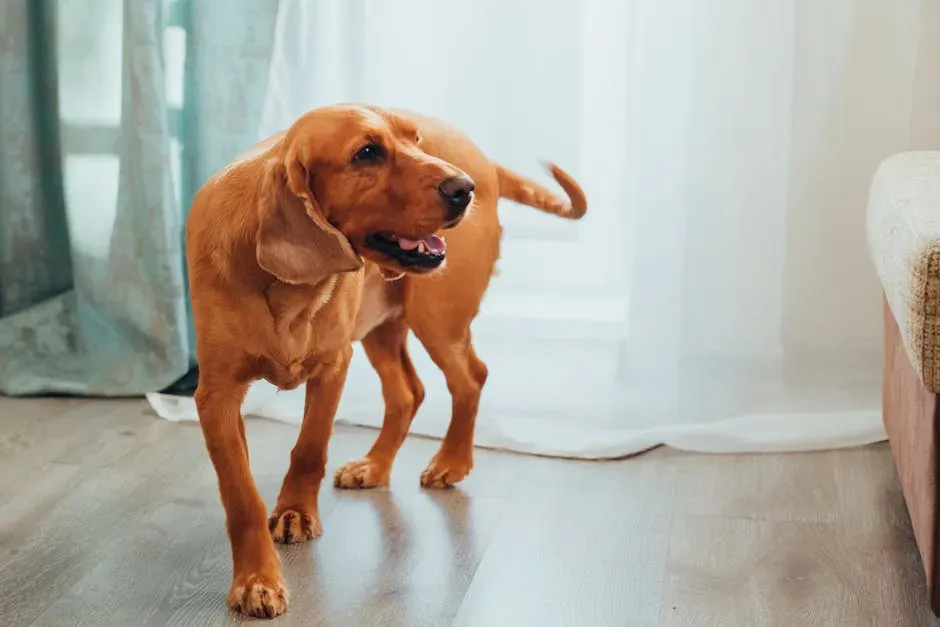
A dog wandering back and forth in your peripheral vision seems like restlessness – they need a walk, they’re bored, they want something. But the pacing that happens in a dog who had a calm morning and hasn’t been under-exercised looks different. It’s contained. It stays close to you. They don’t wander to the other end of the house; they orbit the room you’re in, unable to settle because you haven’t settled yet.
This behavior intensifies in homes where emotional volatility is more frequent – not because the dog is neurotic, but because they’ve learned that their person’s unsettled energy doesn’t resolve quickly, and rest feels impossible before it does. When you finally exhale and drop your shoulders, watch them. Odds are good they’ll choose that exact moment to curl up and go still. They were waiting for you to be okay first.
#8 – Bringing Random Household Items
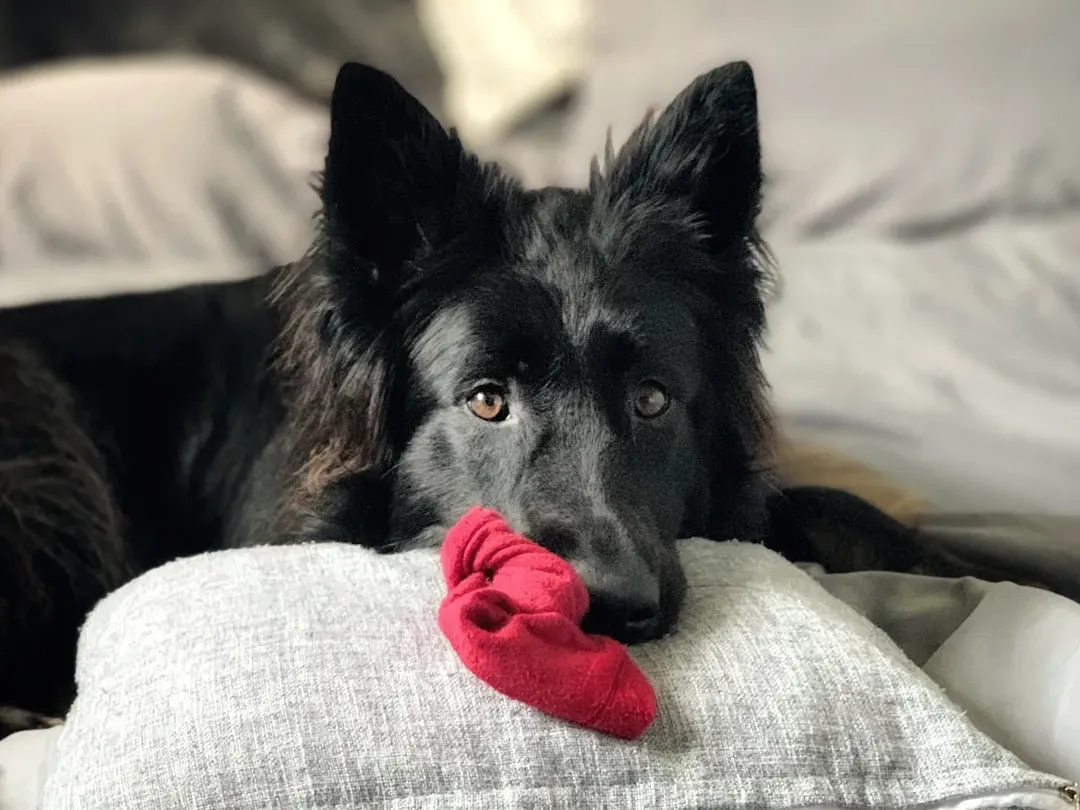
Stolen socks, the TV remote, a shoe that is definitely yours – it’s easy to chalk this up to mischief or play-soliciting, and sometimes it is. But when these deliveries happen during your sick days on the couch, after a visibly difficult phone call, or in the middle of tense household silence, the timing tells a different story. Dogs associate objects tied to positive interactions with comfort and connection. They’re pulling from their toolkit again, offering something that has historically brought you back to them.
There’s something genuinely touching about it when you reframe it. Your dog doesn’t have words. They can’t bring you tea or tell you it’s going to be okay. But they can bring you the thing that smells like you and hope it helps. Behavior observations show these item deliveries tend to peak during documented stress events at home – not during the calm, unremarkable afternoons when a purely playful dog would have just as much reason to drop something at your feet.
#7 – Stiff or Low Tail Wags During Interactions
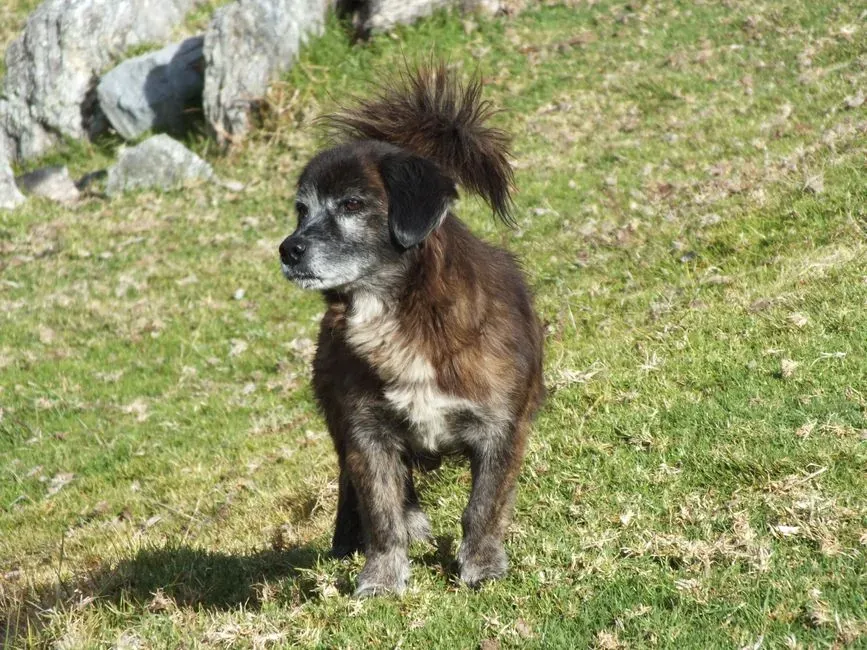
Everyone knows a wagging tail means a happy dog. Except it doesn’t – not always, and not fully. The tail is more like a mood dial than a binary happy/unhappy switch, and most people have never been taught to read the full range. A stiff, low, rapid wag during a moment when your voice has risen or your energy has dropped is a conflicted signal. It says: I want to connect with you, and I’m also on alert because something feels wrong here.
Tail carriage changes are one of the clearest physiological responses dogs have to human emotional shifts, and they happen fast – often within seconds of a change in your tone or body language. The dog isn’t less happy to see you. They’re holding two things at once: the desire to be close and the awareness that the emotional weather in the room has changed. That low, careful wag is them navigating both at the same time.
Quick Compare: Happy Wag vs. Worried Wag
- Happy wag: Wide, loose, whole-body sweep – often includes a wiggling rear end and relaxed ears.
- Worried wag: Stiff, low, rapid – tail held below the spine line, body relatively still.
- Conflicted wag: Medium height, slower tempo, paired with whale eye or a slightly lowered head – watching you carefully.
- Key rule: Always read the tail with the rest of the body. The tail alone is only half the message.
#6 – Resting Head on Your Lap More Often
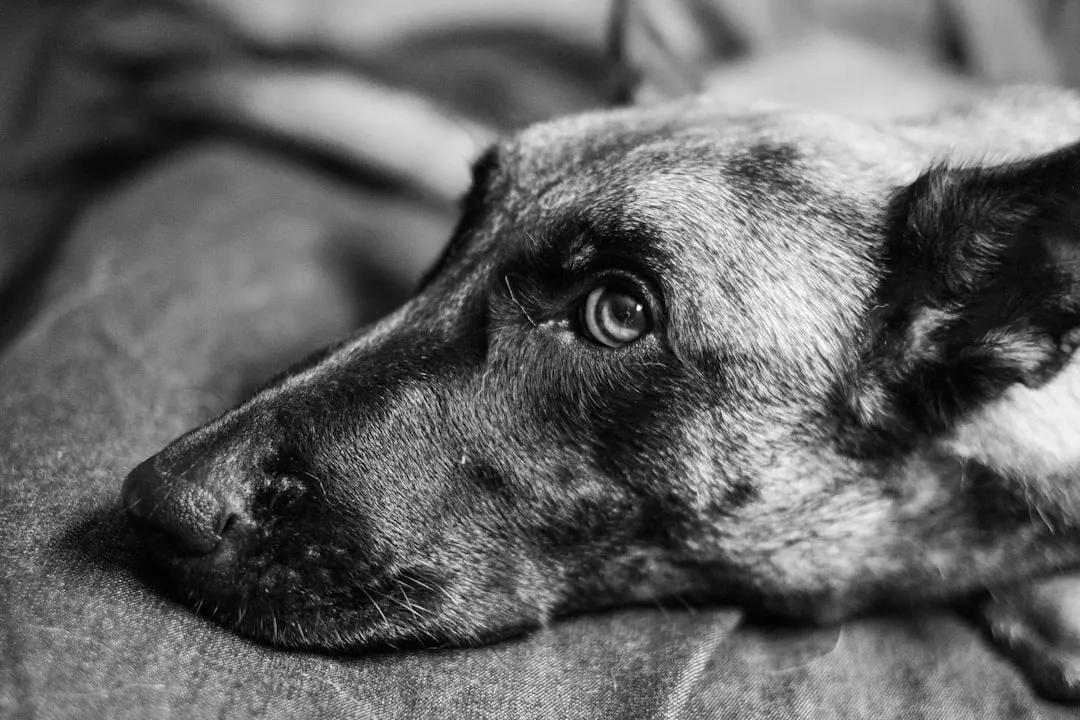
Head-on-lap is arguably the most universally understood dog gesture of affection. It’s warm, it’s simple, and it’s easy to accept at face value. But pay attention to the frequency shifts. A dog who normally rests their head on your lap a few times a week becoming a constant, gentle weight across your thighs on your bad days is doing something more intentional than routine snuggling. They’re positioning themselves to feel your heartbeat. They’re staying close enough to notice if your breathing changes.
The mutual regulation happening in these moments is real. Physical contact with a calm animal measurably reduces human cortisol and heart rate – and dogs seem to know this, or at least behave as if they do. The timing correlation between increased head-resting and owner-reported bad days is stronger than you’d expect from a creature simply seeking warmth or comfort for themselves. They’re not just taking. They’re offering something deliberate.
The dog has seldom been successful in pulling man up to its level of sagacity, but man has frequently dragged the dog down to his.
James Thurber
#5 – Soft Sighing or Whining Sounds
A quiet sigh as your dog settles onto their bed sounds like pure contentment, and often it is. But there’s another version – the soft, almost conversational sigh or the low, barely-there whine that surfaces when you’re sitting across the room, tense and quiet, not interacting with them at all. That one isn’t about comfort or tiredness. It’s a low-level vocalization of worry, a sound that says: I notice something is wrong and I don’t know how to fix it.
These sounds rarely increase in relaxed, predictable households. They cluster around human emotional stress the way clouds cluster before rain – not caused by the dog’s own discomfort, but by their reading of yours. Multi-dog homes make this even clearer: when the sighs and soft whines come from more than one dog simultaneously, and no one has moved, no one is hungry, and nothing environmental has changed, the only variable left is the person in the room.
#4 – Shifting Sleep Spots Closer to You
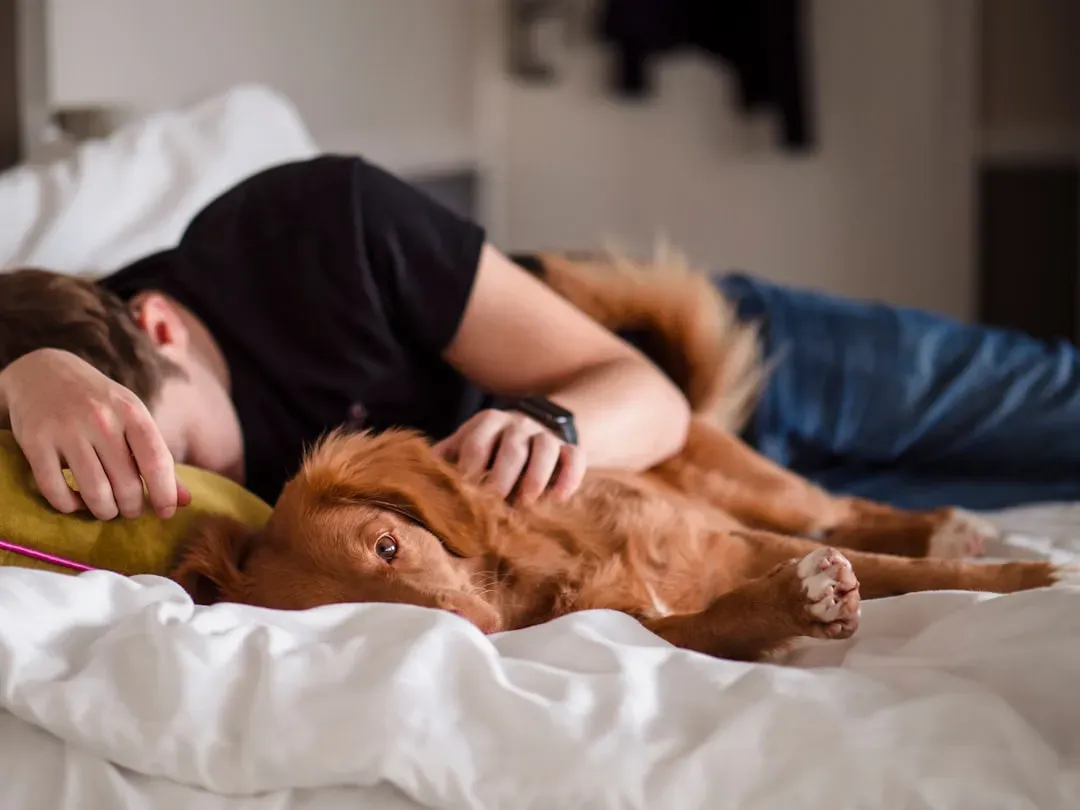
Dogs are creatures of comfortable habit. Most pick a sleeping spot and stick to it for months. So when your dog starts migrating – pulling their bed closer, abandoning a favorite corner to sleep at the foot of yours, choosing the hallway outside your door over the living room couch – it’s worth asking why. This isn’t a coincidence driven by temperature or boredom. It’s a protective repositioning in response to something they’ve detected in you.
Owners who track these sleep location changes often realize, in retrospect, that the migrations lined up with periods of personal health trouble, high work stress, or emotional difficulty they hadn’t fully acknowledged at the time. Proximity allows your dog to monitor your nighttime sounds, your movement, even the subtle changes in your breathing while you sleep. They’re not just sleeping near you. They’re keeping watch.
#3 – Gentle Pawing or Tapping You
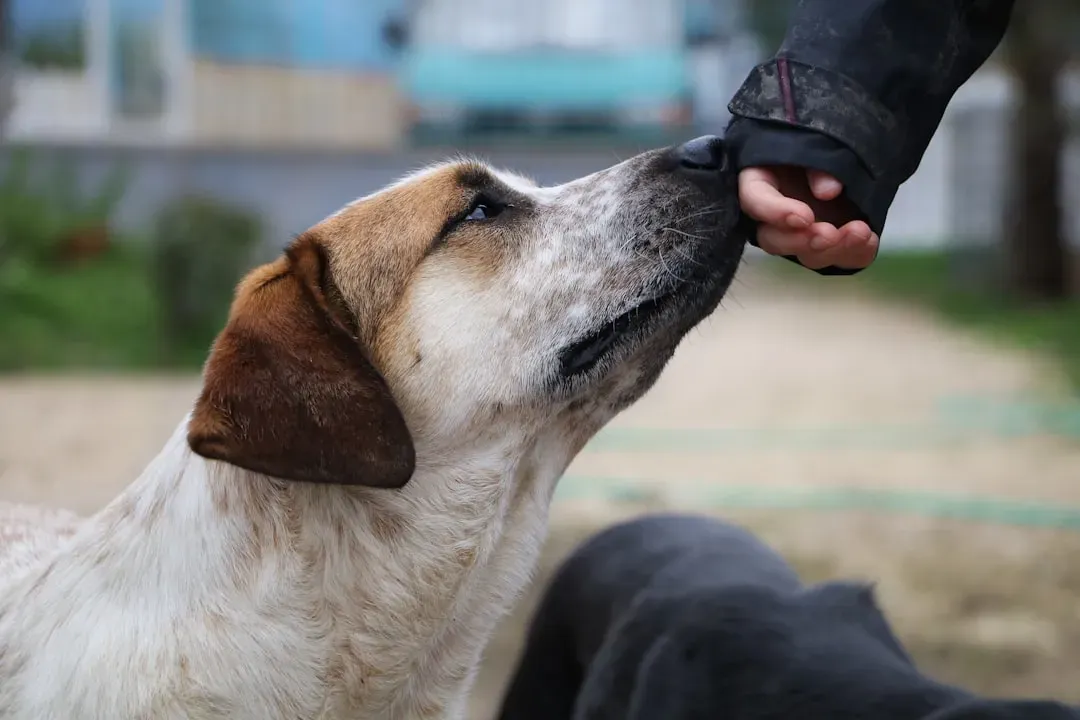
A paw landing on your arm is easy to read as “pay attention to me” – and a demanding, repeated version usually is exactly that. But the gentle tap, the single soft press of a paw on your knee or your hand when you’ve gone quiet and withdrawn, has a completely different character. It’s a check-in. It’s your dog reaching out to assess your state through touch, trying to establish contact in the only physical language they have available.
The gentleness is the distinguishing feature. Demand behaviors are persistent, often escalating, and aimed at getting a response. The worried tap is softer, often single, and followed by a watching pause – as if your dog is waiting to read your reaction before deciding what to do next. This action measurably rises when owners are displaying low-energy, withdrawn body language. They’re not demanding attention. They’re checking to make sure you’re still okay.
#2 – Light Panting With No Physical Exertion
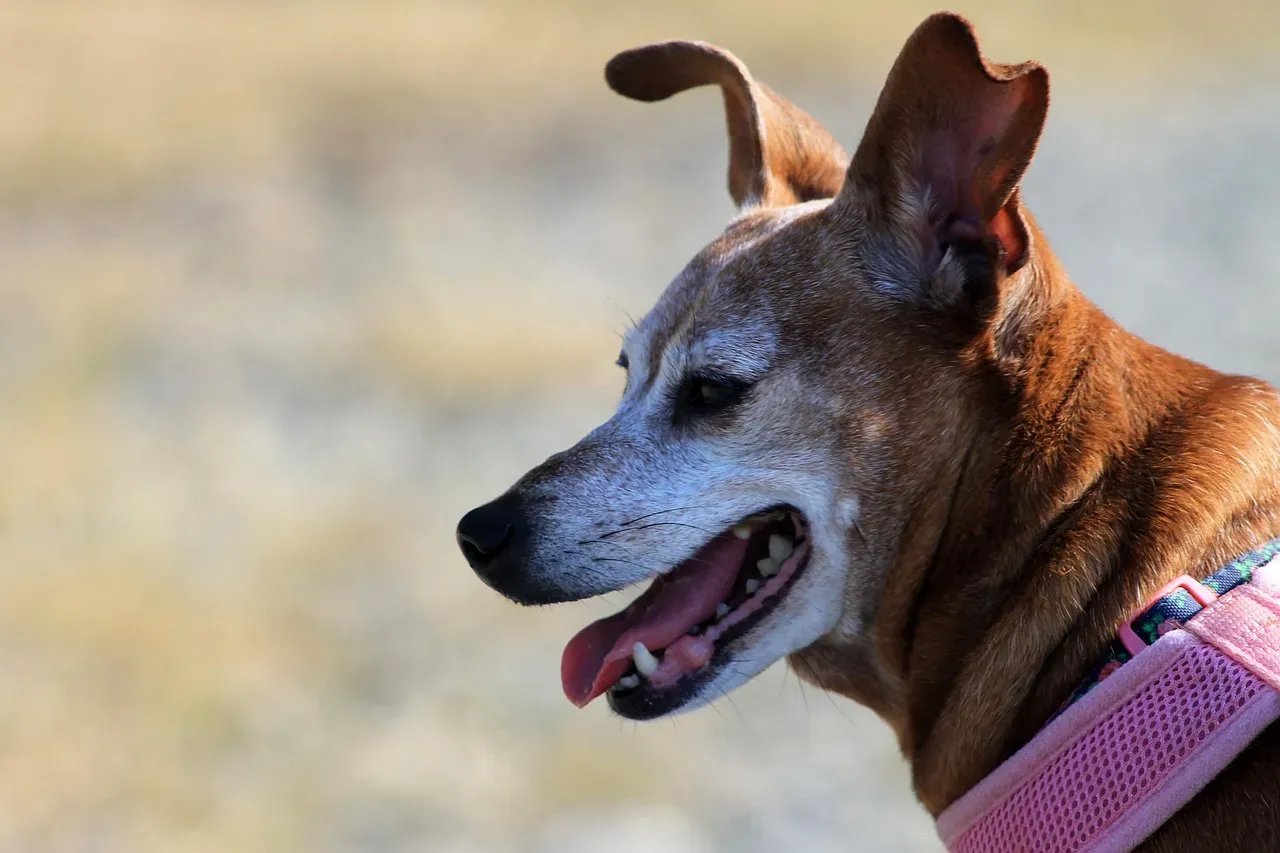
Panting after a run makes obvious sense. Panting on a cool evening when your dog hasn’t moved from the couch in an hour is something else. This kind of panting – light, slightly elevated, appearing when you’re visibly stressed or anxious – is a sympathetic stress response. Your dog has absorbed your physiological state and is reflecting it back. Their nervous system has picked up on yours, and their body is responding accordingly.
Veterinary behaviorists have linked unexplained panting episodes more frequently to owner anxiety than to environmental factors like heat or noise. That’s a striking finding, because it means your dog’s body is literally responding to your internal state – not just your behavior. If you’ve ever felt like your dog “just knows” when something is wrong without you saying a word or doing anything obvious, this is part of the mechanism. They aren’t reading your mind. They’re reading your body, and they’re doing it better than most people could.
Fast Facts
- VCA Animal Hospitals confirm: panting without prior exercise is a recognized sign of stress in dogs – not just overheating.
- Research published in Nature Scientific Reports found that dog and owner cortisol levels follow remarkably similar patterns – when yours rises, theirs typically follows.
- Emotional contagion studies show dogs’ heart rate variability (HRV) shifts in sync with their owners’ during emotional exchanges.
- Stress-related panting often appears suddenly, with no heat, noise, or exercise as a trigger – owner emotional state is frequently the missing variable.
#1 – Mirroring Your Exact Posture or Energy Level
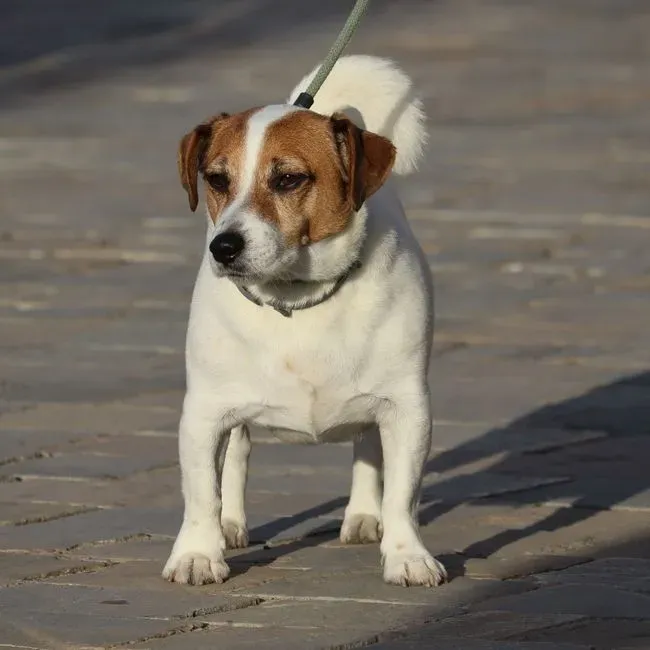
This is the one that tends to stop people cold once they notice it. Your dog isn’t just following you, or leaning on you, or watching you – they’re becoming a physical reflection of you. Slumped on the couch after a brutal week, you look over and your dog is stretched out low and still, head down, matching your energy so precisely it feels almost eerie. Energized and moving fast through the house on a good morning, they’re bouncing at your heels. The sync is that tight.
This full-body mirroring is the deepest expression of what researchers call emotional contagion in dogs – the capacity to not just observe your emotional state but to actually absorb and embody it. It goes beyond pack bonding or imitation into something that looks remarkably like empathy. Dogs who do this aren’t just aware that you’re struggling. They’re carrying it with you, adjusting their entire demeanor to stay in step with yours and offer you the one thing they always have: their presence, steady and completely without judgment.
What You Should Take Away From All of This
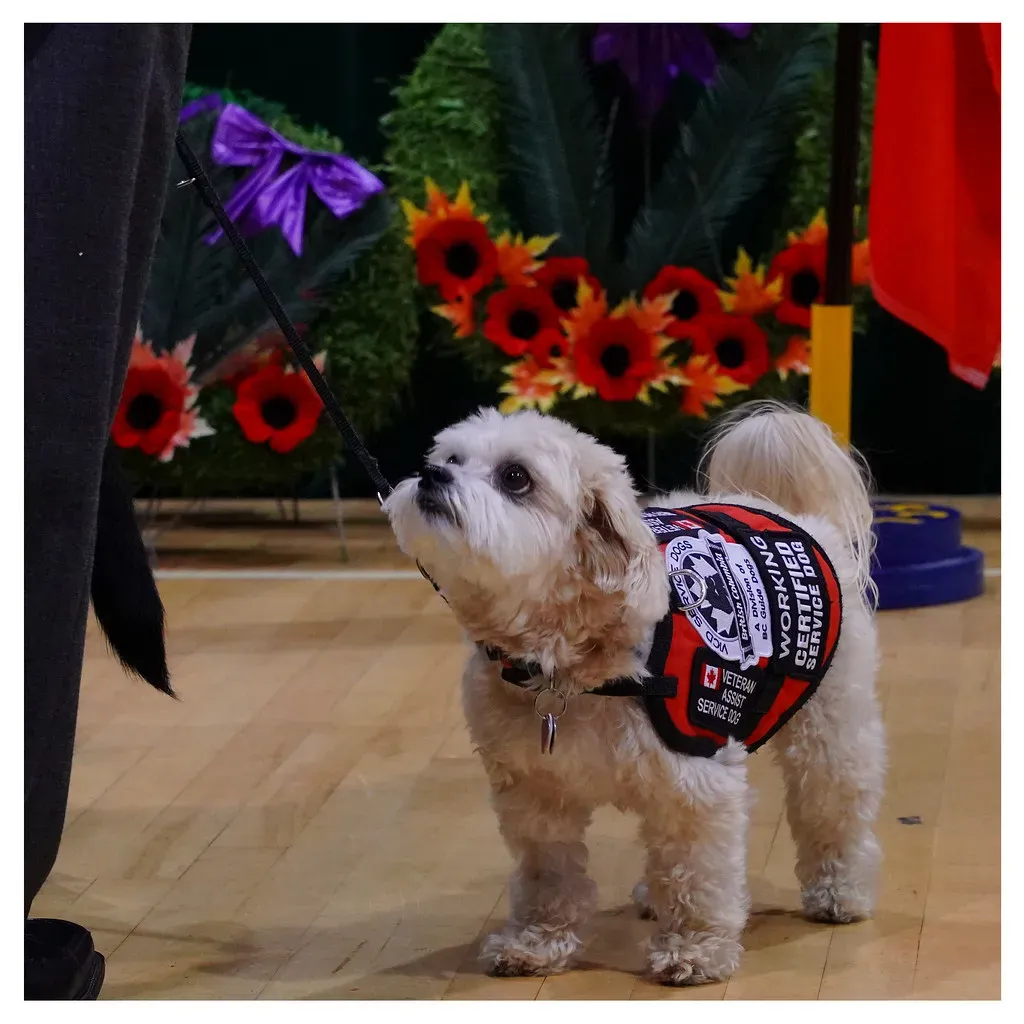
Here’s the honest conclusion: your dog is working harder for you than you probably know. Every yawn you dismissed, every slow tail wag you took for simple happiness, every night they quietly moved their bed closer to yours – those weren’t accidents or quirks. They were attempts. Small, wordless, persistent attempts to check on you, steady you, and stay close enough to help if something went wrong.
We tend to think of ourselves as the caretakers in the relationship, and in practical terms we are. But dogs have spent thousands of years becoming extraordinarily attuned to the people they love, and that attunement runs deeper than most of us give them credit for. The next time your dog does something that seems like a small, unremarkable habit, ask yourself: what if it isn’t about them at all? Because more often than not, it’s about you – and they’ve been trying to tell you that this whole time.


