
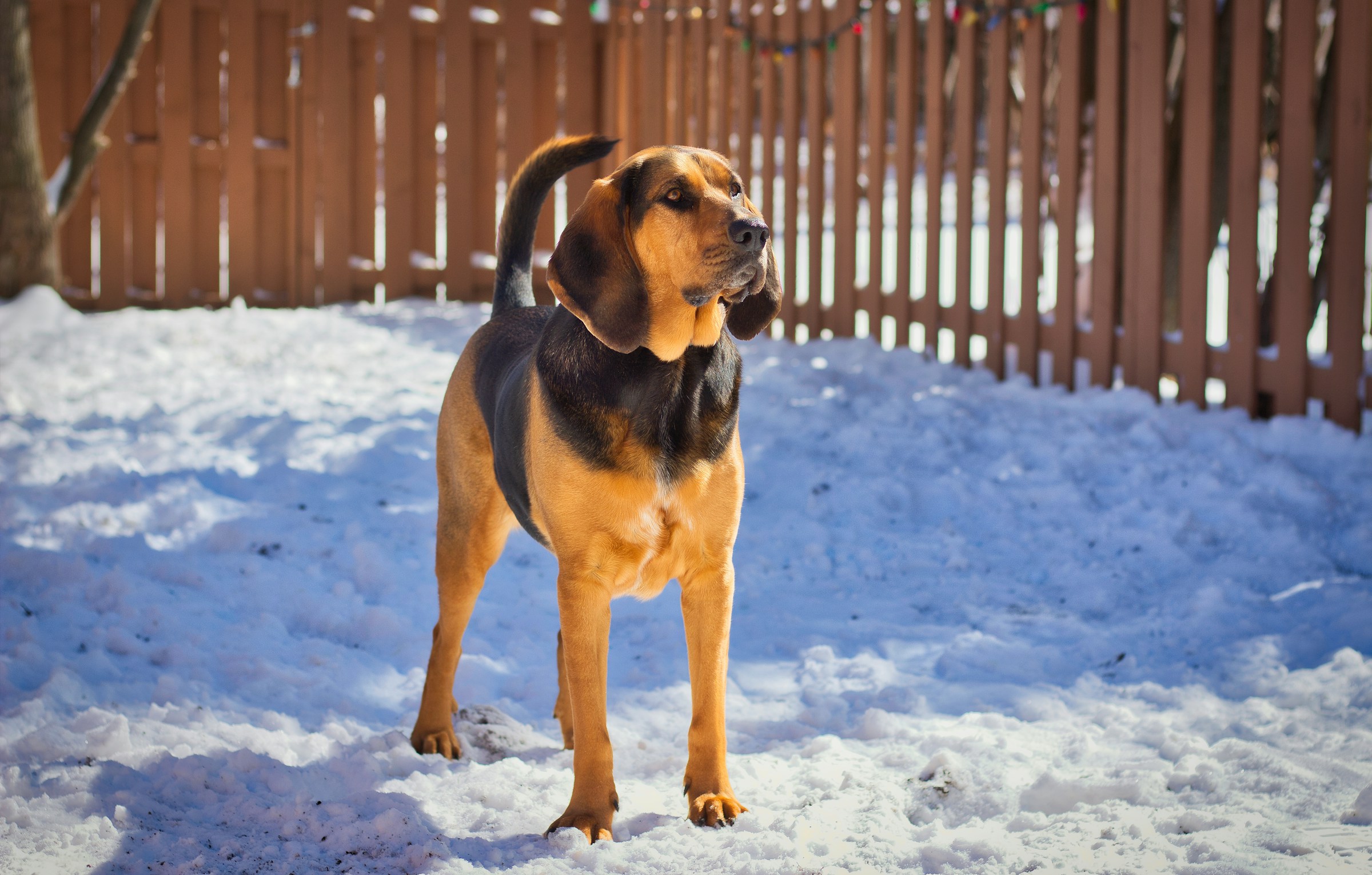
You probably scolded your dog for it at least once. That weird, snuffling, almost obsessive press of the nose against the crack under a closed door, like there’s a secret on the other side worth risking a bruised snout for.
There kind of is. Your dog isn’t bored, and it isn’t being nosy for the sake of it. It’s reading a report that’s been quietly building for hours – who walked past, what mood they were in, whether anything unfamiliar slipped through. Stick around, because the last item on this list is the one that changes how you’ll watch your dog forever.
#7 – Their Nose Basically Runs Circles Around Every Lab Sensor We’ve Built
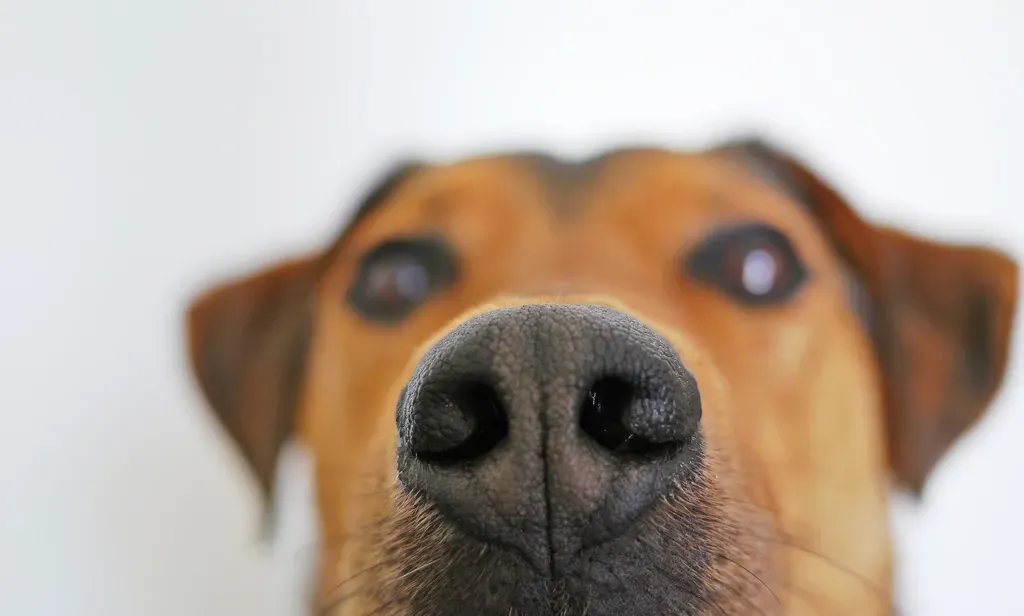
Dogs don’t experience a doorway the way we do, as a flat slab of wood with nothing interesting about it. Their nasal anatomy splits incoming air into two separate paths, one for breathing and one purely for analyzing scent molecules, so nothing gets wasted on the way in.
The numbers explain why this matters so much. A dog carries roughly 300 million scent receptors compared to our measly 6 million, which is why a single pass under a door can tell them who stopped by, what that person recently ate, and even how stressed or relaxed they were. Trainers already lean on this advantage for search-and-rescue work, where dogs follow trails that are days old under the right conditions.
Fast Facts
- Dogs have up to 300 million scent receptors versus about 6 million in humans
- Their sense of smell is estimated to be 10,000 to 100,000 times more sensitive than ours
- Incoming air splits into two separate nasal pathways: one for breathing, one dedicated to scent
- The canine olfactory bulb, which processes smell, is proportionally about 40 times larger than the human version
#6 – That Smell Under the Door Didn’t Vanish – It’s Been Sitting There for Hours
Most of us assume a room “airs out” in minutes and whatever was there is gone. Scent molecules don’t cooperate with that assumption. They cling to surfaces, settle into carpet fibers, and drift through the smallest gaps for far longer than we’d guess, especially in cool, still air.
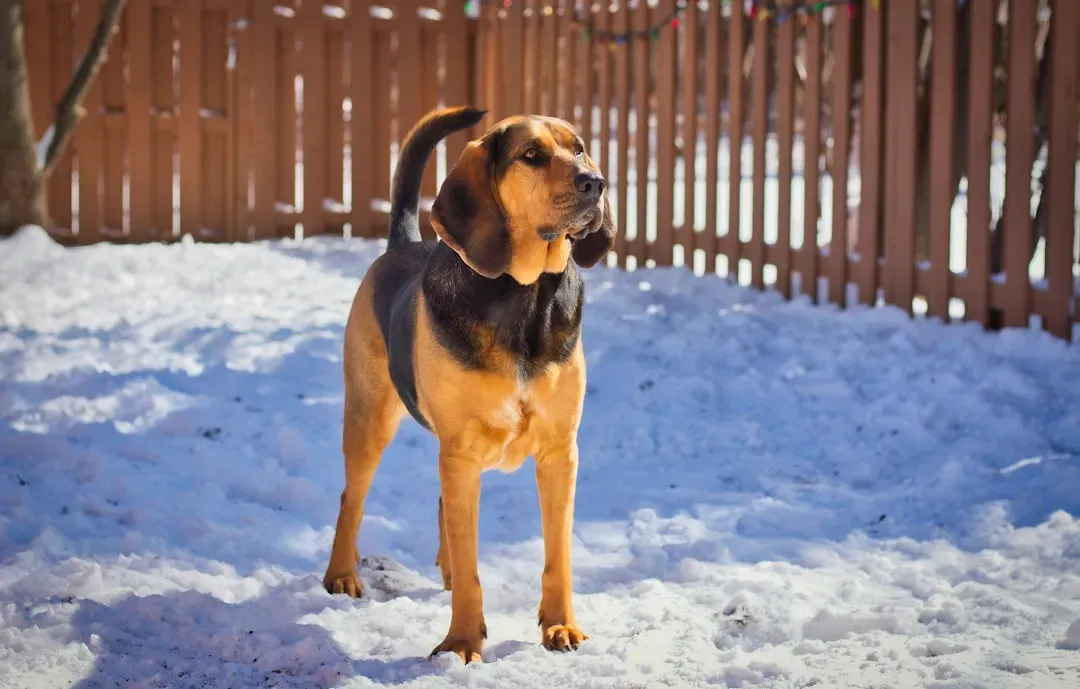
Bloodhound handlers have tracked viable human scent trails up to two weeks old under ideal conditions, which sounds almost unbelievable until you realize your dog is working with the same basic tool, just at a smaller scale. The bottom of the door is where air exchange happens most, which is exactly why that’s where the lingering signatures pool up and wait to be read.
#5 – The Bottom of the Door Is a Scent Highway, and Your Dog Knows the Exit Ramp
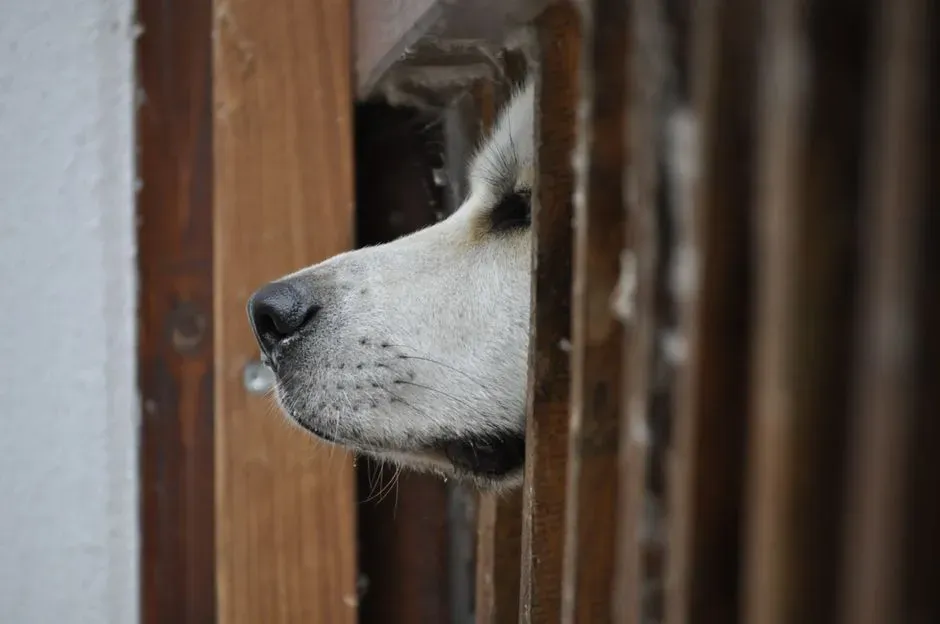
That low gap under the door isn’t a random weak spot your dog happened to find. It’s a low-pressure zone where scent naturally concentrates and flows between rooms, which makes it the richest possible source of information on either side of that door.
Even a fully closed door allows enough airflow for detection, so your dog isn’t wasting time pressing against the middle panel where nothing useful collects. Going straight for the crack isn’t stubbornness or a bad habit to correct. It’s efficient, targeted data collection that most humans walk past a hundred times a day without a second thought.
Quick Compare
- Top of the door: minimal airflow, few scent molecules, almost nothing worth investigating
- Bottom of the door: constant low-pressure airflow that pulls and pools scent from both rooms
- Result: the crack under the door is the single richest reading spot on the entire frame
#4 – Every Sniff Is a Timestamp: How Dogs Clock Who Came and Went
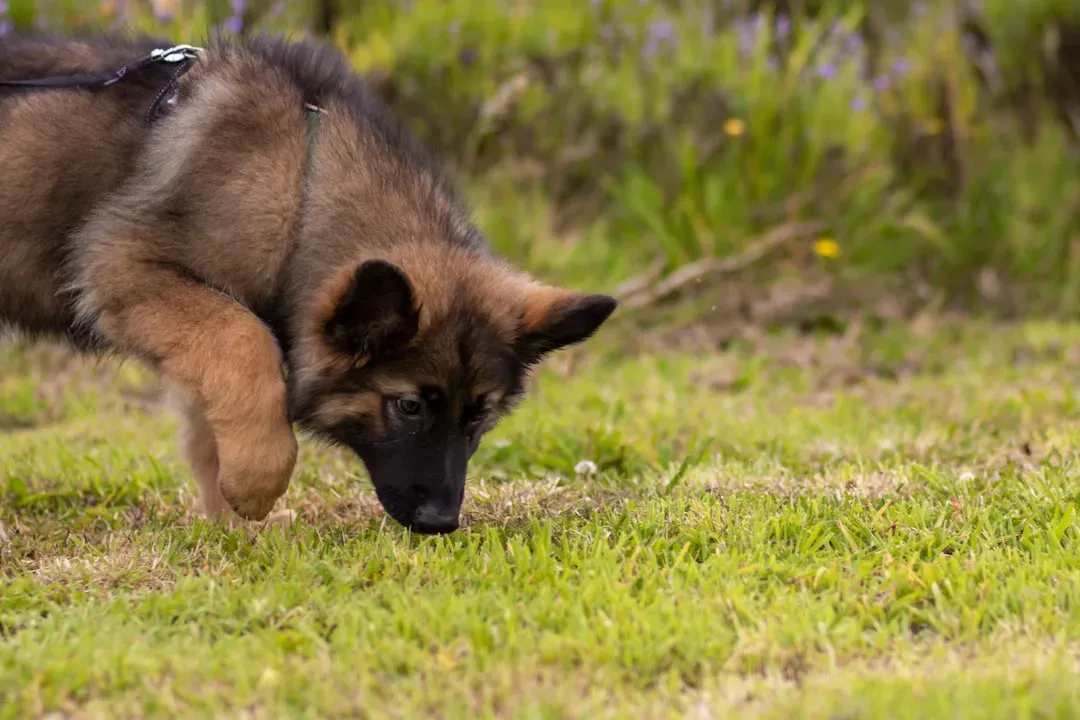
A single sniff doesn’t just register “someone was here.” It decodes sequence and recency through the way a scent has decayed, which means your dog can essentially tell time using nothing but its nose.
What looks like idle curiosity is actually your dog reconstructing a timeline: who came in last, whether a stranger’s scent is fresh or fading, whether anything unexpected passed through while you were gone. This same skill kept wild ancestors alive by flagging unfamiliar threats early, and in your living room it now doubles as an early-warning system for anything that’s shifted in the household.
#3 – It’s Not Just People – Your Dog Is Reading an Entire Environmental Report
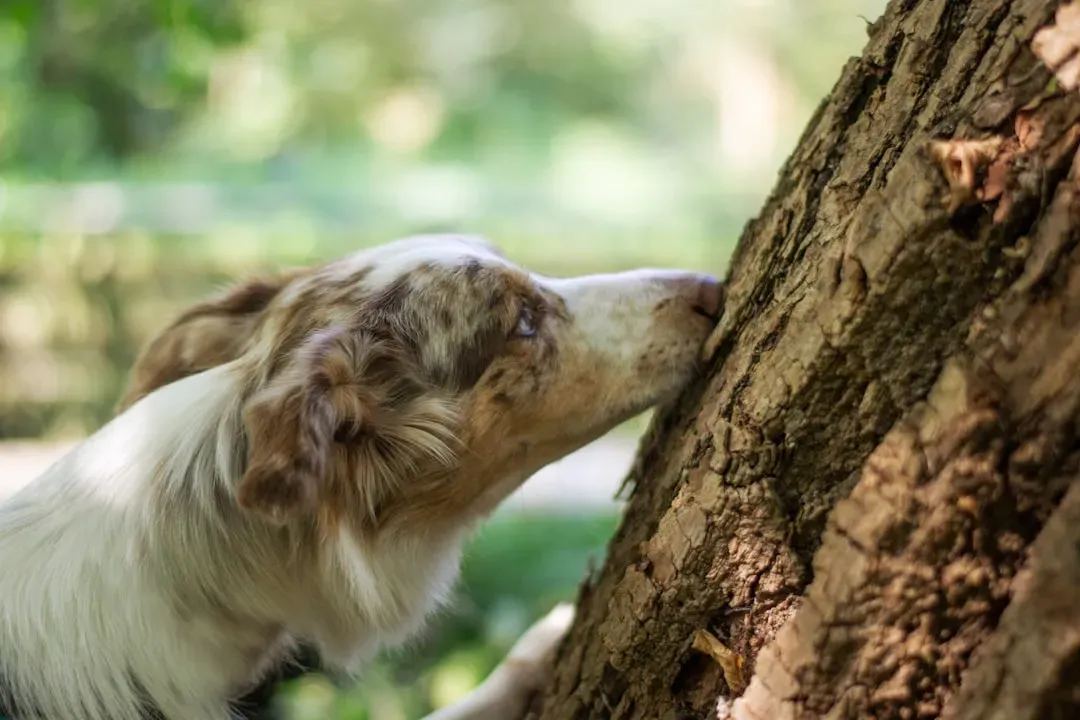
The obvious assumption is that your dog only cares about human visitors, but the scent picture under a door is far messier and more layered than that. Other pets, cleaning products, and outdoor pollutants that hitched a ride on someone’s shoes all show up in the same sniff.
Each of those layers adds context, turning a simple door into something closer to a full environmental report than a single clue. This is also why trainers warn against yanking a dog away from the door mid-sniff. Cutting off that information gathering can actually increase anxiety instead of curbing an odd habit.
#2 – Stop Calling It Separation Anxiety – It’s Often Just Curiosity Doing Its Job
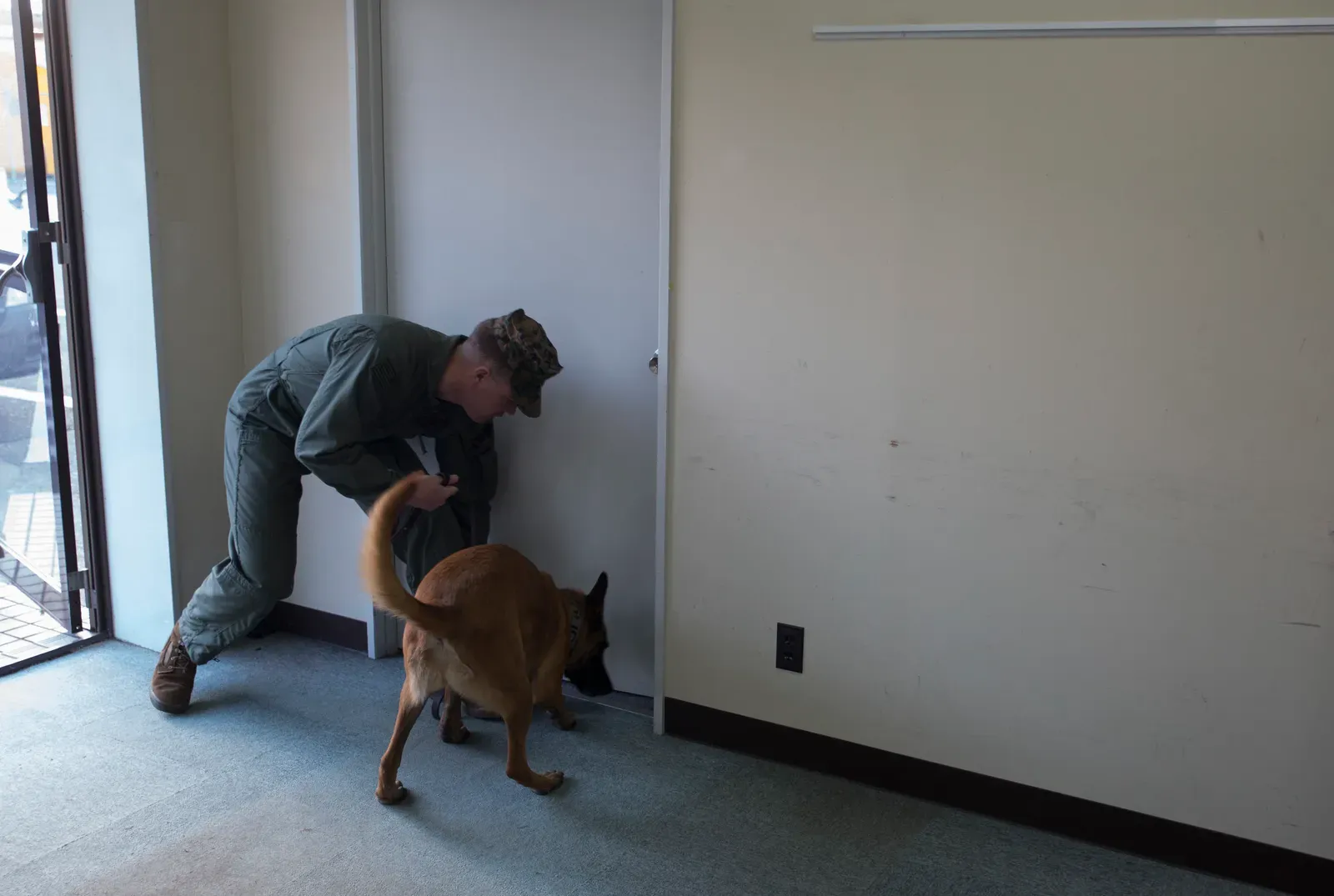
It’s an easy leap to make: your dog checks the door constantly, so it must be panicking about you leaving. That explanation is often wrong. In plenty of cases, this is pure information processing, not distress.
To smell is to know who and what has come before, and for a dog, that knowledge is its own reward.
Alexandra Horowitz, canine cognition researcher
Many dogs repeat the same door-check even in a calm, uneventful household simply because the data itself feels satisfying to gather. Labeling every instance as anxiety can push owners toward interventions they don’t actually need, when the real story is just a dog following an unfamiliar scent it wants to understand a little better.
#1 – The Sniff That Reminds Us We’re Living With an Alien Superpower
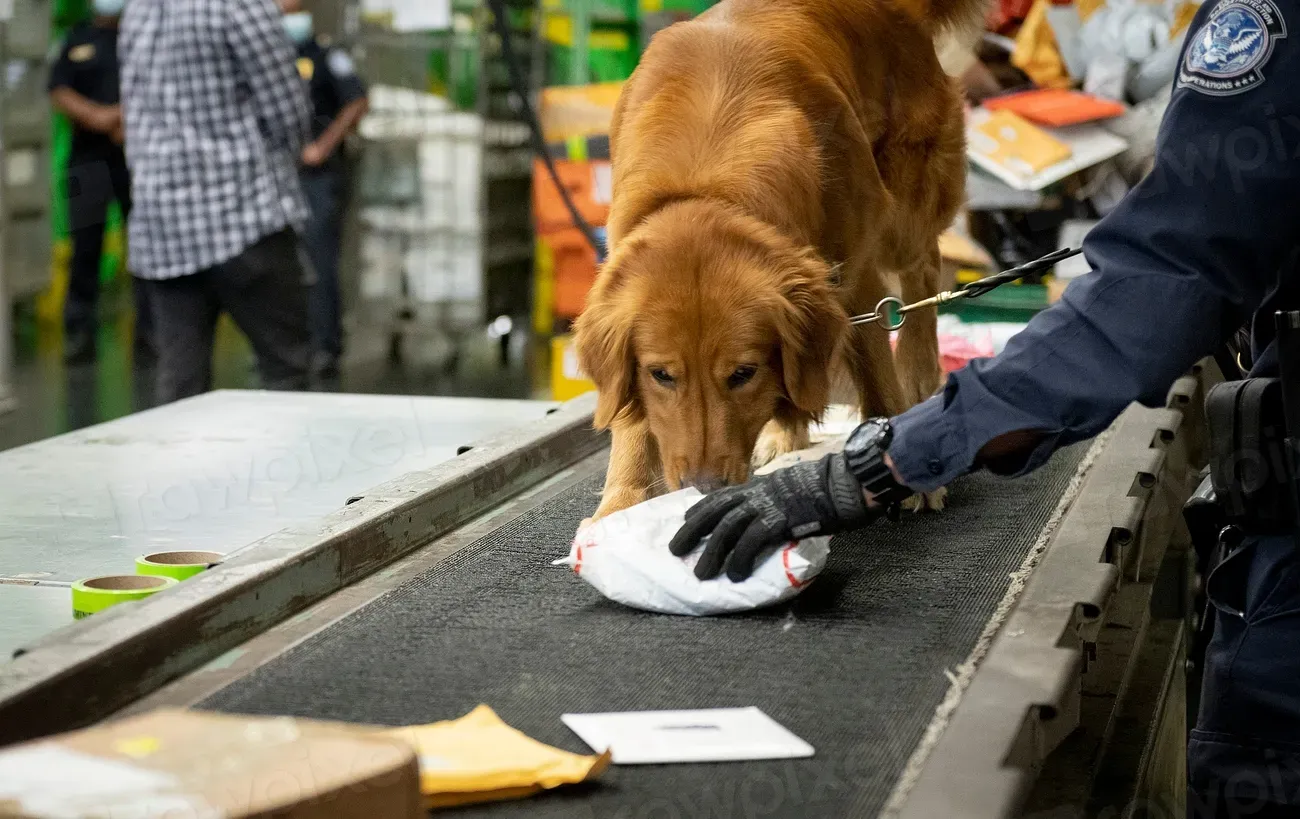
Strip away the assumptions and what’s left is unsettling in a good way: your dog lives inside a parallel sensory world that we can only ever approximate from the outside. What looks like pointless sniffing is actually high-resolution mapping that keeps them oriented, informed, and safe.
Dismissing it as “just a dog thing” means missing a genuine window into your own household, told through the one sense your dog trusts more than sight or sound. Next time it happens, don’t just watch the sniff. Watch what your dog does right after, because that reaction usually says more than the sniff itself ever could.
Why It Stands Out
- Dogs can detect some scents at concentrations as low as parts per trillion
- The brain region devoted to smell processes far more information, proportionally, than the human equivalent
- This system runs constantly in the background, not just during an obvious sniffing session
- Specially trained dogs can even detect certain medical conditions purely through scent
The Bottom Line
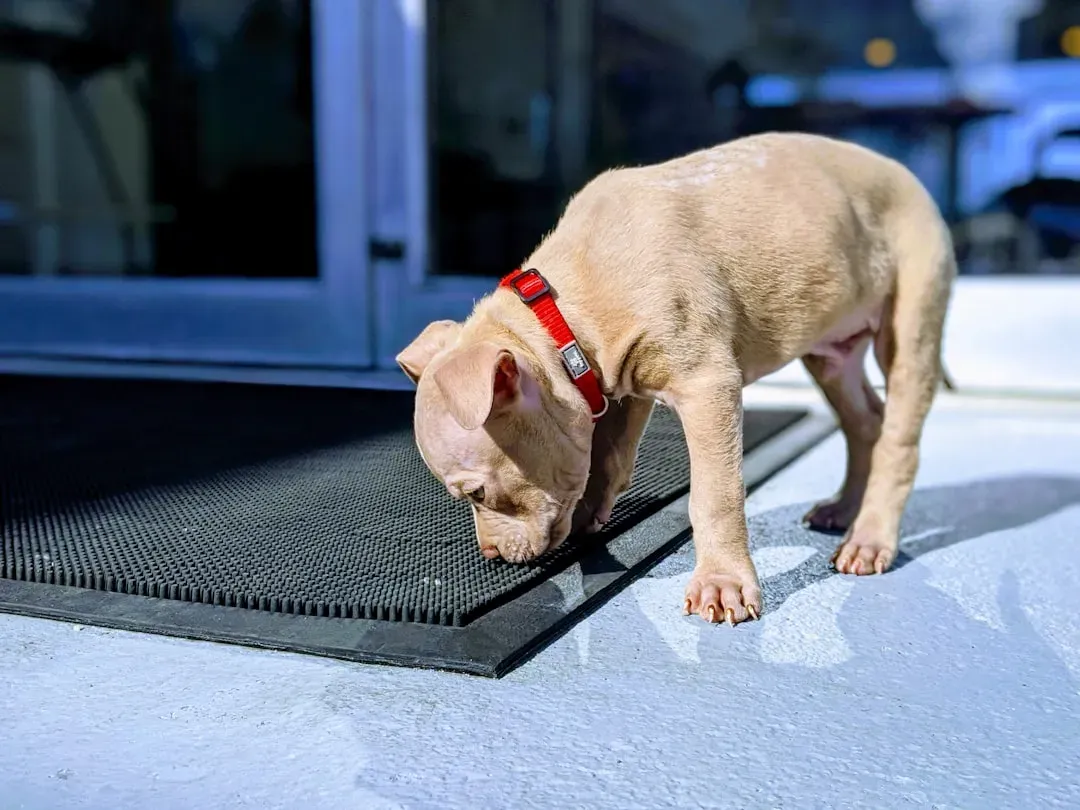
Dogs sniffing the bottom of doors isn’t quirky, and it definitely isn’t boredom. It’s a deliberate scan of scent trails that can linger for hours, quietly revealing visitors, moods, and changes we walk right past without noticing.
That 300-million-receptor advantage turns every threshold in your house into a living logbook your dog checks out of habit, not confusion. Most owners will keep calling it “just sniffing.” The evidence says it’s one of the sharpest, most underrated forms of intelligence living right at floor level.


