
Every dog guardian has had that one moment: the house is quiet, nothing obvious is wrong, and suddenly your dog stiffens, stares into a corner, and refuses to move. It feels like the temperature drops a notch. You might call it bad vibes, negative energy, or something darker, but your dog knows something is off long before you do. While science talks in terms of stress, tension and environmental cues, many people experience it as an almost spiritual warning system on four legs.
The truth probably lies somewhere between biology and belief. Dogs have insanely sharp senses and are hard‑wired to survive, so they pick up on subtle changes in people, places, and routines that we simply miss. When those changes feel threatening, their behavior can shift in ways that look eerie or even supernatural. Here are eleven things dogs often do when they sense something is wrong in your home, and what might really be going on beneath the surface.
1. Suddenly Refusing To Enter Certain Rooms

One of the most unsettling signs is when a dog that normally roams freely suddenly slams on the brakes at a doorway. They might plant their feet, lean back on the leash, or skirt the edge of a hallway like the floor is lava. To us, it can feel like they’re seeing something we can’t, especially if nothing in the room has visibly changed.
From a more grounded perspective, this usually means that room, or something in it, has become associated with a threat or tension. Maybe you and your partner had a serious argument there, maybe someone collapsed there once, or maybe there is a strange new smell or sound coming from a vent. Dogs are emotional sponges, and if the energy in a space has been heavy, they can decide that room is unsafe and avoid it like a no‑go zone.
2. Intense Staring At “Nothing”

That classic horror‑movie moment where your dog stares at an empty corner or tracks something invisible across the ceiling can feel like a scene from a paranormal series. Their eyes go wide, ears perked, body frozen, and they seem locked onto a spot you’ve never thought twice about. The air suddenly feels thick, and you start wondering if you should have saged the place before moving in.
In real‑world terms, this kind of staring is often your dog processing ultra‑subtle sensory input: the faint buzz of wiring, a light reflection, an insect you can’t see, or the low hum of a neighbor’s appliance. But it can also show up when tension is brewing in the home and your dog is hyper‑vigilant, scanning the environment for threats. That laser focus tells you their nervous system is on high alert, which often lines up with what people describe as dark or negative energy in the household.
3. Clinginess And Shadowing You Everywhere
When the vibe in a home shifts in a darker direction, many dogs go from independent to velcro almost overnight. You stand up, they stand up. You go to the bathroom, they wait outside the door. You sit on the couch, they press their body against your leg like they’re trying to fuse with you. It can feel flattering at first, but you start to realize this is not just affection, it’s anxiety.
This clinginess is usually a sign that your dog senses instability and is seeking safety in the only place that makes sense: you. Dogs are social animals who survived by staying close to their group, especially when danger lurked. When arguments, financial stress, grief, or even an unexplained sense of dread hangs over the home, their instincts tell them to stay glued to their most trusted person, almost like a living emotional shield.
4. Growling Or Barking At Empty Spaces

Few things rattle your nerves like a dog suddenly growling at what looks like thin air. The growl is low, teeth slightly bared, body stiff. Or they might erupt in frantic barking at a staircase, a closet, or the dark end of a hallway. It is hard not to think: what on earth are you seeing that I’m not?
Often, what triggers this is their ability to detect sounds and smells behind walls, under floors, and through closed doors. They might be hearing rodents, pipes, a neighbor’s footsteps, or smelling unfamiliar people through shared walls. At the same time, if the home has been emotionally charged or frightening lately, they may generalize that sense of threat to random spaces. The barking and growling become a way of saying, “Something here feels wrong; I’m ready to defend if I have to.”
5. Pacing And Restless Nighttime Behavior

When the energy in a home turns heavy, nights tend to be the hardest. You may notice your dog pacing the hallway, checking rooms, jumping at small sounds, or repeatedly repositioning themselves instead of settling into deep sleep. It looks like they are on patrol, and in a way, they are. Their body is telling them that rest is unsafe while the environment feels charged.
This restlessness often appears when there is hidden stress: unspoken conflicts, fear of eviction, illness in the family, or any situation where everyone is tense but trying to act “normal.” Dogs are brutally honest barometers of tension. Their nervous system stays switched on because, in nature, a bad vibe at night can mean predators nearby. When a dog who used to sleep like a rock starts pacing after dark, it is worth asking what in the house has emotionally changed.
6. Avoiding Or Side‑Eyeing Specific People

Sometimes the “dark energy” is not about the house at all; it is about a person in it. You might notice your dog start to avoid a guest, a new roommate, or even a family member. They may refuse to approach that person, turn their head away, lick their lips, or give nervous side‑eye. In more extreme cases, they may growl softly when that person comes too close, even if they never used to react that way.
Dogs are experts at reading micro‑expressions, body tension, and smell. If someone brings in anger, fear, or hidden aggression, the dog will often pick up on it far sooner than the humans do, especially if that person has been involved in conflict or intense emotions. While it is unfair to let your dog completely judge someone’s character, a sudden sustained change in how your dog responds to a specific person is a strong signal that the emotional climate around that individual has shifted into something heavier.
7. Uncharacteristic Accidents And Destructive Behavior

When dogs sense dark or threatening energy and do not know how to cope, it often comes out sideways as behavior we label “bad.” A house‑trained dog might start having accidents indoors again, shredding pillows, chewing doors, or clawing at windows. It is easy to blame them, but these actions are often desperate attempts to release built‑up panic or to escape an environment that feels hostile.
Think of it like a pressure cooker with no valve. If the home is filled with shouting, cold silences, or unresolved grief, your dog absorbs that atmosphere without understanding it. Their stress hormones rise, their emotional resilience drops, and self‑soothing behaviors kick in. Tearing something apart can feel like regaining a tiny bit of control, while eliminating in the house can be a physical response to a mind stuck in high alarm.
8. Hiding In Unusual Places

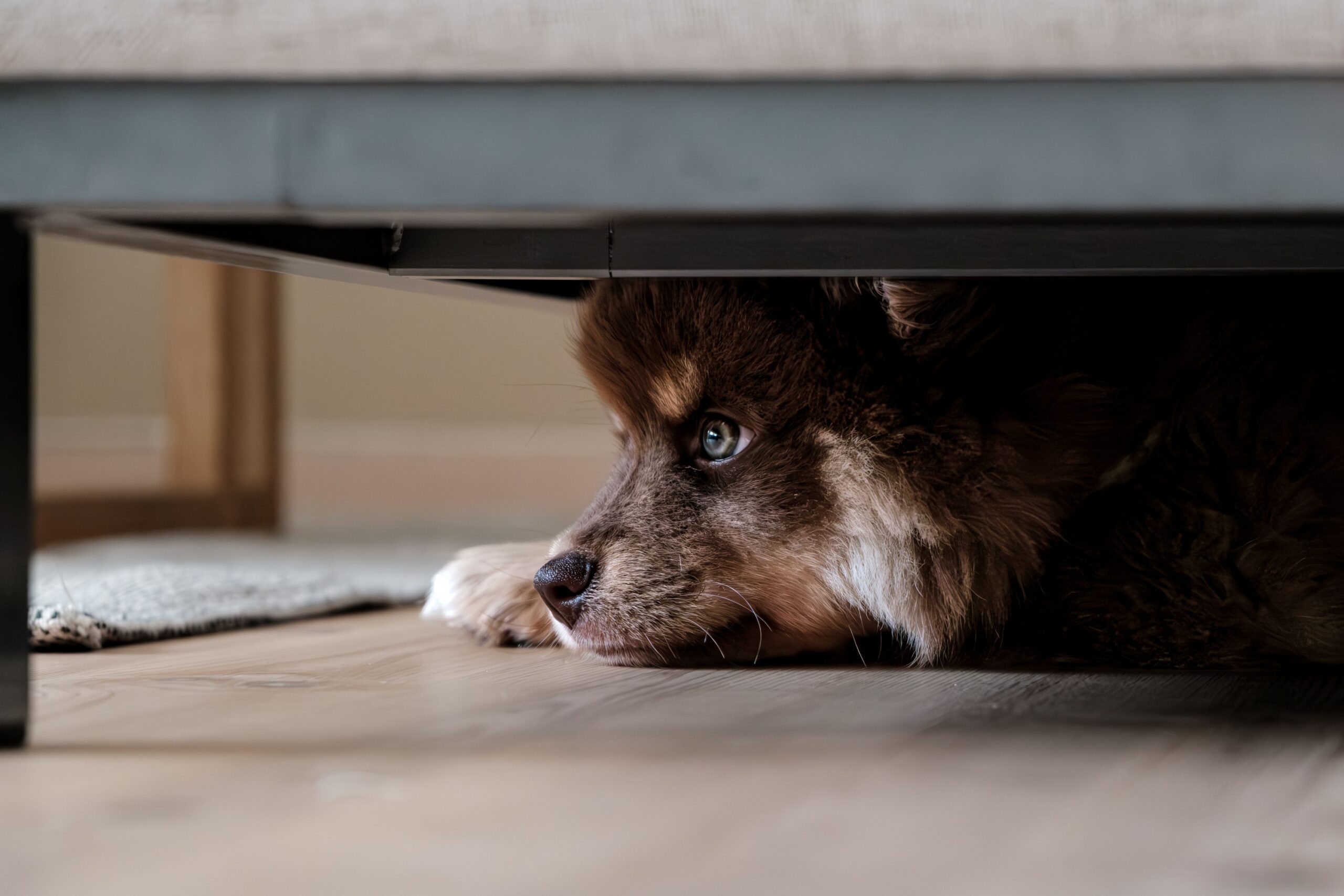
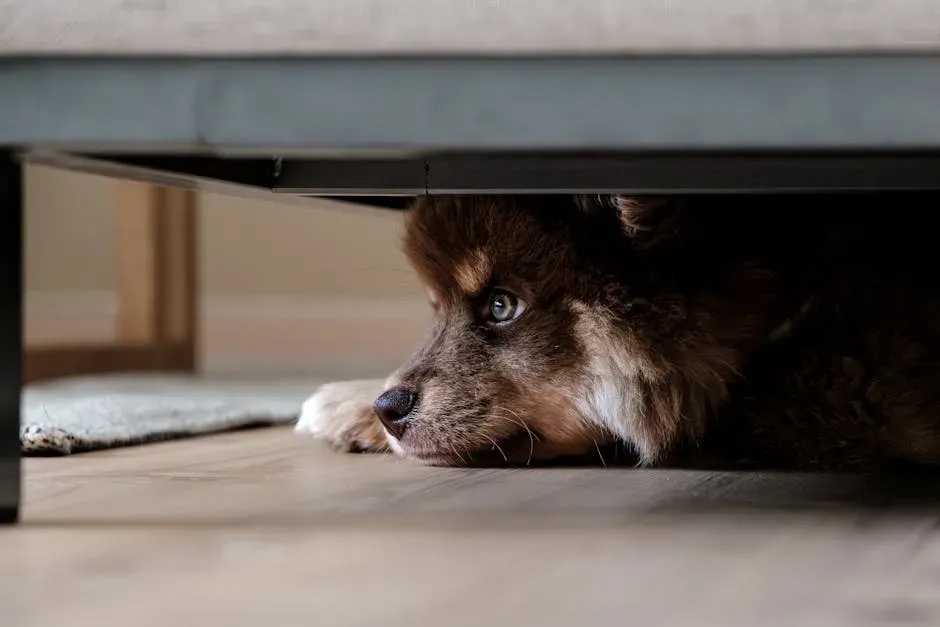
A dog that normally lounges in the middle of the living room suddenly disappearing under beds, into closets, or behind furniture is sending a loud quiet message: I do not feel safe here. They might wedge themselves into corners or choose lower, darker areas where they can curl up with their back protected and their eyes on the exit. To a lot of people, this looks like the dog is literally dodging the bad energy in the room.
From a behavioral lens, hiding is a classic fear response. When things feel overwhelming, retreating to enclosed spaces helps the nervous system calm down because threats are easier to track. If your dog is increasingly drawn to hiding spots, especially after specific events like arguments, visitors, or late‑night disturbances, it is worth treating it as a sign that the emotional weather inside the home is turning stormy, even if no one is saying it out loud.
9. Hyper‑Alertness To Sounds You Barely Notice

Dogs living in emotionally heavy homes often develop what looks like a hair‑trigger startle response. A creak in the ceiling, a car door down the street, a phone vibrating on a table – your dog jolts, stares, or runs to investigate. Their ears stay half‑raised even when lying down, and every small sound feels like it might be the start of something bad. To us, this can feel almost supernatural, like they are hearing threats from another dimension.
The explanation is both simple and sobering: chronic stress sensitizes the brain. Just like a person with anxiety starts jumping at every noise, a stressed dog’s nervous system begins to treat minor cues as potential danger. In a home where dark energy is tied to real human issues – like abuse, addiction, or intense fear – this hyper‑alert state becomes the new normal. The dog is stuck on guard duty, scanning for the next emotional explosion or unseen threat.
10. Sudden Changes In Eating Or Sleeping Habits

When the energy in a house turns sour, appetite is often one of the first things to go, for humans and dogs alike. A dog that usually bolts their food may start picking at their bowl, walking away, or refusing to eat unless you sit right next to them. Others might overeat if they get the chance, using food as a comfort behavior. Both extremes are red flags that their emotional state has shifted.
Sleep patterns tell a similar story. A dog that naps peacefully throughout the day may start sleeping only in short bursts, or refusing to sleep in certain rooms. Conversely, some dogs appear to shut down, sleeping much more to escape a reality that feels confusing or unsafe. While illness should always be ruled out with a vet, when these changes line up with a period of emotional darkness in your home, it is fair to see them as part of your dog’s response to that energy.
11. Quiet, Heavy Stillness You Can Almost Feel

Not every reaction to dark energy is loud or dramatic. Sometimes the most powerful sign is a dog that just…dims. They may move more slowly, stop bringing you toys, and seem to stare into space with a weight you have never seen before. Their body relaxes in a way that looks less like comfort and more like resignation. People often say the whole house feels heavier when their usually bright dog goes quiet.
This withdrawn stillness is often the end point of long‑term stress, where the dog has given up trying to change or escape the situation. In behavioral terms, it can resemble a mild depression. The emotional climate of the home has convinced them that joy is risky, that alertness is exhausting, and that the safest option is to shut down. When the light goes out in a dog’s eyes, it is rarely just about them – it is almost always a reflection of the energy they have been forced to live in.
Conclusion: Dark Energy Or Deep Sensitivity?
I will be honest: as much as I lean on science, I have had moments with dogs that felt downright otherworldly. A dog freezing at a spot where, years before, something terrible happened; another refusing to go into a room where a deeply troubled guest had been staying. You do not have to believe in ghosts to admit that dogs notice things we do not, and that their reactions can feel like the universe is tapping you on the shoulder.
At the same time, calling everything “dark energy” can let us off the hook. Most of the time, what your dog is reacting to is very real but very human – anger, fear, secrets, and unresolved pain soaking into the walls of a home. Their strange behaviors are not just spooky warnings; they are invitations to clean up the emotional mess we live in. Maybe the real question is not whether a dark energy has entered your home, but whether your dog is bravely showing you the corners of your life that need light. If your dog could talk, what do you think they would beg you to change first?


