
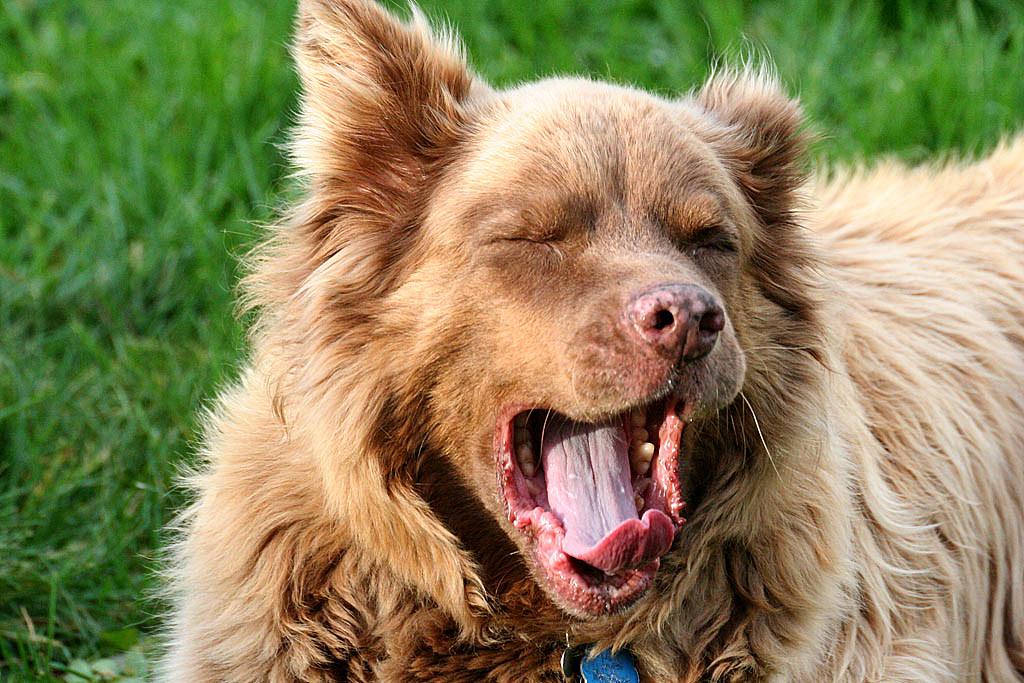
You know that moment when you yawn, your dog looks at you, tilts their head, and then yawns right back? For years people shrugged this off as a cute coincidence or just another quirky dog habit. But research over the past decade has been quietly building a different picture: your dog may actually be catching your feelings in that split second, not just copying your mouth shape.
Scientists now talk about something called emotional contagion, and dogs are turning out to be surprisingly good at it. What is especially striking is that they do it more with people they know and love than with total strangers. In other words, your dog is not only watching you; they are emotionally tuned to you in a way that starts to look uncomfortably close to empathy. Let’s unpack what we really know, what is still uncertain, and why this simple yawn might be one of the clearest windows into the emotional life of dogs.
The Science Behind Contagious Yawning in Dogs
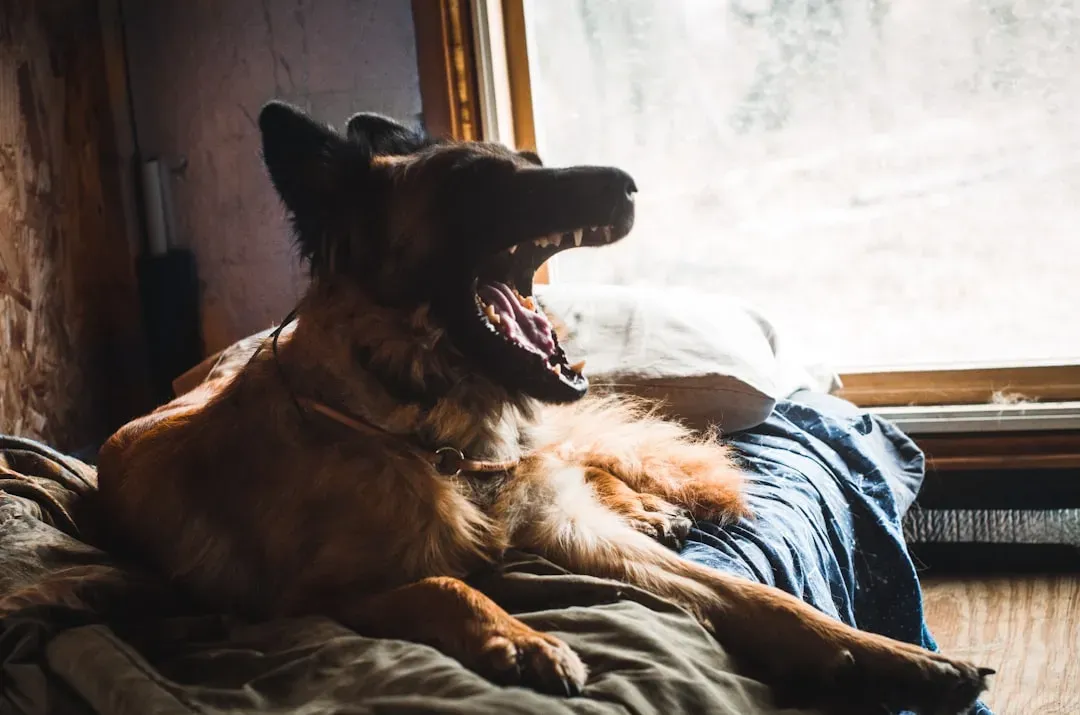
Contagious yawning in humans has been studied for a long time, but when researchers started testing dogs, they found that many dogs yawned more often after watching a person yawn than after watching neutral movements or non-yawning mouth actions. This was not just random: in controlled settings, the yawn rates went up specifically when the stimulus was a yawn, suggesting that dogs are sensitive to that particular cue. Importantly, the increased yawning showed up across different labs, different countries, and different test designs, which adds weight to the finding.
Researchers typically sit a dog in front of a person who either repeatedly yawns or performs a similar but non-yawning facial movement, and then they count how often the dog yawns in each condition. When dogs consistently yawn more during the yawning condition than the control, it strongly hints that something contagious is going on. While not all dogs respond this way – some never seem to catch the yawn at all – a meaningful portion of them do, enough that scientists now treat canine contagious yawning as a real, measurable phenomenon rather than a cute myth.
Familiar Faces: Why Dogs Yawn More With Their Own Humans
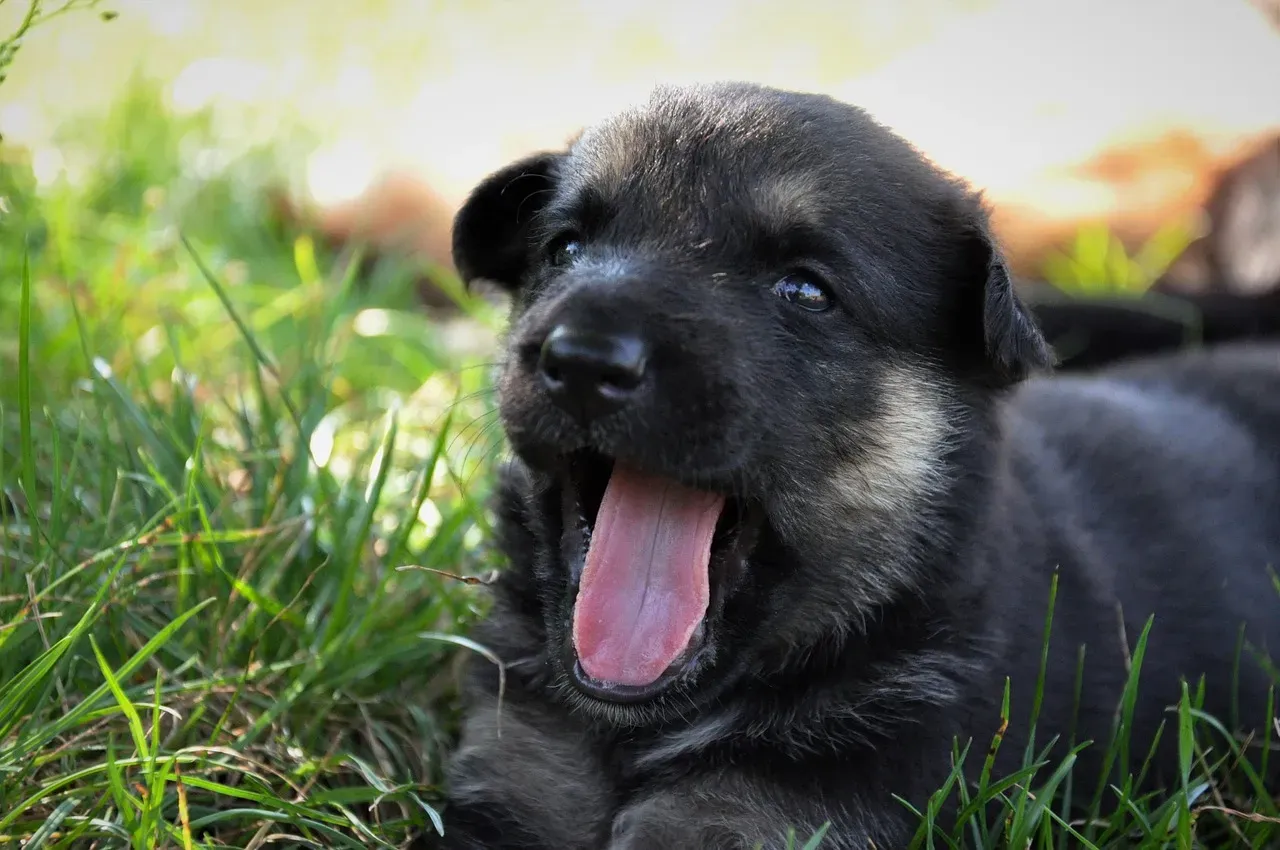
One of the most intriguing findings from these studies is that dogs do not yawn equally for everyone. When researchers compared a dog’s response to their owner yawning versus a stranger yawning, they often found higher yawning rates for the familiar person. That means your dog is more likely to “catch” your yawn than one from a lab assistant they just met, which suggests that emotional closeness or attachment plays a role in triggering the response. It is as if the dog’s emotional radar is turned up higher for people they already care about.
This fits with what many dog owners intuitively feel: their dog reacts differently to their own stress, tiredness, or mood compared to the same signals coming from someone else. In some studies, this familiarity effect has been taken as evidence that dogs are not just copying a motion but actually resonating with the emotional state of their bonded human. While scientists are cautious about using heavy words like empathy, the stronger response to familiar yawns lines up with the idea that dogs experience a basic, relationship-based form of emotional contagion.
Emotional Contagion vs Simple Copying: What Is Really Going On?

Here is where things get tricky: just because a dog yawns when you yawn does not automatically prove they are sharing your feelings. The more conservative explanation is that yawning is a highly noticeable, distinctive movement, and dogs could simply be mimicking what they see without any emotional understanding. That kind of imitation can still be impressive, but it is not quite the same as “feeling with” another being. Scientists have to design careful experiments to try to separate pure motor copying from emotional contagion.
What nudges the interpretation toward emotional contagion is that, in several studies, the dogs seemed more responsive to natural, emotionally loaded yawns than to artificial, staged ones, and more responsive to familiar people than unfamiliar ones. Those patterns are hard to explain with simple motor imitation alone. Still, the evidence is not perfect or unanimous, and not every study has found a strong effect. So the honest view is that emotional contagion is a strong candidate explanation, especially with familiar humans, but researchers are still piecing together exactly how deep that emotional sharing goes.
What Yawning Experiments Reveal About the Dog–Human Bond
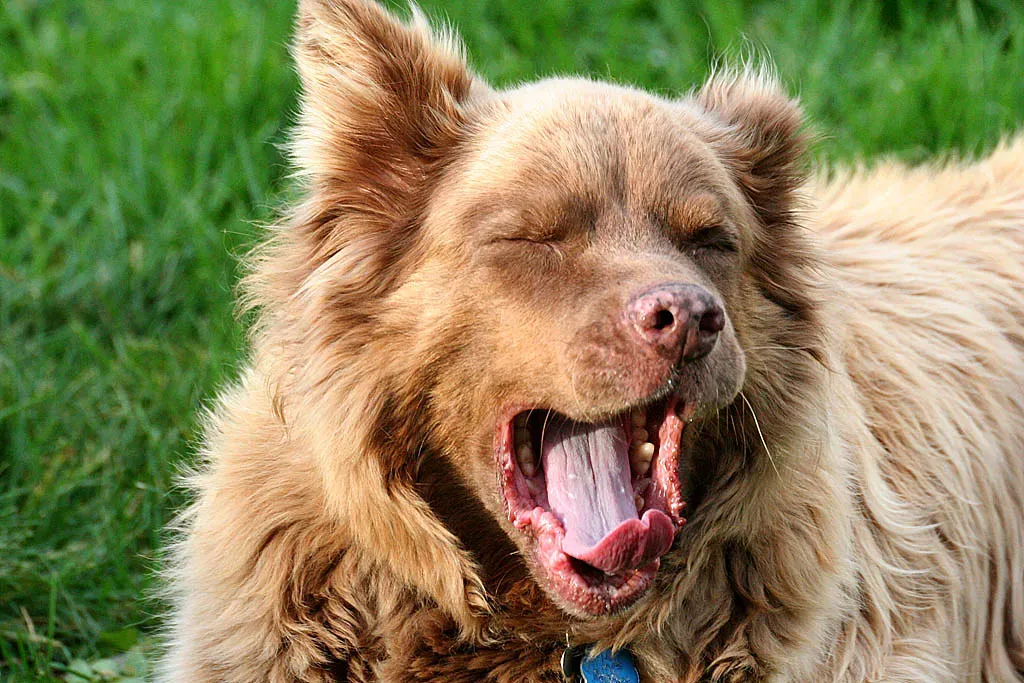
Think about how strange it is that a completely different species has learned to track your face so closely that it responds differently when you are tired, stressed, or emotionally aroused enough to yawn. Dogs did not evolve alongside us by accident; they have spent thousands of years adapting to human social life, and that shows up in the tiny details of how they read us. The fact that many dogs seem most “contagious” with their own person hints at an attachment system that is not so different from what human children form with caregivers.
In everyday life, this plays out in subtle ways: your dog may get restless when you are anxious, calm when you relax, or sleepy when you settle in for a late-night movie and start yawning. Yawning studies add a scientific layer to what owners already sense – that dogs are not just responding to commands, they are reacting to our inner states. To me, that makes the dog–human bond feel less like a one-way dependency and more like a shared emotional ecosystem where your mood and your dog’s mood constantly echo back and forth.
Stress, Empathy, or Just Tired? Interpreting the Dog’s Yawn
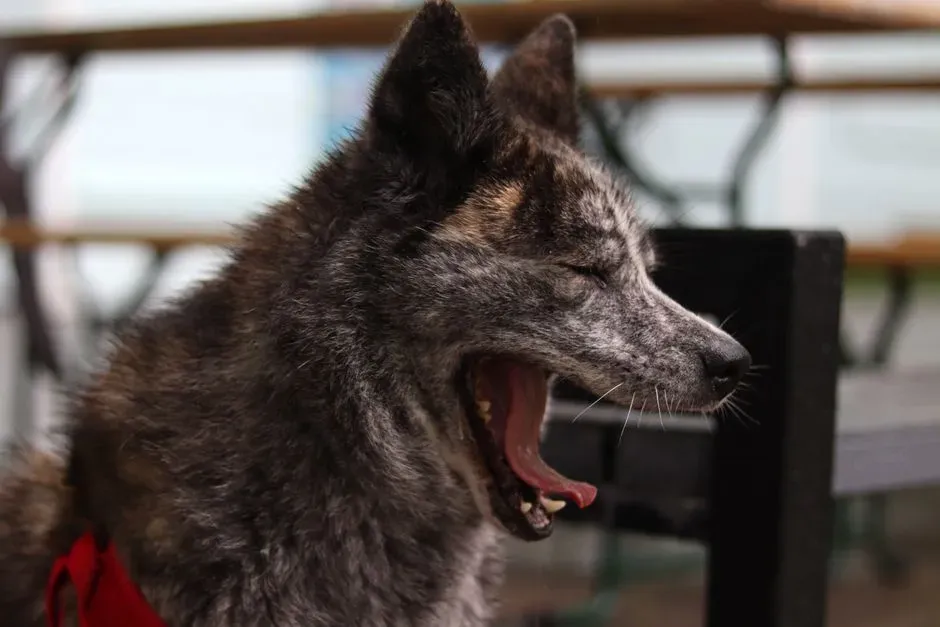
Of course, not every yawn is a sign of empathy. In dogs, yawning can signal tiredness, mild stress, or social tension, depending on the context. Trainers even talk about yawning as a “calming signal,” something dogs do when they are a bit uncomfortable and trying to defuse a situation. That means a dog yawning after you yawn could be picking up on your stress or simply responding to a weird experiment situation rather than sharing your sleepiness. Context really matters, and it is easy for humans to over-romanticize a behavior that has multiple possible meanings.
Some studies have tried to tease this apart by monitoring dogs’ heart rates or other physiological signs while they watch a human yawn. If yawning were purely a stress response, you would expect a spike in arousal every time. The results so far have been mixed and do not fully support a simple stress-only explanation. That leaves us with a nuanced picture: dogs may sometimes yawn from tension, sometimes from tiredness, and sometimes because they are resonating with the emotional tone of someone they care about. Rather than chasing one single meaning, it is more realistic to see the dog’s yawn as a flexible signal shaped by both their internal state and their social environment.
Not All Dogs Yawn Alike: Individual Differences and Training Effects
If you are thinking, “But my dog never yawns when I yawn,” you are not alone. In these studies, some dogs hardly react at all, while others are serial yawners. Just like humans, dogs differ in how socially sensitive, observant, or emotionally responsive they are. Personality, past experiences, and even age may influence how likely a dog is to show contagious yawning. More confident or socially engaged dogs might pay closer attention to human faces, while shy or distracted dogs might simply tune out the signal.
There is also a good chance that our daily interactions and training shape this behavior over time. Dogs that are frequently reinforced for watching their humans – like those trained in sports, assistance work, or therapy – spend a lot of time staring at faces and tiny cues. I would bet that those dogs are more likely to show yawning contagion simply because they are expert human-watchers. On the flip side, a family dog that has learned to mostly ignore human facial expressions might not show the effect strongly, even if they are deeply bonded. So lack of contagious yawning does not mean your dog loves you any less; it may just reflect a different style of attention and communication.
What This Means for How We See Dogs Emotionally
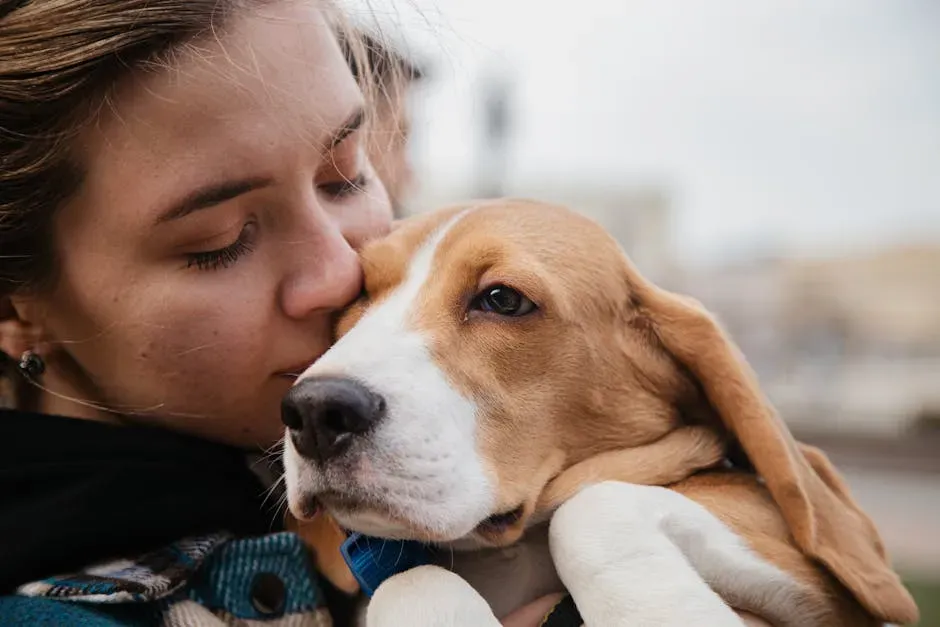
The idea that dogs can “catch” our yawns more from us than from strangers pushes against the old view of dogs as simple, stimulus–response machines. Contagious yawning does not prove that dogs have human-like empathy, but it does support the idea that they experience a basic, automatic form of emotional alignment with us. That is a big deal, because emotional contagion is often considered an early building block of more complex social emotions. If your dog’s brain is wired to resonate with your states even a little, it suggests a shared emotional platform that we should take seriously instead of brushing off as mere projection.
In my opinion, this should nudge us toward treating dogs less like property and more like emotional partners whose inner lives matter. When a dog flinches at your anger or relaxes into your calm or yawns after you do, those reactions are not just cute party tricks – they may be the visible tip of a deeper emotional connection. If we accept that dogs are sensitive to our feelings in this almost viral way, then we have a responsibility to manage our own emotional “signal” around them. Your stress may be more contagious than you think, and your calm might be one of the best gifts you quietly pass to your dog every day.
Opinionated Conclusion: A Yawn as Proof of Something Bigger
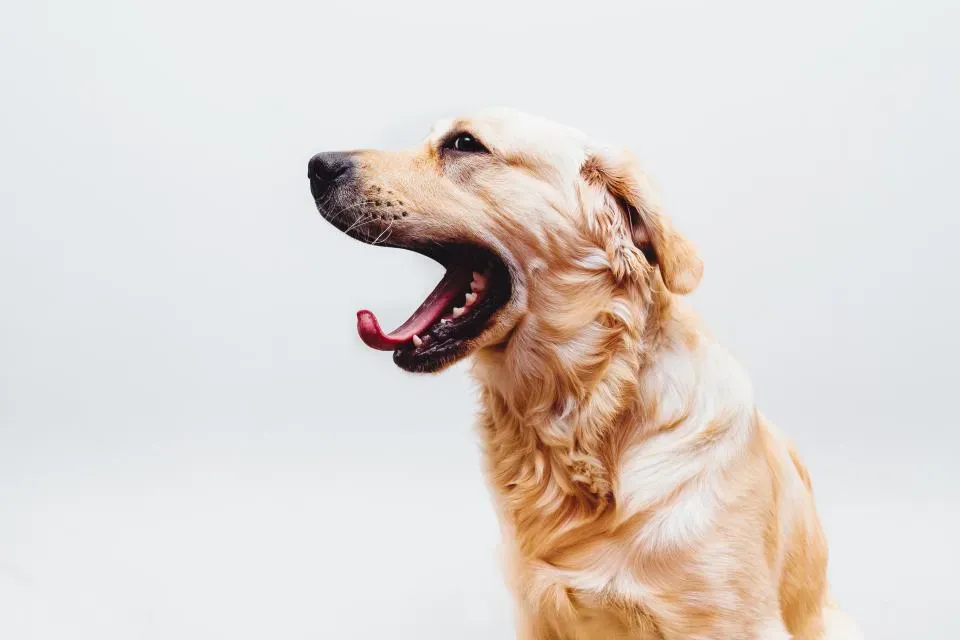
When you put all of this together – the research, the familiarity effect, the everyday stories – it is hard to escape a bold conclusion: dogs are not just following us, they are feeling with us, at least in a basic, contagious way. To dismiss their yawns as random quirks is, in my view, to underestimate the emotional sophistication that has evolved in lockstep with our own species. No, we should not claim that a dog’s yawn proves full-blown human-style empathy, but it absolutely challenges the idea that dogs are emotionally shallow. That little, sleepy-looking stretch of the jaw may be one of the clearest signs that your dog’s inner world is tethered to yours.
So the next time you sit on the couch, sigh, and let out a big yawn, glance over at your dog. If they yawn back, do not just laugh and move on; let it sink in that you might be watching emotional contagion in real time between two different species who chose each other. To me, that is quietly extraordinary and a reminder that our moods ripple through the lives of the animals who share our homes. If even a simple yawn can travel across that bond, what else might be passing between you and your dog that you have never really noticed?


