

Most owners assume that once a dog crosses into “senior” territory, the job gets simple: show up for the yearly exam, toss a joint supplement in the bowl, call it care. Veterinarians see something else happening behind that routine, and what they don’t say out loud in the exam room might be quietly costing your dog months, even years, of comfort.
The truth is uncomfortable: it’s rarely the vet’s equipment or the medicine that determines how well an old dog ages. It’s the questions the owner does or doesn’t ask. Below are the 12 questions vets wish more owners over 70 would say out loud — starting with the one most people never think to ask at all.
#1 Is My Dog Really in Pain Even If They’re Not Crying?

Owners over 70 were often raised to believe that if an animal isn’t whining, it’s fine. Vets know that’s dangerously wrong. Most senior dogs with arthritis, dental disease, or even cancer never vocalize at all — they just move less, sleep more, or get labeled “grumpy.”
A slow rise from the bed, slipping on floors, or hesitating at the stairs are textbook pain signs, not just “getting old.” Asking directly, “Do you think my dog is in pain?” pushes your vet to look past the quick glance and really evaluate gait, joints, spine, and mouth. Many senior dogs spend years in moderate pain simply because no one recognized the subtle signs — and modern pain management has come a long way from what it was even a decade ago.
Worth Knowing
- Reluctance to jump, slow rising, or a shortened stride
- New irritability when touched, lifted, or petted near the hips
- Less interest in walks, play, or greeting you at the door
- Repeated licking or chewing at one joint or limb
- Restlessness or trouble settling into a comfortable position
#2 Are These Medications Still Right for My Dog’s Age and Organs?
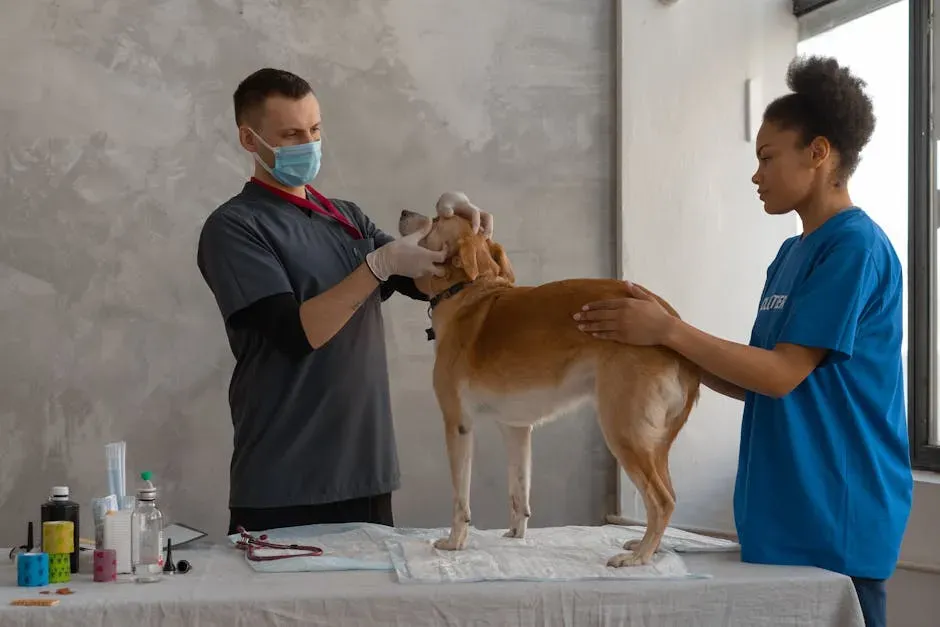
Most people over 70 know to have their own prescriptions reviewed every year. Far fewer realize their dog needs the exact same scrutiny. Dogs stay on heart medication, NSAIDs, or seizure drugs for years without anyone ever questioning whether the dose still fits.
As dogs age, their liver and kidneys change — “safe at 8” is not automatically “safe at 12.” Asking, “Should we recheck bloodwork and adjust anything?” forces the kind of medication audit most clinics wish happened more often. This is also the moment to be honest about what you can actually manage — pill size, frequency, cost, memory. If twice-daily dosing means you’re quietly skipping doses to stretch the bottle, say so. A once-daily switch might exist, and it could be the difference between a medication that works and one that just sits half-used in a drawer.
#3 What Subtle Changes Should I Be Tracking at Home Between Visits?
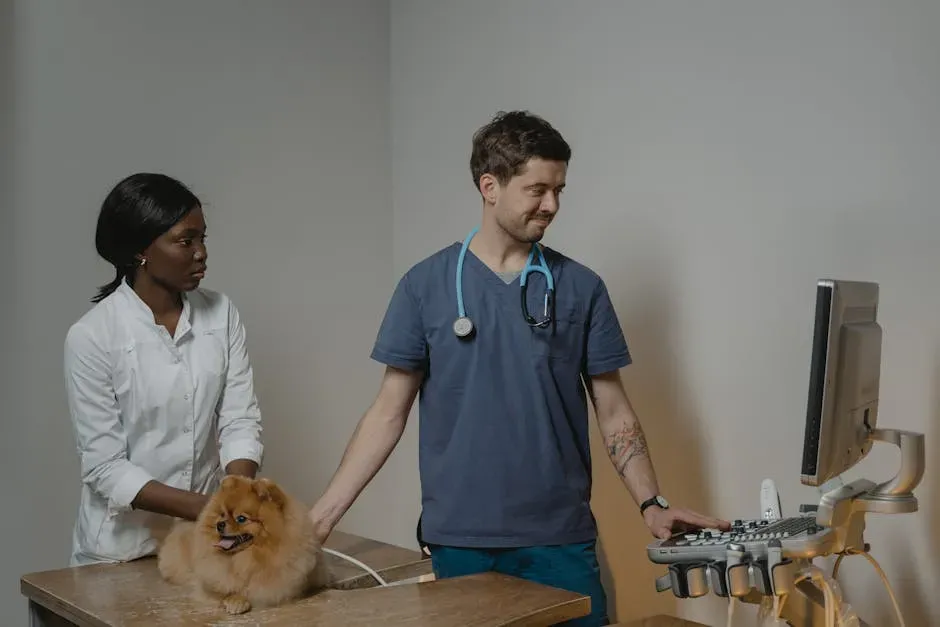
Vets repeatedly notice that the dogs with the best outcomes share one thing: owners who catch small changes early. The problem is most seniors simply don’t know what’s worth mentioning at all.
A little extra drinking, some nighttime pacing, an occasional accident — these aren’t “normal aging.” They’re often the first whisper of kidney disease, diabetes, or cognitive decline. Ask, “What changes do you want me to write down for next time?” and you instantly become your vet’s best ally. A simple notebook tracking appetite, water intake, and energy often tells a vet more over three to six months than a single exam ever could. Photos and short videos of odd behavior are worth more than you’d think — bring them.
#4 How Aggressive Should We Really Be With Testing at This Age?
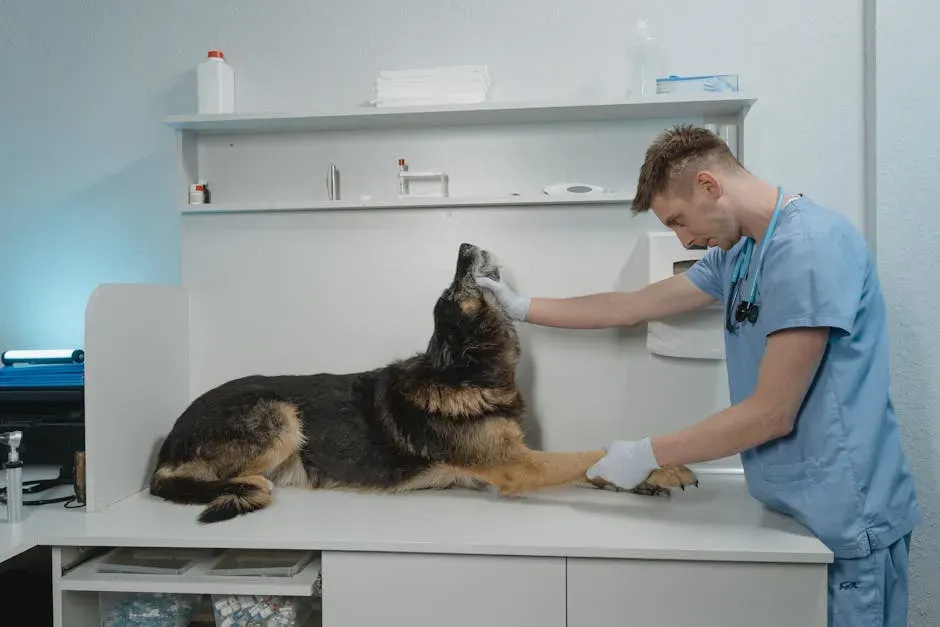
This is the question many vets wish older owners would ask out loud instead of quietly deciding on their own. Plenty of people over 70 think, “He’s 13 — what’s the point?” Vets see it very differently.
Early bloodwork or X-rays don’t always add years, but they can prevent a terrifying emergency-room crisis and dramatically improve comfort along the way. You’re allowed to ask, “I want to know what will actually change if we find something” before agreeing to anything. A good vet will lay out real options — minimal testing focused on comfort, moderate testing to catch treatable disease, or a full workup for total answers. Asking “what’s the smartest first test” isn’t being cheap. It’s being strategic.
Quick Compare
- Minimal: A basic exam plus targeted bloodwork only if symptoms appear — focused purely on comfort.
- Moderate: Routine bloodwork, urinalysis, and blood pressure checks to catch treatable disease early.
- Full workup: Imaging and specialist referrals for the most complete picture available.
#5 Is My Dog’s Weight Helping or Quietly Hurting Their Joints.

Many owners proudly report that their senior dog has “kept their weight,” treating it as a win. Vets often see something else: a dog quietly overweight, with every extra pound grinding down aging joints a little more each day.
Even a 10% weight loss in an arthritic dog can make as much difference as adding an entirely new pain medication. Ask your vet to show you a body condition score chart, let you feel the ribs and waist correctly, and give you an exact target — “let’s lose three pounds over three months.” For many people over 70, feeding is a love language, and cutting treats can feel almost cruel. But swapping high-calorie biscuits for a few pieces of veggie isn’t starving your dog. It’s sparing their hips and spine years of unnecessary strain.
#6 Are These ‘Senior’ Foods and Supplements Actually Doing Anything?

Pet food marketing is ruthless, and seniors are often the biggest target of all. That bag with the photo of a grey-muzzled Labrador on the front might genuinely be worse for your specific dog than what’s already in the bowl.
Not every senior dog needs low protein or grain-free food — some of those trendy choices can quietly erode muscle mass or stress the kidneys. Bring the label in and ask, “Is this really right for my dog?” The same honesty applies to supplements. Joint chews, CBD, powders — some have real data behind them, many don’t, and a few interact with prescription meds in ways owners never expect. Be upfront about everything, including “just a little turmeric,” and ask which one or two things actually matter most for your budget.
#7 What Can We Do to Make Our Home Easier on an Old Dog’s Body?
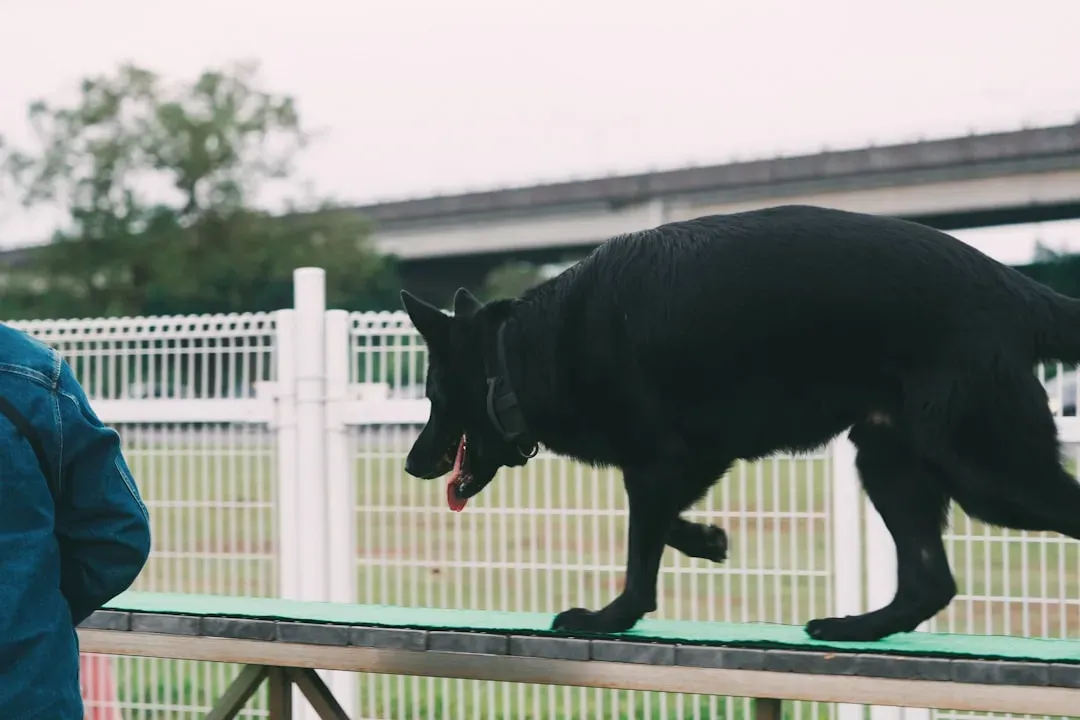
Most older owners have already modified their own homes with grab bars and better lighting, but rarely think to do the same for their dog’s environment. Slippery floors, steep stairs, and high beds quietly turn ordinary movement into slow joint damage.
Vets wish more people would ask, “What small changes at home could protect his joints and prevent falls?” because those tweaks often help more than another pill. Runners on slick floors, a ramp to the couch or car, raised bowls for a stiff neck, an orthopedic bed away from drafts — small fixes, real impact. This is one area where being over 70 is actually an advantage: you already understand, from your own body, exactly how much environment matters.
Fast Facts
- Rubber-backed runners on hardwood or tile cut down on slipping
- A ramp or pet stairs spare aging knees and spines from jumping
- Raised food and water bowls ease strain on a stiff neck
- An orthopedic bed placed away from drafts supports sore joints overnight
# 8 Is This Just ‘Canine Dementia,’ and What Can We Realistically Do?

Nighttime pacing, getting stuck in corners, staring blankly at walls — many owners quietly watch these changes happen and say nothing, afraid it means the end is near. Vets wish you’d bring it up sooner, not later.
Canine cognitive dysfunction is real, and early management — routine changes, enrichment, certain diets or medications — can genuinely slow it down or make it less distressing for everyone. Be specific: new anxiety, accidents from a dog who’s been house-trained for a decade, a sleep cycle that’s flipped upside down. Then ask, “What does quality of life look like for a dog with this, in your opinion?” Some owners will fight every symptom; others want a gentler, shorter path. Both are valid — but they start with this one honest question.
#9 How Do I Decide When It’s ‘ER Now’ vs. ‘Call You in the Morning’?
This is one of the most stressful parts of loving a senior dog, especially for anyone who lives alone or no longer drives at night. Many people over 70 have little patience for chaos and don’t want a midnight emergency unless it’s truly necessary.
Vets would far rather hand you a clear, personalized red-flag list than have you sit at home worrying, or worse, wait too long. Ask specifically: “Given my dog’s heart, kidney, or arthritis issues, what are the three signs that mean don’t wait — go?” Sudden collapse, trouble breathing, repeated vomiting with lethargy usually top that list. Then ask the flip side — what’s safe to simply watch until morning. A written list on the fridge can be the difference between panic and a clear decision at 2 a.m.
At a Glance
- Go now: Collapse, labored breathing, repeated vomiting with lethargy, pale gums, or a visibly bloated belly.
- Call in the morning: Mild stiffness, a single vomiting episode with normal energy, or a slightly smaller appetite for a day.
#10 Can We Talk Honestly About Costs and My Budget Before There’s a Crisis?

Many owners over 70 live on fixed incomes and are quietly terrified of being judged at the front desk. So they stay vague, and vets end up blindsided when a client suddenly says “no tests, no meds” the moment an emergency estimate lands.
Saying plainly, during a routine visit, “I’m on a fixed income — I need a realistic cost plan” isn’t difficult. It’s responsible, and most vets deeply prefer it. Ask what typical cost ranges look like for conditions your dog is already at risk for, so you can plan instead of panic. Some will call financial honesty “putting money above love.” That’s simplistic and unfair — clear boundaries almost always lead to better decisions and less suffering down the road.
#11 What’s Your Honest Take on My Dog’s Quality of Life Right Now?

Owners almost always underestimate how much has changed, because decline happens so gradually you adapt without noticing. Slower walks, more naps, more pills — it becomes the new normal before you realize it. Vets, seeing your dog only every few months, often spot the decline far more clearly than you do.
Looking your vet in the eye and asking, “If this were your dog, how would you rate their quality of life?” gives them permission to be candid instead of polite. Ask for a number, one to ten, and track it at every visit. Sometimes the answer hurts — “we’re managing, but we’re closer to the end than the beginning” is not an easy sentence to hear. But it can spare your dog weeks or months of quiet, invisible misery.
Dogs don’t fear death the way we do. What they fear is being left in a state where they no longer feel like themselves.
Dr. Alice Villalobos, veterinary oncologist and creator of the Quality of Life Scale
#12 Can We Make a Plan Now for His Final Phase, So I’m Not Deciding in a Panic?
This is the question too many people avoid until it’s already too late. Older owners in particular fear being left alone with that decision. Vets, meanwhile, desperately wish more families would start this conversation earlier, while things are still calm.
Talking about euthanasia and end-of-life care does not “jinx” anything — it gives you and your dog a far better final chapter. Ask what the last weeks will probably look like, and discuss your preferences now: at-home versus in-clinic, who should be present, and the specific “stop points” where you’ve agreed in advance that it’s time. Have your vet write it into the chart. On the hardest day, you won’t be starting from zero — you’ll be following a plan that calmer, clearer you already built.
The Bottom Line
Here’s the uncomfortable truth: senior dogs rarely suffer because their humans don’t love them enough. They suffer because their humans don’t know which questions to ask, or wait too long to ask them.
Vets don’t need fancier equipment to help your old dog live better. They need you to speak up — about pain, about budget, about the fears you’ve been carrying quietly about the end. Some people will insist that love and a warm bed are all an old dog needs. That’s comforting, but it’s incomplete.
Real devotion looks like asking the hard question before there’s an emergency, even when the answer scares you a little. If you’re over 70 with a senior dog beside you, your voice in that exam room is more powerful than any drug on the shelf. Use it — and don’t wait for the next crisis to start.
Which of these questions are you finally going to ask at your dog’s next visit — and which one do you disagree with completely?


