
14 Things Trainers Pick Up in a Dog That Predict How Quickly a Household Will Actually Settle

Most people assume a “good” dog is quiet, obedient, and doesn’t jump on guests. Trainers who’ve spent decades sitting on strangers’ living room floors say that assumption is almost completely wrong.
The real predictor of household harmony has almost nothing to do with sit, stay, or heel. It’s a set of subtle, almost invisible behaviors that most owners never notice – until the dog either melts into the family rhythm within two weeks, or turns the next six months into a slow-motion negotiation. Here’s what trainers actually watch for, and why some of it will surprise you.
#1 – How Fast the Dog Recovers From a Startle

A dog that jumps at a dropped pan and is back to normal in three seconds is telling you something important about its nervous system. Trainers call this “bounce-back time,” and it’s one of the single best predictors of adjustment speed in a new home. Dogs with short recovery windows treat surprises as information, not threats.
That means the chaos of a new household – doorbells, kids, vacuum cleaners – gets processed and dismissed instead of stored as trauma. The opposite pattern is the real warning sign. A dog that startles and then pants, paces, or hides for ten or fifteen minutes is running on a nervous system that’s easily overwhelmed. That doesn’t mean the dog is broken, but the settling-in period will likely take months instead of weeks, because every new sound resets the clock.
Fast Facts
- Bounce-back time is often measured in seconds, not minutes, in a well-adjusted nervous system.
- The widely referenced “3-3-3 rule” suggests roughly 3 days to decompress, 3 weeks to learn a routine, and 3 months to feel fully at home.
- Startle recovery is frequently one of the very first traits trainers assess, sometimes within minutes of meeting a dog.
- Dogs with slower bounce-back times usually benefit from a quieter setup for the first several weeks.
#2 – Whether the Dog Checks In Without Being Asked

Unprompted eye contact sounds like a small thing, but it’s actually a massive behavioral signal. A dog that glances back at its handler after sniffing something interesting is demonstrating what trainers call “voluntary engagement.” Dogs that check in on their own settle into new routines dramatically faster than dogs who never look back.
This isn’t about training or obedience – some dogs are never taught to check in, they just do it instinctively because they’re wired to look to a person for guidance. Dogs who never offer this eye contact tend to make decisions entirely on their own, which means they’re more likely to counter-surf, bolt through open doors, or ignore a recall in a new yard. Trainers see checking-in as the dog quietly saying, “I trust you to lead.”
#3 – How the Dog Reacts to Brand-New Objects

Put an umbrella, a laundry basket, or a rolling suitcase in front of a dog for the first time and watch what happens. The dogs who approach cautiously, sniff, and then move on are the ones who adapt to new furniture, new routines, and new house rules the fastest.
Dogs who freeze, bark, or retreat and refuse to re-approach are signaling something trainers take seriously: a low tolerance for novelty. In a brand-new household, novelty is everywhere – new smells, new floor layouts, new people – and a dog that struggles with one new object usually struggles with dozens of new stimuli every single day for weeks. This is why trainers often recommend a slow, staged introduction for these dogs, because rushing the process almost always backfires.
#4 – How the Dog Handles Being Touched Somewhere Awkward

Paws, ears, tail, and mouth. Trainers deliberately touch these areas during an evaluation because a dog’s reaction to awkward handling predicts vet visits, grooming sessions, and every future stressful moment in the home.
A dog that tolerates a paw hold or ear touch without stiffening is showing a baseline of physical trust that translates directly into faster bonding with new family members, especially children, who touch dogs less predictably than adults do. A dog that snaps, freezes, or wriggles away aggressively isn’t necessarily aggressive by nature, but it usually needs a slower, more deliberate desensitization process before the household can relax around it. Skipping this step is one of the most common mistakes new owners make, and trainers see the fallout months later.
#5 – Impulse Control Around Food and Doors
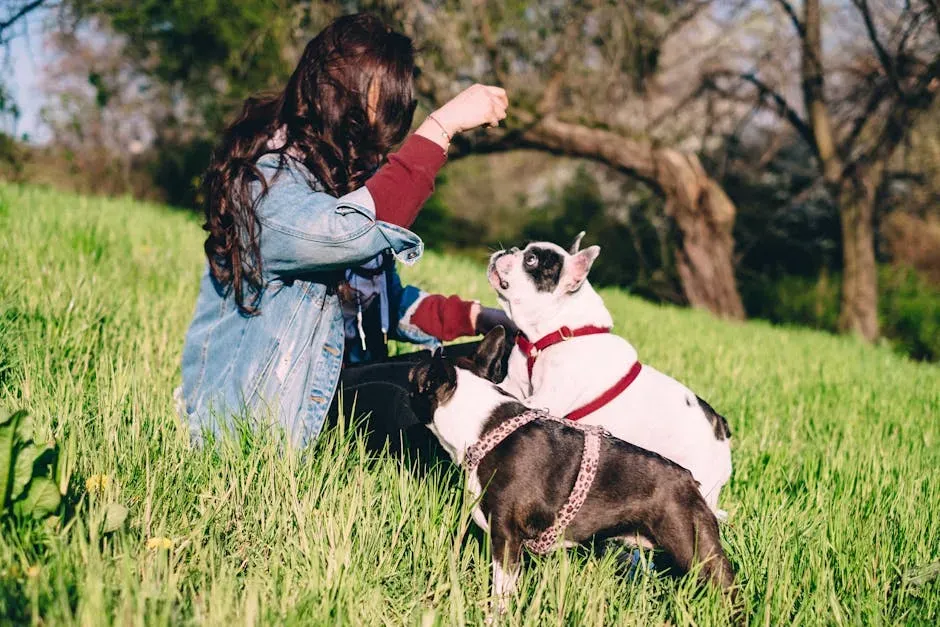
Can the dog wait, even for three seconds, before diving at a bowl or bolting through an open door? This single test reveals more about a household’s future daily friction than almost anything else. Trainers repeatedly flag food-bowl impulsivity and door-dashing as the two behaviors most likely to cause ongoing tension between a dog and a family.
Dogs with strong impulse control settle into mealtime routines, greeting rituals, and walk departures with almost no drama. Dogs without it create a constant low-grade stress loop – owners start avoiding the front door, guests get nervous, and mealtime becomes a daily battle instead of a calm ritual. The encouraging part is that impulse control is one of the more trainable traits on this list, but only if it’s caught early instead of waved off as “he’s just excited.”
#6 – Sound Sensitivity in an Everyday Environment

Thunder, garbage trucks, the microwave beep – sound sensitivity is one of the most underestimated predictors of household adjustment speed. Dogs who startle at ordinary household sounds and stay activated for extended periods often struggle for months, not days, to feel truly relaxed in a new space.
This matters more than most owners expect because modern homes are loud in ways that are easy to forget – dishwashers, notification pings, smoke detector chirps. A dog with sound sensitivity isn’t being dramatic; its auditory processing is genuinely more reactive, and every unfamiliar noise resets the adjustment timeline. Trainers often recommend a controlled, low-volume introduction to a home’s usual soundscape in the first week, because dogs eased in gradually adapt significantly faster than those thrown straight into a fully “live” household.
#7 – Play Style With Other Dogs
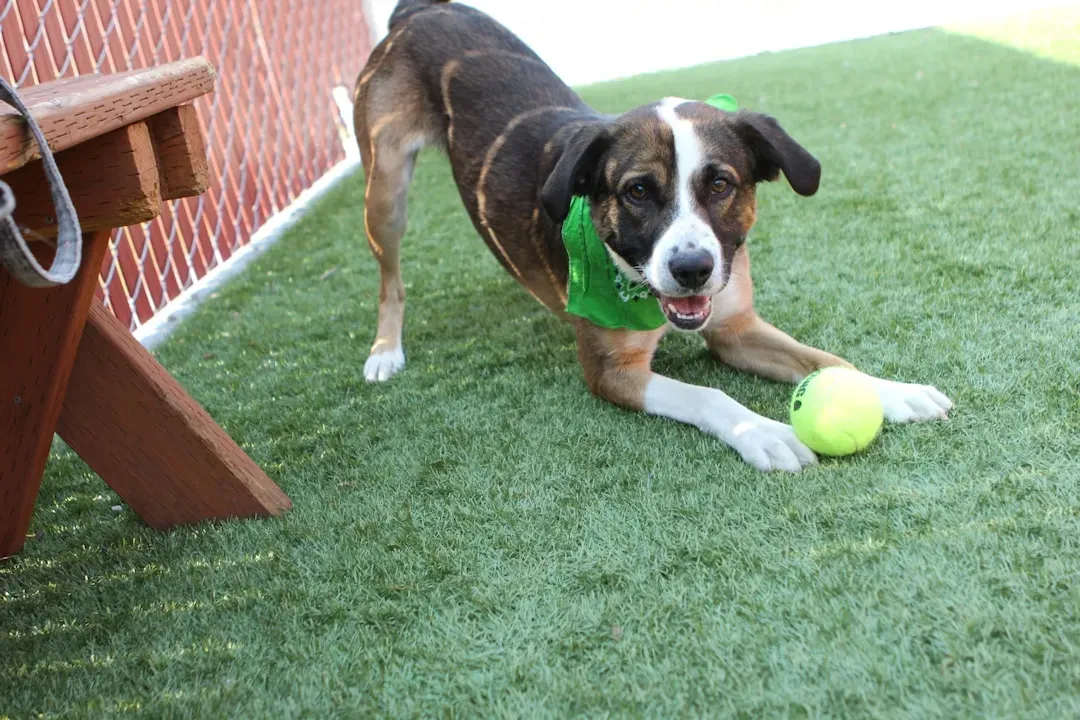
How a dog plays reveals its social operating system. Dogs who self-interrupt during play – pausing, offering a play bow, checking the other dog’s comfort – settle into multi-pet households far faster than dogs who play at one intensity level the entire time.
Trainers watch for this because it predicts something owners rarely think about: whether the dog will read social cues correctly once the excitement of a new home wears off. A dog with poor play-style regulation often escalates too quickly during normal interactions, which can create tension with resident pets and turn what should be a two-week adjustment into a two-month standoff. Dogs who naturally soften their play when another dog signals discomfort tend to be the fastest-integrating personalities in any multi-animal household.
Quick Compare
- Self-interrupting player: Pauses, offers play bows, reads the other dog’s cues – often settles into multi-pet homes within days.
- One-speed player: Same intensity regardless of feedback – usually needs weeks of supervised, gradual introductions.
- Bottom line: Play-style regulation predicts multi-pet harmony more reliably than breed or size matching.
#8 – The Ability to Simply Lie Down and Rest

This sounds almost too basic to matter, but it might be the single most telling behavior on this entire list. Trainers say a dog’s ability to fully relax – flopping onto a side, breathing slowly, eyes half-closed – in an unfamiliar environment is a rare and powerful predictor of fast household integration.
Most dogs entering a new home stay in a state of low-grade vigilance for days or weeks, scanning constantly, sleeping in short bursts. A dog capable of deep rest within the first few days is demonstrating an unusually flexible nervous system, one that adapts to new environments instead of treating them as ongoing threats. Trainers actively encourage new owners to create a low-traffic “settle zone” in the first week specifically to test and support this, because rest quality in week one often mirrors the entire adjustment trajectory that follows.
#9 – Tolerance for Being Left Alone, Even Briefly

Separation tolerance is frequently misunderstood as a training issue when it’s really a baseline temperament trait. Dogs who can handle five to ten minutes of alone time without escalating into panic almost always adjust to a new household’s daily rhythm within the first two weeks.
Dogs who spiral quickly – barking, scratching at doors, destructive chewing – when left even briefly are signaling a deeper attachment vulnerability that a new home can actually intensify rather than resolve, at least initially. This is one of the most common reasons families feel like an otherwise “perfect” dog is falling apart in the first month; the separation issue was always there, just untested until real life demanded real alone time. Early, brief, low-stakes departures in the first days are what trainers recommend to gently build this tolerance before it becomes a bigger issue.
#10 – Greeting Style With Strangers

The first ten seconds of meeting a new person tell trainers almost everything about how a dog will handle the parade of visitors, delivery drivers, and relatives that come with a new household. Dogs who greet with loose, wiggly body language and a soft tail carriage integrate into social households significantly faster than dogs who freeze, bark, or retreat.
Here’s the part trainers rarely say publicly: an overly enthusiastic, jumpy greeting isn’t actually the worst pattern – it’s the stiff, frozen greeting that predicts real long-term struggle. Owners often think a jumping dog is the “problem child,” but trainers say the frozen, still dog is the one requiring the most careful, slow introduction protocol. Rushing that dog’s exposure to visitors is one of the most common mistakes that stretches settling time from weeks into months.
#11 – Response to Correction or Redirection

How does the dog respond when gently interrupted mid-behavior? Dogs that redirect smoothly after a calm “no” or a leash guide settle into new house rules dramatically faster than dogs who sulk, shut down, or escalate.
This matters because every new household comes with new rules – different furniture boundaries, different feeding schedules, different walking routes – and a dog’s redirect-ability determines how painful that rule-learning phase will be. Dogs who bounce back from a correction within seconds treat house rules as simple information updates. Dogs who shut down or sulk for extended periods often need much gentler, slower rule introduction, and pushing too hard too fast is one of the most common reasons trainers get called in during month two instead of week one.
Worth Knowing
- A calm “no” followed by a quick recovery usually signals strong rule-adaptability.
- Sulking or shutting down after a correction often means rules need a slower, gentler rollout.
- Escalating after a redirect is a signal trainers take seriously during early evaluations.
- Redirect-ability tends to forecast how smoothly a dog adjusts to an entirely new set of house rules.
#12 – Willingness to Explore Independently

A dog that sniffs its way around a new space at its own pace, without clinging to a person’s leg the entire time, is demonstrating a kind of environmental confidence that predicts smoother days ahead. Trainers say independent exploration in the first 48 hours is a stronger predictor of fast adjustment than almost any obedience skill.
Dogs who refuse to leave a person’s side in a new environment aren’t showing loyalty so much as anxiety, and that anxiety typically doesn’t resolve on its own – it usually needs structured, gradual independence-building. The dogs who explore early tend to build a mental map of the home quickly, which reduces stress triggers because unfamiliar corners stop being unfamiliar. This is one of the clearest signs trainers look for during the very first walk-through of a new home.
#13 – How the Dog Handles Mild Frustration

Trainers sometimes place a treat under a cup or behind a barrier just to watch what happens next. A dog that works calmly at the problem for a reasonable stretch before disengaging shows an emotional regulation skill that predicts remarkably smooth household transitions.
Dogs that escalate immediately – barking, pawing aggressively, or abandoning the task in visible distress – are showing a lower frustration tolerance that tends to show up everywhere in daily life: at closed doors, during meal prep, when a toy rolls under the couch. Frustration tolerance is rarely discussed by new owners, but it’s one of the most frequently cited predictors among professional trainers, because it shows up in dozens of small daily moments, and each one either builds calm or builds tension.
#14 – The Dog’s Baseline Energy Discharge Pattern
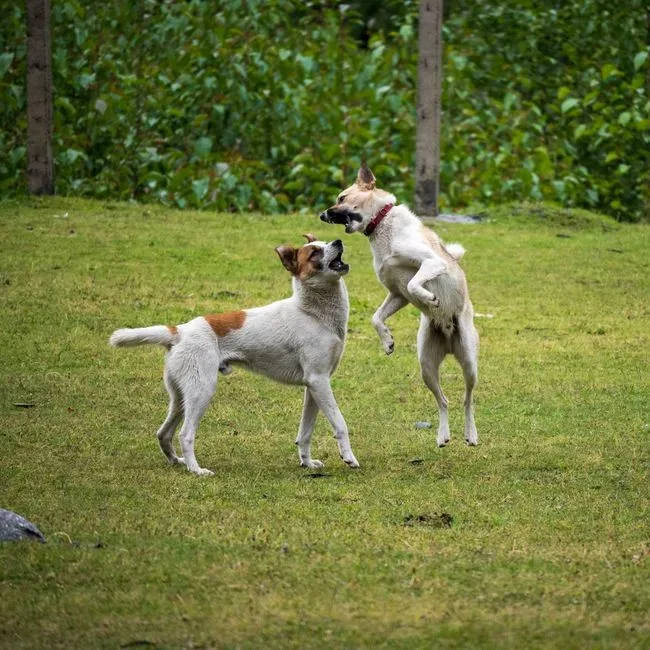
Every dog has a natural rhythm of energy bursts followed by rest, and trainers say dogs with a clear, predictable discharge-and-rest cycle settle into household schedules far faster than dogs with erratic, unpredictable energy patterns.
A dog that runs hard for ten minutes and then settles for an hour is easy to plan a day around – walks, feeding, and quiet time all fall into a rhythm quickly. A dog with an erratic pattern, alternating between sudden bursts and restless pacing with no clear cycle, creates ongoing unpredictability that makes even experienced owners feel like they can never quite “figure the dog out.” This trait often gets misdiagnosed as a training failure when it’s really just an unformed rhythm that needs a consistent daily schedule to stabilize.
Why It Stands Out
- Predictable energy cycles make daily scheduling far easier for new owners.
- Erratic bursts are frequently mistaken for behavioral problems, when they’re really just an unformed rhythm.
- A consistent discharge-and-rest cycle is one of the last traits owners think to check – and one of the most useful.
The Bottom Line

Here’s the part that’s uncomfortable for a lot of owners to hear: obedience has almost nothing to do with how fast a dog settles into a home. A dog can know every command in the book and still take six months to relax on the couch. A dog that’s never heard the word “sit” can feel like family within a week.
Recovery speed, impulse control, frustration tolerance, and the simple ability to lie down and rest matter far more than sit, stay, or heel ever will. If I had to bet on which dog settles fastest in a chaotic, loud, unpredictable American household, I’d bet on the one who can nap through it – not the one who can shake on command. Which of these have you noticed in your own dog? Drop your experience in the comments – we want to hear what actually predicted your settling-in period.