
The 7 Silent Signs Your Dog Is in Pain (And How to Spot Them Early)
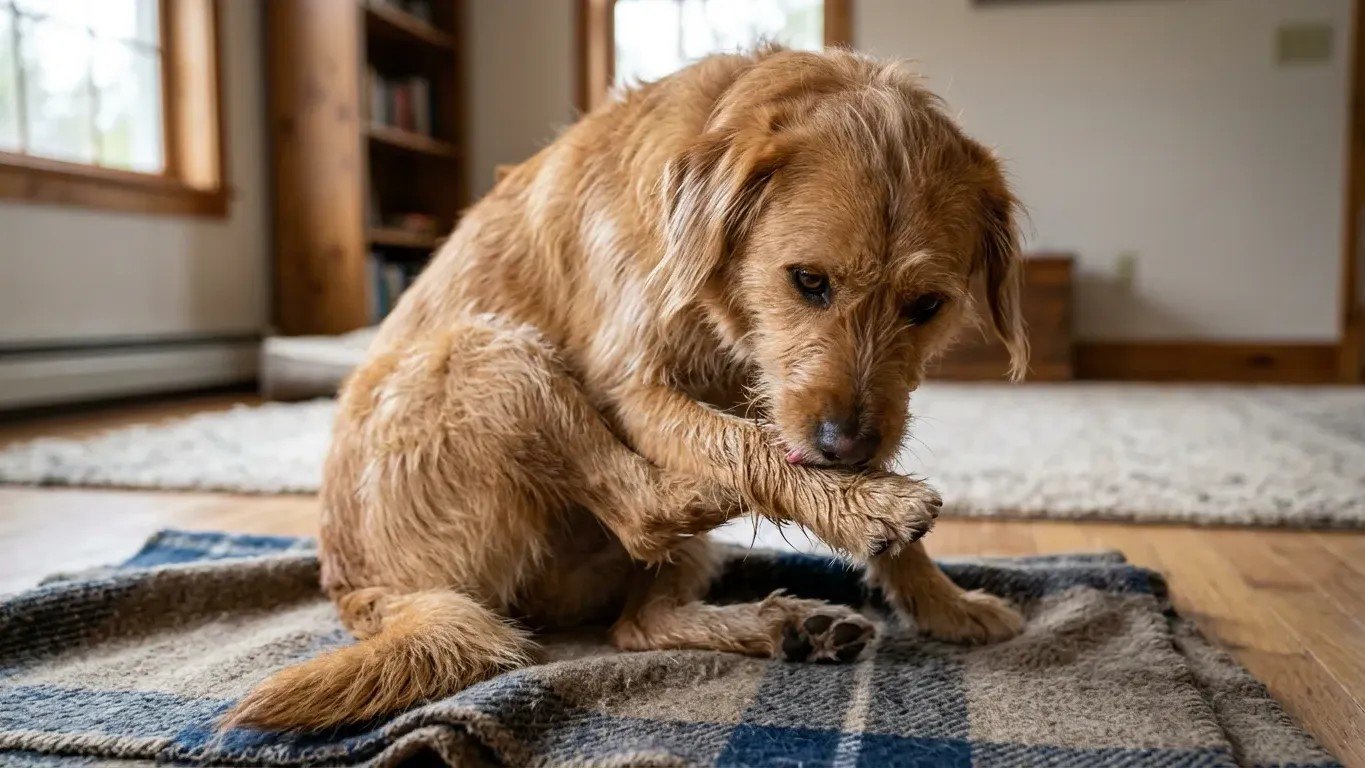
Your dog isn’t limping. He’s not whining. He ate his breakfast and wagged his tail at the door like always.
And yet, underneath all that normal-looking behavior, he could be hurting right now. Dogs are wired by evolution to hide weakness, which means the signs of pain rarely look like pain at all. They look like quirks, moods, and “just getting older.”
Here are the seven silent signals vets say owners miss most often, counted down to the one that’s easiest to catch too late.
#7 – A Slight Change in How They Stand
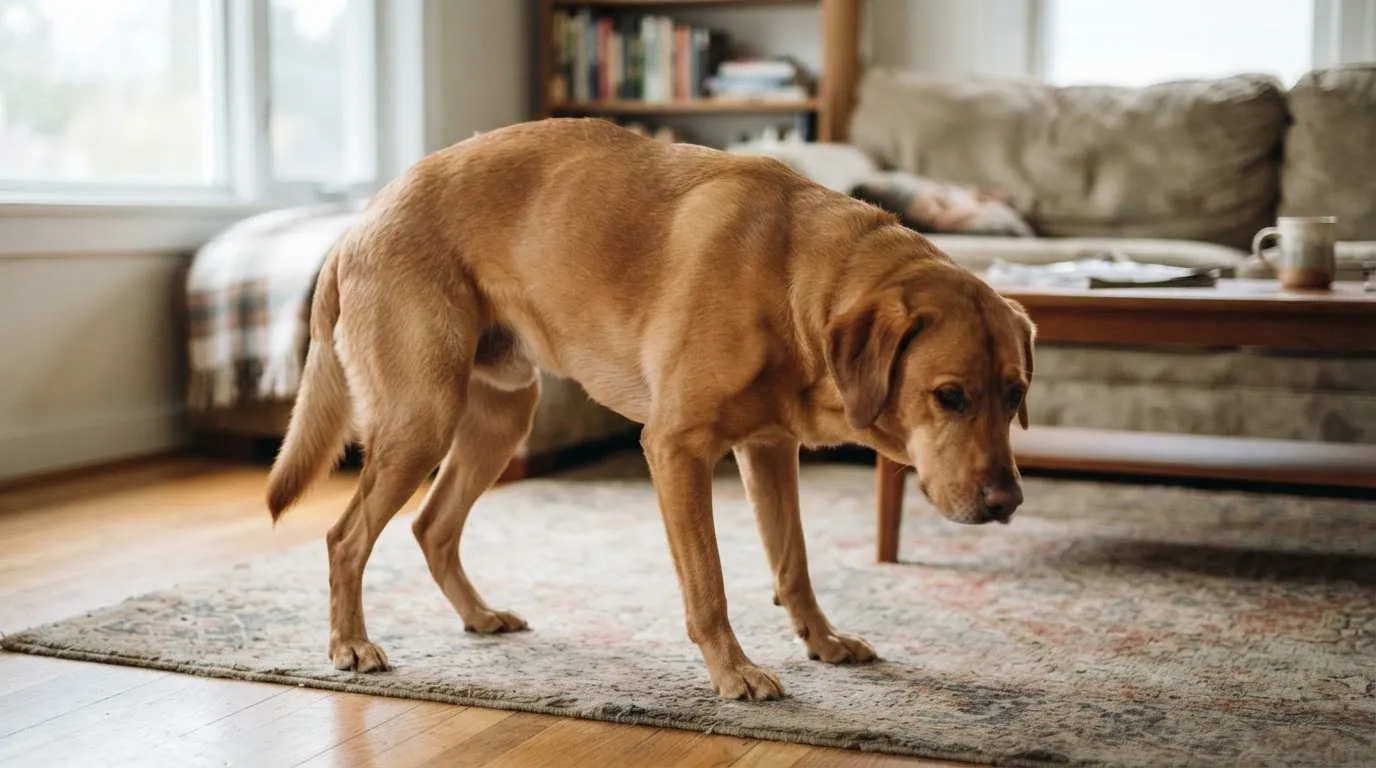
Before the limp ever shows up, the posture changes first. A dog easing pressure off a sore hip or joint will lower its head slightly or arch its back just a touch.
It’s easy to write off as laziness or a nap-induced stretch. Vets say this subtle shift is often the very first mobility red flag, weeks before anything looks obviously wrong.
But that’s nothing compared to what’s happening every time your dog yawns for no reason.
#6 – Yawning and Lip Licking With No Food or Tiredness Involved
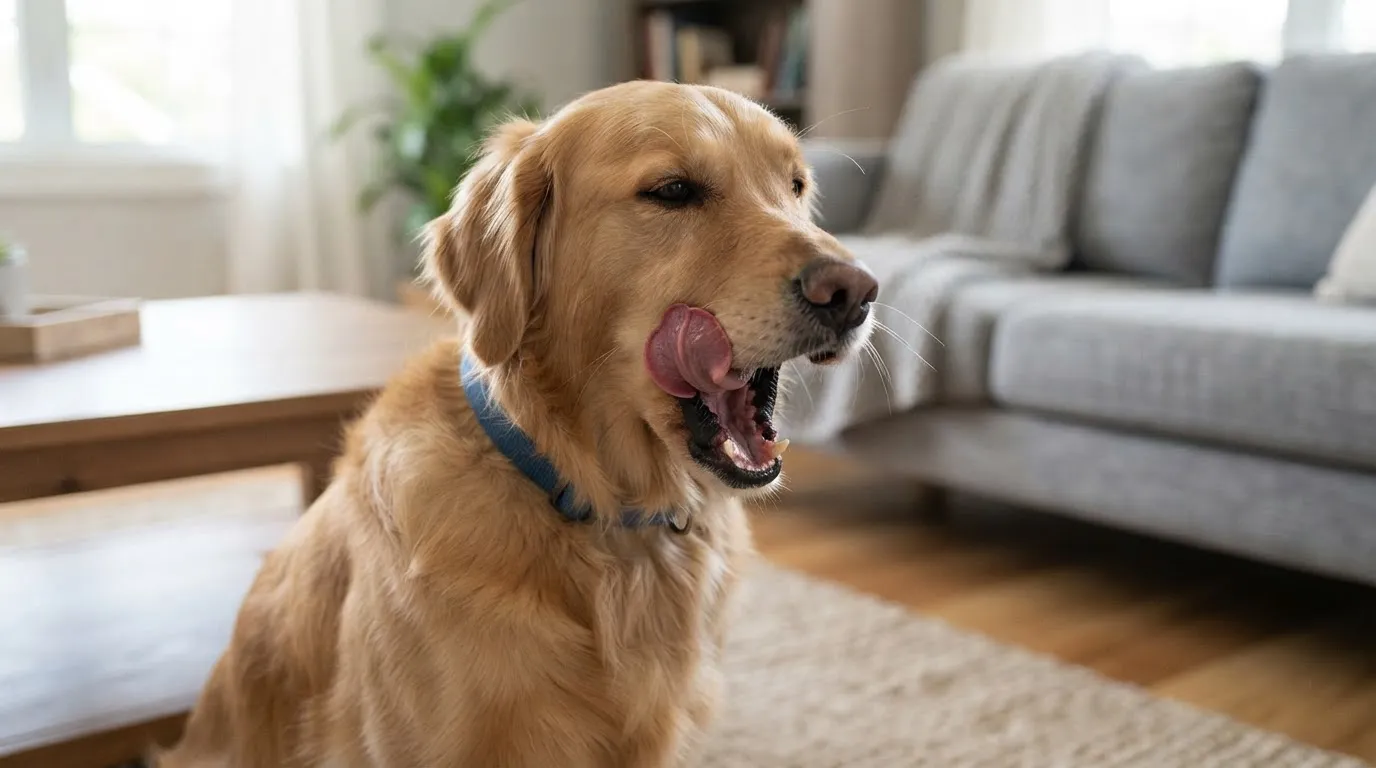
A yawn when your dog isn’t sleepy. A lip lick when there’s no food in sight. These are what vets call displacement behaviors, and they show up when a dog is uncomfortable but has no other way to say so.
Most owners chalk it up to nervous habits or personality. In reality, it can be one of the quietest tells of chronic discomfort, and it hides in plain sight because it looks so ordinary.
Fast Facts
- A 2026 study asked nearly 650 dog owners and non-owners to rate 17 dog behaviors for pain.
- Quiet cues like yawning, lip licking, and looking away were the ones most often missed.
- When a dog’s pain showed up as an obvious limp, 97% of owners correctly called it pain.
- Owners scored no better than people without dogs at reading these quieter signals.
The next sign feels like love. It isn’t always.
#5 – Suddenly Following You Everywhere
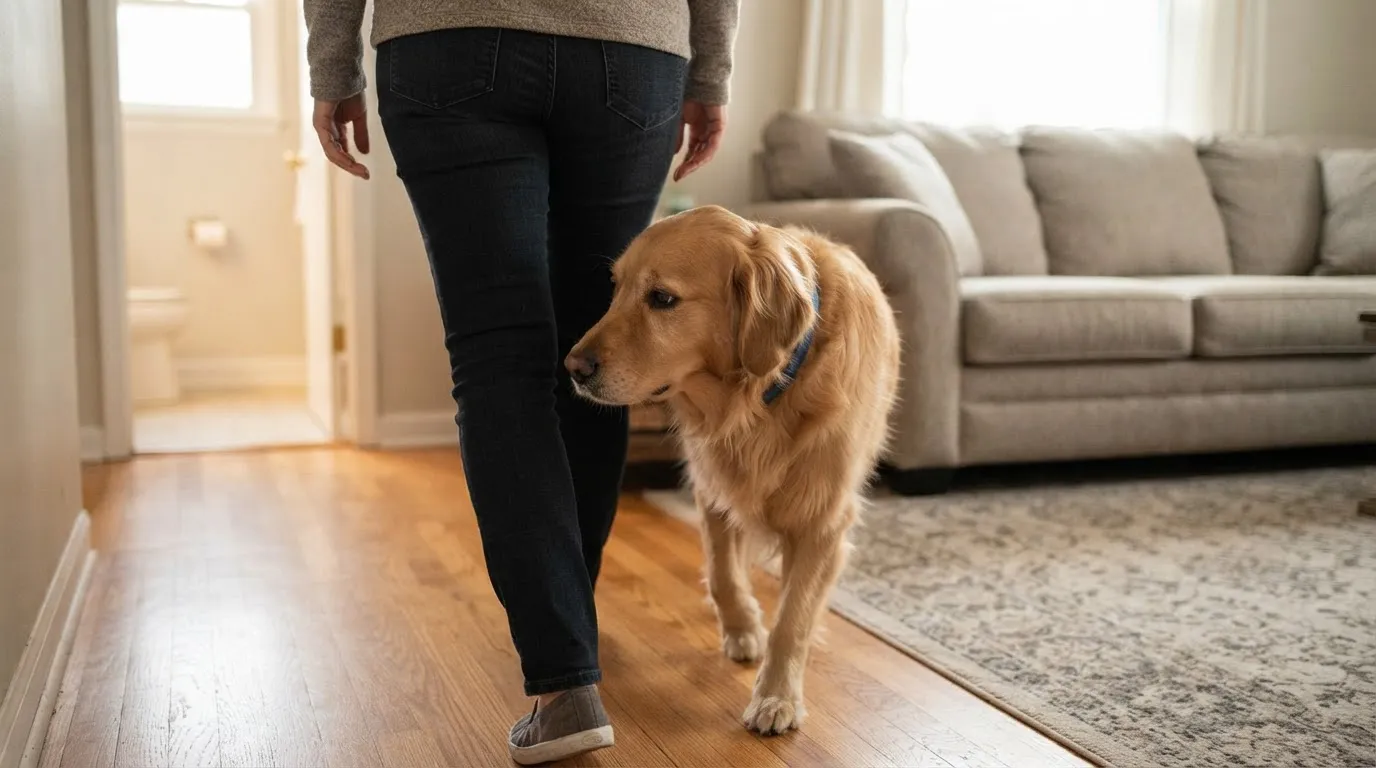
Your independent dog is suddenly glued to your side, room to room, even into the bathroom. It feels sweet, until you realize something’s changed.
Pain often makes dogs seek reassurance the same way they’d seek comfort from injury. This clinginess builds slowly, so it gets mistaken for extra affection instead of a warning sign.
Now watch what happens the next time your dog has to jump onto the couch.
#4 – Hesitating Before Jumps or Stairs
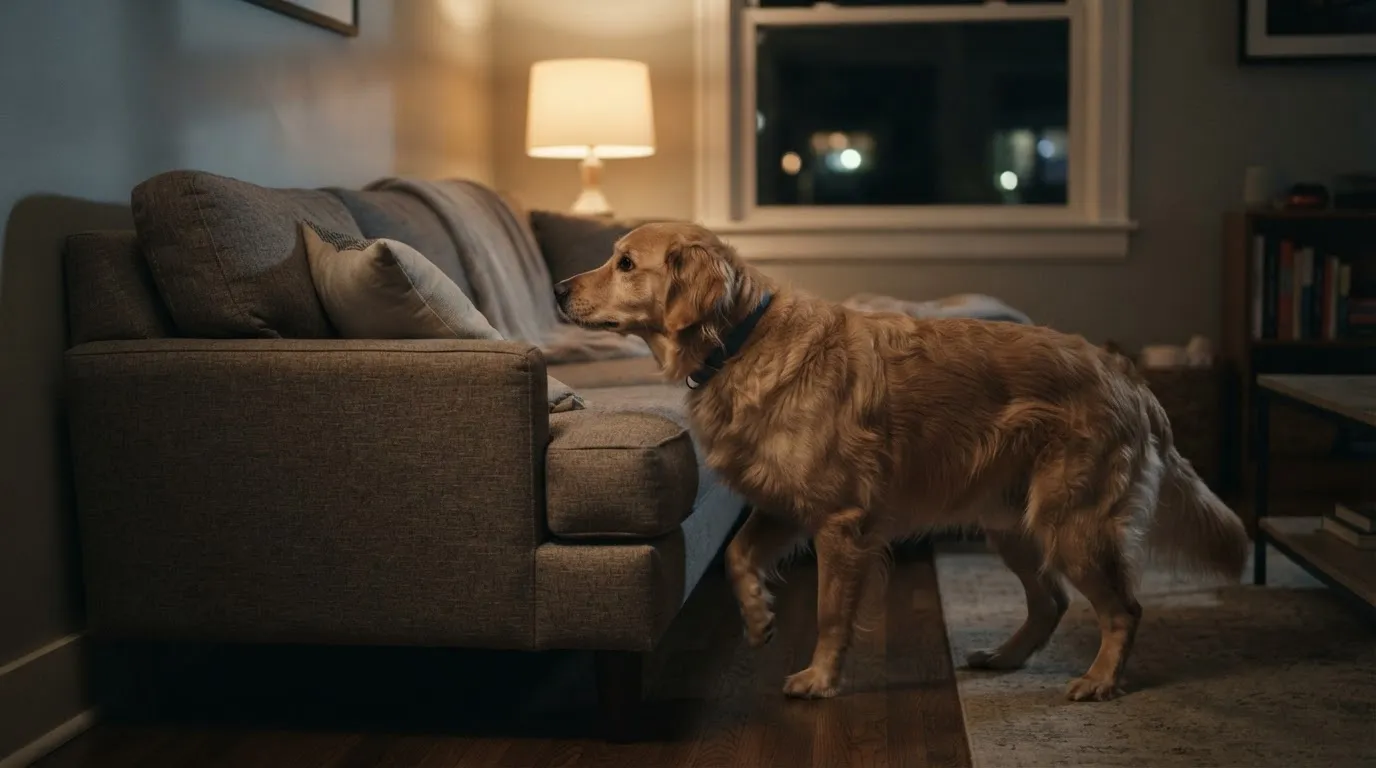
The couch used to be a one-second leap. Now there’s a pause, a recalculation, sometimes a flat-out refusal.
Owners often blame stubbornness or a training slip. But that hesitation is frequently joint or muscle pain talking, and it tends to repeat and worsen day after day rather than fade.
If you think daytime behavior is revealing, wait until you see what happens after dark.
#3 – Restless Nights and Strange Sleeping Spots
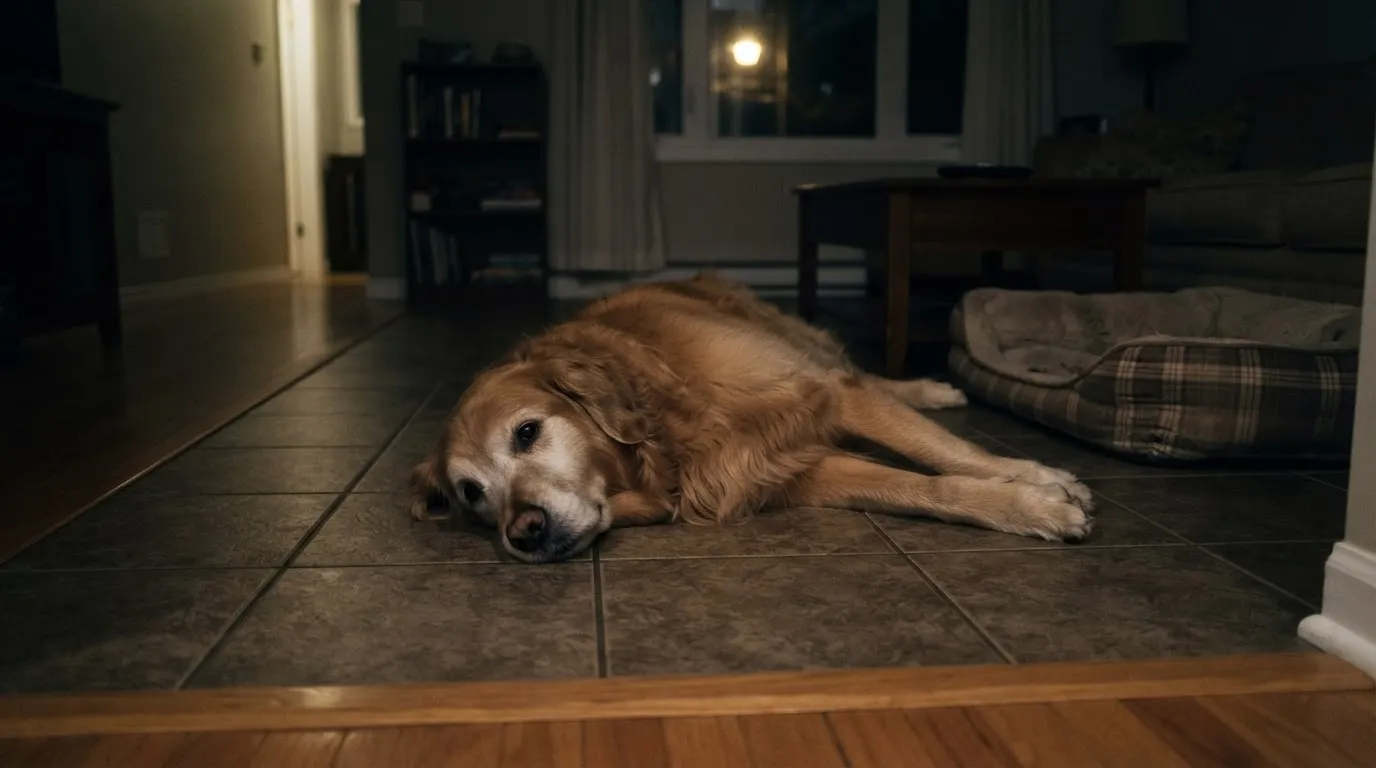
Pacing at 2 a.m. Sleeping stretched flat instead of curled up. Choosing the cold tile floor over the usual dog bed.
Dogs shift position and location to avoid pressure on a sore spot, and they do it without a single whimper. Owners usually blame noise outside or a change in routine, never realizing the real disruption is coming from inside their dog’s body.
Quick Compare
- Obvious pain (limping, hopping on three legs): correctly spotted by 97% of dog owners.
- Subtle pain (nighttime restlessness, shadowing, clinginess): correctly spotted by only 53% of dog owners.
- People with no dog at all scored almost the same, around 55%, on the subtle case.
Meanwhile, something even easier to miss is happening at the food bowl.
#2 – Slower Meals or Suddenly Picky Eating
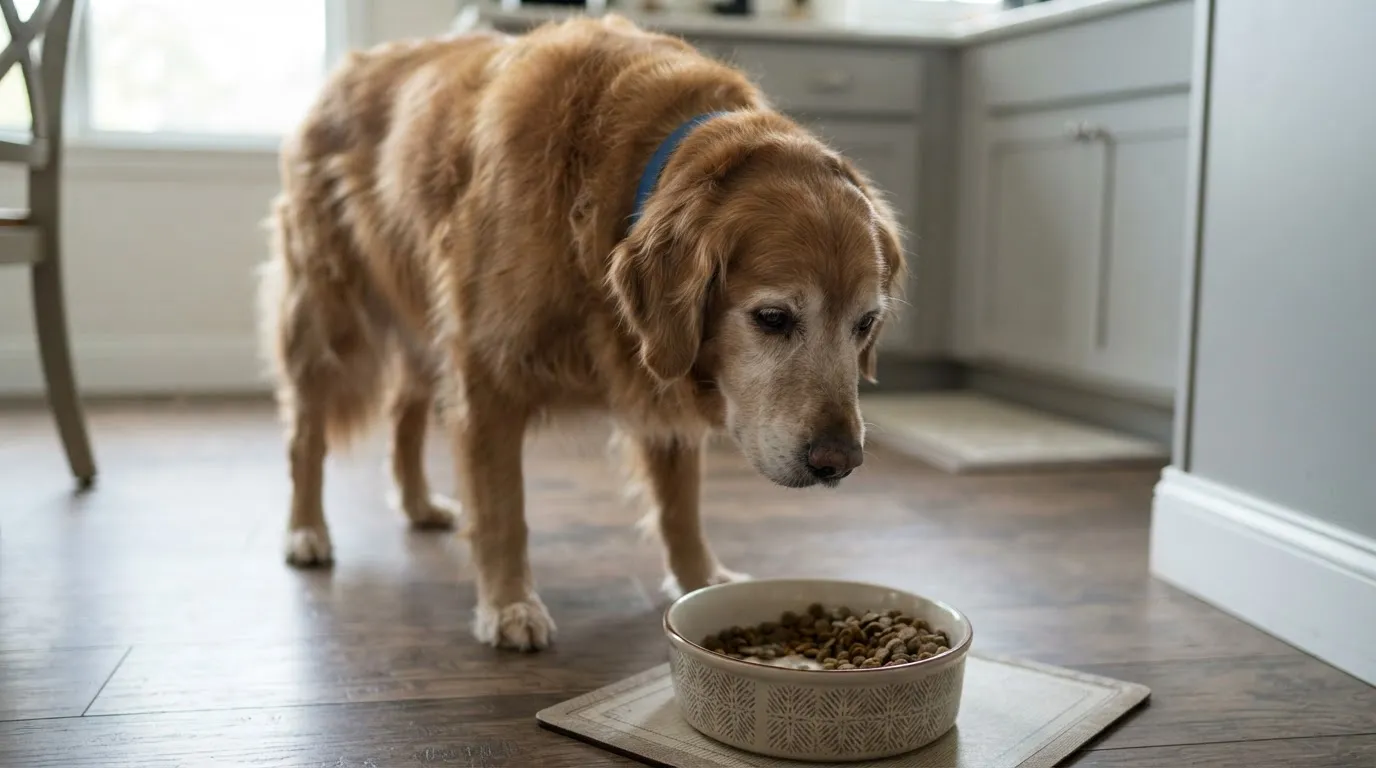
Dinner that used to disappear in thirty seconds now takes five minutes. Some kibble gets left behind more nights than not.
Dental pain, stomach discomfort, or general malaise can make chewing and swallowing genuinely unpleasant. Families usually blame boredom with the food, while the real cause quietly compounds until weight loss finally makes it obvious.
The final sign is the one vets say is the clearest, and the most heartbreaking to miss.
#1 – Obsessive Licking of One Spot or Flinching From Touch
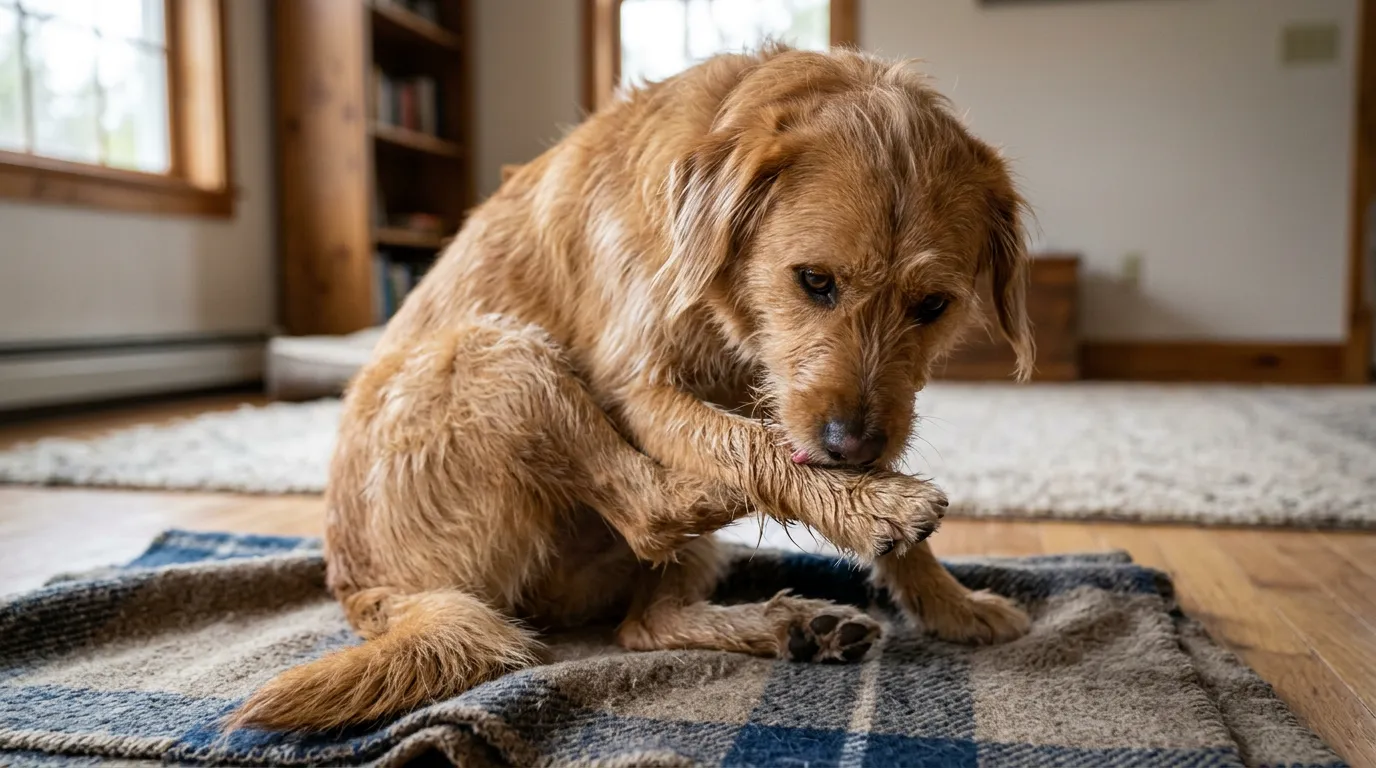
A dog who licks one paw, one joint, one patch of skin over and over isn’t grooming. He’s trying to soothe something that hurts.
Pulling away from a normal pat, tensing under your hand, or refusing to be touched in one specific area is often the loudest signal a dog can give without saying a word. Most owners don’t connect the dots until a bald patch or raw skin makes it undeniable.
Worth Knowing
- Roughly one in five adult dogs deals with osteoarthritis in at least one joint.
- The elbow, hip, ankle, and knee are the joints most commonly affected.
- Many cases stay undiagnosed until a dog starts licking, limping, or avoiding movement.
- A vet exam, not a guess at home, is the only way to confirm what actually hurts.
Researchers who tested nearly 650 dog owners and non-owners found “barely half” recognized pain when it looked like restlessness or clinginess instead of a limp.
Utrecht University pain-recognition study, 2026
The Bottom Line
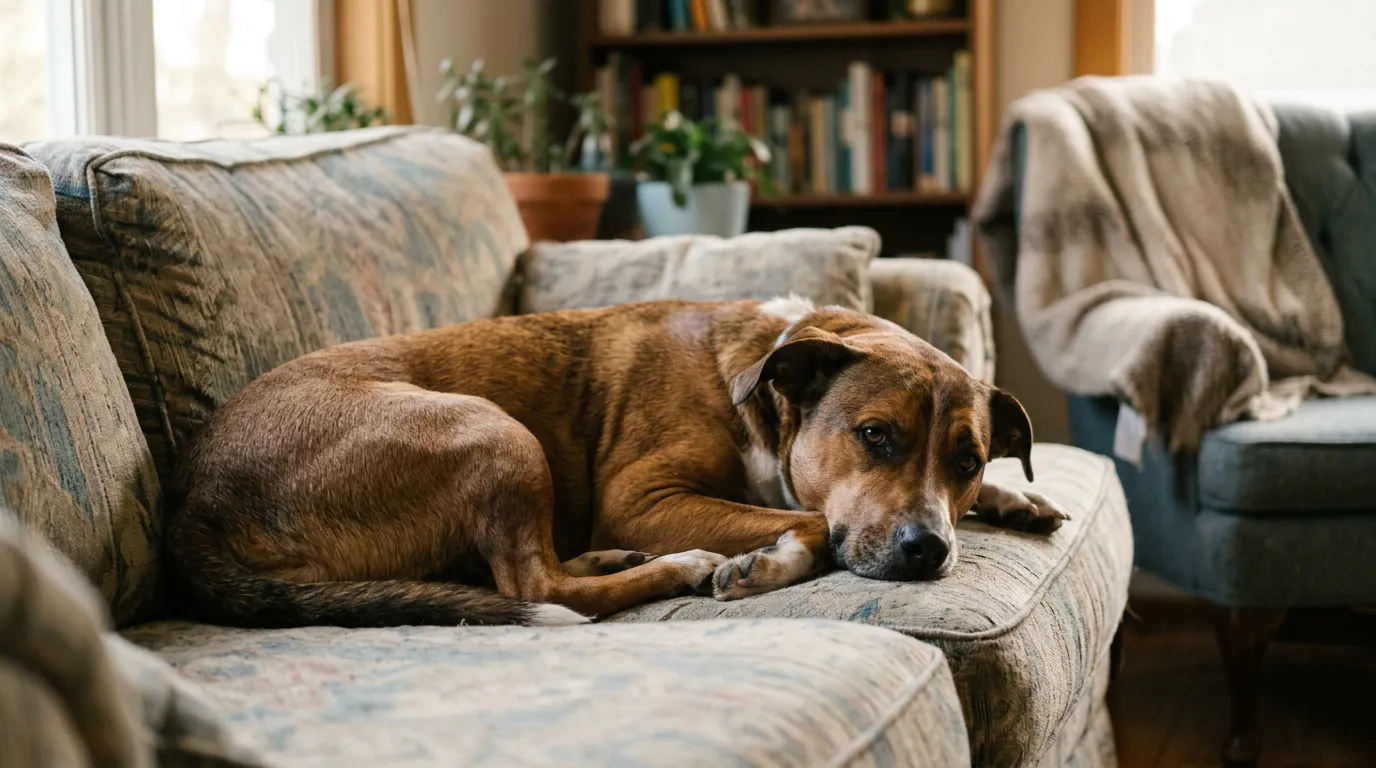
None of these seven signs look dramatic on their own. That’s exactly why they get missed.
A shifted stance, a random yawn, a clingy afternoon, a hesitant jump, a restless night, a slower dinner, a spot licked raw. Individually they seem like nothing. Together, they’re often the earliest map of pain your dog can draw for you.
Catch the pattern early, and a vet visit becomes a quick fix instead of a crisis. Miss it, and your dog just keeps quietly enduring what he never had the words to tell you about.
Did we miss one? Drop it in the comments.