
Ghost Octopus Faces Imminent Threat from Deep-Sea Exploration
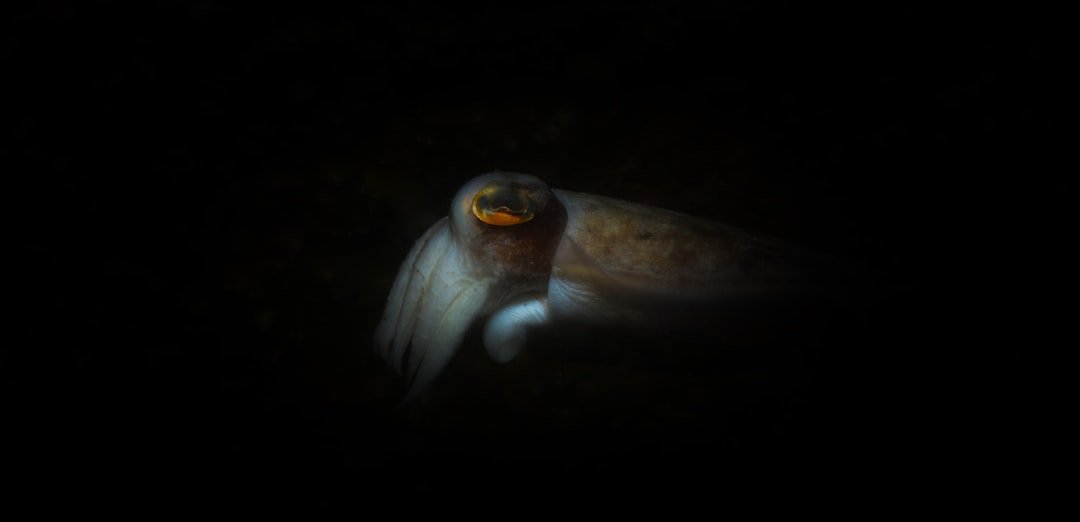
In the vast, lightless expanses of the Pacific Ocean’s Clarion-Clipperton Zone, a translucent creature known as the Casper octopus drifts silently among manganese nodules. This ghostly cephalopod, with its ethereal appearance, relies on the seabed’s delicate structures for survival. Recent investigations reveal how intensive research activities now jeopardize its habitat, raising alarms among conservationists.[1][2]
China’s Fleet Dominates Deep-Sea Surveys
A joint investigation by Mongabay and CNN tracked eight Chinese state-owned research vessels over the past five years. These ships focused on mineral exploration in areas allocated by the International Seabed Authority to Chinese companies.[1] They accumulated more than 814 days within or near these zones, covering 102,000 kilometers – a distance exceeding twice the Earth’s circumference.[2]
China holds five exploration contracts spanning 225,000 square kilometers, primarily targeting polymetallic nodules rich in nickel, cobalt, and copper. Vessels such as the Xiang Yang Hong 01 and Xiang Yang Hong 06 conducted detailed seabed mapping using multibeam echosounders. These operations often followed precise “lawnmower” patterns to scan vast seafloors.[3]
However, data showed the ships spent only about 6% of their time in designated mining areas. Much of their activity occurred in broader ocean regions, including near undersea cables and military-sensitive zones. This pattern underscores the scale of China’s deep-sea ambitions.[2]
Powerful Echosounders Harm Delicate Marine Life
The vessels deployed high-powered echosounders, essential for mapping but disruptive to deep-sea ecosystems. These sonic tools generate intense noise that can injure sensitive species like whales and octopuses. Casper octopuses, in particular, face risks from this acoustic disturbance in their remote habitats.[1]
Grimpoteuthis species, nicknamed Casper for their pale, ghostly form, inhabit depths of 4,000 to 6,000 meters. They lay eggs on sponges attached to manganese nodules, structures central to nodule-rich fields like the Clarion-Clipperton Zone. Noise pollution from surveys could disorient these slow-moving creatures, interfering with hunting and reproduction.[1]
- Xiang Yang Hong 06 surveyed 44,000 square kilometers west of Guam using multibeam systems.
- Xiang Yang Hong 03 lingered for 48 hours over a transpacific cable, scanning 400 square nautical miles.
- Shen Hai Yi Hao traveled over 25,000 kilometers to the North Atlantic for sampling.
- Hai Yang Di Zhi Liu Hao entered foreign exclusive economic zones without permission.
- Ke Xue operated near Alaska’s Aleutian Islands in U.S. waters.
Such incursions highlight how exploration noise permeates understudied abyssal plains, where biodiversity remains largely unknown.[3]
Deep-Sea Mining Looms as Greater Peril
Exploration precedes commercial extraction, which promises even graver consequences. Test mining in the Clarion-Clipperton Zone reduced animal abundance by 37%, according to a 2025 Nature study. Ecosystems showed no full recovery even 44 years after disturbances.[2]
Manganese nodules, potato-sized formations millions of years old, support unique life forms including sea cucumbers, sponges, and starfish. Casper octopuses depend on these for egg-laying sites. Harvesting nodules would strip away this foundation, potentially eradicating species before scientists fully document them.[3]
| Vessel | Key Activity | Environmental Concern |
|---|---|---|
| Xiang Yang Hong 01 | Northwest Pacific zigzagging | Echosounder noise |
| Da Yang Hao | Taiwan coast surveys | Habitat disruption |
| Hai Yang Di Zhi Liu Hao | EEZ encroachments | Sampling impacts |
China’s Ministry of Natural Resources emphasizes environmental protection under ISA guidelines. Yet critics warn that rivalry with the U.S., which invests billions in alternative mining, accelerates risks to ocean biodiversity.[2]
Calls Grow for Protective Measures
Forty countries and leading scientists advocate a moratorium on deep-sea mining. The ISA has designated 1.9 million square kilometers as areas of particular environmental interest, off-limits to extraction. Recent discoveries, including thousands of new microbial species, underscore the urgency of caution.[2]
Conservation groups highlight how military-civilian fusion policies blur lines between research and strategy, amplifying threats. Protecting Casper and similar species requires international oversight beyond current frameworks.
Key Takeaways
- Eight Chinese vessels logged 814 days in mining zones but prioritized strategic surveys.
- Echosounders pose immediate harm to octopuses and whales.
- Mining tests show lasting biodiversity loss in nodule fields.
As the race for seabed minerals intensifies, the fate of the Casper octopus serves as a stark reminder of the deep ocean’s fragility. Stronger global regulations could safeguard these ancient ecosystems for future generations. What steps should nations take to protect deep-sea wildlife? Share your thoughts in the comments.