
12 Signs Your Dog Has Decided You Are Its Whole World
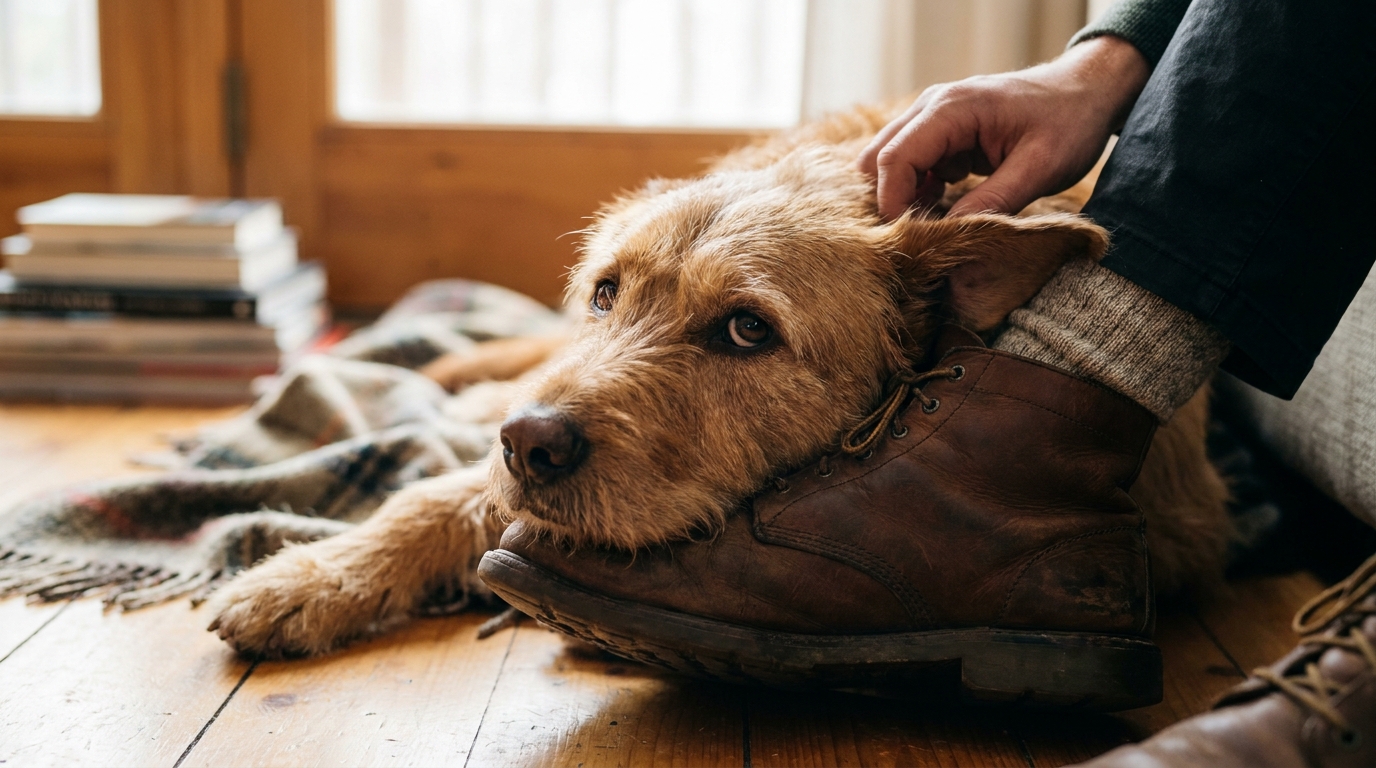
Stick with us to the end: one simple behavior reveals whether your bond has crossed from companionship into something deeper.
Dogs don’t do anything halfway. When they decide you’re important, the signs show up in dozens of small moments most owners walk right past without noticing.
What looks like clinginess or neediness is often something else entirely—a complete reordering of priorities that puts you at the center of their universe. Here’s what the data actually says.
#12 — They Check Your Location Every Few Minutes
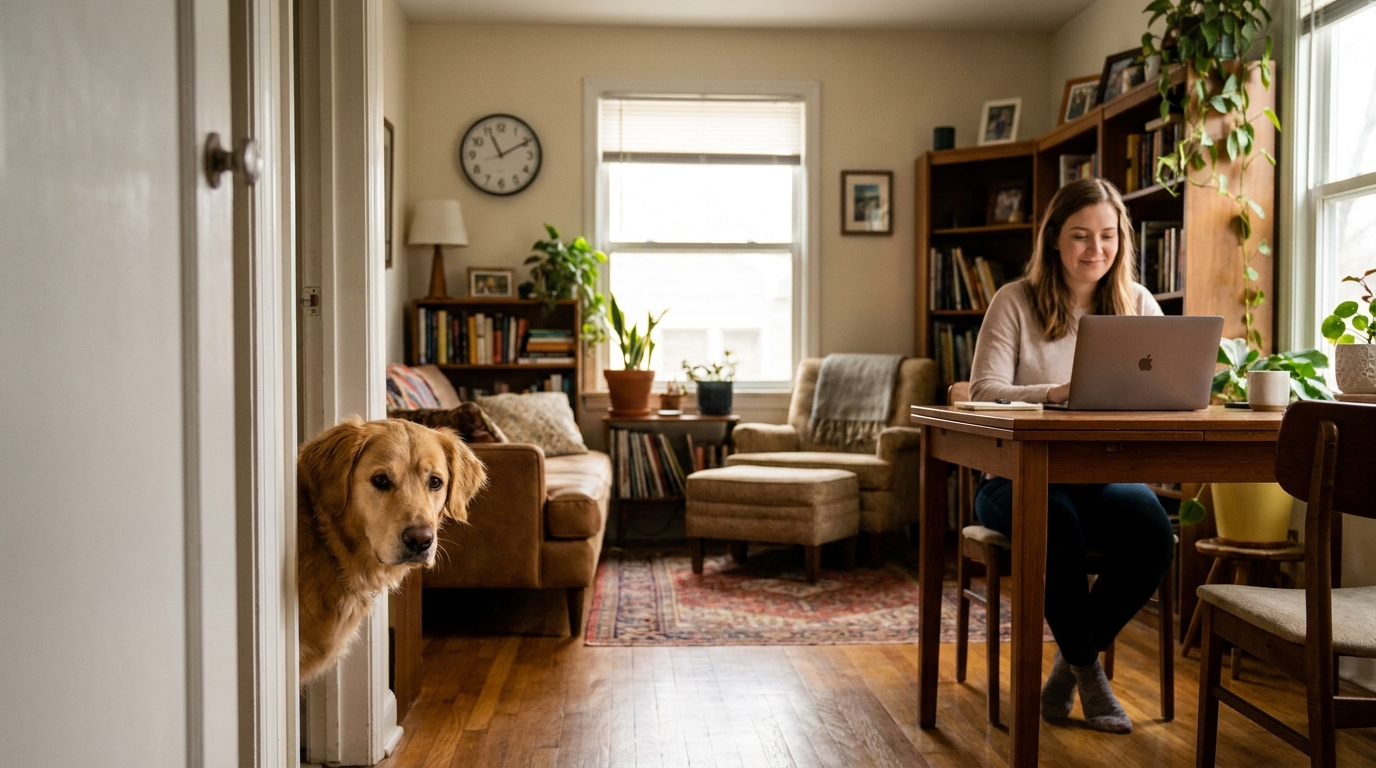
Your dog tracks you from room to room without making a sound.
This constant location monitoring isn’t separation anxiety—it’s a proximity maintenance behavior observed in bonded pairs across pack animals. They’re not worried you’ll leave; they’re making sure they know exactly where you are at all times.
The behavior stems from an instinct to maintain visual or auditory contact with the pack leader. Wild canids do this continuously, using brief check-ins to coordinate movement and maintain group cohesion.
Veterinary behaviorists note this pattern intensifies after you return from trips or extended absences. The monitoring frequency can reach once every three to five minutes in deeply bonded dogs, often without the owner registering the behavior at all.
#11 — Your Routine Dictates Their Entire Day
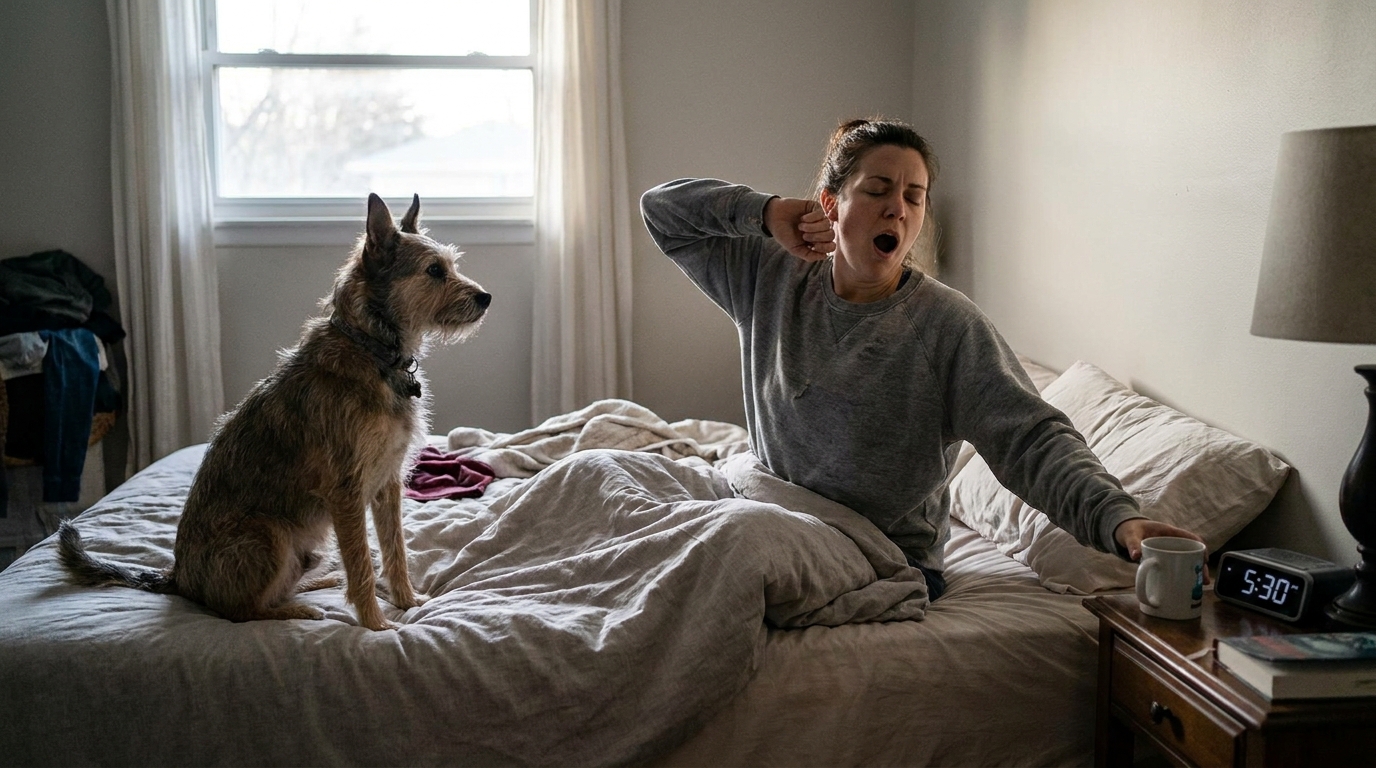
They’re awake exactly when you wake up, regardless of the actual hour.
Dogs with deep attachment synchronize their circadian rhythms to match yours, shifting sleep and activity windows to align with your schedule. This goes beyond learned behavior—their cortisol and melatonin patterns literally adjust to mirror the household rhythm.
The synchronization happens through repeated exposure to your patterns. Their internal clock recalibrates based on light, sound, and movement cues you provide, essentially programming their day around your presence.
Research from the University of Vienna found that dogs in single-owner households show tighter circadian alignment than those in multi-person homes. They can maintain this sync even when you change your schedule, adjusting within three to four days to match new wake times or meal patterns.
But #10 reveals a habit that genuinely surprises them…
#10 — They Bring You Objects Without Prompting
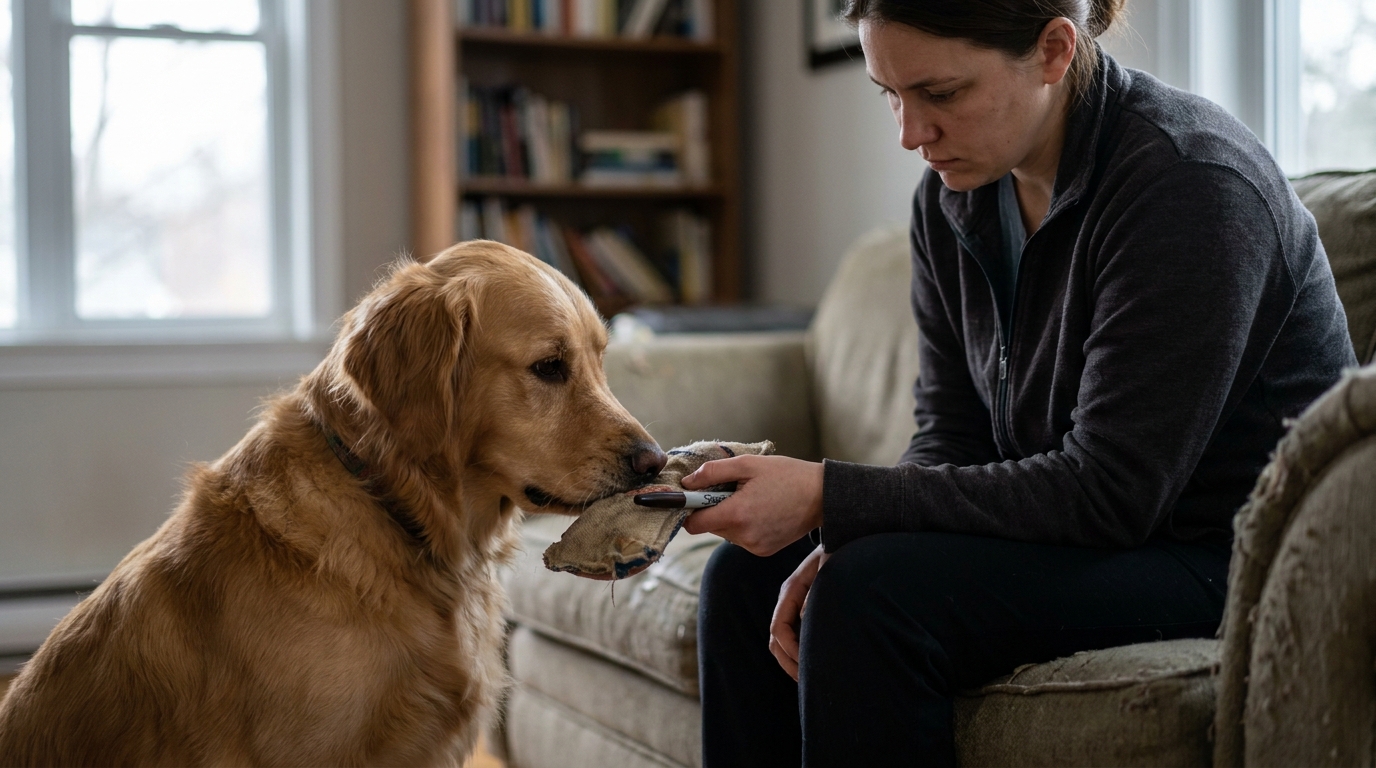
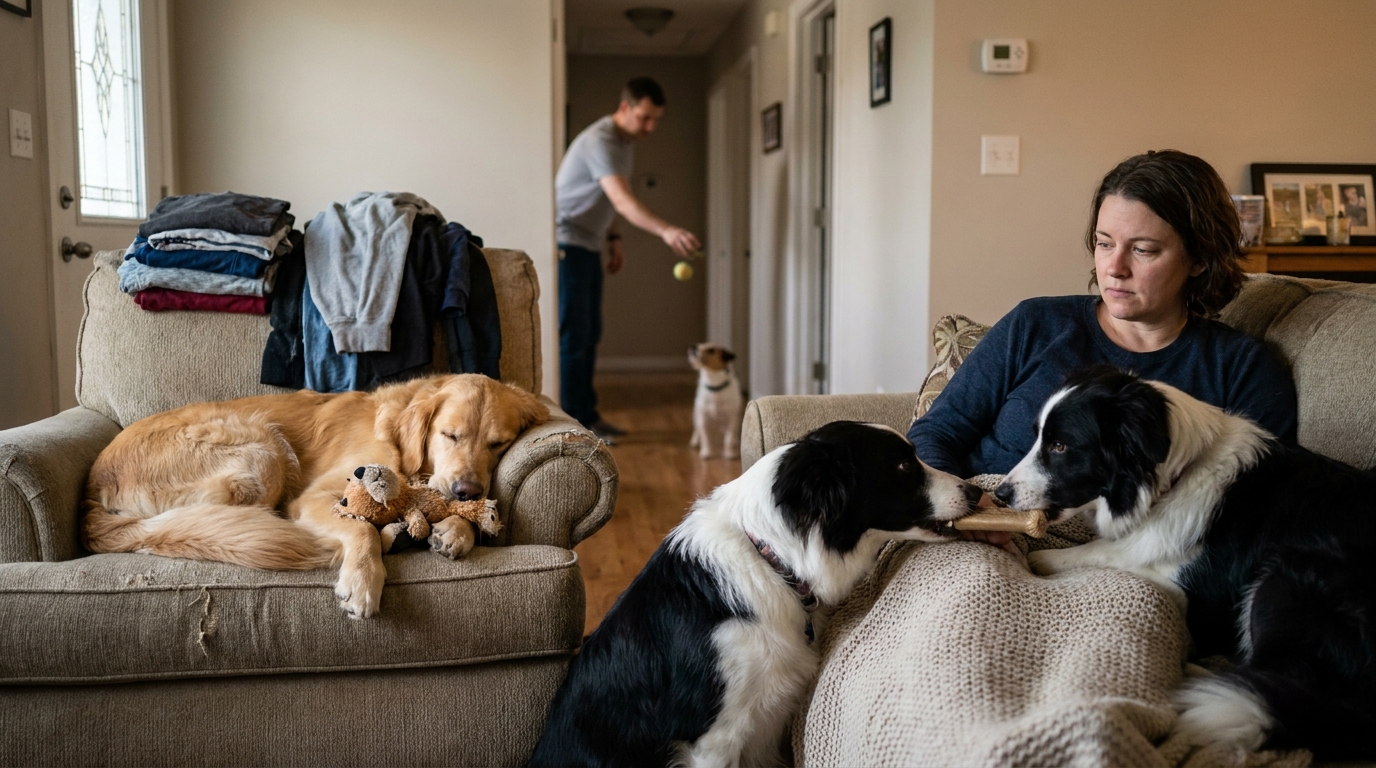
The toy delivery happens when you’re sad, stressed, or quiet.
This unprompted gift-giving represents resource sharing behavior rarely seen outside parent-offspring or mate relationships in the animal kingdom. They’re offering their most valued possessions during moments when they perceive you need comfort or distraction.
The trigger isn’t arbitrary—dogs read micro-expressions and vocal tone shifts humans barely notice themselves. When they detect distress markers, the instinct to offer a high-value item activates, mirroring how wolves provision for pack members who are injured or unwell.
Animal behaviorists identify this as one of the clearest markers of deep attachment. The objects aren’t random; dogs typically select toys or items they themselves find most comforting, essentially giving you what works for them when they’re anxious.
Quick Compare
- Casual bond: brings toys during play only
- Deep bond: delivers items during your stress moments
- Strongest bond: leaves toys near you overnight
#9 — Physical Contact Becomes Their Default Setting
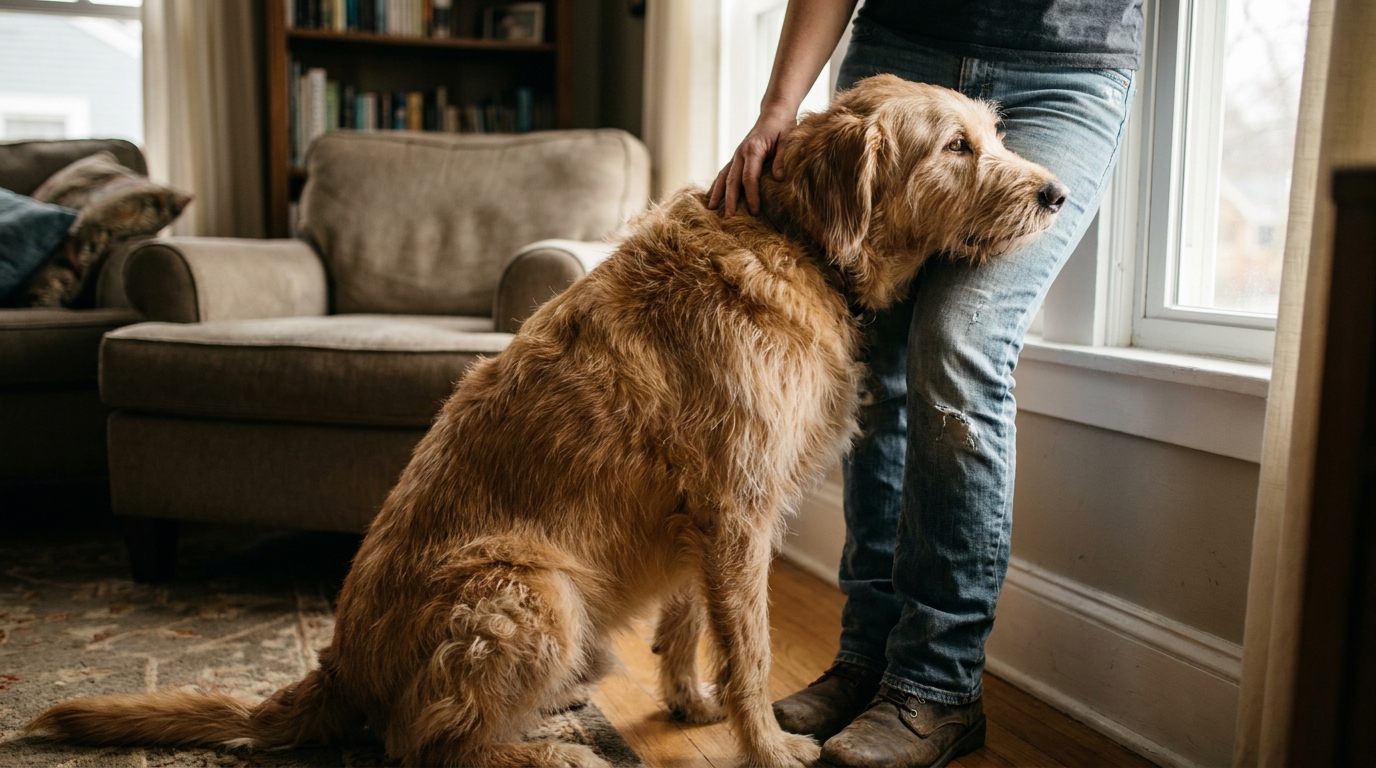
They lean their full weight against your legs when you stand still.
This sustained pressure behavior signals trust and claiming in equal measure—they’re simultaneously grounding themselves through your presence and marking you as their person. The lean isn’t casual; it’s deliberate weight transfer that would knock over someone they didn’t fully trust.
Canine body language experts explain this as an evolutionary holdover from denning behavior. Pack animals sleep pressed against each other for warmth and security; the standing lean reproduces that pressure contact during waking hours.
The behavior intensifies in unfamiliar environments or around strangers. Dogs who lean hardest at home often show the same pressure-seeking in new locations, using your body as a mobile safe zone when normal territory markers aren’t available.
#8 — They Position Themselves as a Physical Barrier
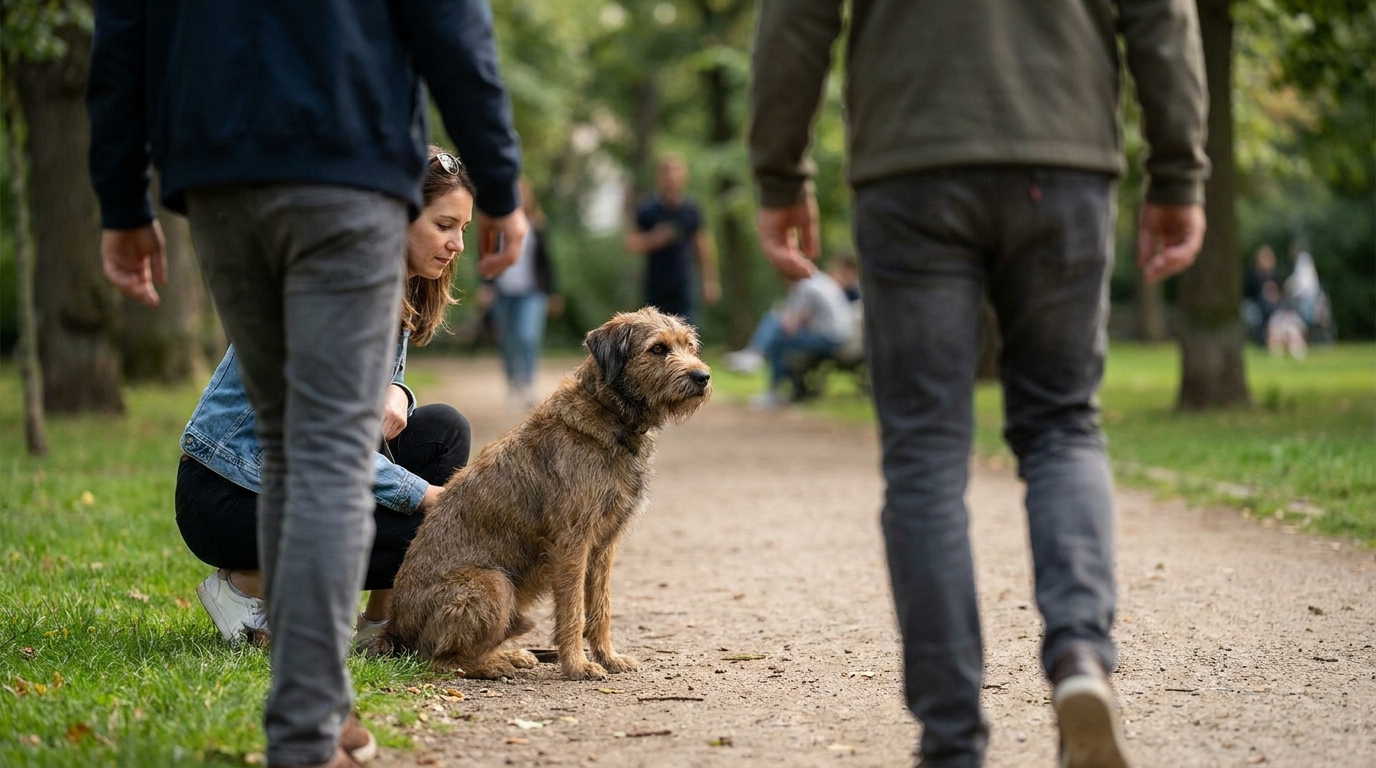
Your dog consistently places their body between you and approaching people.
This isn’t aggression or resource guarding in most cases—it’s protective positioning that prioritizes your safety over their own comfort. They’re creating a buffer zone, giving themselves reaction time if the approaching person proves threatening.
The instinct comes from livestock guardian breeds and has been selectively reinforced across centuries. Even dogs with no guarding heritage will exhibit the behavior when bonded strongly enough, overriding their natural friendliness to strangers.
Professional trainers note the position usually forms without any teaching. The dog simply begins intercepting approaches, standing broadside to create maximum barrier width. They typically remain calm unless the person continues advancing after the position is established.
#7 — Your Emotional State Changes Their Behavior Instantly
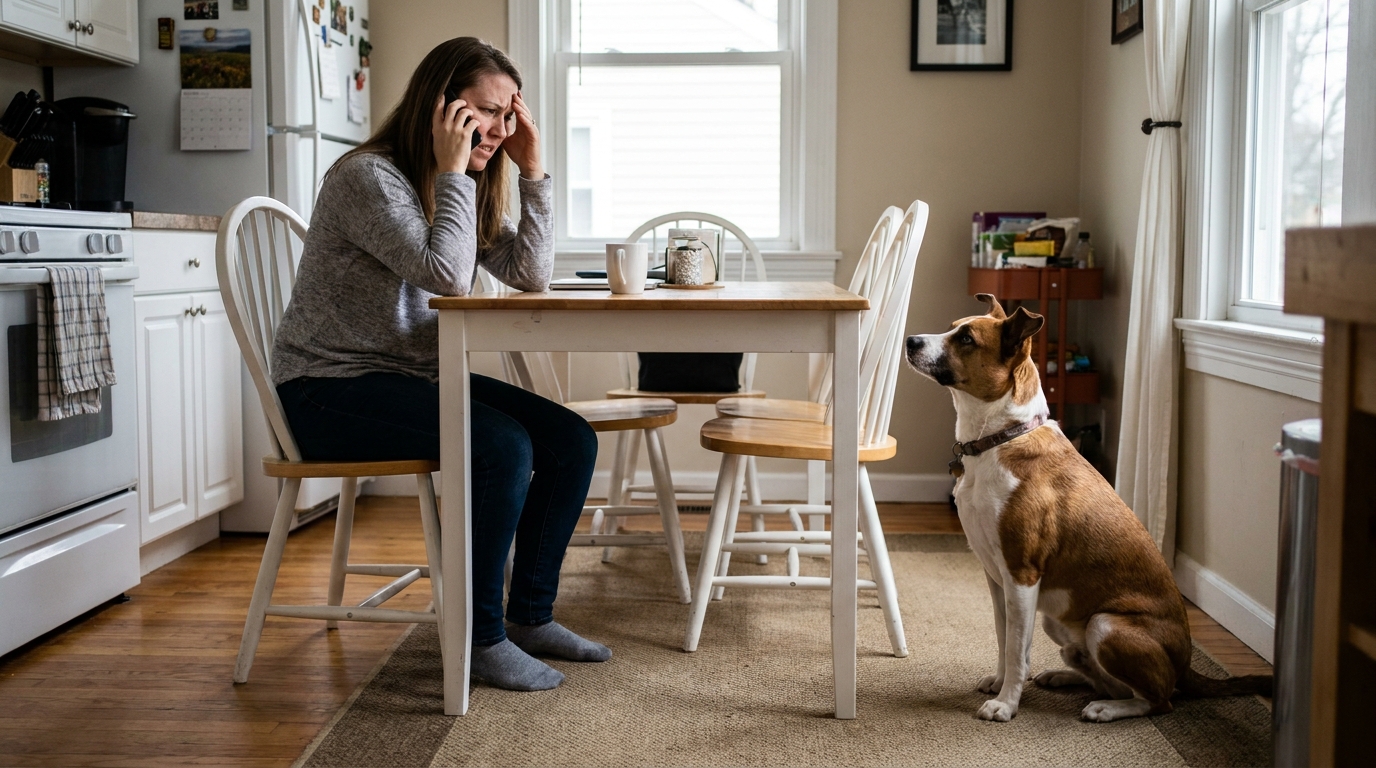
They go still and attentive the moment your voice pitch shifts.
Dogs bonded at this level demonstrate emotional contagion—your cortisol levels trigger matching stress responses in their bodies. They’re not interpreting your mood from the outside; they’re experiencing a physiological echo of it.
This happens through a combination of scent, vocal tone, and facial micro-expressions. When you’re stressed, you release different pheromones; their vomeronasal organ detects these chemical changes and signals their own limbic system to match your state.
Studies at Lincoln University showed bonded dogs’ heart rates synchronize with their owners’ during shared stressful events. The synchronization happens within 15 seconds of the stress onset, faster than conscious recognition would allow.
When your emotional state changes theirs in seconds, you’re not just their owner—you’re their emotional anchor.
#6 — They Guard Your Belongings When You’re Away
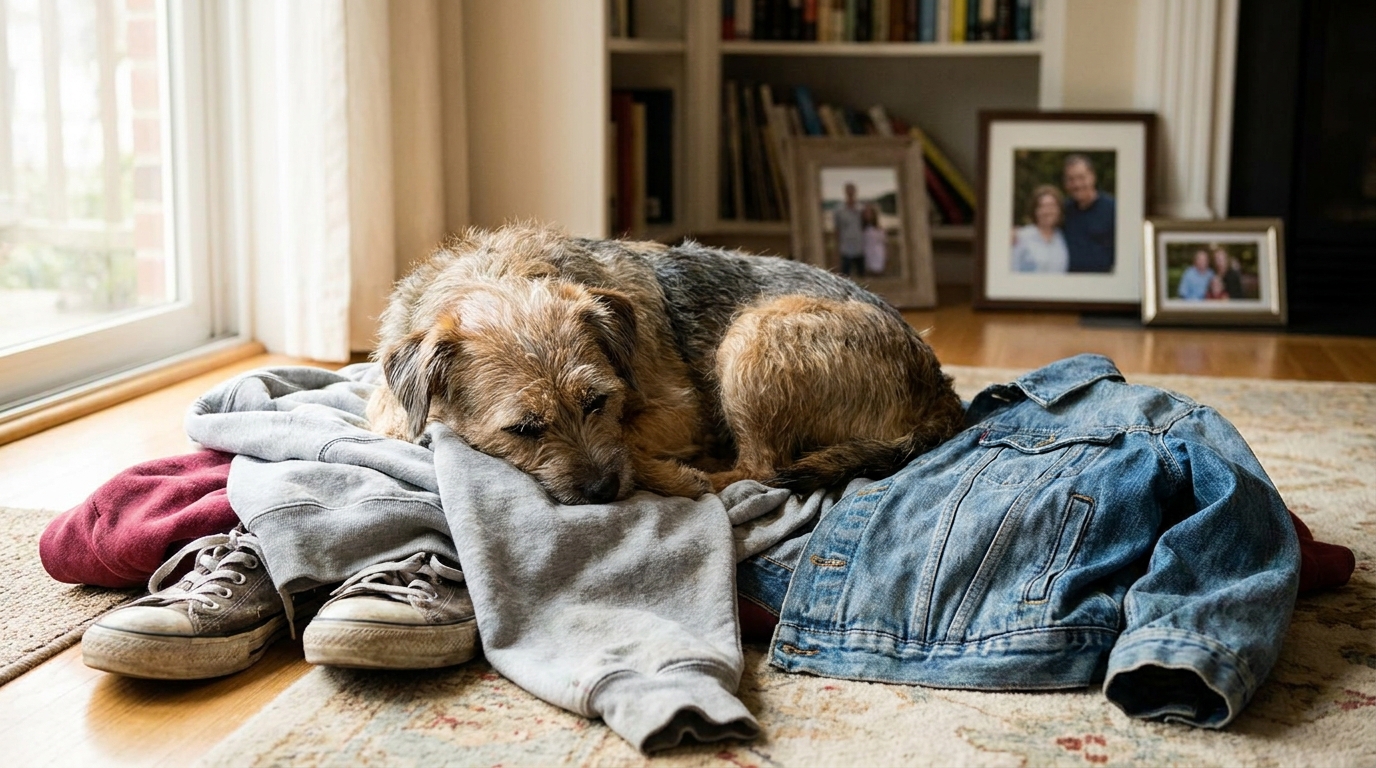
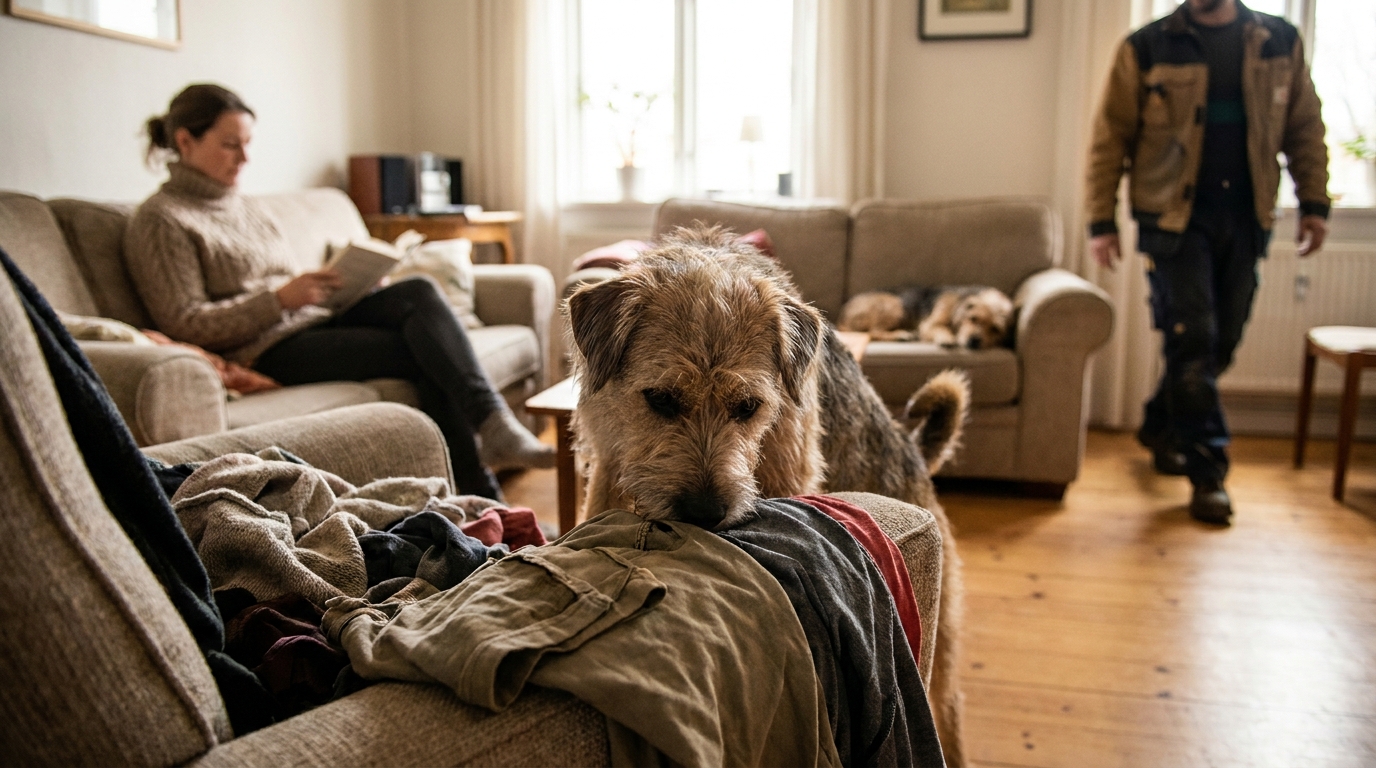
They sleep on your worn clothes or shoes when you leave the house.
This scent-seeking behavior indicates they’re self-soothing through your smell, using your pheromone signature as a security object. It’s the canine equivalent of a child sleeping with a parent’s shirt while they’re traveling.
The mechanism is neurochemical—your scent activates the same reward pathways in their brain that your physical presence triggers. By surrounding themselves with items saturated in your smell, they’re maintaining a connection to you even when you’re miles away.
Behaviorists observe this most strongly in dogs who experienced early bonding. They preferentially select items you’ve worn recently over identical clean items, indicating they’re tracking scent concentration rather than just recognizing familiar objects.
#5 — Eating Patterns Depend on Your Presence
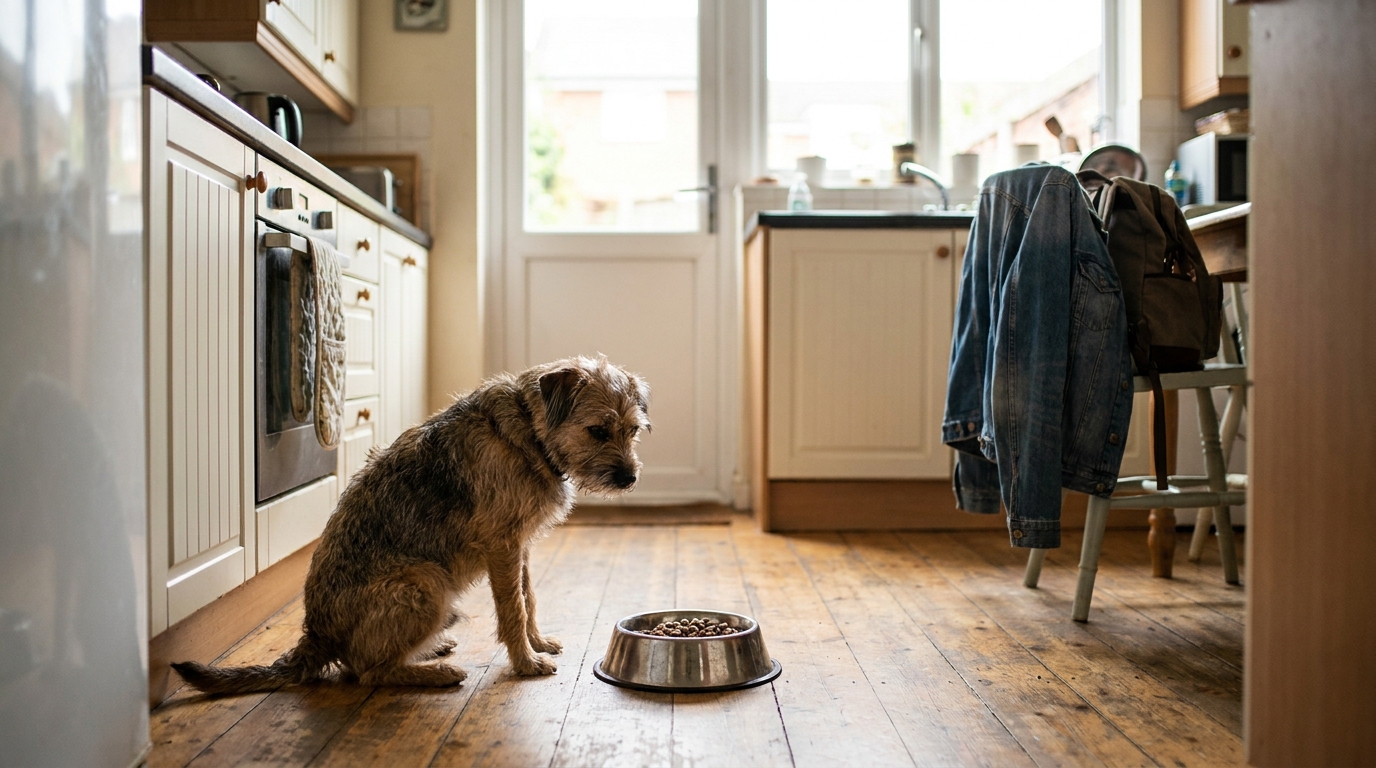
They refuse meals or eat minimally when you’re not home.
This appetite suppression under separation reveals that your presence has become intertwined with their basic survival behaviors. Food, normally the highest-value motivator, takes a back seat to proximity maintenance.
The pattern develops through repeated pairing of your presence with feeding time. Eventually, your absence triggers mild stress that suppresses appetite through elevated cortisol and reduced ghrelin production—the same mechanism that makes humans lose interest in food during anxiety.
Veterinary nutritionists report this affects 30-40% of deeply bonded dogs. They’ll often guard the food bowl while you’re gone but begin eating within minutes of your return, even if hours have passed since the meal was offered.
But #4 shows the most striking change in their daily rhythm…
#4 — They Abandon Their Own Comfort for Proximity
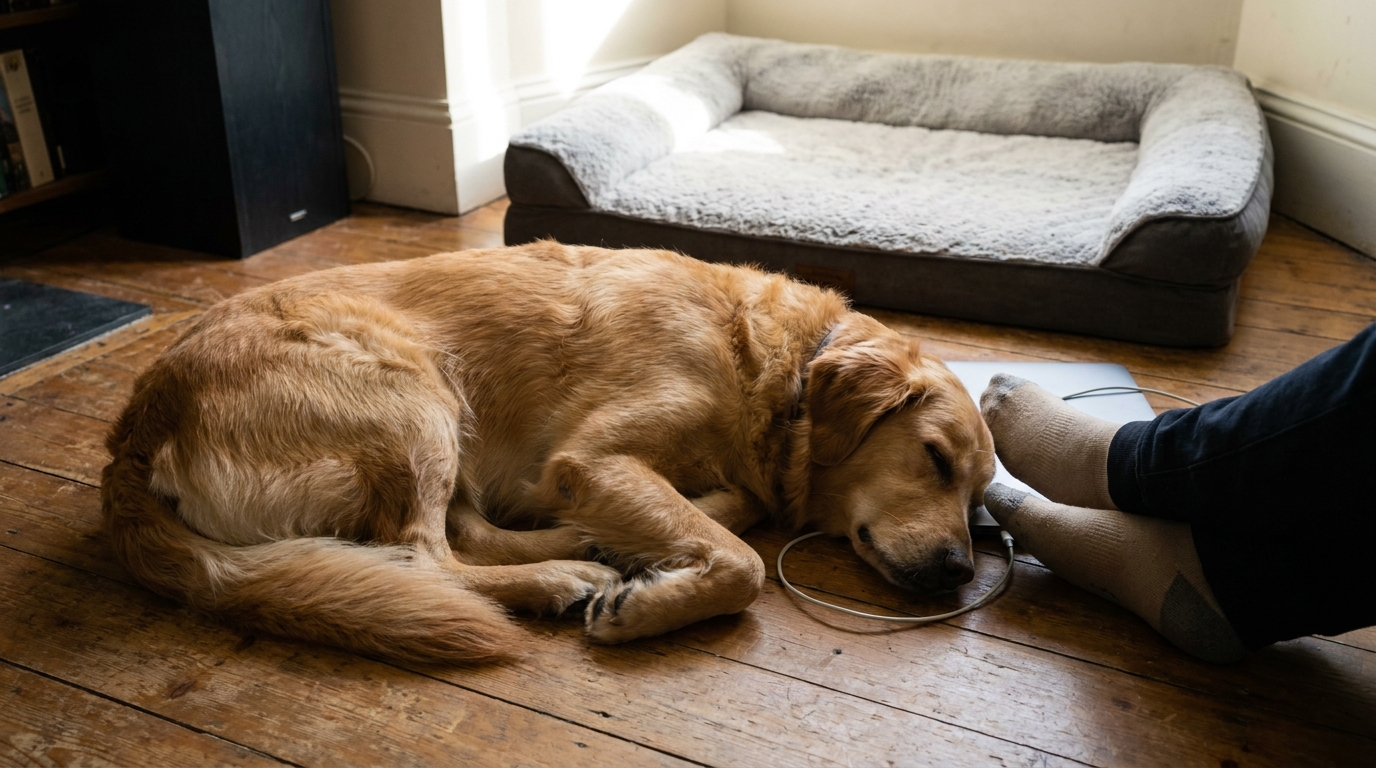
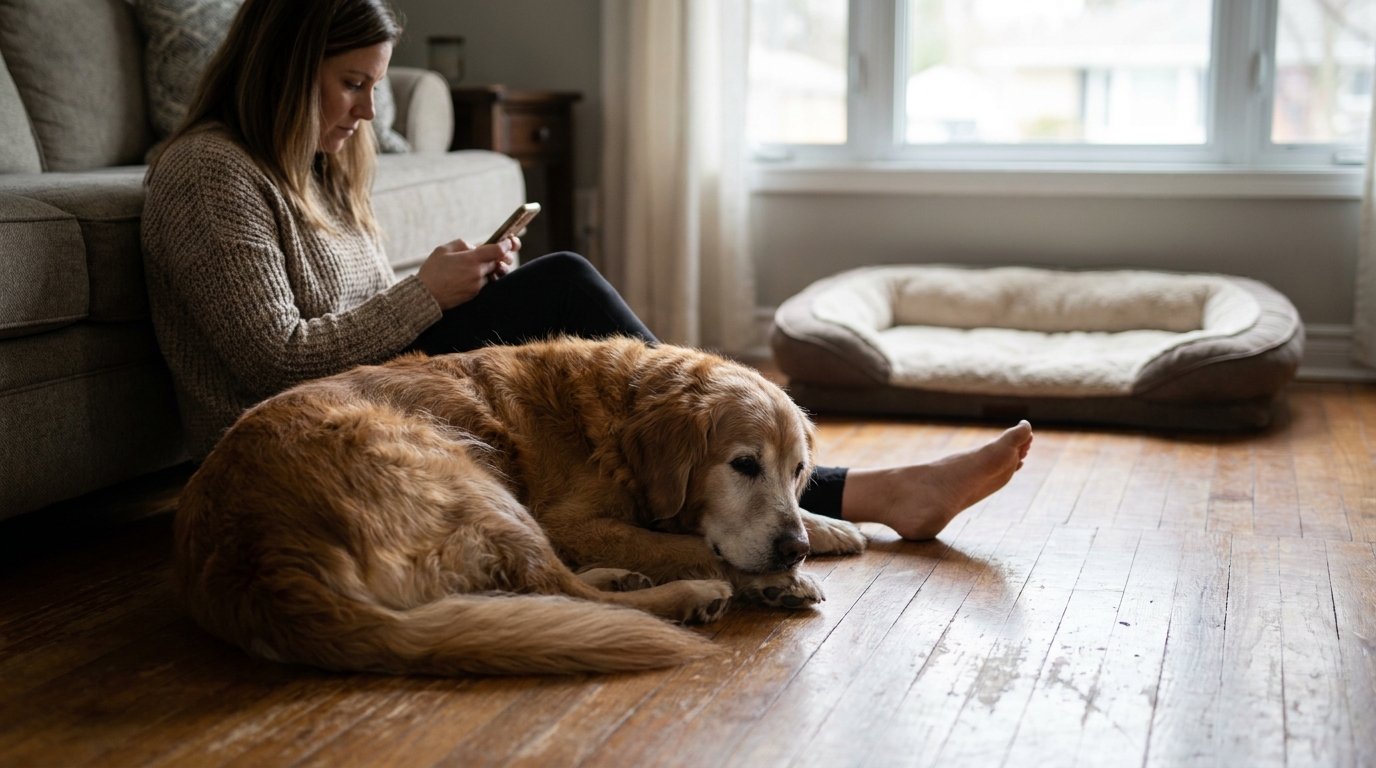
Your dog leaves their orthopedic bed to sleep on the hard floor beside you.
This comfort sacrifice is profound—dogs naturally seek soft, elevated resting spots, yet they’ll override that hardwired preference to maintain physical closeness. They’re choosing proximity over every other biological comfort signal.
The decision happens at a pre-conscious level. Dogs don’t deliberate between the bed and the floor; the drive to be near you simply overrides the input from pressure receptors signaling discomfort on hard surfaces.
Animal behavior researchers note this intensifies with age. Older dogs with arthritis will still choose the hard floor next to you over a heated orthopedic bed in another room, even when moving clearly causes them pain.
Fast Facts
- Joint pressure on hard floors can exceed 400% of soft bed levels
- Most dogs naturally avoid prolonged hard surface rest after age 5
- Proximity preference overrides pain signaling in bonded pairs
- The behavior persists even when vision-blocking barriers are added
#3 — They’ve Learned Your Unique Walking Pattern
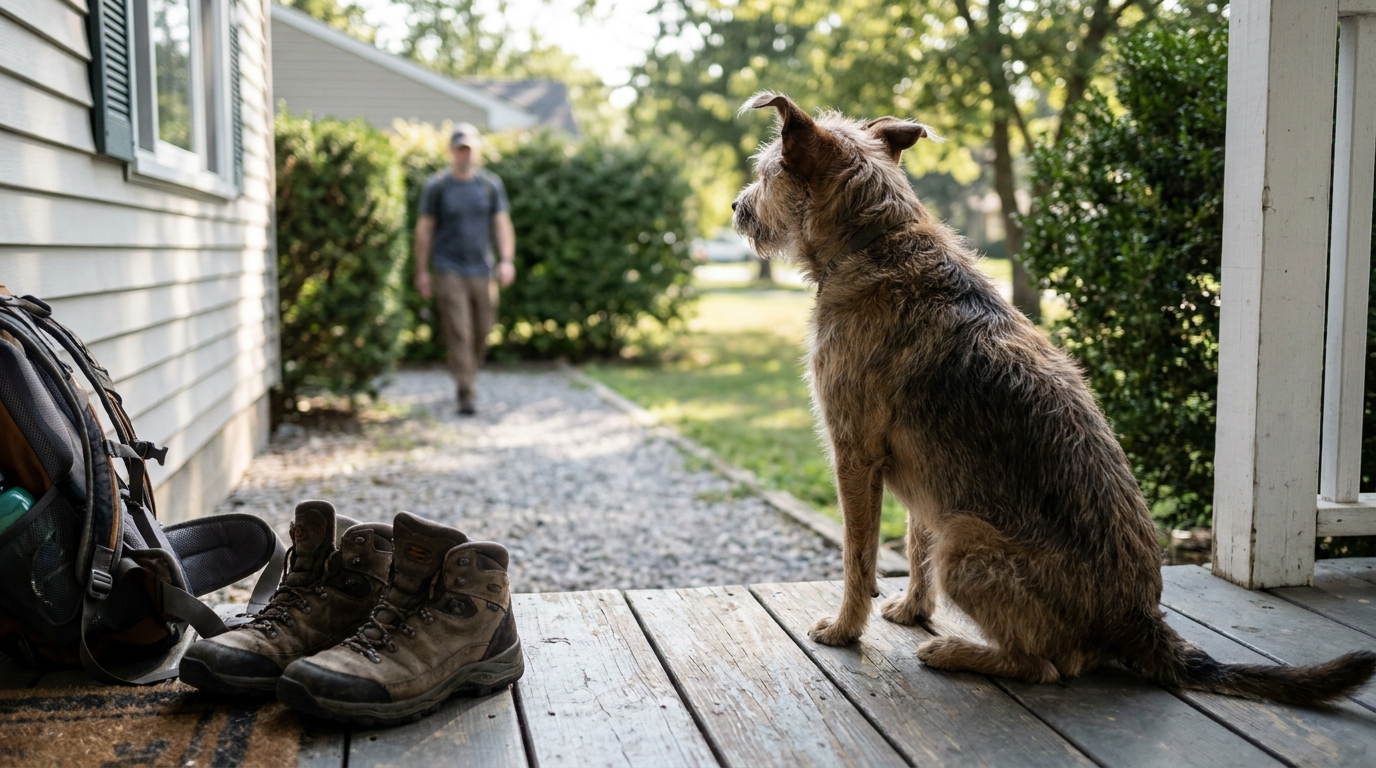
They react to your footsteps before you’re visible or audible to humans.
This recognition goes beyond hearing someone approach—they’ve memorized your specific gait signature: stride length, foot pressure pattern, and walking rhythm. They can distinguish your footsteps from dozens of others in apartment hallways or office buildings.
The discrimination ability comes from repeated exposure to your movement patterns. Dogs process footstep sounds through both rhythm recognition and frequency analysis, building a unique acoustic profile that matches only your gait.
Detection can happen at remarkable distances. In multi-story buildings, owners report dogs reacting to their footsteps two floors away, distinguishing them from neighbors with similar walking speeds simply through subtle pressure pattern differences.
#2 — Your Scent Calms Them in Stressful Situations
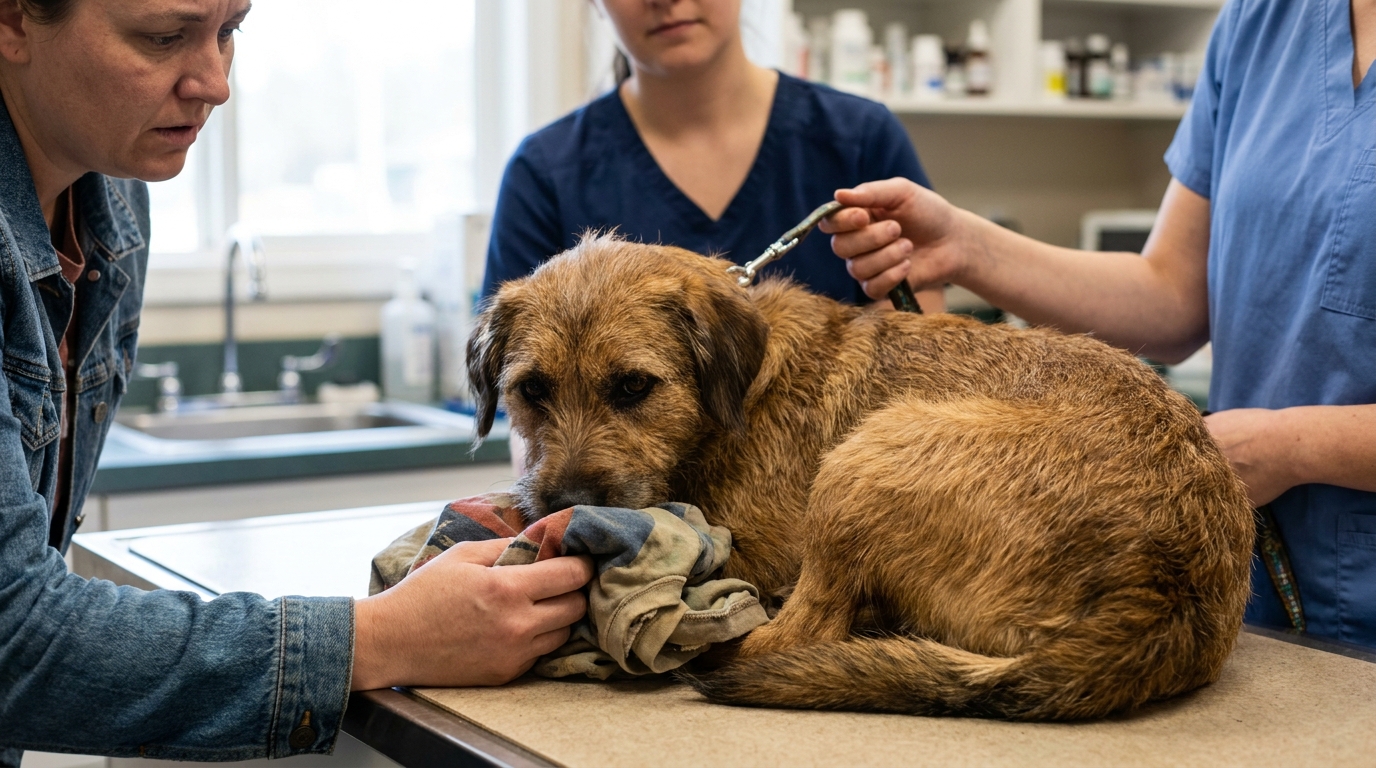
At the vet or groomer, they actively seek items that smell like you.
Your scent has become a pharmacological intervention—it measurably reduces their cortisol levels and heart rate during acute stress. This isn’t psychological comfort; it’s a measurable biochemical response to your pheromone signature.
The effect works through the dog’s olfactory system’s direct connection to the amygdala, bypassing conscious processing. Your scent triggers dopamine and oxytocin release while simultaneously suppressing cortisol production, creating a rapid shift toward calm.
Researchers testing this response found that owner-scented items reduced stress behaviors by 60-70% in veterinary settings. The effect was stronger than any other intervention tested, including treats, toys, or verbal reassurance from strangers.
Worth Knowing
- Effect works even with items you wore days earlier
- Scent intensity matters—recently worn items work better
- Works across distances up to 15 feet in open air
- Other dogs’ presence doesn’t diminish the calming effect
#1 — They Watch You More Than They Watch the World
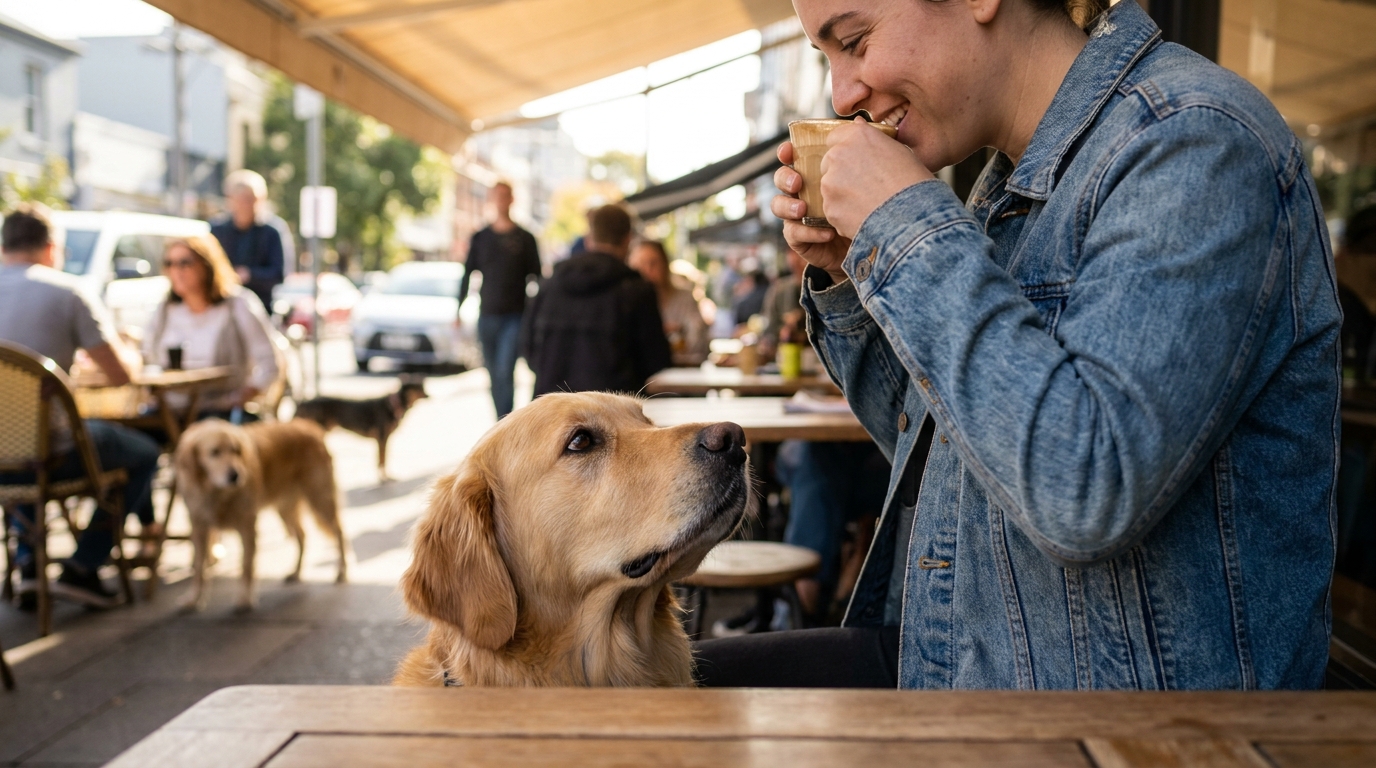
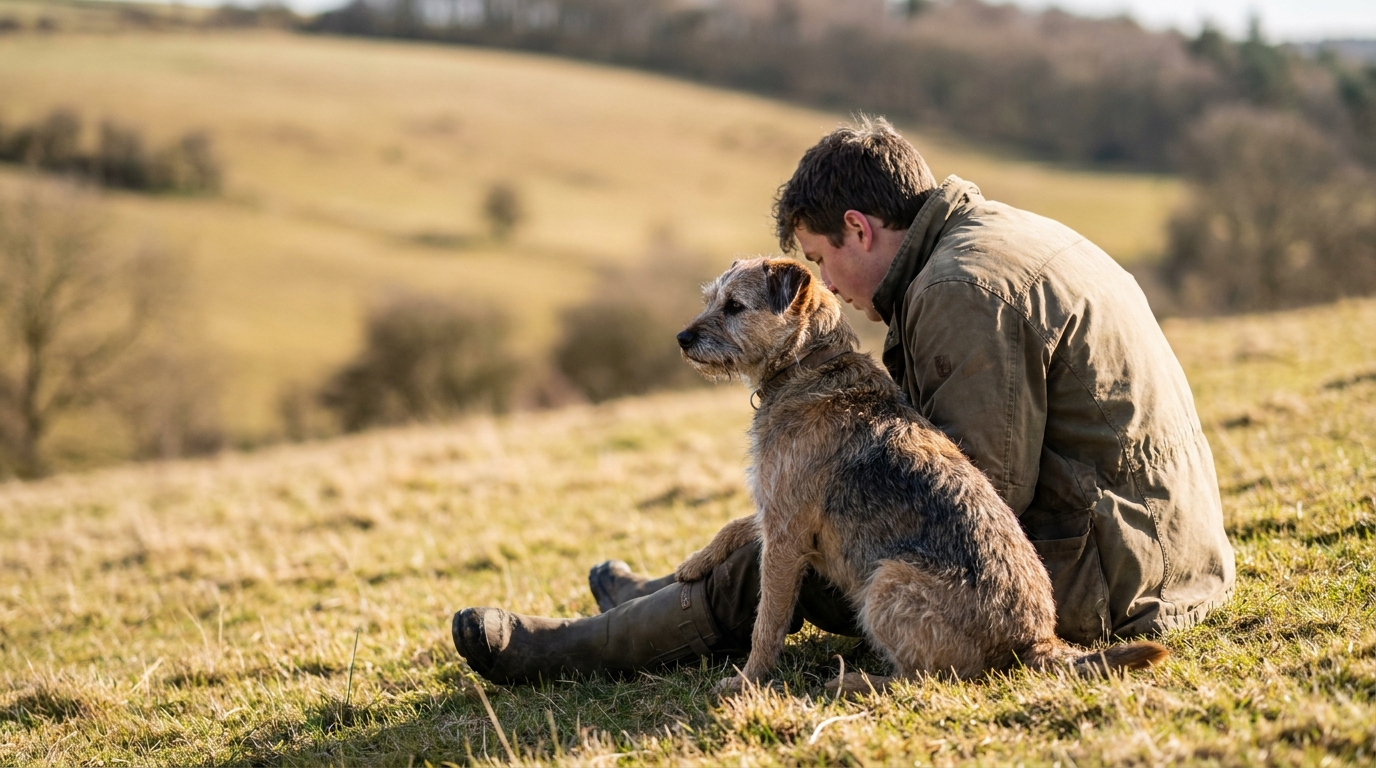
Eye contact with you exceeds their environmental monitoring time.
Normal dogs spend 60-70% of waking hours scanning their environment for threats, food sources, or interesting stimuli. Dogs who’ve decided you’re their whole world reverse that ratio—they watch you more than everything else combined.
This represents a fundamental restructuring of priorities. Environmental awareness is hardwired survival behavior; subordinating it to social monitoring requires that you’ve become more important to their survival calculus than everything else in their world.
The monitoring includes micro-expressions most owners never notice. They’re tracking eye movements, facial muscle shifts, breathing patterns, and postural changes, building a real-time model of your emotional state and likely next actions.
Why It Stands Out
- Most profound departure from wild canid behavior patterns
- Requires months or years of bonding to fully develop
- Correlates with elevated oxytocin in both dog and owner
- Creates shared attention patterns seen otherwise only in parent-infant pairs
The Bottom Line
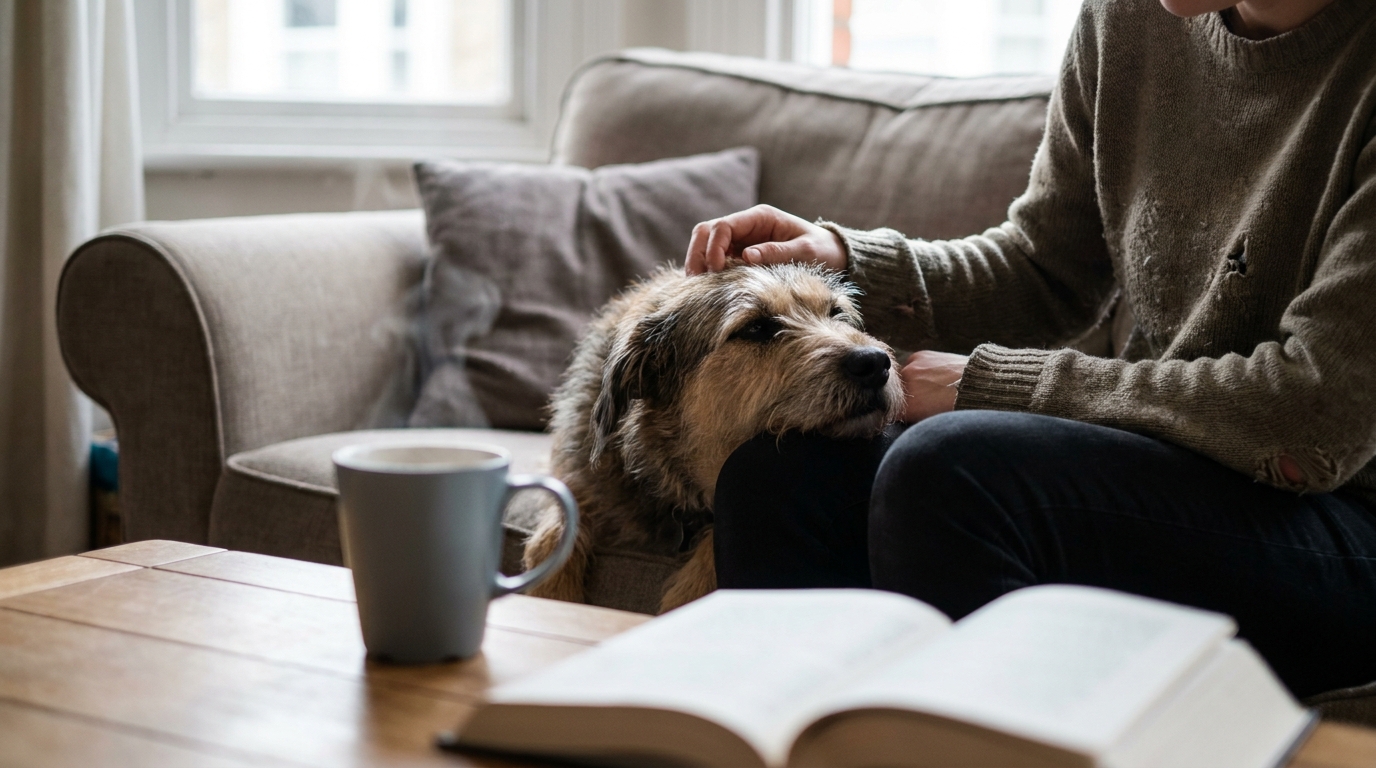
These twelve signs represent a complete reordering of your dog’s priorities—you’ve moved from caretaker to the center of their universe. The behaviors cluster around proximity maintenance, emotional synchronization, and protection—exactly what pack animals reserve for their most critical relationships.
When your presence changes their appetite, their sleep patterns, and their pain tolerance, you’ve become more than an owner—you’ve become necessary.
The most striking pattern isn’t any single behavior but the cumulative picture: they’ve reorganized their entire day, their emotional state, and their basic comfort around maximizing time near you. While most dog owners see these as isolated quirks, they’re actually pieces of a larger behavioral shift that signals complete trust and attachment.
Which of these signs has your dog shown most strongly—and did you recognize it before now, or did it just become visible through this lens?
Bonus — The One Question That Measures True Bond Depth
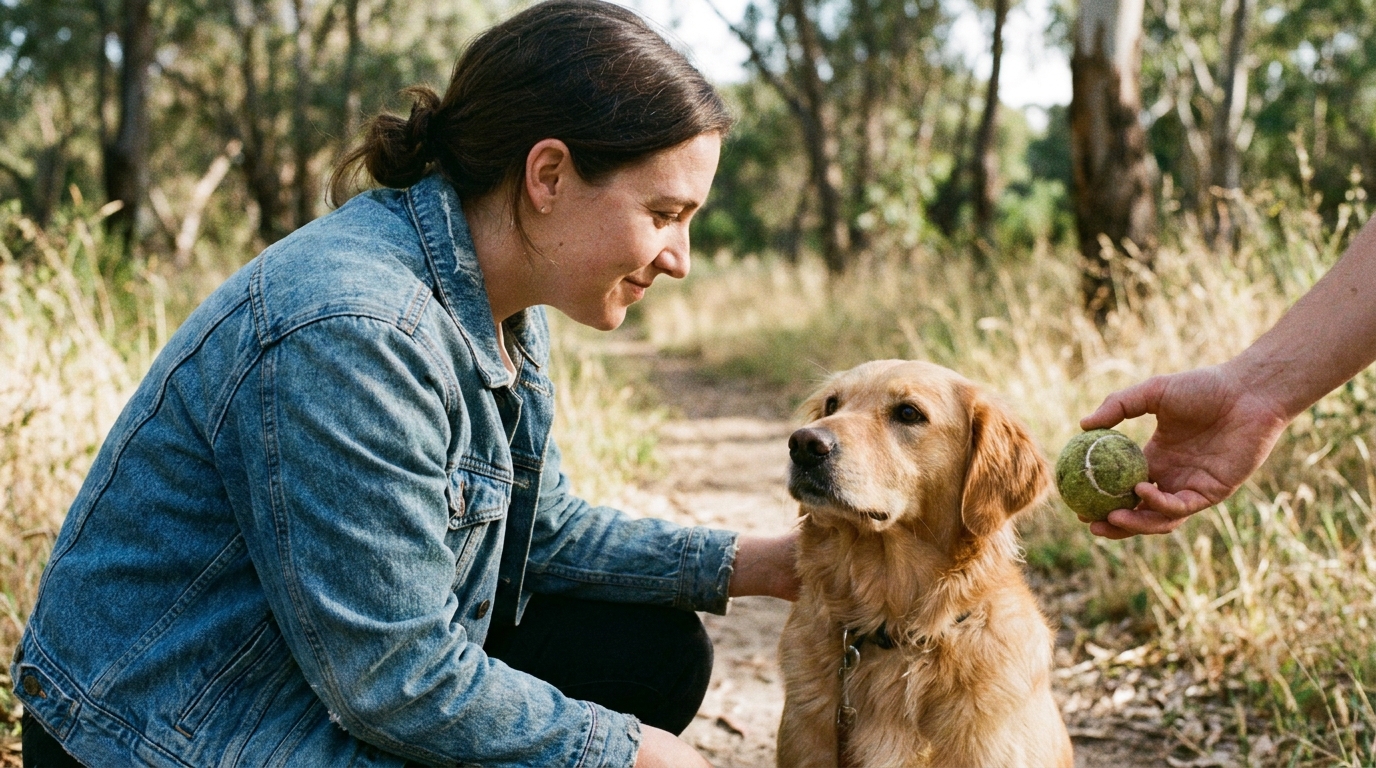
The ultimate test of whether you’re your dog’s whole world happens in a single scenario.
When you leave the house, does your dog settle within five minutes, or do they maintain vigilance at windows and doors for the entire duration of your absence? That persistence reveals whether they’ve simply adapted to your routine or whether your return has become the organizing principle of their time apart.
Four Ways to Assess True Bond Depth
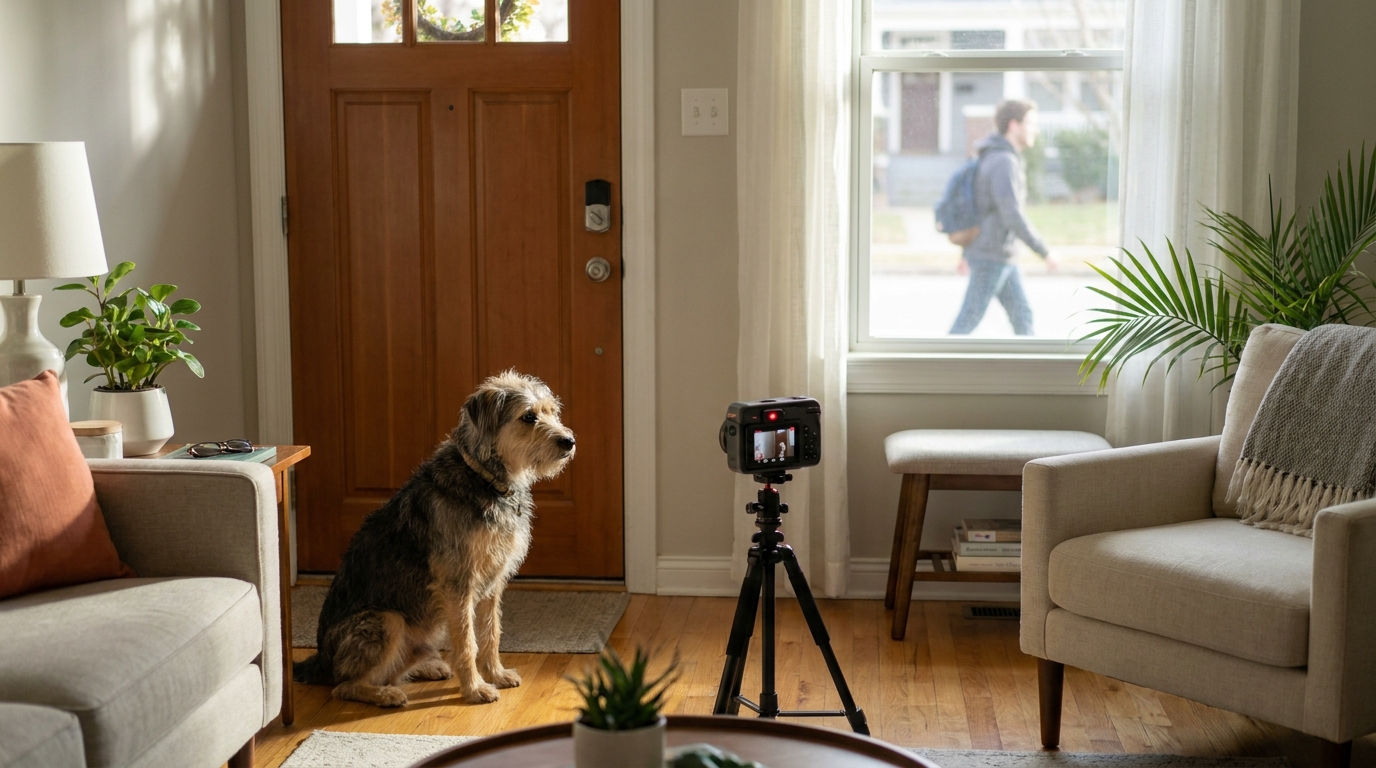
- Film your dog’s behavior for the first 30 minutes you’re gone—settling vs. monitoring tells the story
- Note whether they greet you identically regardless of absence length (deep bond) or with intensity matching duration (routine bond)
- Test if they choose your company over high-value rewards like meal time or favored visitors
- Observe whether they maintain proximity even when obviously tired or when their preferred sleeping spots are available elsewhere
The dogs who’ve decided you’re their whole world don’t just miss you—they reorganize time itself around your presence and absence. Every minute you’re gone is spent anticipating return rather than engaging with their environment.
READER QUIZ
[How Well Do You Know Your Dog’s Bond Signals?]
![[How Well Do You Know Your Dog's Bond Signals?]](https://amgpublishingstudio.blob.core.windows.net/articles/caaf70e5-4c8a-4927-a17a-f8763d0048a2/33b738a3-313a-48dd-b7c9-646e94033d2a.png)
What percentage of bonded dogs show appetite suppression when their owner is away?
- 10-15%
- 30-40%
- 55-60%
- 70-80%
How long does it take for a bonded dog’s heart rate to synchronize with their stressed owner’s?
- Within 15 seconds
- 1-2 minutes
- 5-10 minutes
- After 15 minutes
What ratio describes how much a deeply bonded dog watches their owner versus their environment?
- 30-40% owner watching
- Equal split between both
- 60-70% owner watching
- More environment watching always
At what distance can dogs distinguish their owner’s footsteps in multi-story buildings?
- Same floor only
- One floor away
- Two floors away
- Three floors away
What behavior indicates a dog is self-soothing through their owner’s scent?
- Sniffing the air when owner leaves
- Sleeping on owner’s worn clothes
- Following owner to the door
- Barking when owner is gone
[How does your dog behave when you’re away from home?]
- Settles within minutes and engages with their environment normally
- Shows some monitoring behavior but eventually relaxes
- Maintains vigilance at doors/windows for most or all of my absence