
13 Small Routines Your Dog Waits for Every Single Day
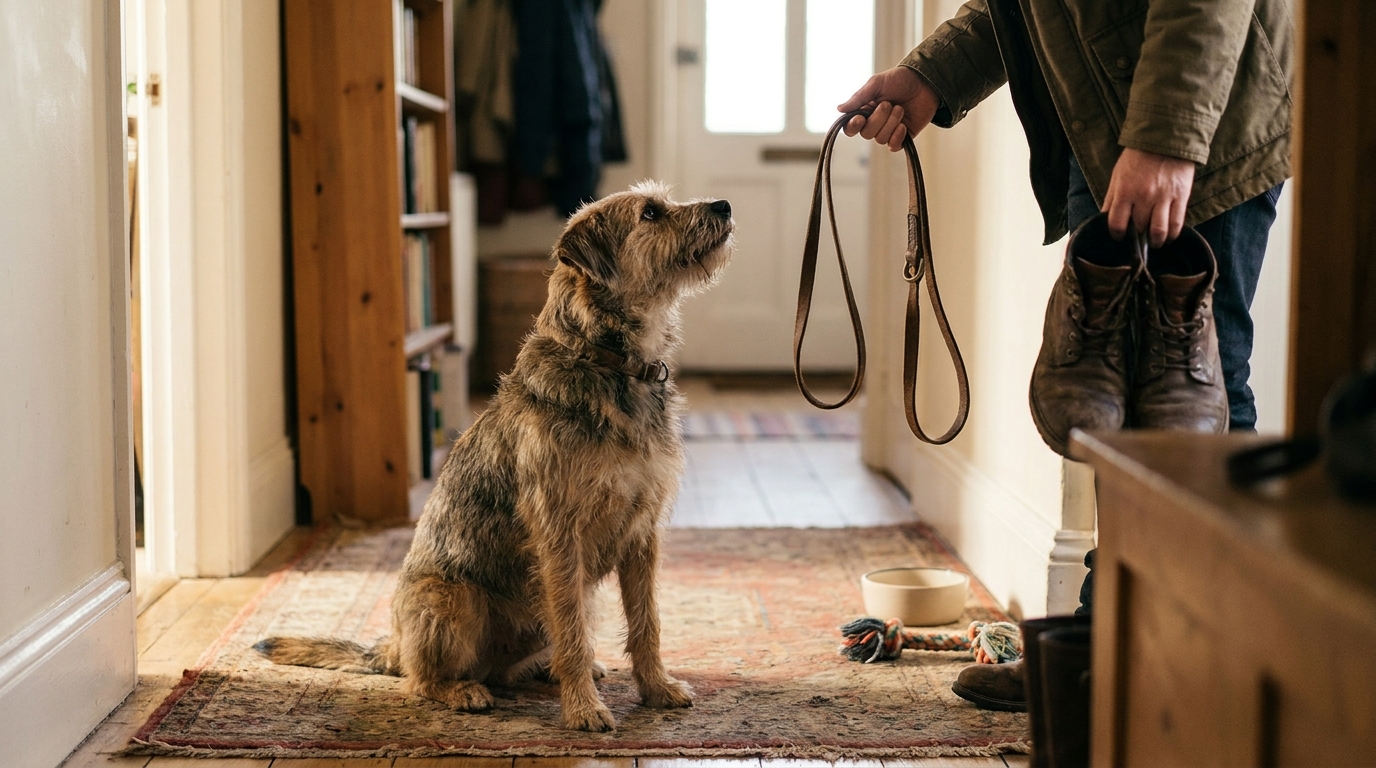
Stick with us to the end: one five-second habit reveals whether your dog feels truly secure in your home.
Dogs are creatures of habit, but most owners don’t realize just how much their pet depends on daily micro-routines. These aren’t the obvious walks or meals—they’re the tiny rituals your dog has memorized and now waits for like clockwork.
Understanding these patterns changes how you see your dog’s day. What looks like random behavior is actually a carefully constructed schedule your dog has built around your movements, and breaking it—even accidentally—can throw off their entire mood.
Here’s what the data actually says.
#13 — The Morning Bathroom Door Opening
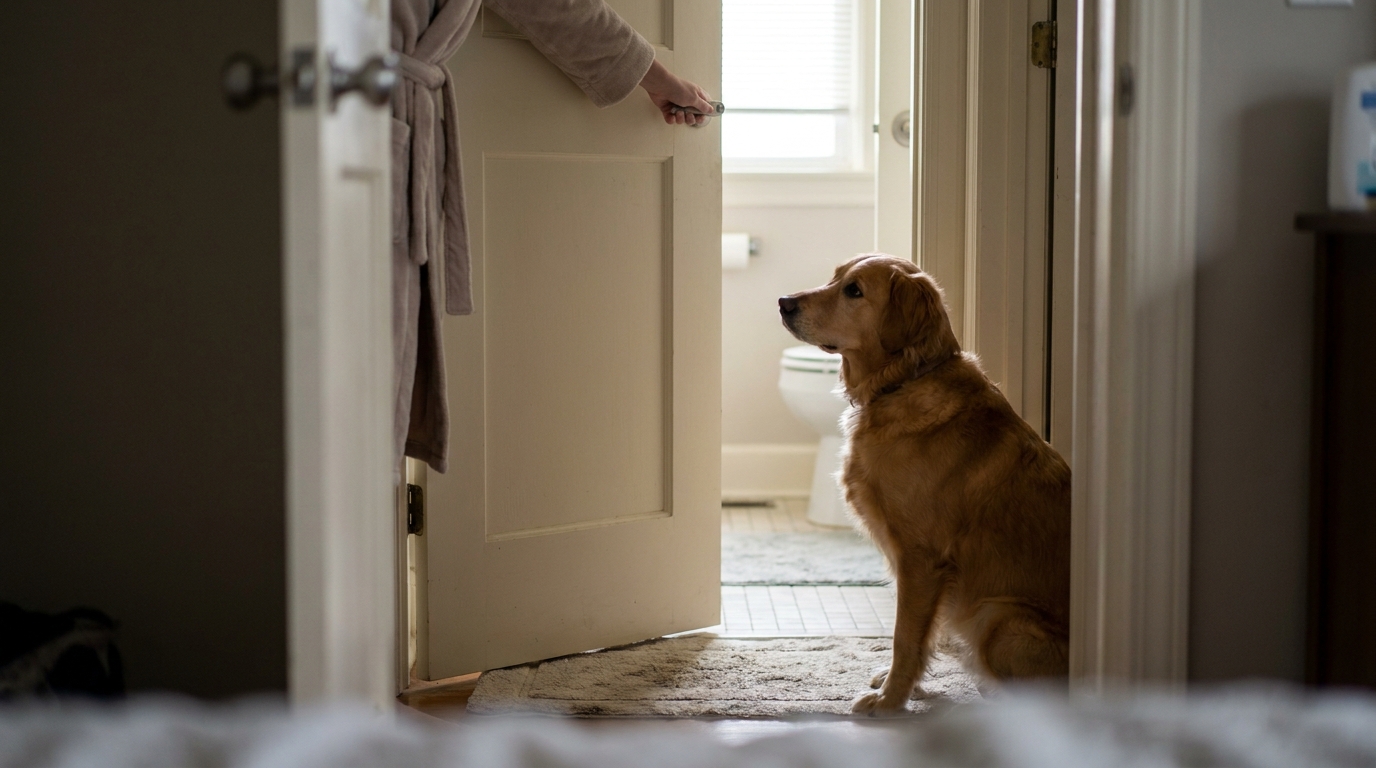
Your dog knows the exact sound of that first bathroom trip.
The pre-dawn bathroom door click has become your dog’s official wake-up signal, even if they were already stirring. Most dogs position themselves within earshot of the master bathroom between 5 and 7 a.m., waiting for that specific door latch sound that means the day has started.
This happens because dogs are crepuscular by nature—most active at dawn and dusk—and they’ve learned to sync their natural alertness window with your first movement. The bathroom door is simply the most consistent early-morning sound in the house.
Behaviorists note that dogs typically wait through an average of three other household sounds before that door opens. Your dog isn’t guessing when you’ll wake up; they’re listening for the one sound that’s never out of order.
#12 — The Coffee Maker Gurgle
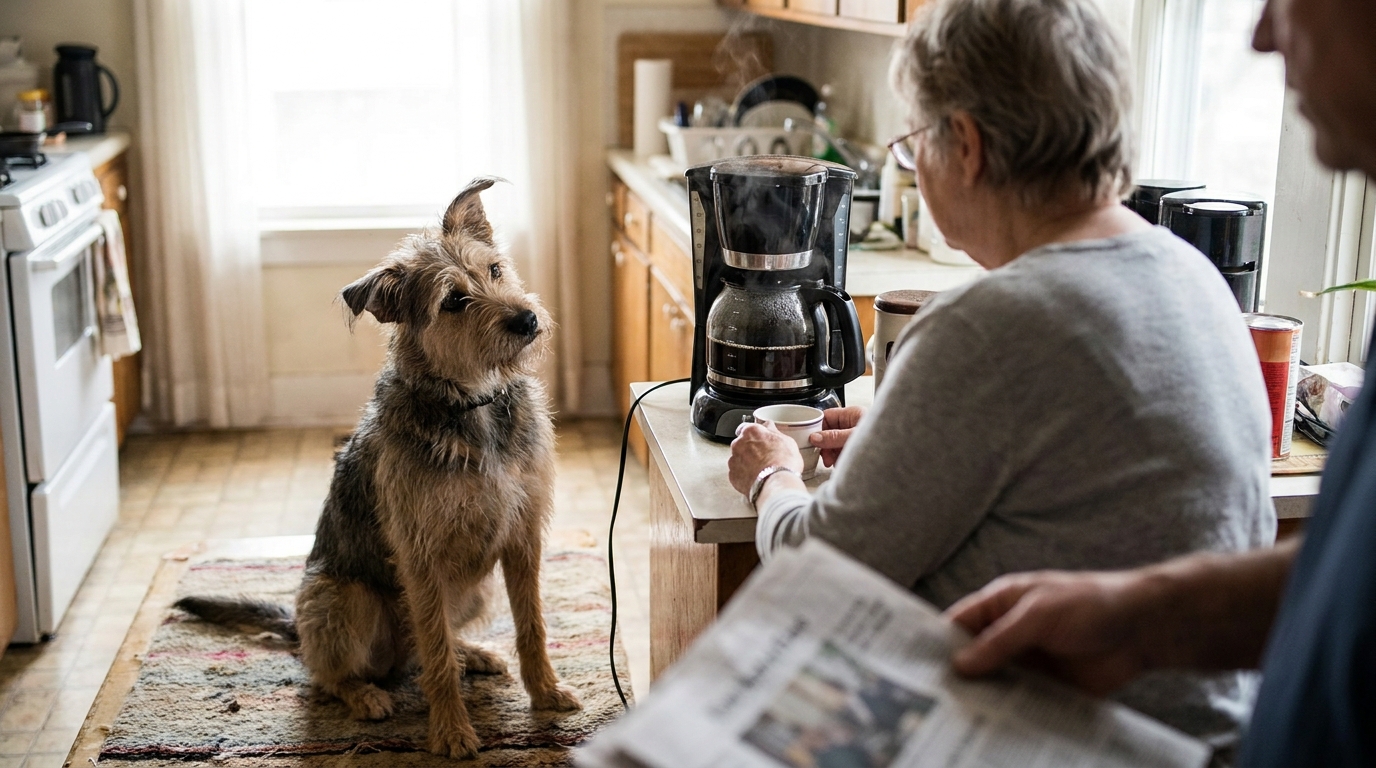
That brewing sound means you’re staying downstairs.
Dogs quickly learn that the coffee maker’s gurgling noise predicts at least eight to ten minutes of your stationary presence in the kitchen. This is prime time for them to position themselves for scraps, attention, or simply your company without competition from other rooms.
The reason is purely tactical. While the coffee brews, you’re not heading back upstairs, leaving for work, or moving to another part of the house. You’re anchored, and your dog has learned this window is reliably theirs.
Professional trainers report that dogs often ignore the coffee maker sound on weekends until they’ve confirmed you’re dressed for the day. The routine isn’t just auditory—it’s contextual.
Quick Compare
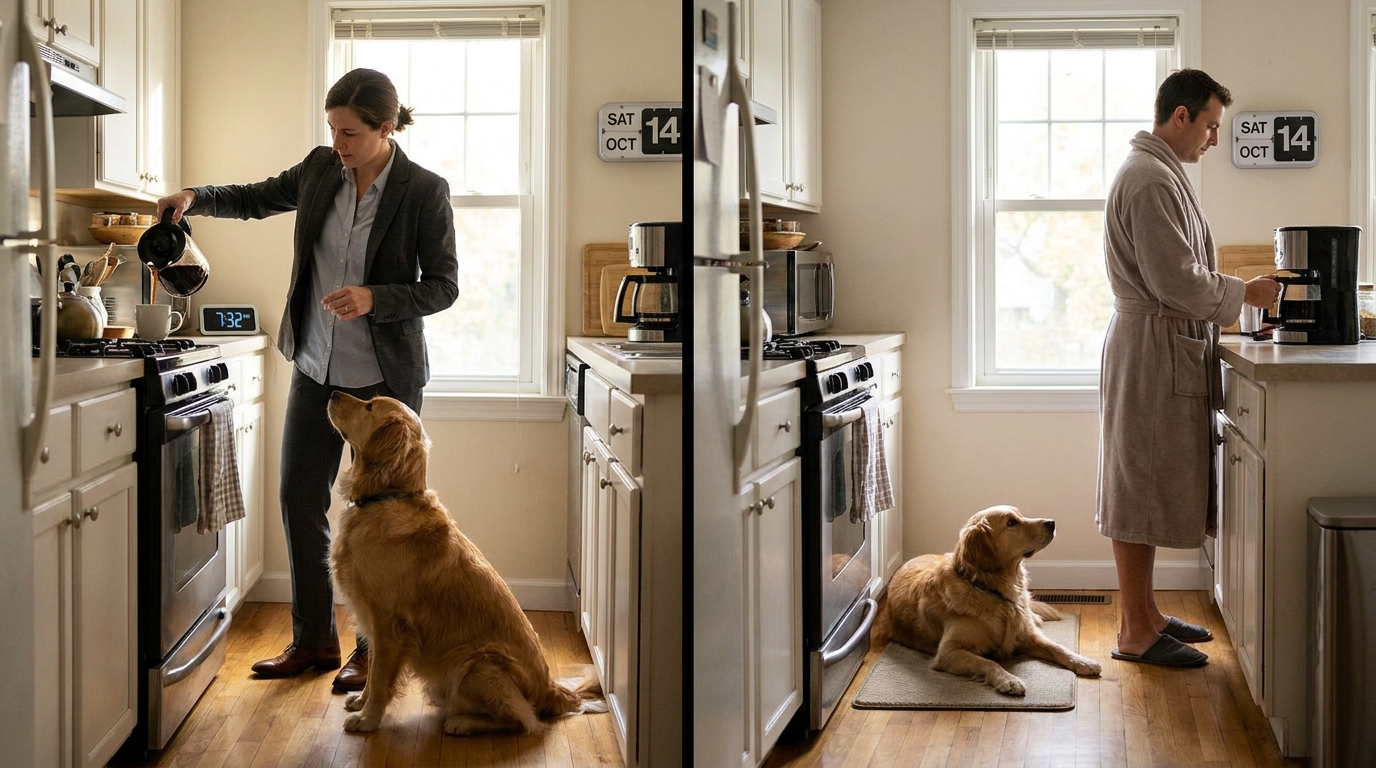
- Weekday brewing: dog appears within 15 seconds
- Weekend brewing: dog waits to confirm you’re dressed
- Decaf vs. regular: dogs can’t tell, but they notice if you skip it
- Travel days: many dogs refuse breakfast when the maker stays silent
#11 — The Shoe Selection Moment
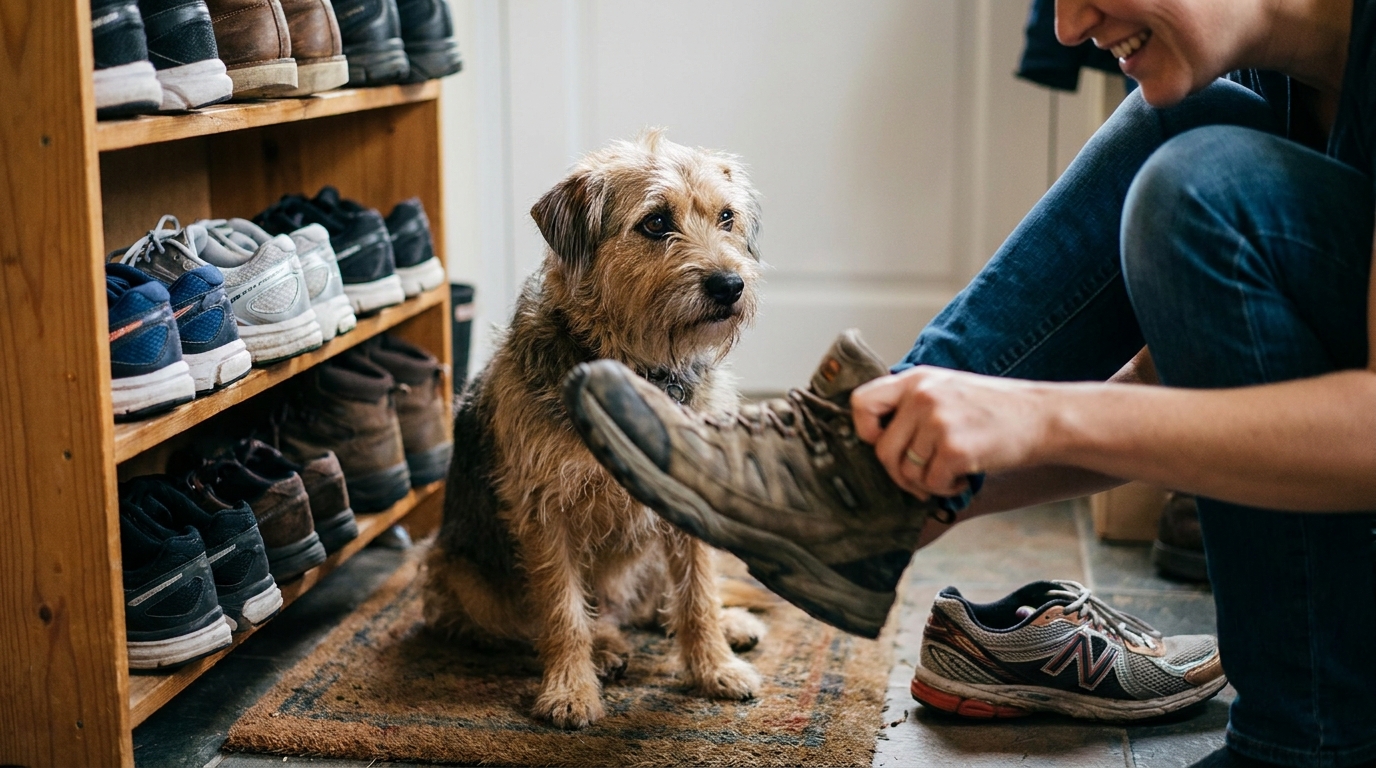
Your footwear choice tells them everything about the next hour.
Dogs can distinguish between your work shoes, walking shoes, and house slippers from across the room, and each pair triggers a different behavioral response. The moment you reach for sneakers, your dog’s excitement level spikes; when you grab dress shoes, they often retreat to their bed.
This discrimination happens because dogs are exceptionally good at pairing specific objects with outcomes. Sneakers have preceded thousands of walks; dress shoes have preceded your departure. They’re not reading your mind—they’re reading your feet.
A 2019 survey of dog trainers found that 78% of clients reported their dogs reacting to shoe choices before any other departure cue. Some dogs even learn to differentiate between multiple pairs of sneakers based on which park each pair typically visits.
But #10 reveals something they watch even more closely than your shoes…
#10 — The Leash Location Check
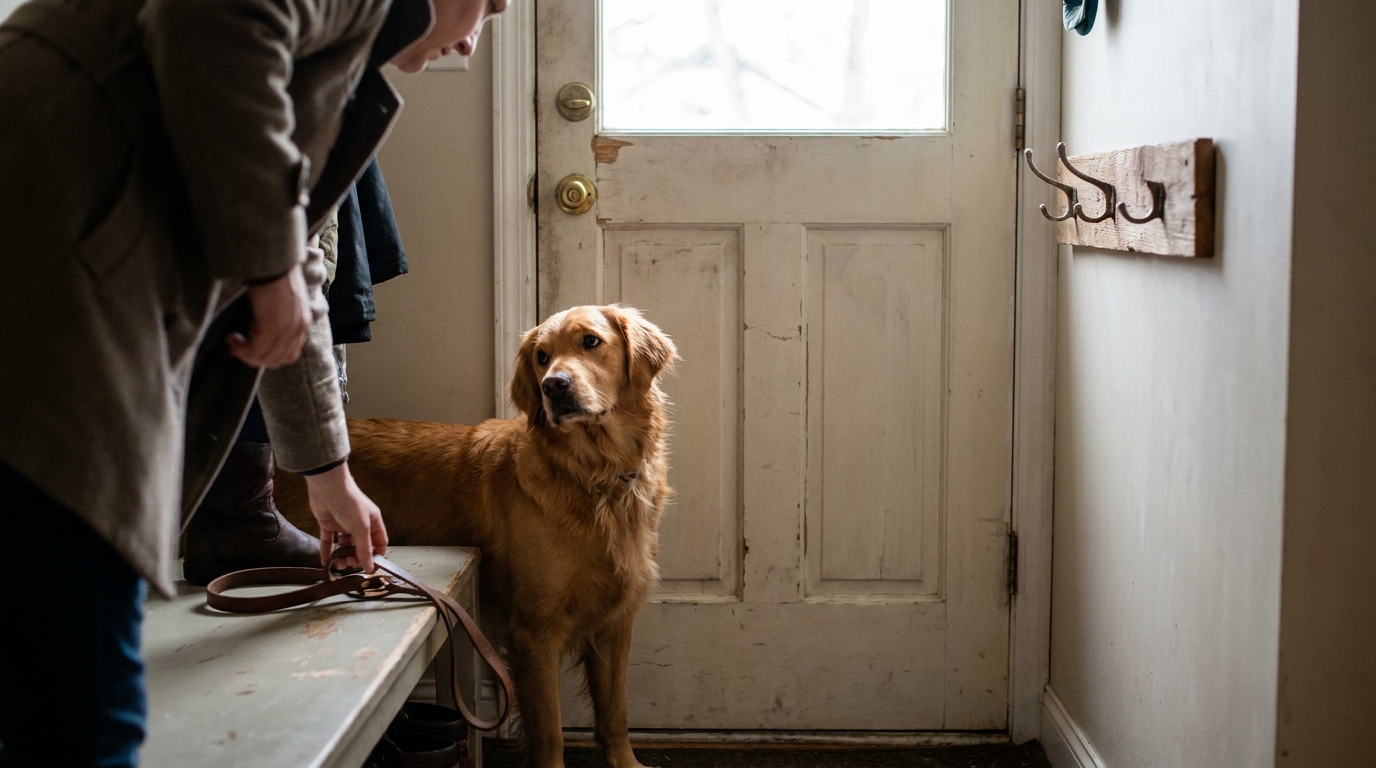
They know exactly where that leash belongs.
Dogs visually scan the leash hook or storage spot an average of four to six times per day, even when no walk is imminent. This isn’t obsessive behavior—it’s information gathering. The leash’s presence or absence tells them whether a walk happened without them or is still possible.
The behavior stems from object permanence and pattern recognition. Dogs understand that the leash must be retrieved before a walk occurs, so monitoring its location gives them advance notice and reduces uncertainty about whether they’ll be included.
Veterinary behaviorists note that dogs in multi-dog households check the leash location more frequently, likely because they’re also tracking which dog went last. The leash isn’t just a tool to them—it’s a scheduling system they’ve learned to read.
#9 — The Couch Cushion Rearrangement
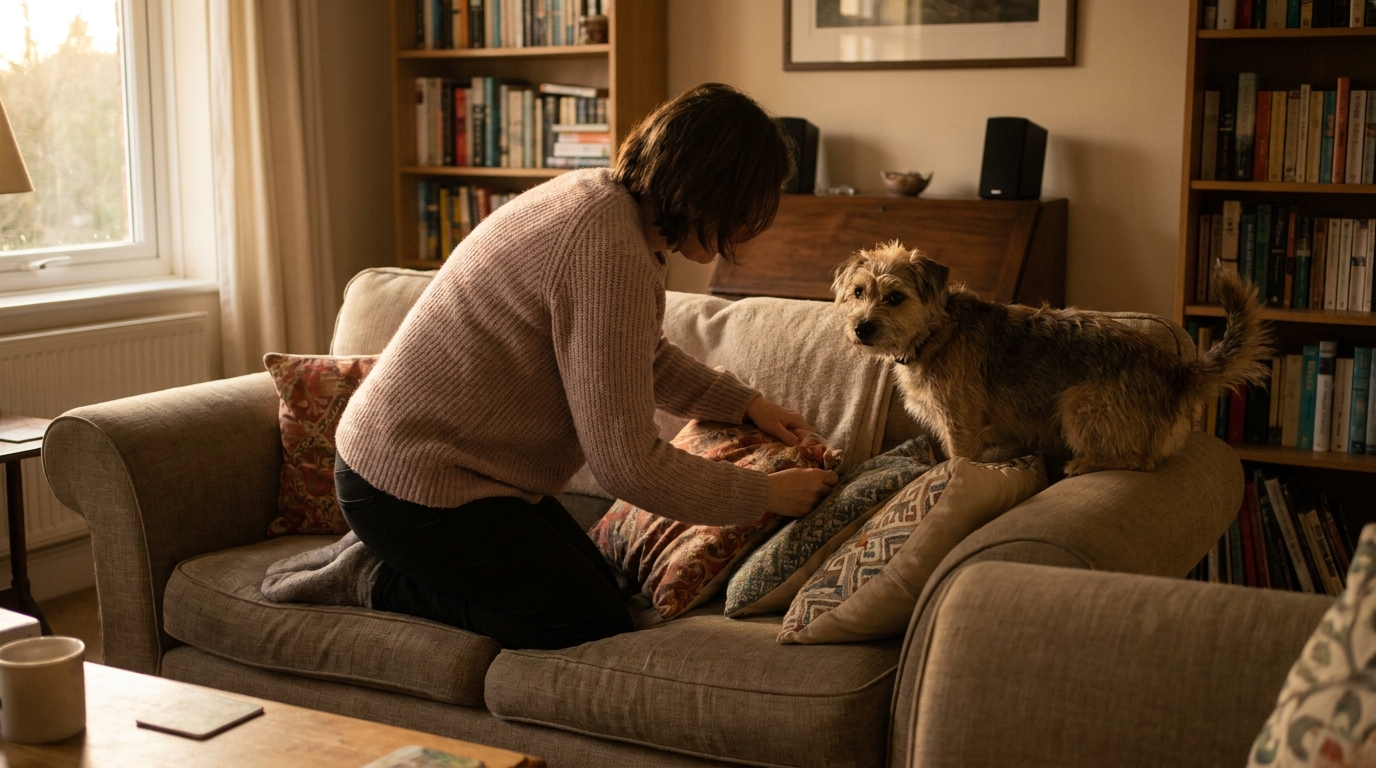
That pillow fluffing signals evening mode.
When you straighten the couch cushions after dinner, your dog interprets this as the transition from active hours to settle-down time. Most dogs respond by moving to their evening spot, whether that’s the same couch, a nearby bed, or a specific corner they favor after dark.
This works because dogs are exceptional at reading environmental resets. Rearranging cushions is a consistent signal that the household is shifting into relaxation mode, and they’ve learned that this moment predicts at least an hour of calm, stationary human presence.
Professional dog sitters report that maintaining this specific routine—even the cushion rearrangement—helps anxious dogs settle in unfamiliar situations. The action itself becomes a portable cue that everything is proceeding normally.
Your dog doesn’t see household tasks—they see a schedule written in your movements.
#8 — The Dinner Plate Scraping Sound
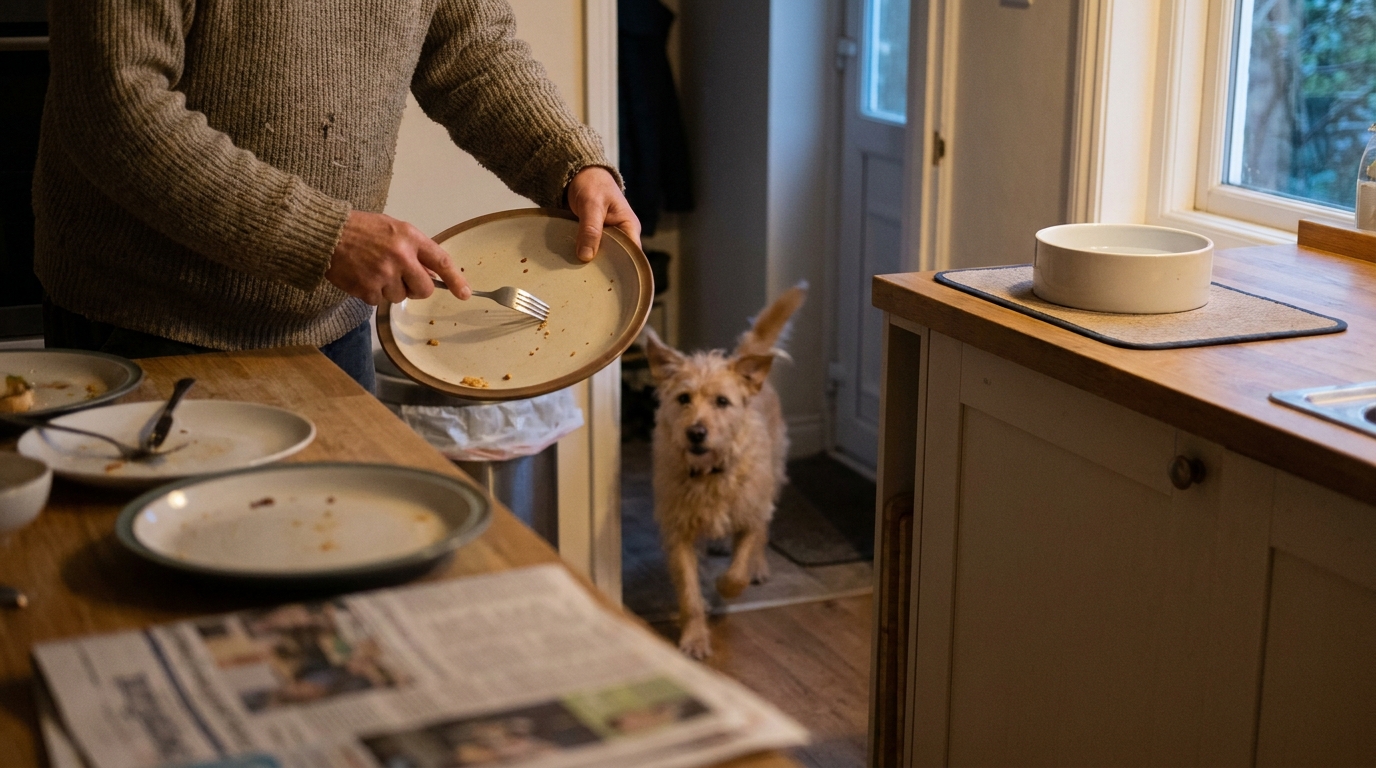
That fork-on-ceramic noise brings them running.
The specific sound of a fork scraping a dinner plate triggers alertness in dogs from two rooms away, even if they’ve already been fed. This isn’t begging—it’s an ingrained response to a sound that has historically preceded food availability.
The reason is simple auditory conditioning. Plate scraping occurs at the exact moment when human food transitions from “on the plate” to “potentially available,” and dogs have learned that their chances of receiving something increase dramatically in the ten seconds after that sound.
Canine nutrition researchers note that dogs respond more strongly to the scraping sound than to the sight of food being eaten. The audio cue is both more reliable and earlier in the sequence than visual cues, giving them a head start on positioning themselves optimally.
#7 — The Car Key Jingle Evaluation
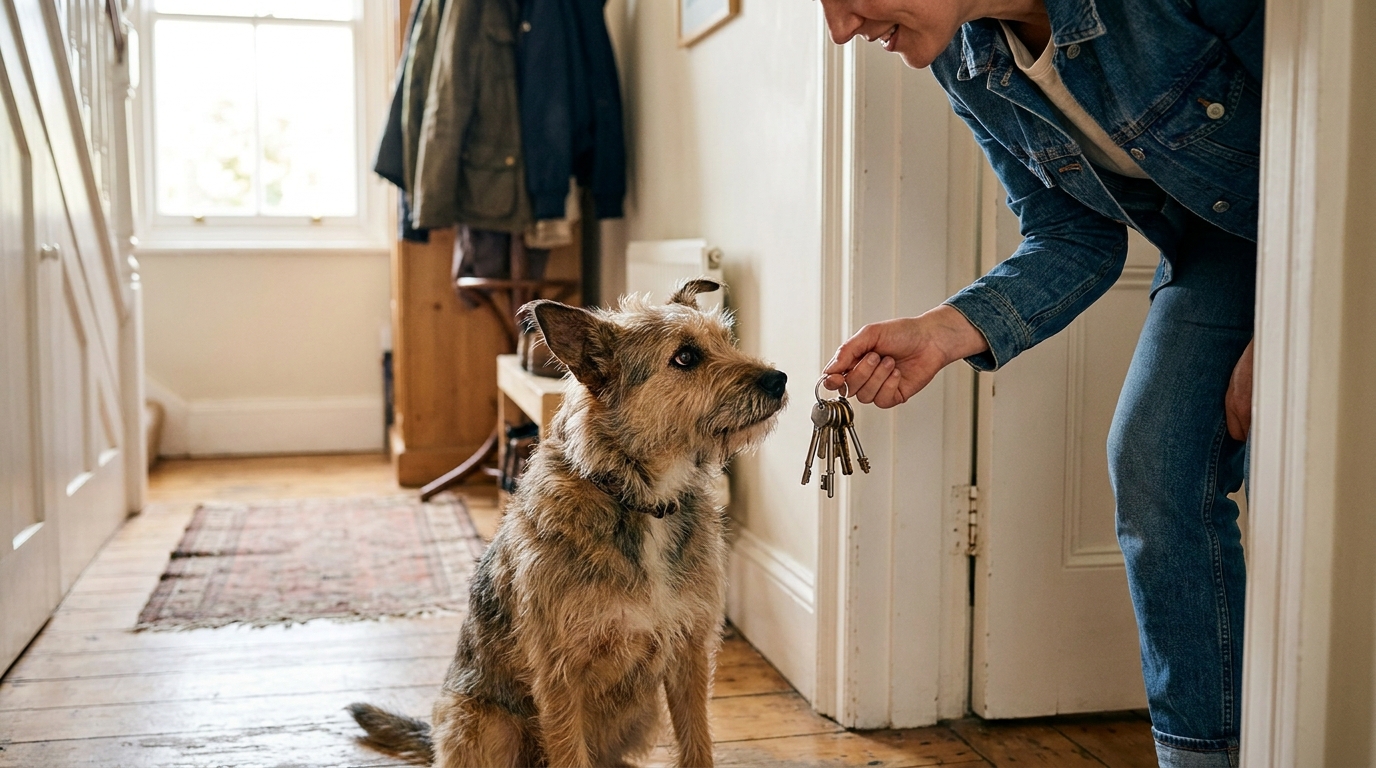
They’re listening for which keys you grabbed.
Dogs in multi-car households learn to distinguish between key sets, and they react differently based on which vehicle you’re taking. The SUV keys might mean they’re coming along; the sedan keys might mean you’re going alone. They’ve memorized the difference in sound.
This happens because each key set has a unique jingle pattern based on the number of keys, the weight of the fob, and what else is on the ring. Dogs have the auditory processing power to differentiate these patterns and the memory to link each one with its outcome.
A canine cognition study from 2021 found that dogs could distinguish between two similar-sounding key sets with 82% accuracy after just three weeks of consistent pairing. They’re not guessing—they’re genuinely recognizing the specific sound signature.
Fast Facts
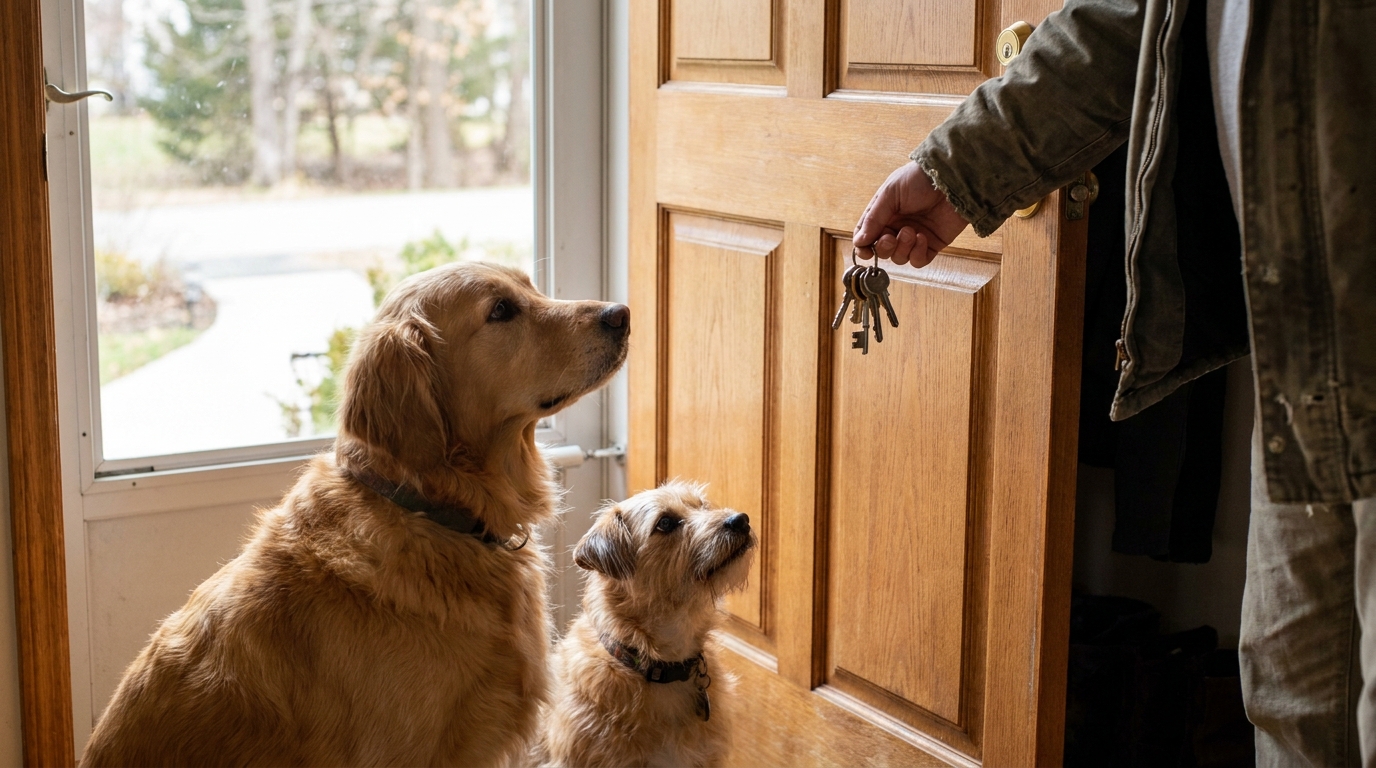
- Dogs can distinguish key sounds from up to 40 feet away
- Multi-dog homes: dogs learn which keys mean group vs. solo trips
- Electric cars: dogs adapt to fob beeps within two weeks
- Many dogs react to specific keys even when their owner isn’t holding them
#6 — The Treat Jar Proximity Rule
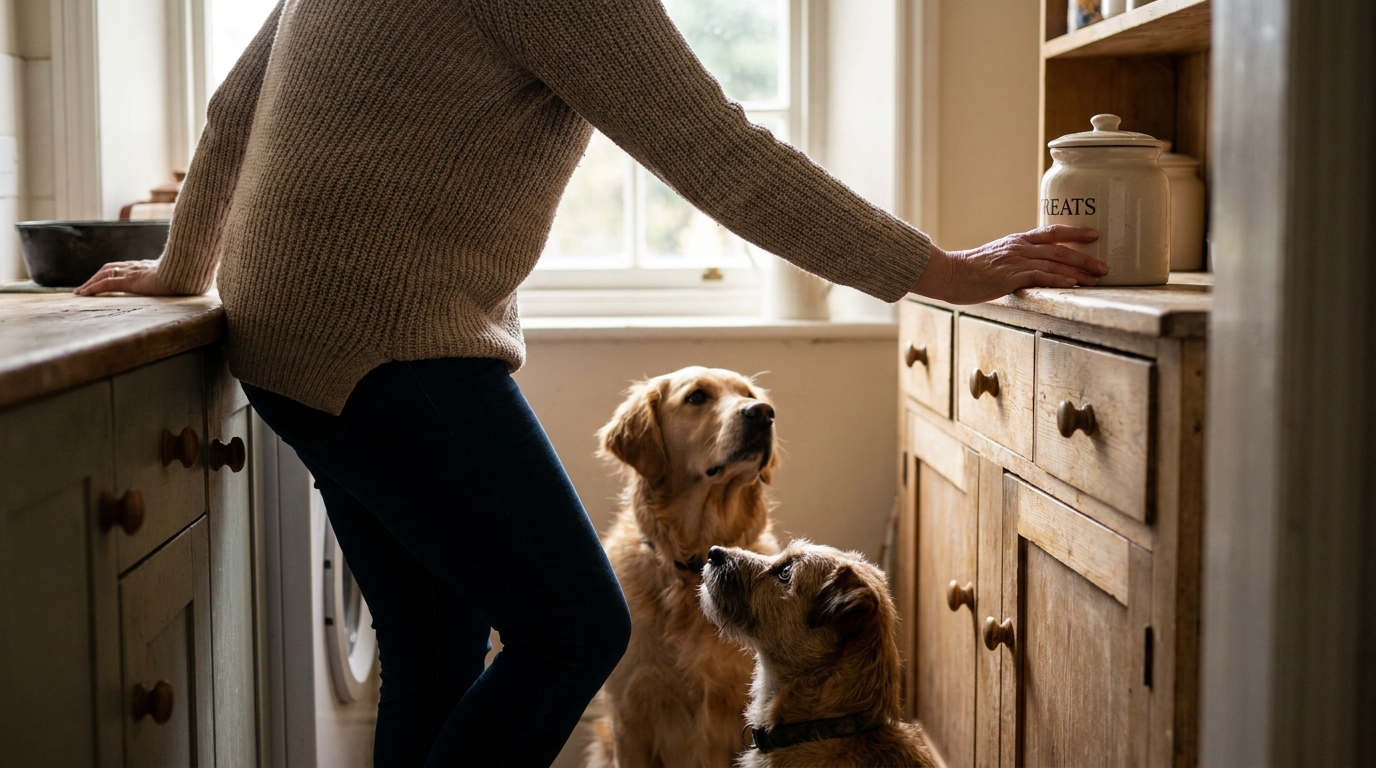
You don’t even have to open it anymore.
Most dogs have established an invisible boundary around the treat storage area—typically 18 to 24 inches—and they monitor your movements within that zone constantly. Entering the zone doesn’t guarantee a treat, but your dog has learned it’s a necessary precursor, so they pay attention.
This spatial monitoring develops because dogs are exceptionally good at mapping high-value locations and tracking human proximity to them. They’re not watching the jar; they’re watching you in relation to the jar, which is a more sophisticated cognitive task.
Professional trainers use this behavior to teach impulse control by deliberately entering the treat zone without dispensing anything. Over time, dogs learn that proximity alone isn’t a reliable predictor, but most never stop monitoring the space entirely.
#5 — The Blanket Retrieval Signal
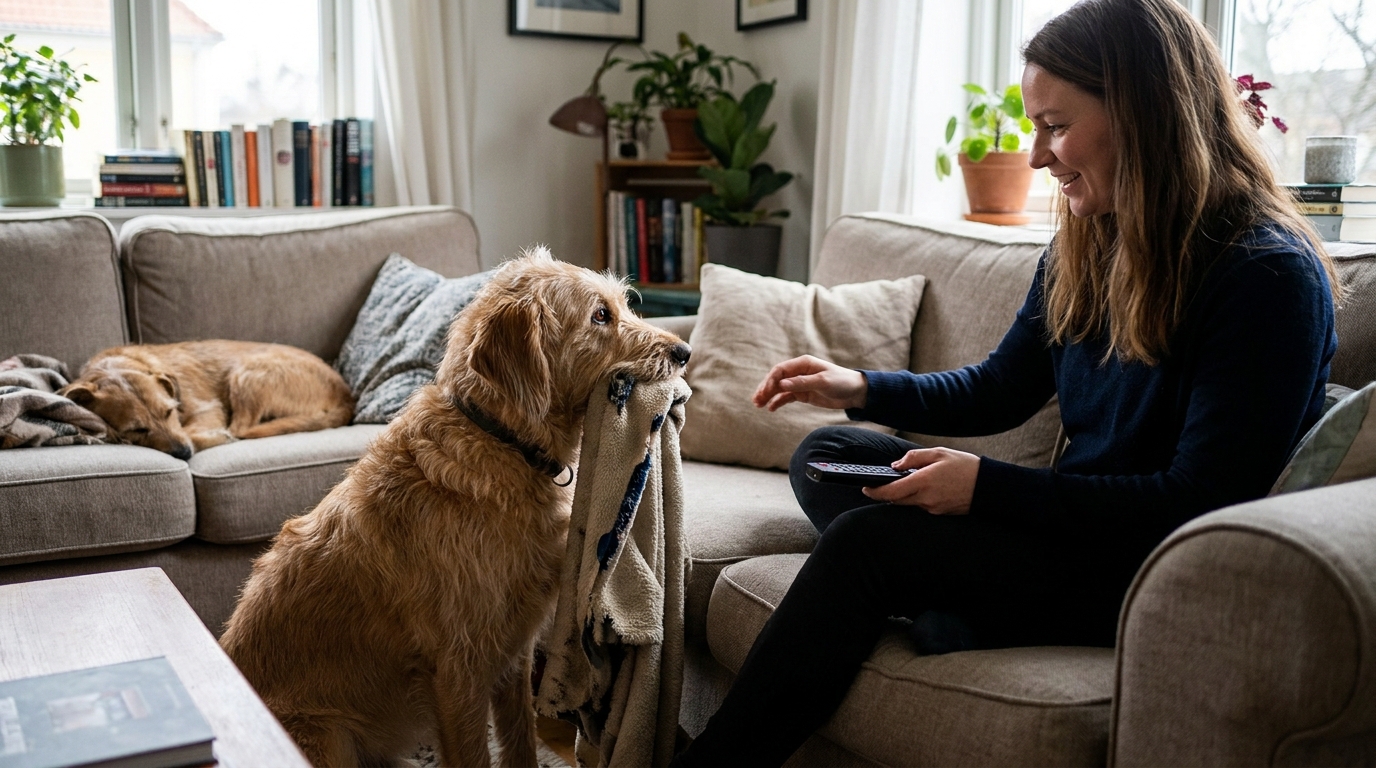
That specific blanket means TV time.
When you pull out your designated couch blanket, your dog recognizes this as the signal that you’re settling in for an extended stationary period. Many dogs respond by immediately claiming their spot on the furniture or nearby, often before you’ve even sat down.
The blanket works as a signal because it appears only during long sitting sessions—never during quick couch stops or brief breaks. Dogs learn to differentiate between you sitting temporarily and you settling in, and the blanket is one of the most reliable predictors of the latter.
Behavior specialists note that dogs often react more strongly to the blanket cue than to you simply sitting down. The prop itself has become more predictive than the action, likely because you sometimes sit briefly without settling, but you never use the blanket without staying put.
But #4 involves something they hear from another room entirely…
#4 — The Shower Shut-Off Anticipation
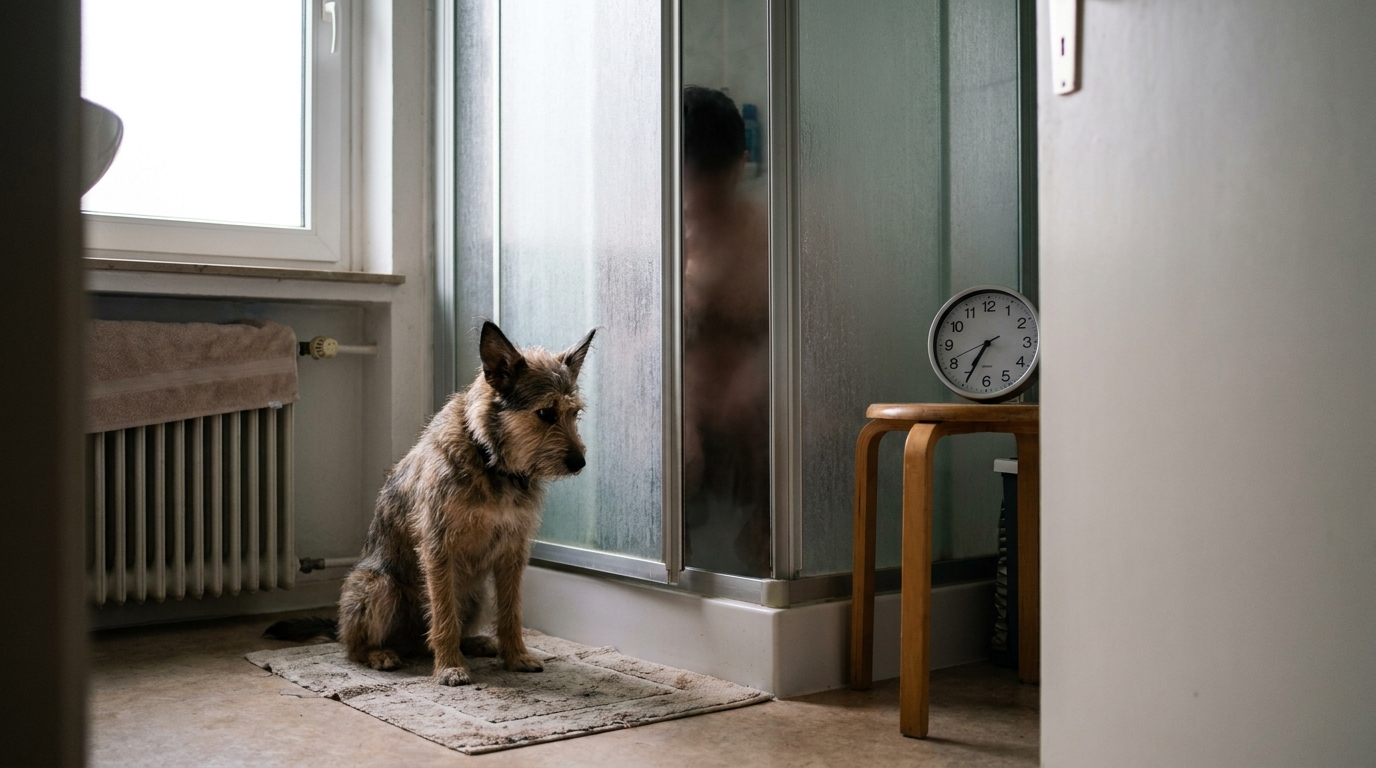
They know exactly how long your shower lasts.
Dogs learn the duration of your typical shower within a week or two, and they position themselves outside the bathroom door approximately one minute before you finish. This isn’t random timing—they’ve internalized the length of your routine and can anticipate its end.
This happens because dogs have excellent time perception for regular intervals. The sound of running water provides continuous auditory feedback, and they’ve learned that after a specific duration, the water stops and you emerge. It’s pattern recognition applied to time.
Veterinary research on canine time perception shows that dogs can estimate intervals of 5 to 20 minutes with surprising accuracy. They’re not counting seconds, but they’re tracking the passage of routine-length chunks of time reliably enough to predict when you’ll reappear.
#3 — The Nighttime Light Switching
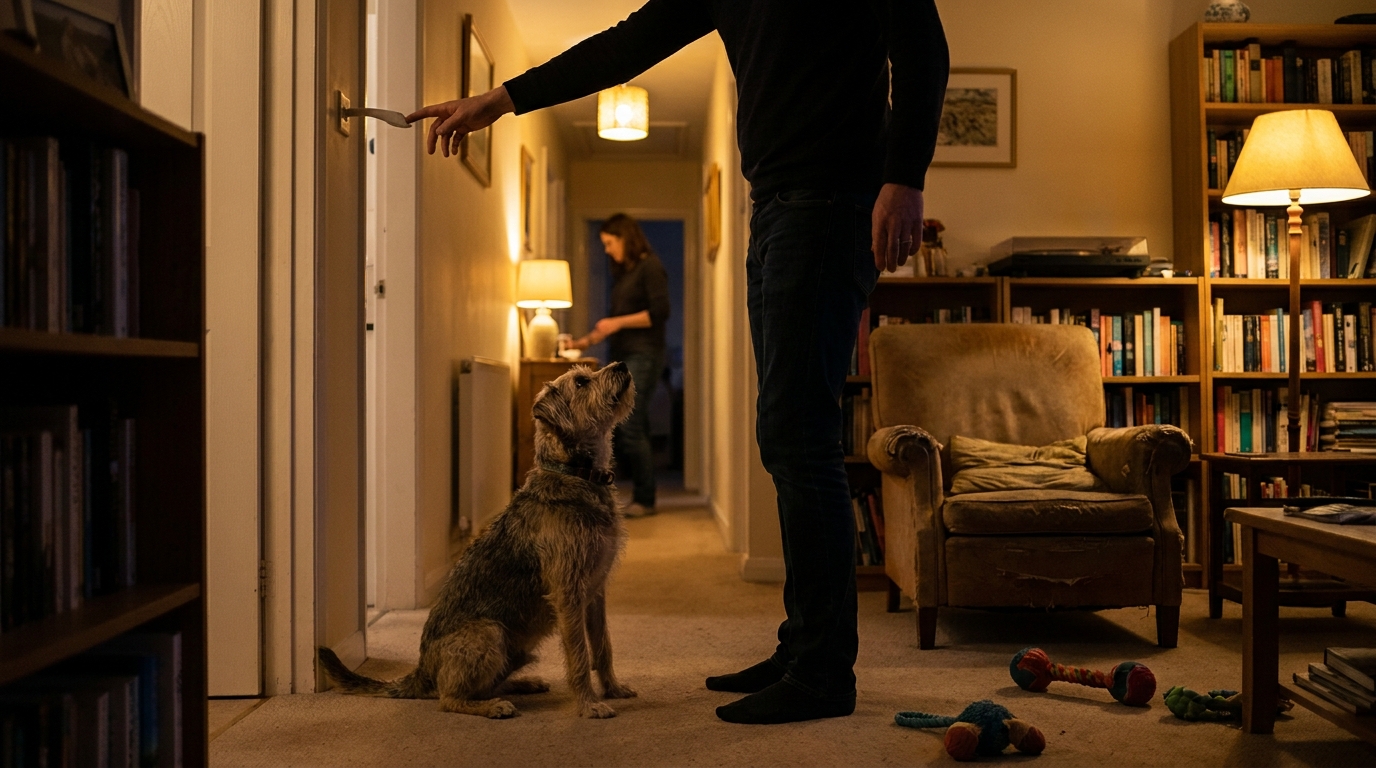
They’ve memorized the order you turn off the lights.
Most dogs can predict which light you’ll turn off next during your nighttime routine, and they often move toward the bedroom before you’ve finished the sequence. They’re not following you—they’re anticipating where you’re going based on which room just went dark.
This works because your light-switching pattern is highly consistent. You likely turn off the kitchen, then the living room, then the hallway in the same order every night. Your dog has mapped this sequence and learned that the final light predicts your arrival in the bedroom within 30 to 90 seconds.
Professional dog trainers report that dogs in new environments often show anxiety during the first few nights partly because they haven’t yet learned the light-switching sequence. Once they map the routine, their nighttime stress typically decreases.
#2 — The Laundry Basket Appearance
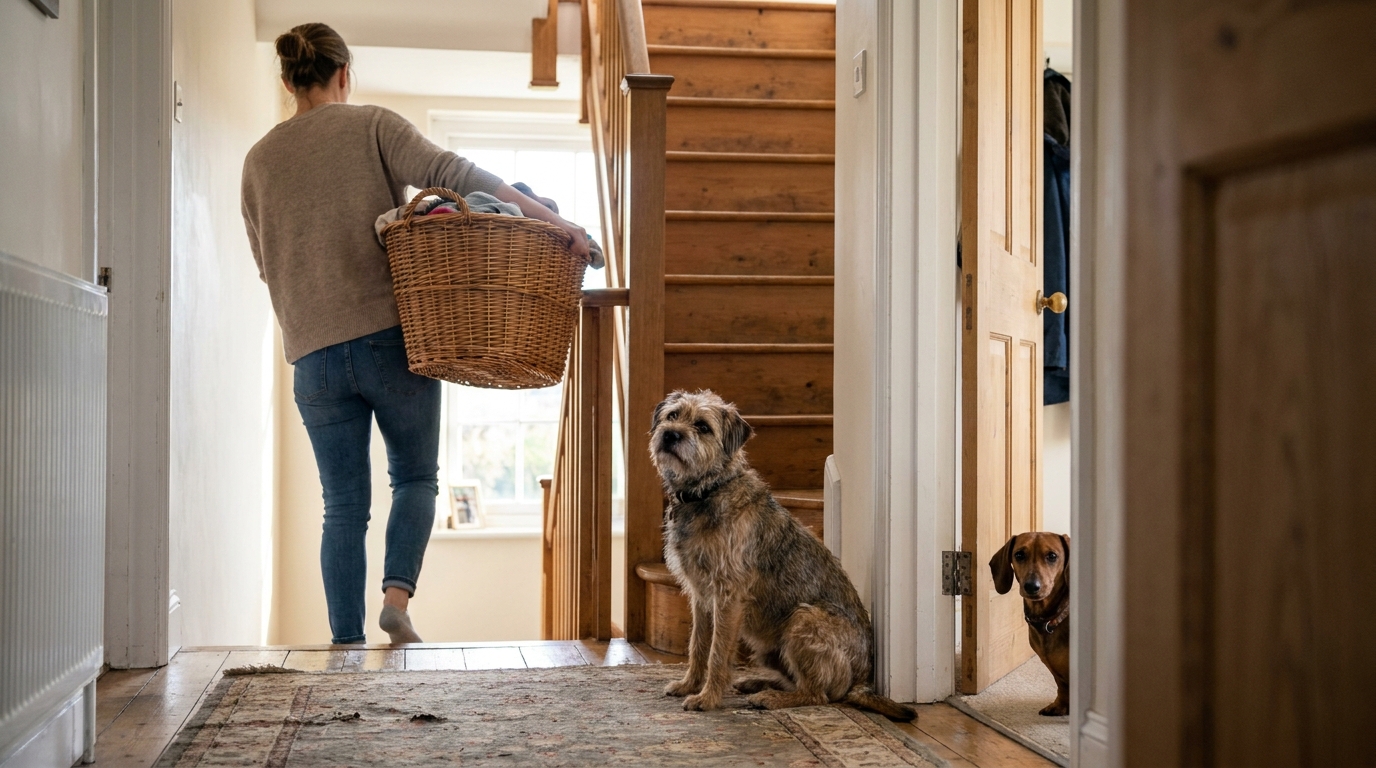
That basket means you’re about to disappear upstairs.
When the laundry basket comes out, your dog recognizes this as a signal that you’ll be making multiple trips between floors—a pattern that often excludes them from following every single time. Many dogs react by settling in downstairs rather than attempting to track your movements.
The laundry basket triggers this response because it’s uniquely associated with repetitive, multi-trip tasks. Unlike other items you carry upstairs, the basket always means you’ll be back down soon, then back up, then back down again. Dogs learn that trailing you during this routine is inefficient.
Behaviorists studying separation tolerance note that dogs who’ve learned to settle during laundry time show lower overall anxiety levels. They’ve internalized that this particular absence is temporary and predictable, which reduces the stress of watching you leave.
Worth Knowing
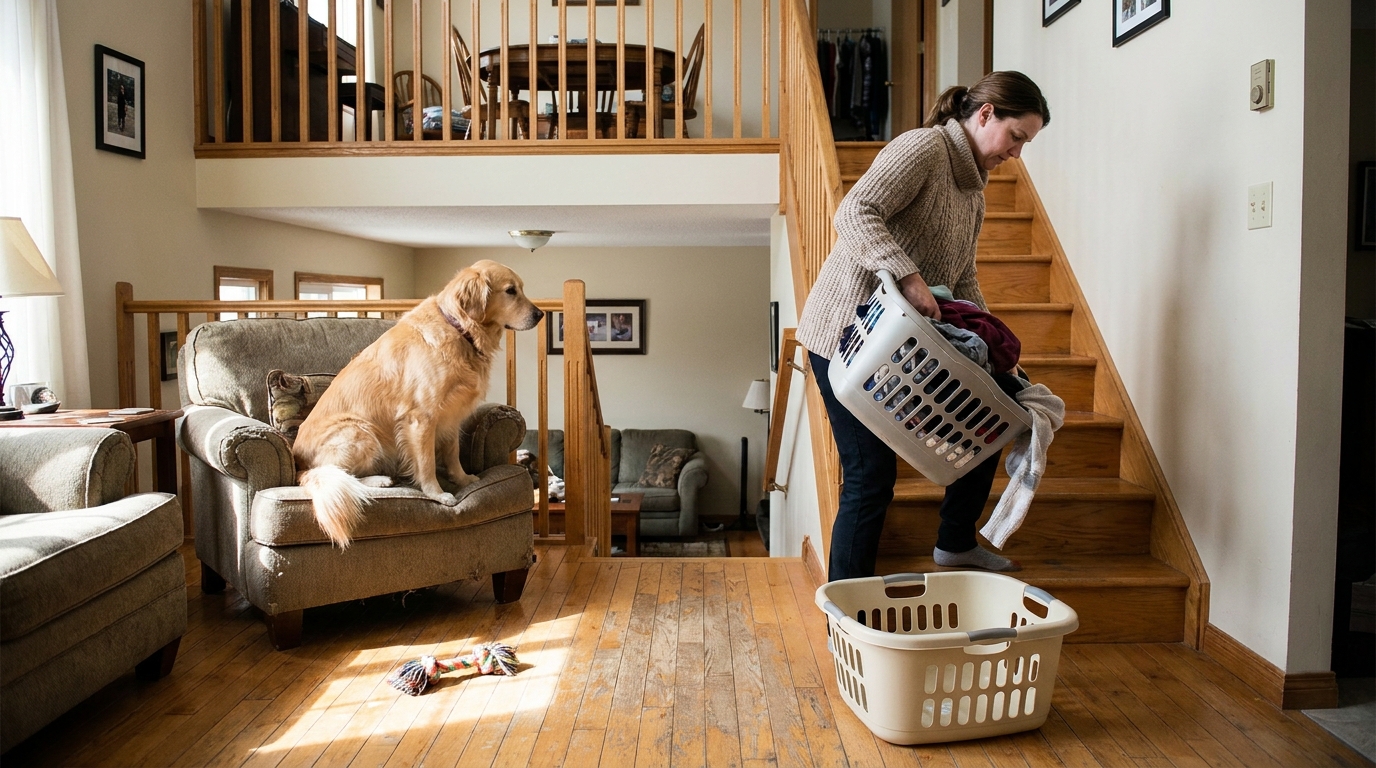
- Dogs distinguish between empty and full laundry baskets by weight/carrying posture
- Multi-level homes: dogs learn floor-specific routines faster than single-level
- Many dogs settle in the exact spot where they can monitor both staircases
- Senior dogs often stop following laundry trips years before other activities
The most secure dogs aren’t the ones who follow everywhere—they’re the ones who know when you’re coming back.
#1 — The Bedroom Door Position
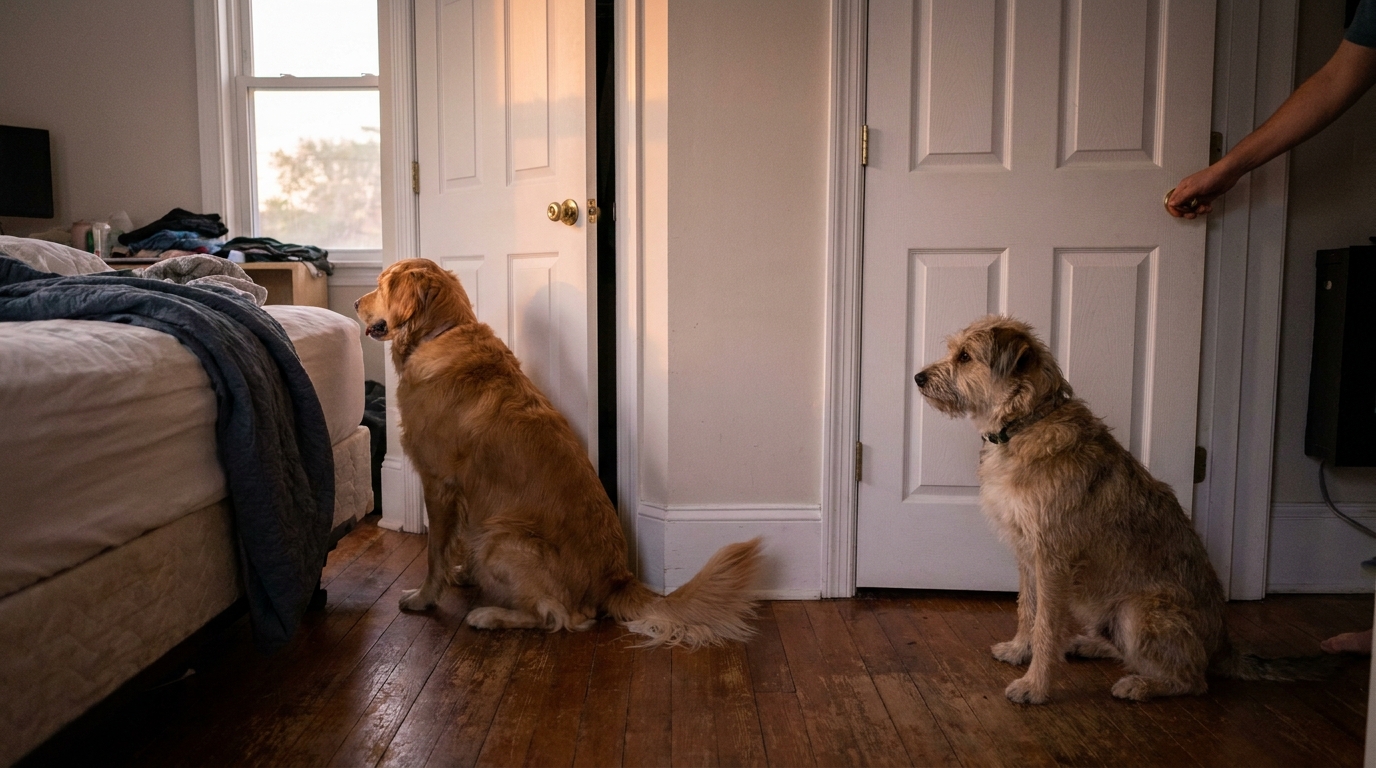
This one detail tells them everything about tonight.
Dogs check whether the bedroom door is open, closed, or ajar multiple times each evening, and this single detail determines their entire nighttime strategy. A closed door means they’ll sleep elsewhere; an open door means they’re welcome; a door left ajar creates uncertainty they’ll often test.
The door position matters because it’s the final, definitive answer to the question every dog asks at bedtime: will I be included tonight or not? All other signals—couch blankets, light switches, even your direct commands—can be ambiguous, but the door position at the moment you enter the room is absolute.
Veterinary behaviorists studying canine sleep patterns found that dogs in homes with consistent door policies—always open or always closed—show significantly lower cortisol levels at night than dogs in homes where the policy varies. The predictability itself, regardless of inclusion, reduces stress more than the inclusion does.
The Bottom Line
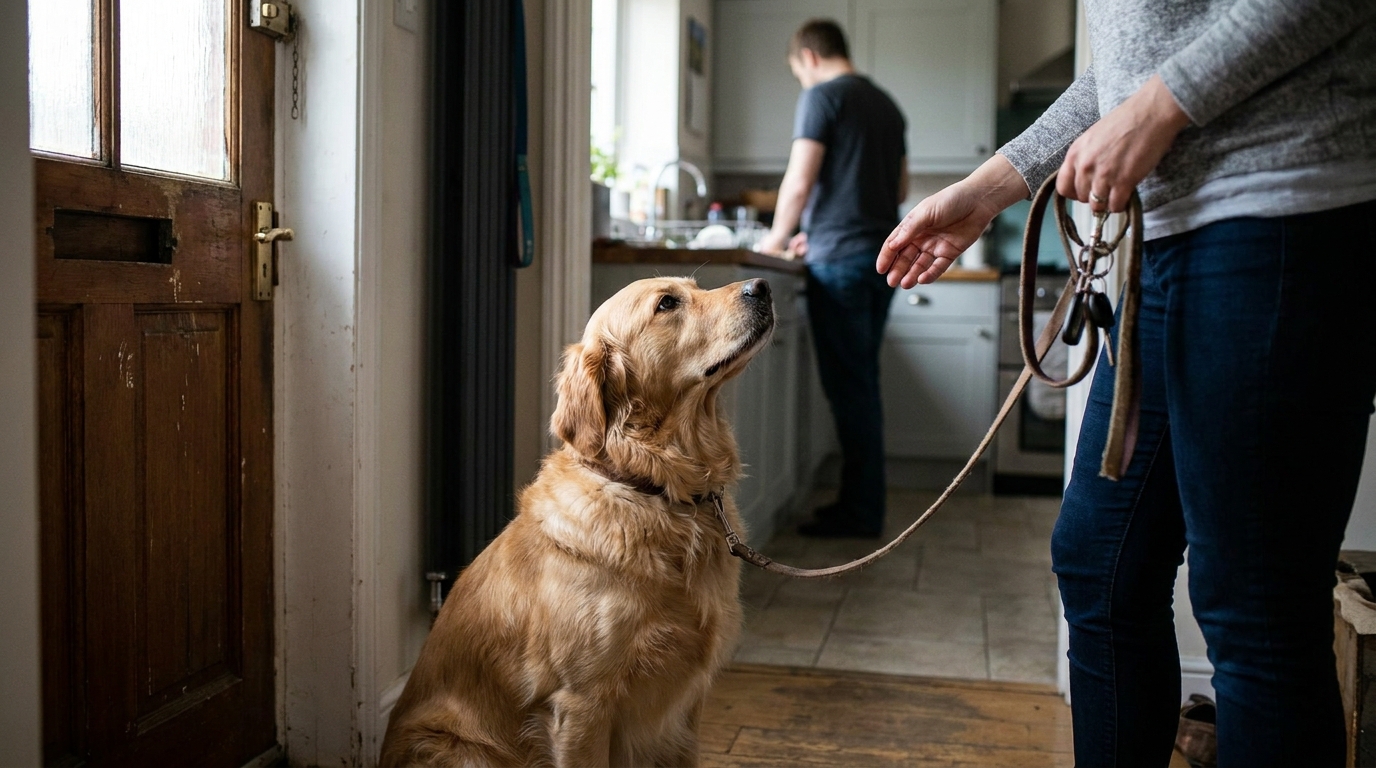
These micro-routines prove that your dog isn’t just living in your home—they’re actively reading it. Every sound, movement, and object placement feeds into a mental schedule they’ve built entirely through observation.
The most surprising finding? Dogs experience genuine relief when these patterns stay consistent, even when the pattern itself isn’t particularly exciting. A closed bedroom door they can predict is less stressful than an unpredictable open one.
Routine isn’t boring to your dog—it’s the language they use to understand their world.
Which of these routines does your dog monitor most obsessively, and have you noticed any we didn’t cover?
Bonus — The Five-Second Security Check That Reveals Everything
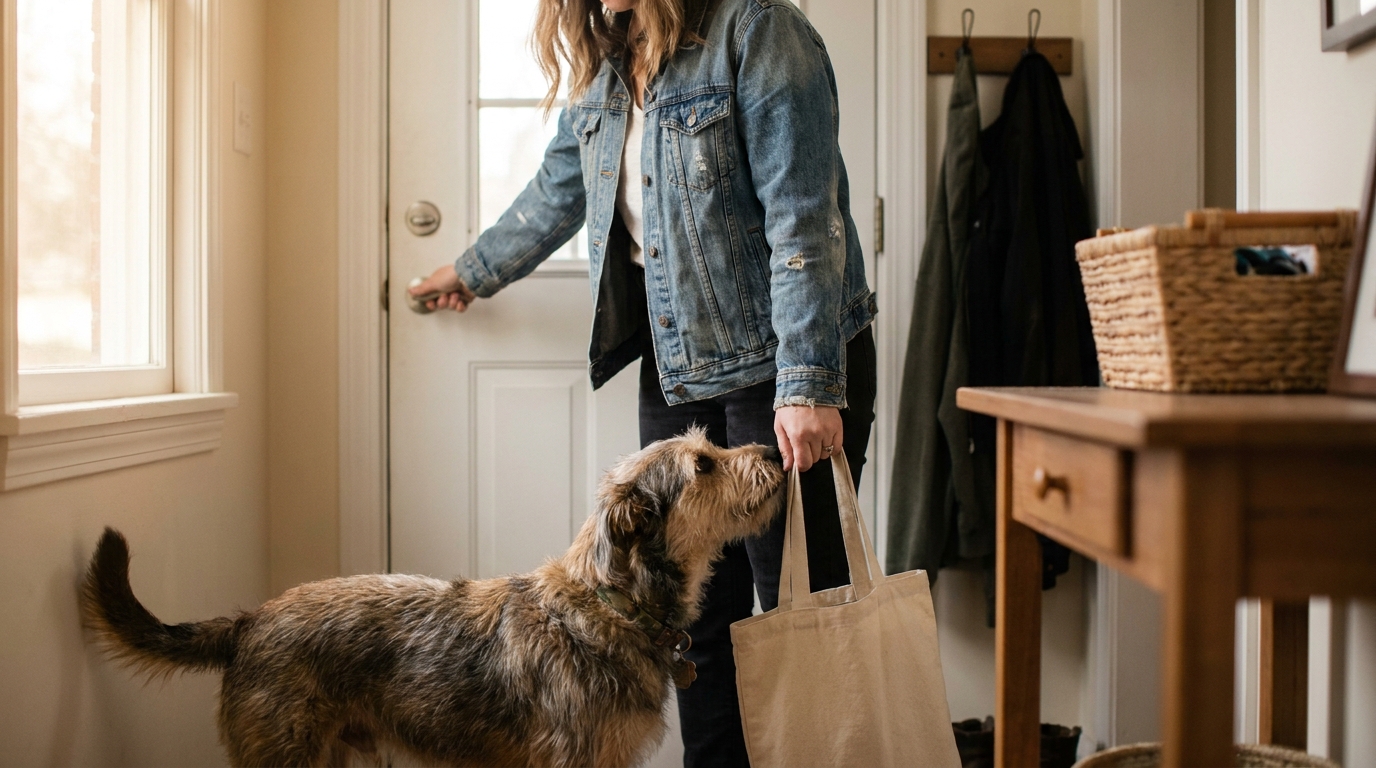
One simple behavior tells you whether your dog feels truly secure.
A confident, secure dog will settle in a spot where they cannot see you for at least five uninterrupted seconds before checking your location. An anxious dog checks constantly, often within two seconds, because they haven’t internalized that your routines are predictable.
Watch for these security markers:
- Settles in a room you just left without immediately following
- Remains calm when a door closes between you for brief periods
- Doesn’t reposition every time you stand up or shift your weight
- Can focus on a toy or treat even when you’re moving around nearby
If your dog passes this test, your consistent routines have done their job. If they don’t, the solution isn’t more attention—it’s more predictability. The routines above aren’t just habits your dog enjoys; they’re the framework that helps them relax.
READER QUIZ
[How Well Do You Know Your Dog’s Daily Routines?]
![[How Well Do You Know Your Dog's Daily Routines?]](https://amgpublishingstudio.blob.core.windows.net/articles/d239676e-b94c-46c1-a331-246983f289c3/3911120c-d4fe-4c7b-bdc1-440bc7abfd46.png)
According to the article, how many times per day does the average dog visually check the leash storage location?
- Two to three times
- Four to six times
- Eight to ten times
- More than twelve times
What does the coffee maker’s gurgling sound predict for most dogs?
- Breakfast is coming soon
- You’re leaving for work
- You’ll stay stationary for 8-10 minutes
- Other family members will wake up
How accurately can dogs distinguish between similar key sets after three weeks?
- 62% accuracy
- 72% accuracy
- 82% accuracy
- 92% accuracy
What does a closed bedroom door provide for dogs, according to veterinary behaviorists?
- More alone time
- Better sleep quality
- Reduced nighttime cortisol when consistent
- Increased independence
How long will a secure, confident dog settle without checking on your location?
- Two seconds
- Five seconds
- Ten seconds
- One minute
[How consistent are your daily routines with your dog?]
- Nearly identical every day—my dog could set a clock by me
- Mostly similar with occasional weekend variations
- Pretty random—I don’t follow the same schedule day to day