
13 Small Signs a Dog Has Learned a Household Schedule Nobody Ever Sat Down to Teach It
Most people assume their dog just floats through the day, reacting to whatever happens to happen. No memory, no math, no sense of “later.” Just vibes.
Except that’s not what actually happens behind those eyes. Dogs quietly build internal routines around us – often accurate to the minute – without a single lesson, flashcard, or bribe. You never sat down and explained breakfast time, work time, or Netflix time, yet your dog acts like it has a copy of the family calendar taped to the inside of its skull. Stick around, because sign #13 is the one most owners never even notice they’re doing.
#1 – They Park Themselves By The Door Before You Even Reach For Your Keys
Dogs who’ve cracked the household schedule don’t wait for keys to jingle. They’re already in position, hovering near the front door, the garage entry, or the mudroom a few minutes before you usually walk out.
That’s not aimless wandering – that’s anticipation built from a whole chain of clues. Your shower ending, the coffee machine gurgling, the exact slant of morning light, even the difference between weekday footsteps and weekend shuffling all get stitched together in their head.
You’ll notice how eerily consistent it is. Monday through Friday, your dog might be sitting upright at the door by 7:50 a.m. – then Saturday rolls around and they don’t bother, because nothing about your morning matches the script: no work shoes, no rushed pace, no grabbed bag.
Take a day off but keep your normal morning motions going, and watch what happens. Their confusion when you don’t leave is basically a signed confession that they were reading the pattern the whole time.
#2 – Their “Wake-Up Call” Lines Up With Your Alarm, Not Sunrise

A dog that’s learned the schedule doesn’t wake up with the sun – it wakes up with you. If your alarm usually goes off at 6:30 a.m., plenty of dogs will start stirring a few minutes early, stretching, nudging, or just staring at your face like a furry backup alarm clock.
Shift workers know this one painfully well. Change your wake-up time and most dogs recalibrate within days, not weeks – that’s not instinct, that’s data processing in real time.
Here’s the sneaky part: they’re not only reacting to the alarm sound itself. They’re clocking your breathing changes, the early light through the blinds, even the temperature shift as the heater kicks on before you’re technically awake.
Over time all of that gets fused into one signal: “this exact feeling means the human wakes up now.” It’s also why a dog will nudge you awake if you sleep in – the internal clock plus the pattern recognition both agree that you’re late.
#3 – Mealtime Staring Starts On the Dot (Even If You’re Distracted)

If you’ve ever been mid-Netflix episode and suddenly felt a hole burning through the side of your face, check the clock. Dogs who’ve internalized the household schedule develop a chillingly precise sense of mealtime, often locked in within a 10–15 minute window every single day.
You might not be watching the time. They absolutely are.
The staring is just step one. Next comes the pacing, the arm nudge, the paw on your leg, or a toy dropped dramatically at your feet – the canine version of “excuse me, the food scene is running late.”
Here’s the part that ruffles feathers: a lot of what gets labeled “begging” isn’t begging at all. It’s your dog flagging that you broke the contract. You built the rhythm – breakfast at 7, dinner at 6 – and they memorized every sound in the sequence, from the kibble bag crinkling to your footsteps toward the pantry. Break that rhythm too often, and you’ll see real stress, not just impatience.
Fast Facts
- Meal-time anticipation often narrows to a tight 10–15 minute window once a routine is set.
- Dogs track sound cues like the kibble bag and pantry footsteps, not just the clock.
- Consistent feeding times tend to calm “begging” behavior over time.
- Frequently broken feeding routines can trigger real stress, not just mild impatience.
#4 – They Visit the Water Bowl at the Same Times You Usually Refill It

Here’s a tiny sign almost nobody clocks: watch *when* your dog wanders to the water bowl, especially in the evening. Most owners refill it on autopilot – right after dinner, right when they walk in from work, or just before bed.
A schedule-savvy dog starts hovering near that bowl around those exact windows, even when it’s already full to the brim. They’re not thirsty. They’re syncing their internal clock to yours.
Some dogs go further and “ping” the bowl – a nose bump or a paw tap – right around the usual refill moment, like a gentle reminder that this is their slot. Part of it is thirst, sure, but a bigger part is pattern memory: your bending posture, the running water sound, even the little phrase you always say (“fresh water!”) all stack into one scheduled event in their brain.
Skip it or run late, and you might catch them glancing between you and the bowl, checking both the clock and the human at the same time.
#5 – They Shift From “Chill Mode” to “Waiting Mode” Right Before You Get Home
This is the one that spooks people the most – the “my dog somehow knows I’m coming home” phenomenon. Even with zero cameras or trackers involved, many dogs flip from sleeping or wandering to full-on window-watch mode 10 to 30 minutes before you usually walk through the door.
They’ll post up by the door, lock eyes on the driveway, or perk up at every passing car – long before your actual vehicle shows up.
One popular theory: dogs track the fading strength of your scent around the house over the course of the day, then combine that with the light outside, the neighborhood noise level, and their own internal rhythm. When that scent hits its usual “low point,” the alarm goes off – the human is due.
People who switch work shifts often notice their dog’s waiting time adjusts after just a short stretch, which points hard toward learning rather than anything mystical. Romantics call it pure love. Behaviorists call it pattern prediction. Honestly, it can be both.
Why It Stands Out
- Kicks in 10 to 30 minutes before arrival, often with no obvious external trigger.
- Widely linked to gradual scent fade rather than sound or sight.
- Recalibrates within days whenever a person’s schedule shifts.
- Considered one of the clearest proofs of real pattern learning, not just instinct.
#6 – They Magically Appear When You Head to the Bathroom at Certain Times

Unglamorous but true: bathrooms are massive schedule anchors for dogs. If you shower right after waking up or brush your teeth every night at 10 p.m. sharp, your dog quietly files those exact timestamps away.
Notice how they “randomly” trail you into the bathroom at some times but ignore it completely at others? That’s because certain bathroom trips get flagged in their head as transitions in the daily script.
Morning bathroom usually means “human is about to leave for work.” Late-night bathroom means “we’re almost at sleep time.” A dog that’s truly cracked the code will often:
- Move straight to their daytime resting spot right after your morning routine.
- Head for the bedroom or crate the moment the nighttime brushing-teeth ritual starts.
People love writing this off as basic “Velcro dog” clinginess. Often it’s strategic – your dog knows exactly what usually comes next, and they don’t want to miss the next move, especially if it’s separation, bedtime, or a snack.
#7 – They React to App Sounds, TV Themes, or Phone Alerts as Time Markers
Dogs have no clue what an iPhone is, but they absolutely understand that the ding means something is about to happen. If a specific notification sound almost always leads to you grabbing shoes, clipping on a leash, or walking to the kitchen, your dog starts treating that sound itself as a scheduling cue.
Some dogs visibly perk up at a particular text tone or work email chime – not because they care about your inbox, but because it reliably predicts a walk, dinner, or couch time.
TV routines are even easier for them to crack. Plenty of households have a nightly show or a news segment that runs like clockwork, and after enough repetitions your dog stops caring what’s on screen and starts caring what happens when the closing music hits. Usually that means one of these:
- You stand up and head toward bed.
- You get a late-night snack (and inevitably drop crumbs).
- You grab the leash for the final potty break.
So watch closely when the credits roll: ears up, body already repositioning, maybe even moving toward the door before you’ve lifted a finger. They’re not reacting to noise. They’re reading your digital habits like a clock.
#8 – They Behave Completely Differently on Weekdays vs. Weekends
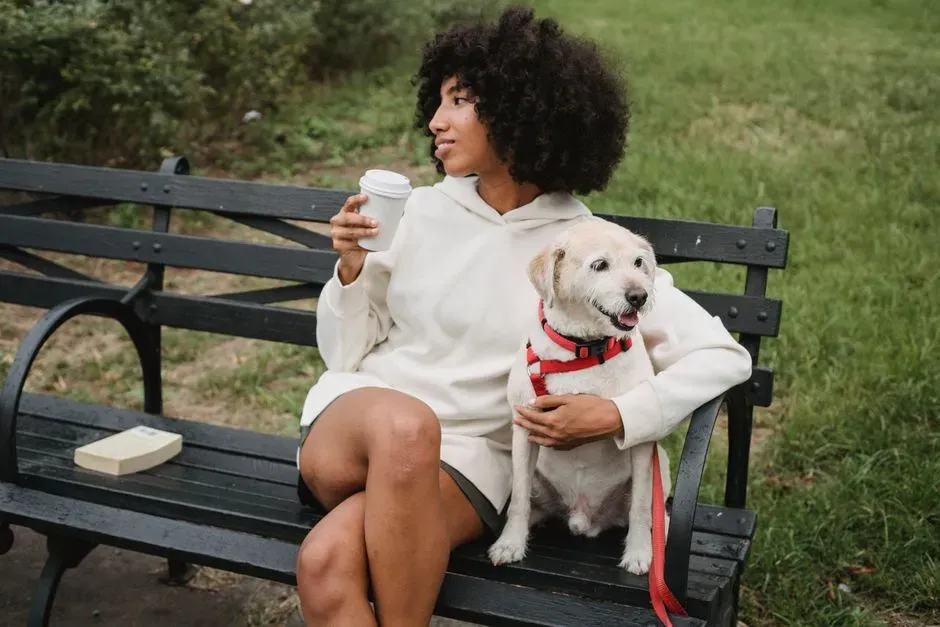
Anyone with a 9-to-5 has seen it firsthand: your dog is a different animal on Saturday morning. Weekdays get a rushed, businesslike routine – quick walk, fast breakfast, you grabbing your bag and vanishing.
Weekends? Same dog, completely different energy – playful, animated, way more insistent about attention. This split isn’t imagination. It’s a hallmark sign your dog has mapped your whole weekly rhythm, not just your daily one.
They’re reading your clothing (work shoes versus slippers), your pace (rushed versus lazy), and the ambient sounds of the house (coffee and laptop versus music and chores). Stack that over months and years, and dogs quietly link “weekday morning” with long stretches of alone time, and “weekend morning” with more family presence.
That’s the real reason some dogs whine or pace more on Monday mornings – they’re not sad about the calendar, they’re recognizing the change in vibe and bracing for what it usually means.
Quick Compare: Weekday Dog vs. Weekend Dog
- Weekday morning: Quick walk, fast breakfast, rushed goodbye at the door.
- Weekend morning: Slower pace, more play, no urgency in the room.
- Weekday cues: Work shoes, brisk footsteps, coffee-and-laptop sounds.
- Weekend cues: Slippers, relaxed pace, music or chores in the background.
#9 – They Start Winding Down Before You’ve Even Announced Bedtime

A dog that’s internalized your sleep schedule starts acting sleepy on cue – no announcement needed. About 20 to 40 minutes before you usually head to bed, plenty of dogs will migrate to their favorite nighttime spot, stop initiating play, and get noticeably extra cuddly.
That’s not just fatigue lining up with theirs. Their whole system is syncing to the predictable lights-dimming, screens-off, voices-lowering pattern you repeat almost every night without realizing it.
Some dogs go one step further and preemptively head to their crate or the bedroom the moment you run through small repeatable rituals – the TV clicking off, the blinds closing, a specific lamp switching on.
Pull an all-nighter and you’ll likely see them get up, circle, and lie back down over and over with a confused expression, as if silently asking, “We missed bedtime. Are you okay?” Interestingly, dogs that fight bedtime with sudden zoomies often have owners whose bedtime signals are inconsistent – mixed signals create a messy schedule in a dog’s head, while consistency carves the routine in clean lines.
#10 – Their Potty Requests Hit at Predictable, Clock-Like Moments
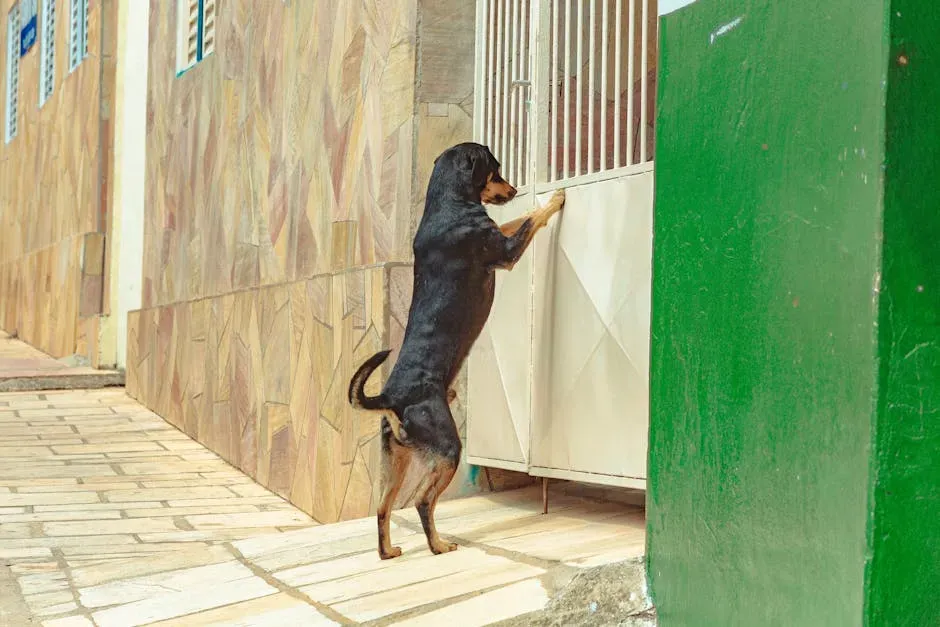
Outdoor breaks aren’t purely biological for a schedule-savvy dog – they’re scheduled events they track just like everything else. If you usually take them out right after breakfast, the second you get home from work, or just before bed, over time they’ll start proactively asking around those exact windows.
That “sudden” bark at the back door or the nose-nudge near the leash hook at 9:30 p.m. every single night? That’s your dog running through the evening checklist you built without ever meaning to.
You’ll notice this most sharply when you forget. Many dogs will stand by the door and stare you down, walk back and forth between you and the usual exit, or escalate from patient waiting to full-on vocalizing.
People often misread this as attention-seeking or bad behavior. In reality, it’s frequently your dog saying, in the clearest way they know how, “this is the part where we go outside before sleep so I don’t ruin the rug.” They’ve learned that skipping this step leads to discomfort – and they’d rather annoy you now than deal with the consequences later.
#11 – They Get Anxious or Extra Clingy Before Your Actual Departure
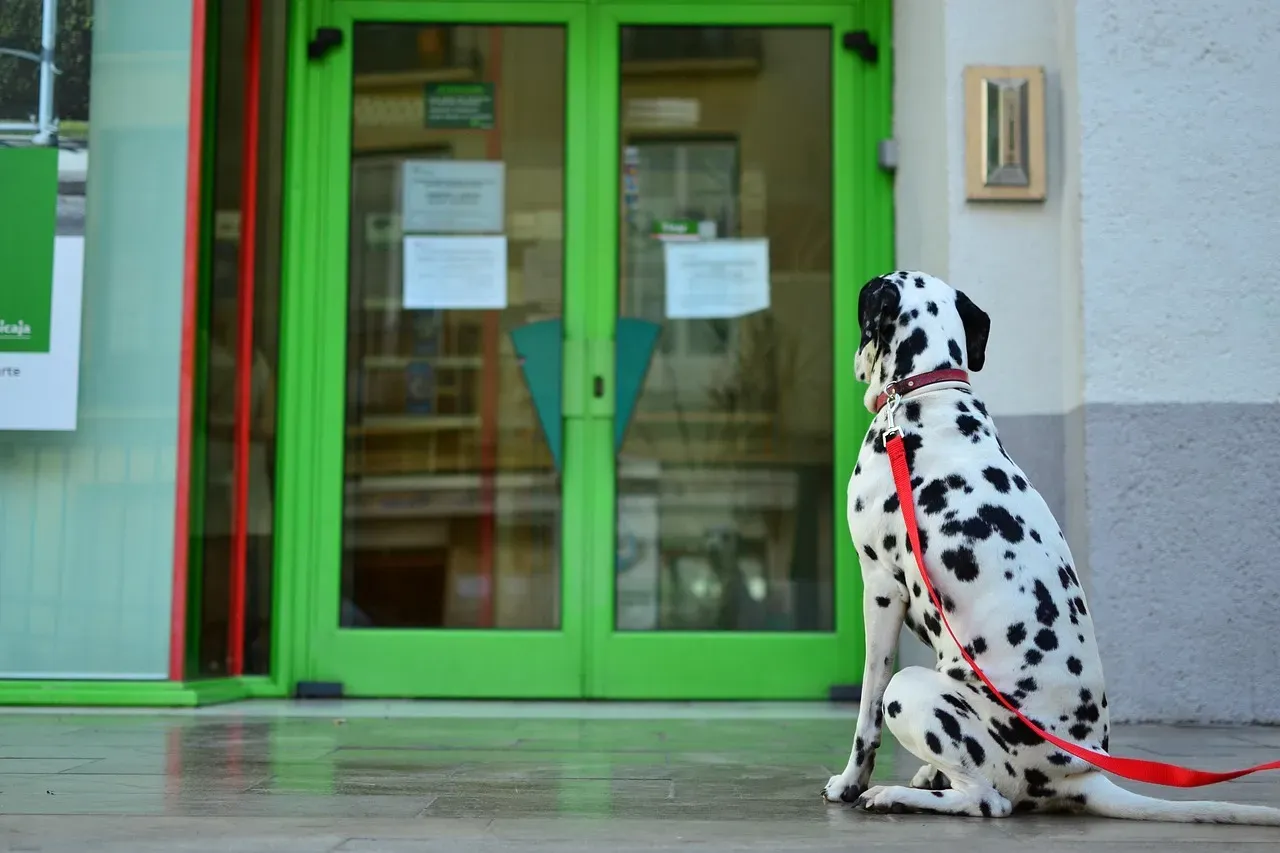
Dogs prone to separation stress don’t wait for the door to shut to start panicking – they clock the moment your leaving routine even begins. If you tend to leave around a similar time each day, they learn to track the entire prep sequence: shower, dressing, a specific jacket, the bag hitting its usual spot by the door.
Their anxiety creeping in earlier and earlier along that chain is actually a sign they’ve mapped your schedule with almost unsettling accuracy.
You’ll catch it in small details. They might follow you more closely when you slip on certain shoes but ignore others entirely, block doorways or plant themselves on your feet while you grab your keys, or start panting and pacing as early as the makeup or hair stage – because they already know where this particular sequence ends.
It’s uncomfortable to watch, but it proves how deeply they’ve internalized not just time itself but emotionally loaded time. People often chalk a dog’s pre-departure meltdown up to “over-attachment,” but a huge chunk of it is a rigid script that got built by accident. Slow the script down deliberately, and the reaction often softens along with it.
#12 – They Predict Kid-Related Events Like the School Bus or Homework Time With Scary Precision

Family dogs are frequently better than the parents at sensing exactly when the kids are due home. If your household runs on a fairly consistent school schedule, plenty of dogs will start hovering near the front window 10 to 15 minutes before the bus, the driveway around pick-up time, or the hallway where backpacks always get dumped.
It’s not just an internal clock at work here – it’s the whole cadence of the neighborhood. The sound of other buses, the way light falls at that particular hour, the traffic pattern outside, plus your own pacing and clock-glancing, all get glued together into one rich signal your dog reads fluently.
Some dogs even associate the first clank of pots and pans with “homework time” or “family dinner,” wandering into the dining room before a single person has actually sat down.
Owners love saying, “He just knows when the kids are coming.” Technically, yes, he does – he’s learned the pattern cold. That doesn’t make it any less touching, though; it means your dog has woven your children’s comings and goings directly into his own emotional calendar.
#13 – They “Clock Out” From Pestering the Moment They Know It’s a No-Play Zone

This is the quietest sign on the list, and arguably the most impressive: a dog that truly understands the household schedule stops asking for things during known off-limits blocks. If you consistently ignore them during long work calls, skip playtime during your early-morning laptop session, or never engage while you’re cooking dinner, a schedule-wise dog will eventually reduce or completely stop trying during those exact windows.
Instead, they’ll lie under the desk, curl up on the couch, or quietly chew a toy in the corner until the moment your “available period” reliably kicks in – the laptop closing, the call ending, you finally sitting down on the couch.
This selective pestering is wildly underrated. Everyone gushes over tricks and heelwork, but a dog that’s essentially built a mental spreadsheet of “humans are reachable at 7–8 a.m., 6–9 p.m., and weekends” is showing off some genuinely sophisticated time-and-context learning.
It also exposes an uncomfortable truth: inconsistency is on us. Play during the “no-play” window even occasionally, and you scramble the whole schedule, so your dog keeps trying at random. Stay consistent, and you give them permission to actually clock out until the next slot – and that, more than any cute door-watching, is where real household harmony lives.
At a Glance
- Dogs learn to recognize consistent “unavailable” windows, like work calls or cooking time.
- Selective pestering reflects advanced time-and-context learning, not just quiet obedience.
- Occasional rule-breaking, like playing during a “no-play” window, resets the whole pattern.
- Consistency is what allows a dog to fully relax instead of testing you at random.
The Bottom Line

Dogs don’t need wall calendars or phone reminders. They build their own daily maps out of scent, light, micro-routines, and our endlessly predictable habits, and they do it without a single deliberate lesson from us.
Every sign on this list – the door-waiting, the precision dinner stares, the weekend-versus-weekday shift, the bathroom shadowing, the sudden clock-out during no-play hours – is proof of the same thing: your dog quietly learned a full household schedule that nobody ever sat down to teach.
Here’s the opinion part, and I’ll stand by it: when we call our dogs “needy,” “clingy,” or “manipulative,” we’re usually blaming them for patterns we created and then broke ourselves. If anything, the dog is the only one in the house actually honoring the contract.
So be honest with yourself – which of these thirteen signs does your dog nail, and where have you accidentally taught a schedule you now secretly wish you hadn’t? Drop it in the comments. Dog people love being right about this stuff, and somebody’s about to argue with you.