
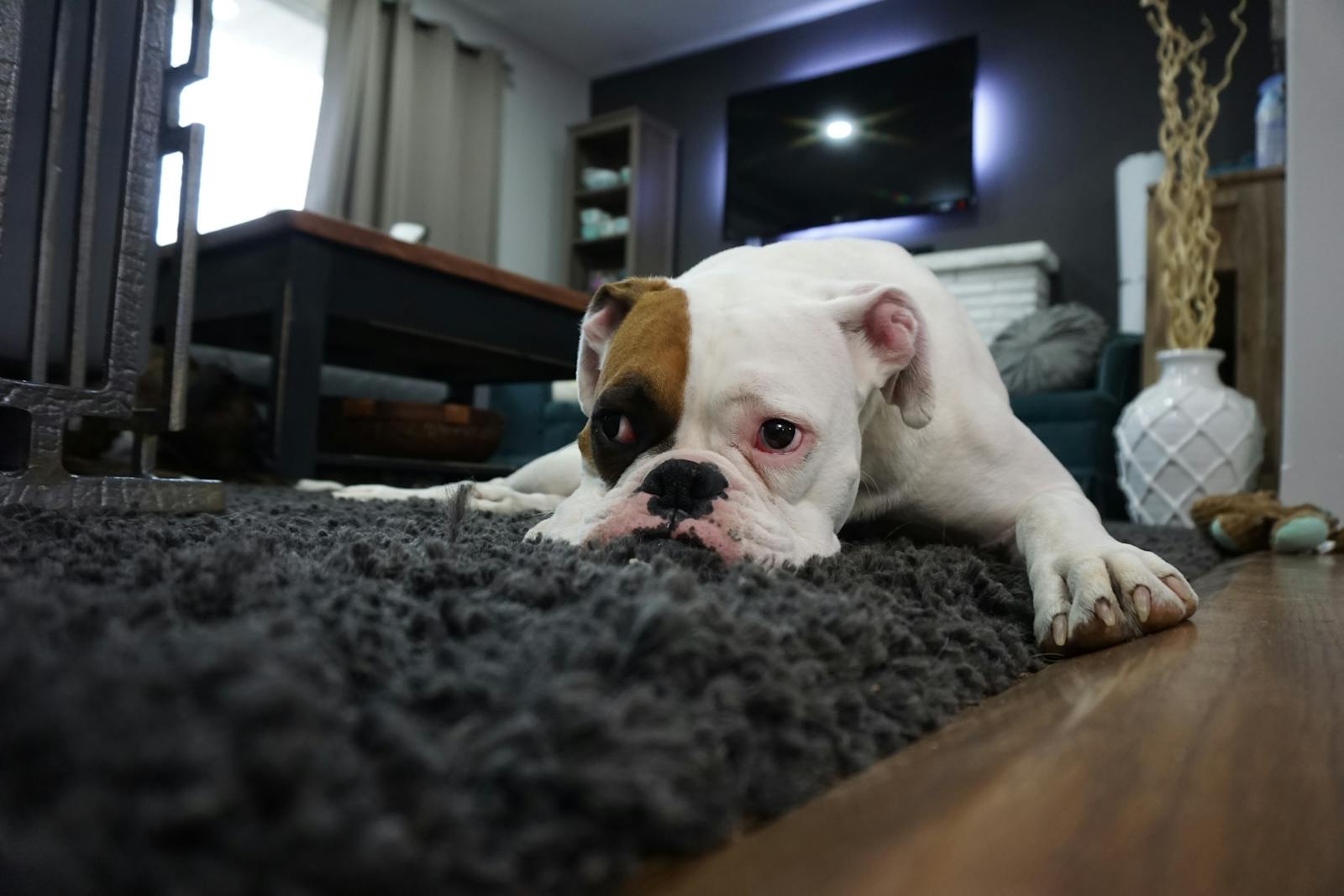
Ask most people what’s hardest about having a dog in your 70s, and they’ll say the vet bills. They’re wrong. The real threat is quieter and closer to home – a slick kitchen floor, a dim hallway at 2 a.m., that one front step nobody thinks twice about until a dog’s back legs buckle on it.
The retirees who get this right aren’t the ones buying every gadget at the pet store. They’re the ones rewiring their homes in small, deliberate ways – and vets are paying attention. Here are 13 changes real retirees over 70 are making for their senior dogs, starting with the one hiding in plain sight in almost every home.
#1 – Swapping Slippery Floors for Traction Zones
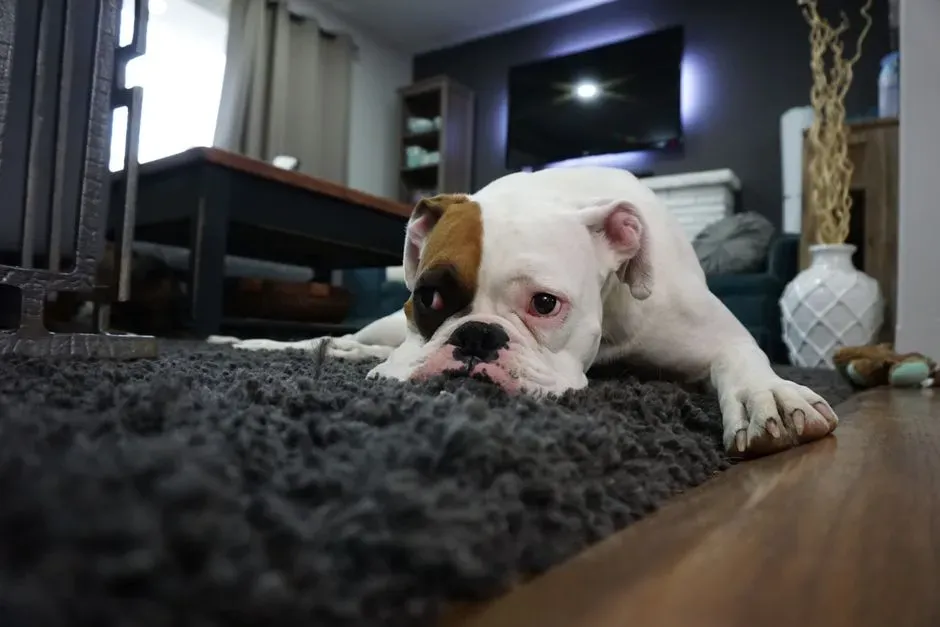
Most people think arthritis medication does the heavy lifting. Vets will tell you a slick floor can undo half of that progress overnight. Senior dogs lose muscle and joint stability fast, and hardwood or tile turns every single step into a small gamble on a hip or a knee.
That risk doubles when the person holding the leash is 75 and can’t afford to be yanked off balance either. So the retirees who’ve figured this out skip the pills-only approach and go straight for grip: non-slip runners down the main hallways, and grippy area rugs anchored with solid rug pads. It sounds almost too simple, but vets say if they could change one thing in a senior dog’s world, it wouldn’t be the supplements – it would be the floor under their feet.
Fast Facts
- Rubber-backed runners grip better than fluffy decorative rugs
- Double-sided rug pads keep runners from bunching or sliding
- Trimming excess fur between paw pads can improve natural traction
- Non-slip toenail grips or lightweight booties help on hardwood-heavy floor plans
#2 – Raising Food and Water Bowls to a Pain-Free Height
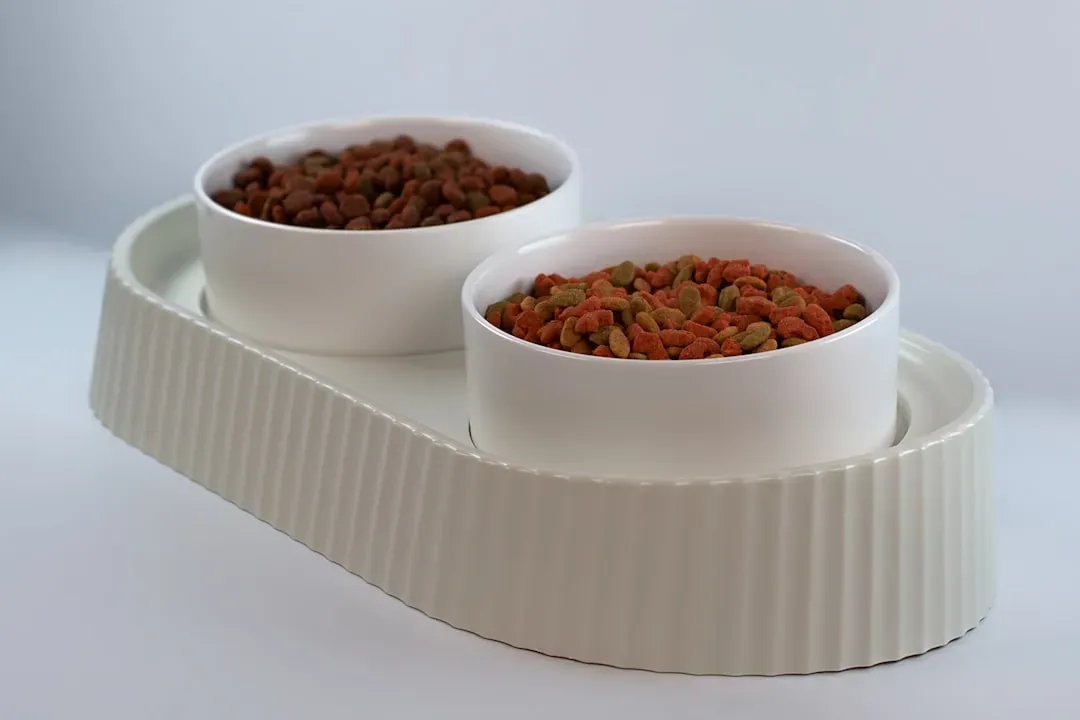
Eating off the floor is, quietly, a young dog’s game. As the spine, neck, and hips stiffen with age, that deep forward bend at every meal starts to hurt – especially for taller breeds who have to fold almost in half just to reach their bowl.
Retirees who’ve watched their dog hesitate, wobble, or slowly lower itself down to eat often catch on before anyone tells them: something about mealtime has become a small ordeal. The fix is a bowl raised to roughly chest or shoulder height, just enough that the neck stays level instead of craning up or down. For dogs without bloat risk, most vets now say the benefit – pain-free eating – outweighs the old internet warnings by a wide margin.
#3 – Turning One Room Into a No-Stairs Safe Zone
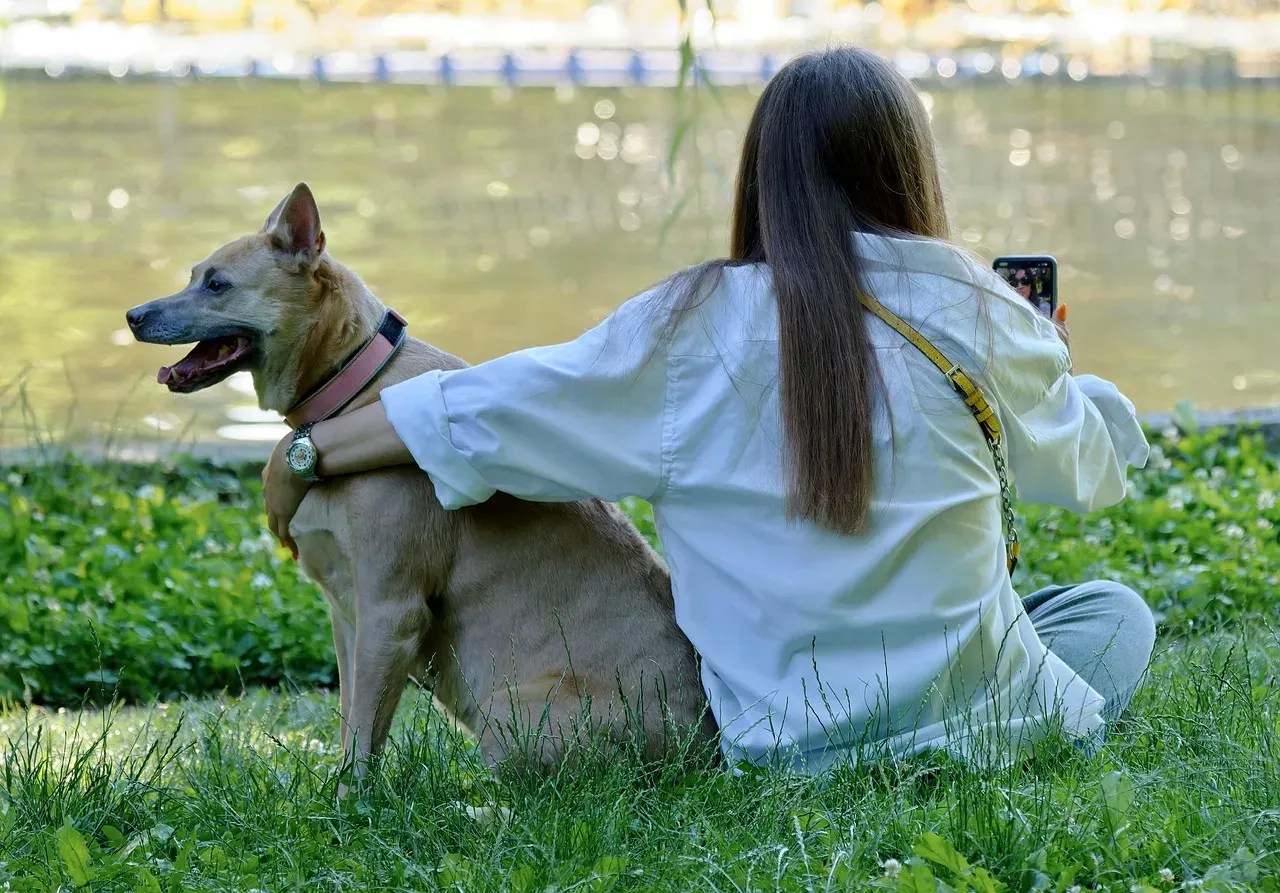
People used to brag about their multi-level homes. Now more and more retirees quietly admit the stairs have become the enemy. Arthritis, heart disease, or hind-end weakness means one missed step can end in a torn ligament – or a fall that takes the dog and the owner down together.
Vets increasingly push for a one-level “safe zone”: baby gates blocking full staircases, and the dog’s bed, food, water, and nighttime potty access all kept on a single floor. It doesn’t mean stairs are banned forever – it means climbing becomes an occasional, supervised event instead of a daily obstacle course. Retirees who’ve made this switch say it did more for their dog’s daily anxiety than any medication ever did.
#4 – Adding Night Lights Along Every Path the Dog Walks

Most people assume dogs “see fine in the dark.” That’s only half true, and it gets a lot less true with age. Cataracts and fading vision mean a dim hallway can feel just as disorienting to a 12-year-old dog as it does to a 78-year-old owner navigating it half-asleep.
Savvy retirees trace their dog’s actual routes – bed to bowl, bed to back door, the hallway with that one small step – and line them with soft, low-level night lights, motion-sensor or always-on. This one is oddly controversial in vet circles: while everyone obsesses over orthopedic beds, some rehab specialists argue that lighting prevents more falls than any bed ever could.
#5 – Lowering the Emotional Volume of the House

Everyone fixates on physical changes, but vets who specialize in senior dogs bring up something quieter: stress. A blaring TV, a house full of guests, constant noise – it agitates dogs who can no longer see or hear well enough to make sense of the chaos around them.
Retirees who notice their dog pacing, panting, or hovering near the door after visitors leave often realize the problem was never bad manners. It was overwhelm. So they rewrite the house rules: quieter evenings, a hands-off zone for grandkids during big gatherings, calmer entrances instead of a crowd rushing in at once. It’s not spoiling – some behaviorists now say cutting household chaos does as much for an anxious senior dog as medication does.
#6 – Replacing Jumps With Ramps and Strategic Lifts
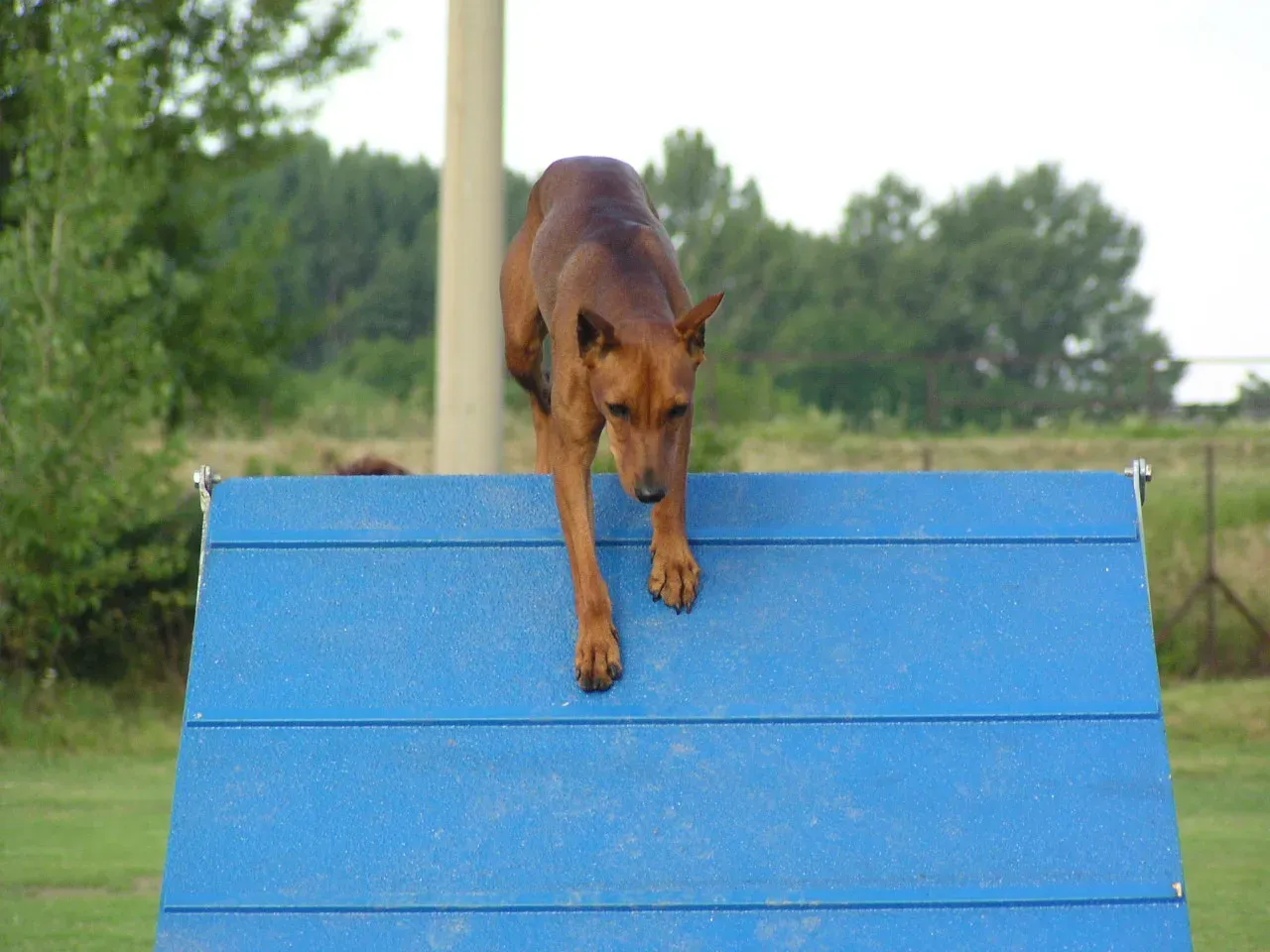
A hop onto the couch, into the car, off the porch – harmless, right? Vets see it differently: thousands of tiny impacts stacking up on joints and a spine that can’t absorb them like they used to. Retirees who watch their dog pause and stare at the car before jumping in are often watching pain, not stubbornness.
So instead of encouraging the dog to “just try,” they install a sturdy ramp to the car, low wide steps to the favorite couch spot, and a no-jump rule off the deck. Orthopedic vets have gone on record saying they’d rather see a dog “spoiled” with a ramp than tough and limping. There’s a bonus for the humans too – one less chance of getting knocked over when a dog misjudges a leap.
Why It Stands Out
- Spares the spine and joints from repeated hard-landing impact
- Lowers the odds of an owner getting knocked over during a leap
- Portable ramps work for cars, couches, and porches alike
- Removes the daily hesitation-and-jump gamble entirely
#7 – Creating a Draft-Free, Temperature-Stable Sleeping Spot
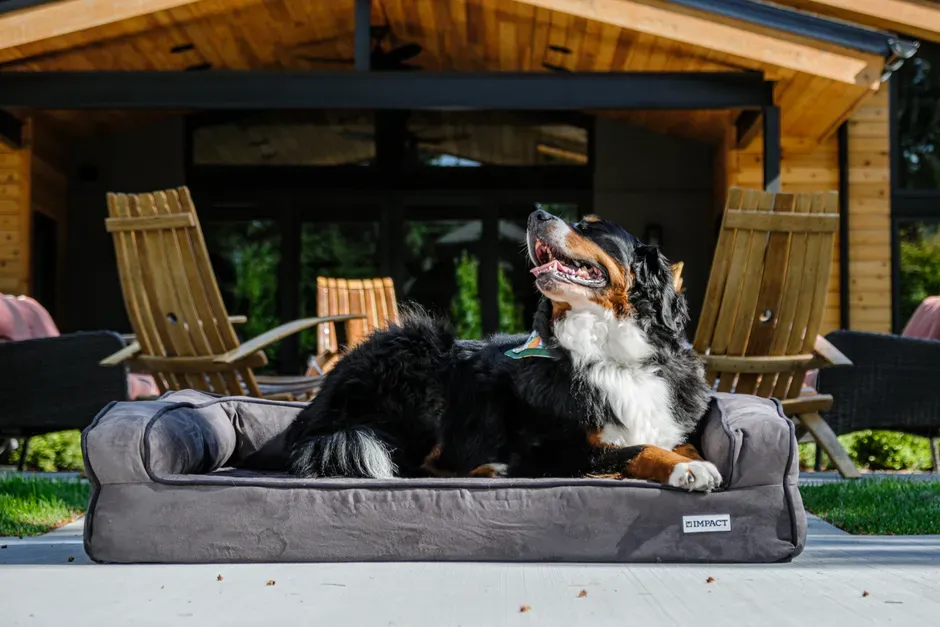
Young dogs will flop down anywhere and sleep like the floor owes them nothing. Older dogs are pickier for a reason – thinner coats, slower circulation, and joints that ache in the cold. Vets regularly see stiff, sore seniors who’ve been sleeping right in a door draft or under a window without anyone noticing.
Retirees who pay attention catch their dog bed-hopping all night, restless and never quite comfortable. The fix is moving the bed away from exterior doors and vents, switching to an orthopedic or memory-foam mattress, and sometimes adding a low-level heated pad for the worst joint days. Many vets quietly report fewer complaints about morning stiffness once this one detail gets fixed.
#8 – Simplifying the Backyard Into Function Over Beauty
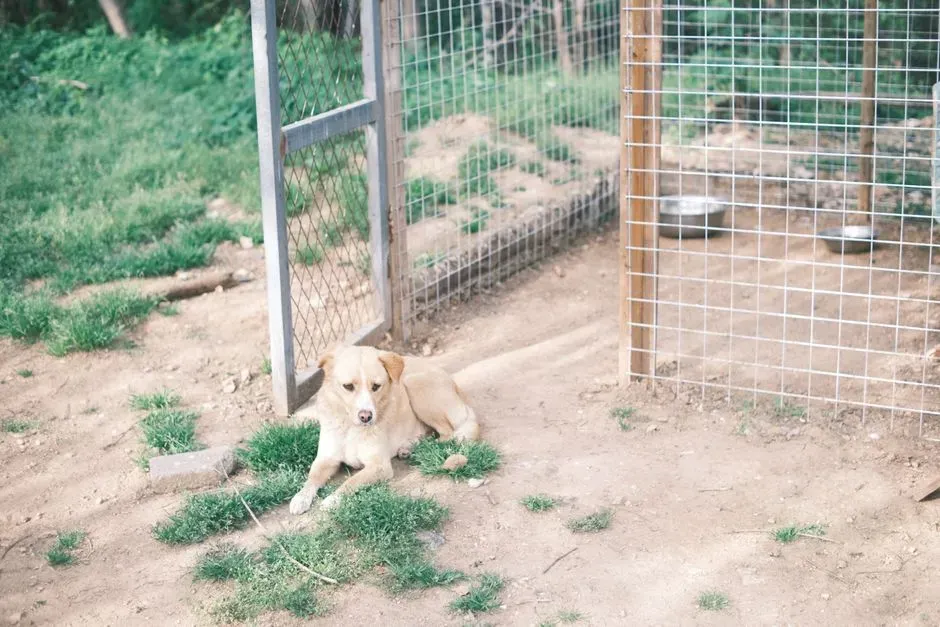
Interior upgrades get all the attention, but a huge share of senior-dog injuries happen outside – on a loose step, a slick deck, or an uneven patch of lawn nobody thought twice about. Retirees thinking long-term start treating the yard like part of the safety plan, not just the view from the porch.
That means leveling or clearly marking any single steps, adding non-slip strips to deck stairs, and installing a small fenced potty area close to the door so a stiff, aging dog isn’t crossing the whole yard in the rain at midnight. It’s not glamorous. Vets will tell you a boring, safe yard beats a gorgeous one every time when there’s a senior dog living in it.
#9 – Reducing Clutter to Protect a Fading Mind
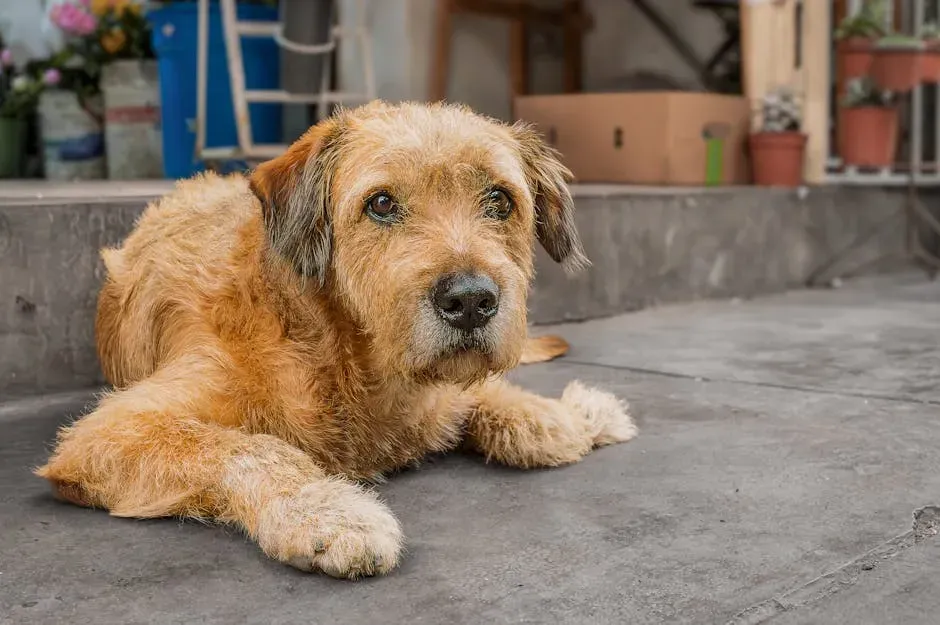
Dog-proofing used to be a puppy thing. Vets are now saying it might matter even more for seniors, because some older dogs develop canine cognitive dysfunction – a condition that looks a lot like dementia. They get stuck behind furniture, wander into corners, and stare blankly at walls.
Retirees who notice their dog trapped behind a chair, confused and unable to back out, don’t brush it off – they start rearranging the whole room. Wider pathways, fewer random footstools and plant stands in walking routes, and sometimes a different-colored rug to help a disoriented dog find its bed. Families sometimes call this overreacting. Behavior vets call it one of the kindest, most practical responses to canine dementia they see.
Worth Knowing
- Getting stuck behind furniture or in corners is an early warning sign
- Blank staring at walls or empty space often accompanies confusion
- Disrupted sleep-wake cycles are common as cognitive decline progresses
- Familiar rooms can suddenly feel disorienting to an affected dog
#10 – Making Safety Upgrades Do Double Duty

Retirees over 70 aren’t just protecting their dogs – smart ones are protecting themselves at the same time, and vets genuinely like that they think this way. A fall for a person that age can be catastrophic, and it often happens while tripping over a dog or rushing to catch one.
The households that get this right add grab bars near steps where the dog tends to hesitate, use the same non-slip mats to steady both species, and move leashes and harnesses onto wall-mounted holders instead of floor baskets. Some switch collars for harnesses to get better control if the dog lunges. Physical therapists and vets increasingly agree: a shared mobility plan for dog and owner is far more realistic than pretending only the pet is getting older.
#11 – Installing Baby Gates and No-Go Zones Without Guilt
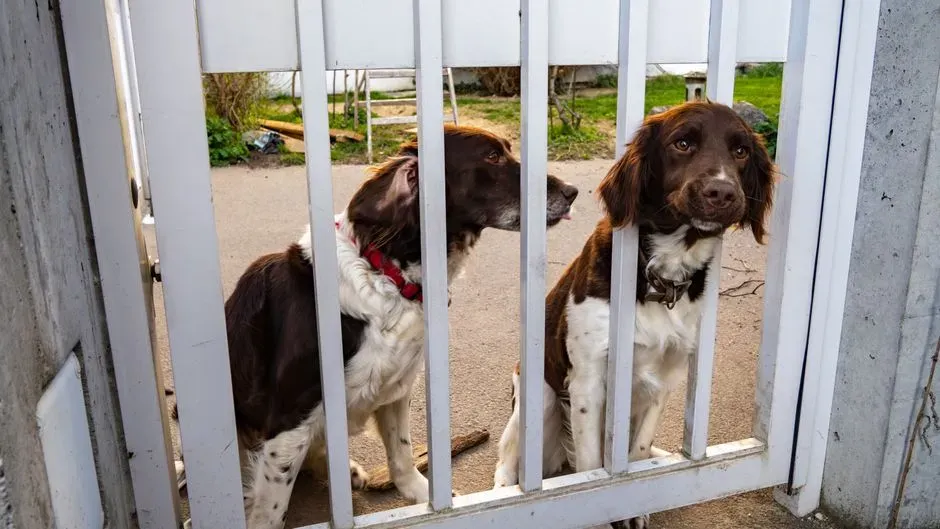
There’s a stubborn belief that loving a dog means letting it roam the whole house, always. Senior-care vets push back hard on that, especially in busy or multi-level homes. Retirees who’ve had one too many close calls finally accept what the professionals have been saying all along: restriction, done right, is kindness.
Blocking basement stairs, closing off rooms with slick floors, keeping the dog away from the grandkids’ toy pile – these boundaries save injuries and reduce anxiety, even if a family member grumbles that “she’s always had run of the house.” Vets side with the retirees on this one almost every time. Safe freedom beats total freedom in the later years.
#12 – Curating Sound for a Dog Who Startles Easily

Hearing loss flips a dog’s entire sensory world upside down. Some go nearly deaf and lean hard on vibration and sudden movement to understand what’s happening around them; others hear just enough to be startled by every sharp noise. Retirees start noticing their dog jolting awake at a door slam or the vacuum kicking on.
The quiet fix: rugs that soften echo and footsteps near the resting area, slow-close mechanisms on doors and cabinets, and predictable, calm morning and bedtime routines instead of chaotic bursts of noise. Some owners add gentle background sound – a fan, soft music – to mask the sharp stuff. Behavior specialists increasingly argue that for a sound-sensitive senior, calming the routine does more than any puzzle toy on the market.
#13 – Moving the Dog Closer, Not Just Making Room
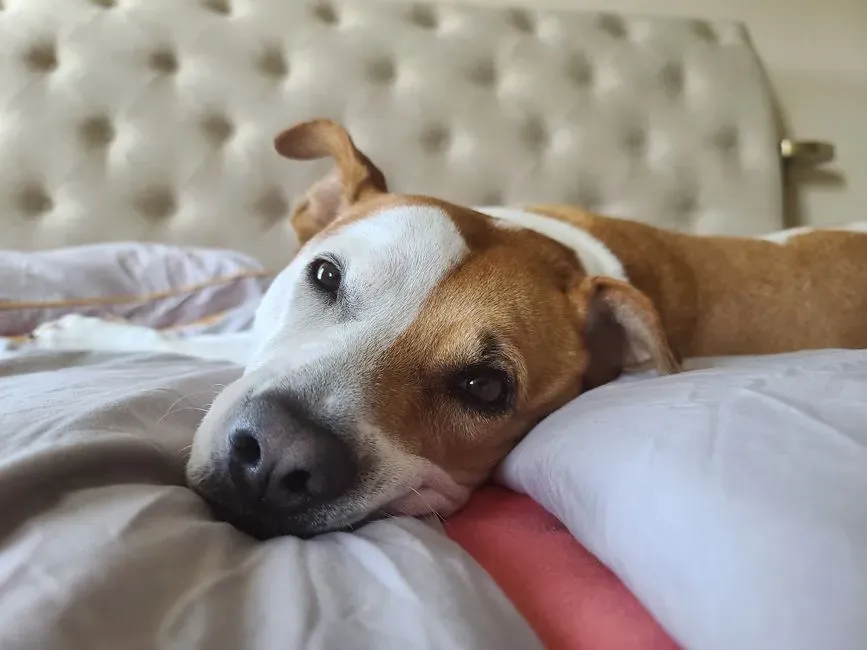
Here’s the change almost nobody talks about, but the one vets and grief counselors quietly endorse the most. Retirees over 70 are literally rearranging their homes so their aging dogs are physically closer to them – bed moved from a distant corner into the living room, or right up against their own bed at night.
It’s not about square footage anymore. It’s a dedicated spot near the favorite chair, with water, meds, and grooming tools kept in that same corner so daily care stops being a chore in another room. Some relatives call it over-attached. Vets tend to call it the healthiest adjustment on this whole list – it catches health changes earlier, cuts anxiety for the dog, and quietly admits a truth nobody likes saying out loud: these are the years when closeness matters more than a picture-perfect layout.
At a Glance
- Dogs kept nearby often settle faster at bedtime
- Owners tend to notice health changes sooner when the bed is close
- Separation anxiety symptoms frequently ease with proximity
- Daily care routines get simpler when supplies stay in one spot
The Bottom Line
None of this is about spoiling a dog. It’s about finally admitting the house itself is part of the healthcare plan. Non-slip runners, night lights, ramps, quieter evenings, decluttered pathways, gated stairs – these aren’t extras anymore. They’re the new baseline if you want your dog, and your own hips, to make it through the senior years intact.
The most surprising part? Vets back these small environmental changes just as firmly as they back medication and prescription diets. Some people will still insist a dog should “age naturally,” no fuss, no adjustments. But if you’ve spent a decade or more with a dog by your side, you already know better – this was never about décor. It was always about showing up for them the way they showed up for you.


