

Everyone assumes that with the right food, enough love, and regular checkups, any dog can cruise into a happy old age. Veterinarians know that’s a fantasy for some breeds.
Behind the scenes, in exam rooms and on ultrasound screens, vets keep watching the same heartbreak repeat itself. A dog that seems “just a little slower” turns out to be losing a fight that started before it was even born, written straight into its DNA. The breeds on this list aren’t unlucky. They’re built – quite literally – to break down early, and the reasons why are more unsettling than most owners ever get told.
#15 – Rottweiler

Many families see the Rottweiler as a rugged, low-maintenance tank of a dog. Vets see something very different on X-rays and bloodwork panels.
Rottweilers carry a heavy genetic load for osteosarcoma (bone cancer), hip dysplasia, and cruciate ligament tears, all of which tend to explode in frequency once they hit their senior years. That means limping, expensive orthopedic surgeries, and gut-wrenching decisions about pain management by age 8 or 9. Add in a large, muscular frame that punishes weak joints, plus a real risk of heart disease and autoimmune trouble, and “healthy at 8” becomes the exception rather than the rule. Many vets will privately tell you that a Rottweiler who reaches 10 without a serious chronic disease basically won the genetic lottery.
#14 – Bernese Mountain Dog

The Bernese looks like a living teddy bear, and social media has turned them into a family-friendly status symbol. Behind closed doors, plenty of vets quietly call them one of the shortest-lived, most cancer-riddled breeds they treat.
Hemangiosarcoma, lymphoma, histiocytic sarcoma – the list of malignancies that hit Berners early and hard is brutal, sometimes showing up as young as 5 or 6. Even without cancer, hip and elbow dysplasia plus spinal problems can turn a simple walk into a painful ordeal well before age 8. Their thick coat and heavy build also make them prone to overheating and faster mobility decline. Some owners insist their Berner “was healthy right up until the end,” but most vets know the more common story is years of escalating medication just to keep the dog comfortable.
#13 – Cavalier King Charles Spaniel

Cavaliers get marketed as easy, cuddly apartment dogs. Cardiology specialists will tell you they’re closer to a ticking clock.
By age 8, a huge share of Cavaliers develop mitral valve disease, a degenerative condition of the heart valves that brings coughing, exercise intolerance, and eventually heart failure. Many need lifelong heart medication starting in middle age. Layer on syringomyelia – a neurological condition where fluid-filled cavities form in the spinal cord due to skull malformation – and you get strange pain episodes, scratching at the neck, and sometimes outright screaming in agony that owners mistake for “quirky behavior.” Chronic heart disease plus chronic nerve pain makes a genuinely healthy 8-year-old Cavalier a rare find.
#12 – Great Dane
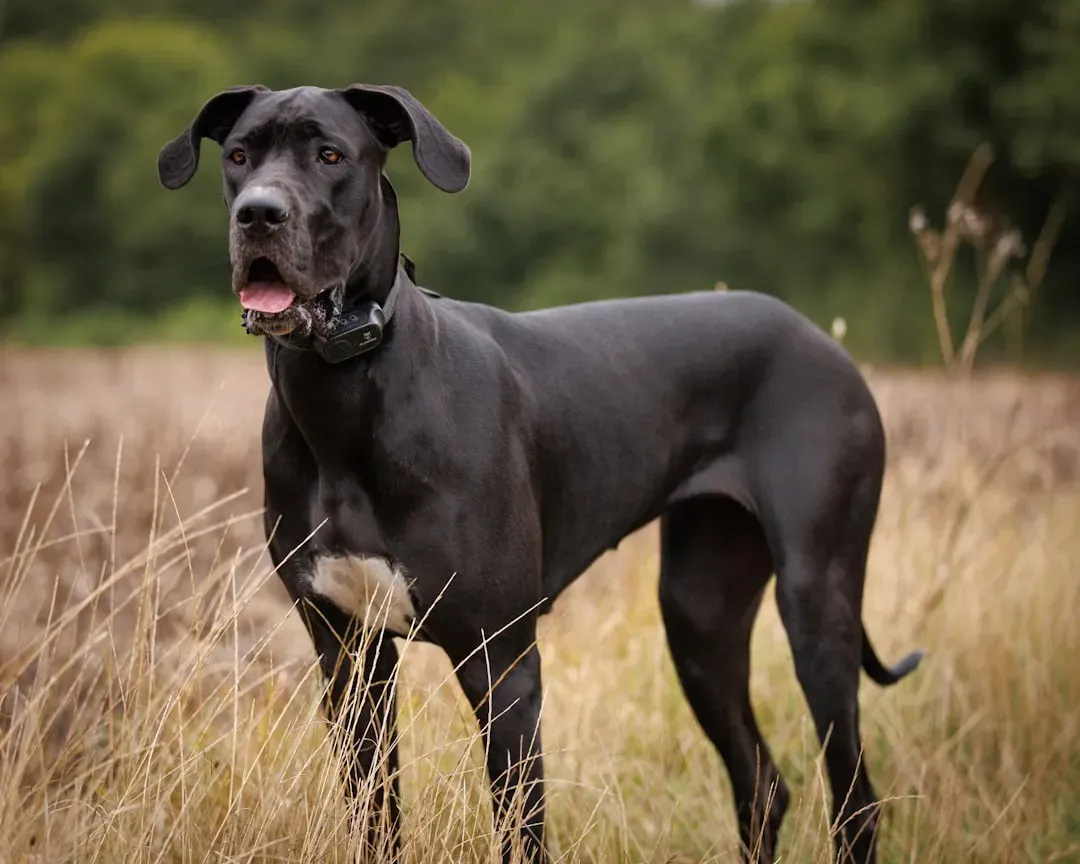
People love calling Great Danes “gentle giants.” Most vets quietly translate that phrase to “very short-lived giants.”
Their sheer size accelerates wear on nearly every system in the body, so by age 8 a Dane is essentially already elderly. Dilated cardiomyopathy (DCM), bloat, and crippling arthritis are all extremely common, and many Danes never make it to 8 without hitting at least one. Add a heightened risk of bone cancer and spinal disease, and something as simple as standing up can turn into a slow, trembling ordeal. Careful breeding and a lean body condition help, but vets generally treat a mobile, disease-free 8-year-old Dane as the rare outlier, not the expectation.
Fast Facts
- Average lifespan is often cited around 7 to 8 years – among the shortest of any popular breed
- Bloat (GDV) is a life-threatening emergency that strikes deep-chested giants like Danes at elevated rates
- Dilated cardiomyopathy is a leading cause of early death in the breed
- Rapid puppyhood growth is linked to higher rates of joint and bone disease later in life
#11 – English Bulldog

If there’s one breed a lot of vets privately wish people would stop buying, it’s the English Bulldog. Their entire body is a collection of compromises.
Decades of breeding for a squat face and thick frame have packed them with brachycephalic airway syndrome, chronic skin infections, orthopedic issues, and eye problems all at once. Narrow nostrils, an elongated soft palate, and a crowded airway mean many Bulldogs can’t manage a warm day or a full night’s sleep without gasping. Add spinal deformities, hip dysplasia, and constant skin fold infections, and you’re often looking at thousands of dollars in vet bills before age 5. Fans insist they’re “worth it,” but a surprising number of vets openly call this one of the least physically sound breeds ever created.
#10 – Doberman Pinscher
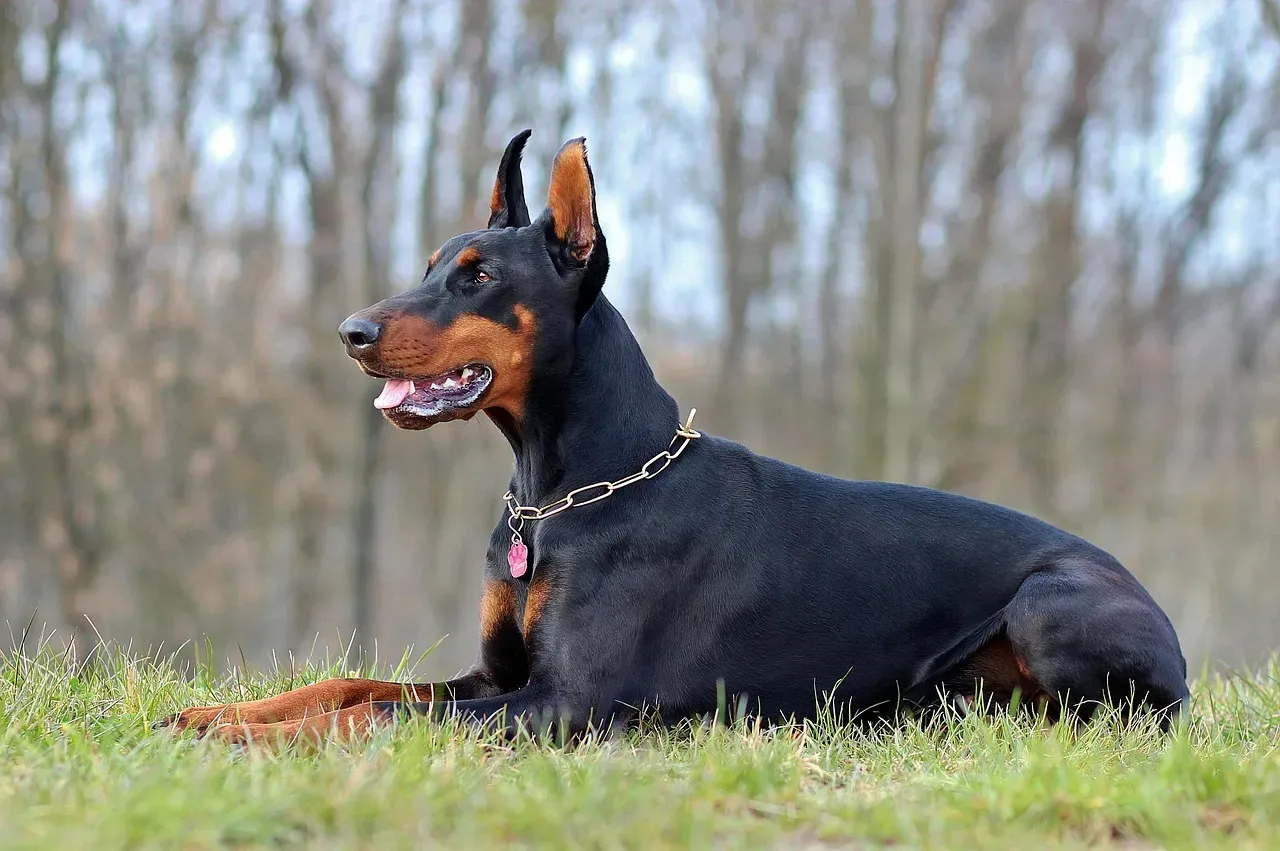
Dobermans look sleek, athletic, and practically indestructible. Cardiology vets know better.
Dilated cardiomyopathy is rampant in this breed, silently enlarging the heart until the dog suddenly collapses, coughs, or dies without warning. A Doberman that looks perfectly healthy at 7 may already have severe heart disease that only shows up on an echocardiogram or Holter monitor. Cancer is another landmine, alongside Wobbler syndrome – a spinal condition that causes a wobbly gait, neck pain, and eventual paralysis. By age 8, a significant chunk of Dobermans are on heart medication, pain medication, or both, and even “good lines” can’t fully outrun that genetic baggage.
#9 – Golden Retriever

This one tends to upset people, which is exactly why it belongs here. Golden Retrievers still carry a wholesome, sturdy family-dog reputation that modern oncology data simply doesn’t support.
An estimated 60% or more of Goldens will develop cancer, especially hemangiosarcoma and lymphoma, often between ages 6 and 10. Vets routinely see Goldens come in “a little tired” only to discover a ruptured splenic tumor or advanced lymphoma underneath. Add chronic allergies, ear infections, and hip or elbow dysplasia, and “healthy senior Golden” is far less common than social media makes it look. Plenty of individual dogs do thrive into their teens, but the overall trend has vets openly calling this one of the most heartbreakingly fragile popular breeds around.
At a Glance
- Hemangiosarcoma and lymphoma are the two cancers most frequently diagnosed in the breed
- Cancer risk climbs sharply once a Golden passes age 6
- Chronic skin allergies and recurrent ear infections often start well before middle age
- Hip and elbow dysplasia remain widespread despite decades of breeding programs aimed at reducing them
#8 – Pug

Pugs get treated like living memes online. The joke wears off fast once you’re in the exam room.
Their flat faces bake in chronic respiratory compromise, eye injuries, and heat intolerance, so by age 8 many Pugs are struggling to breathe comfortably even while resting – what sounds like “just snoring” is often real airway obstruction. Many also have hemivertebrae, abnormally shaped vertebrae that can compress the spinal cord and cause hind-end weakness or incontinence. Add degenerative joint disease, dental crowding, and obesity, and it’s no wonder vets quietly dread seeing older Pugs who never got early airway surgery or weight management. Owners often insist “he’s just lazy,” when really the dog has been compensating for structural problems its entire life.
#7 – Boxer

Boxers are playful clowns on the outside. Underneath that goofiness is a genuinely serious health crisis.
Boxers are heavily overrepresented in mast cell tumors, lymphoma, and brain tumors, many of which show up in what should be their prime years. By age 8, a “lump check” during a routine exam is almost expected, and it often leads to biopsies or grim news. Boxer cardiomyopathy can trigger fainting, irregular heartbeats, and sudden death with little warning, and combined with degenerative spinal issues and arthritis, a large number of Boxers are either gone or medically complicated by the time they reach senior status. Vocal fans claim breeders have fixed this – most vets treating real-world populations would strongly disagree.
#6 – Saint Bernard
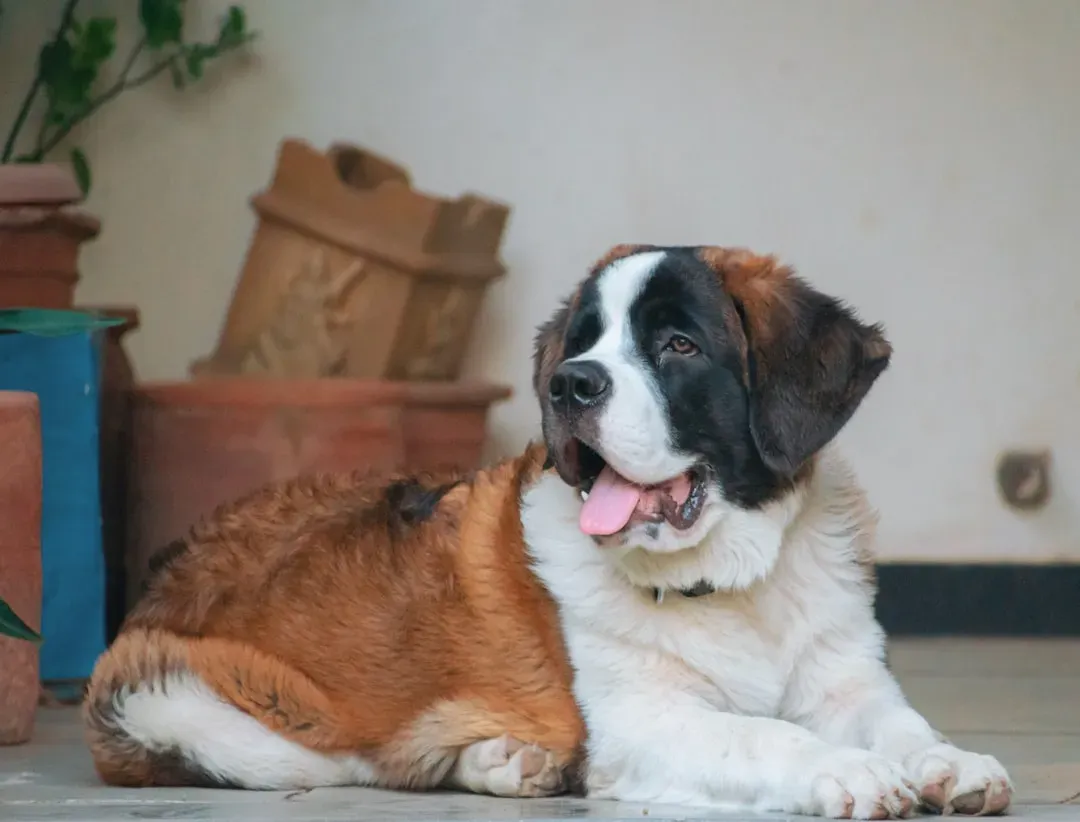
Saint Bernards look like gentle, snow-loving giants straight out of a children’s movie. In reality, they pay a steep physical price for that size.
Vets routinely see hip and elbow dysplasia, cruciate tears, and spinal disease well before age 8, turning something as simple as getting into a car into a painful, yelp-filled production. Bloat is another deadly threat hanging over giant breeds like this one – one bad episode can kill a seemingly healthy dog within hours. Add cardiac issues, skin infections in their heavy jowls and folds, and a naturally short lifespan, and a genuinely vigorous, pain-free 8-year-old Saint is depressingly rare. Some vets quietly steer first-time owners away from the breed for exactly this reason.
Worth Knowing
- Deep-chested giant breeds like Saint Bernards face an elevated lifetime risk of bloat (GDV)
- Average lifespan typically falls in the 8 to 10 year range
- Heavy jowls and skin folds need regular cleaning to prevent chronic infections
- Joint supplements and orthopedic support often start years before the dog is officially “senior”
#5 – Irish Wolfhound
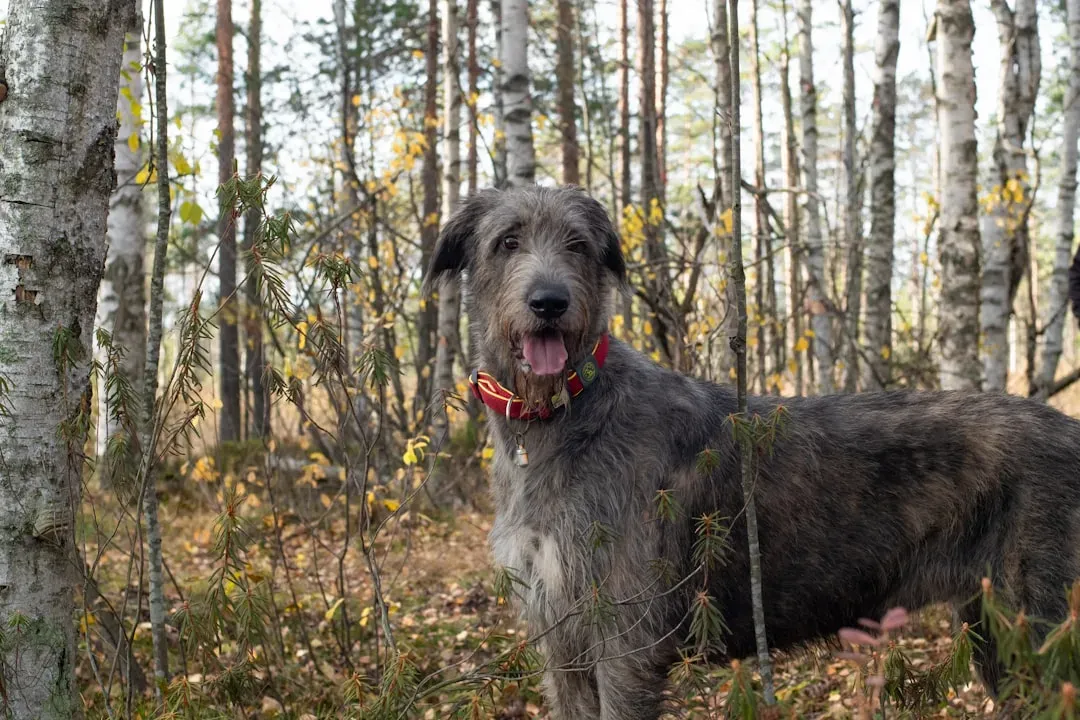
The Irish Wolfhound gets romanticized as a mythical, noble companion. On paper, it’s also one of the shortest-lived breeds in existence.
Dilated cardiomyopathy and osteosarcoma are especially common, often appearing between ages 5 and 8 – cutting lives short right when owners feel most bonded. Their massive frame puts constant stress on joints and spine, so even small injuries can snowball into permanent lameness. Wolfhounds who reach 8 without serious disease are uncommon in most practices, and while dedicated breeders keep trying to improve longevity, the basic biology of an extremely tall, fast-growing dog is hard to outrun.
If you want a dog likely to be truly healthy into double digits, this is not it.
Common warning from veterinarians familiar with the breed
#4 – Dachshund

This one surprises people, because Dachshunds are small and often live a long time. But living long isn’t the same as living healthy.
Their exaggerated long-back, short-leg build is a recipe for intervertebral disc disease. Many Dachshunds experience slipped or herniated discs that cause back pain, wobbliness, or full paralysis, often well before age 8. Even after surgery, many stay on strict activity limits for life, cycling through anti-inflammatories, nerve pain meds, and physical therapy as a normal routine. A Dachshund might hit 13 or 14 years old, sure – but plenty of those “extra years” are lived under the constant shadow of spinal disease.
#3 – French Bulldog

French Bulldogs have exploded on Instagram, but a growing number of vets consider them an active welfare crisis. They combine nearly every problem of the English Bulldog packed into a smaller, more compact body.
Severe brachycephalic airway syndrome, chronic skin allergies, spine malformations, and eye issues are standard, not rare, in this breed. By age 8, a Frenchie who hasn’t needed major surgery – airway, spine, or both – is genuinely surprising. Many can’t handle heat, long walks, or even moderate play without huffing, gagging, or collapsing, and their spinal issues can trigger sudden paralysis or lifelong hind-end weakness. Fans call it “quirky.” A growing number of veterinarians call it one of the most structurally compromised breeds ever popularized.
#2 – German Shepherd
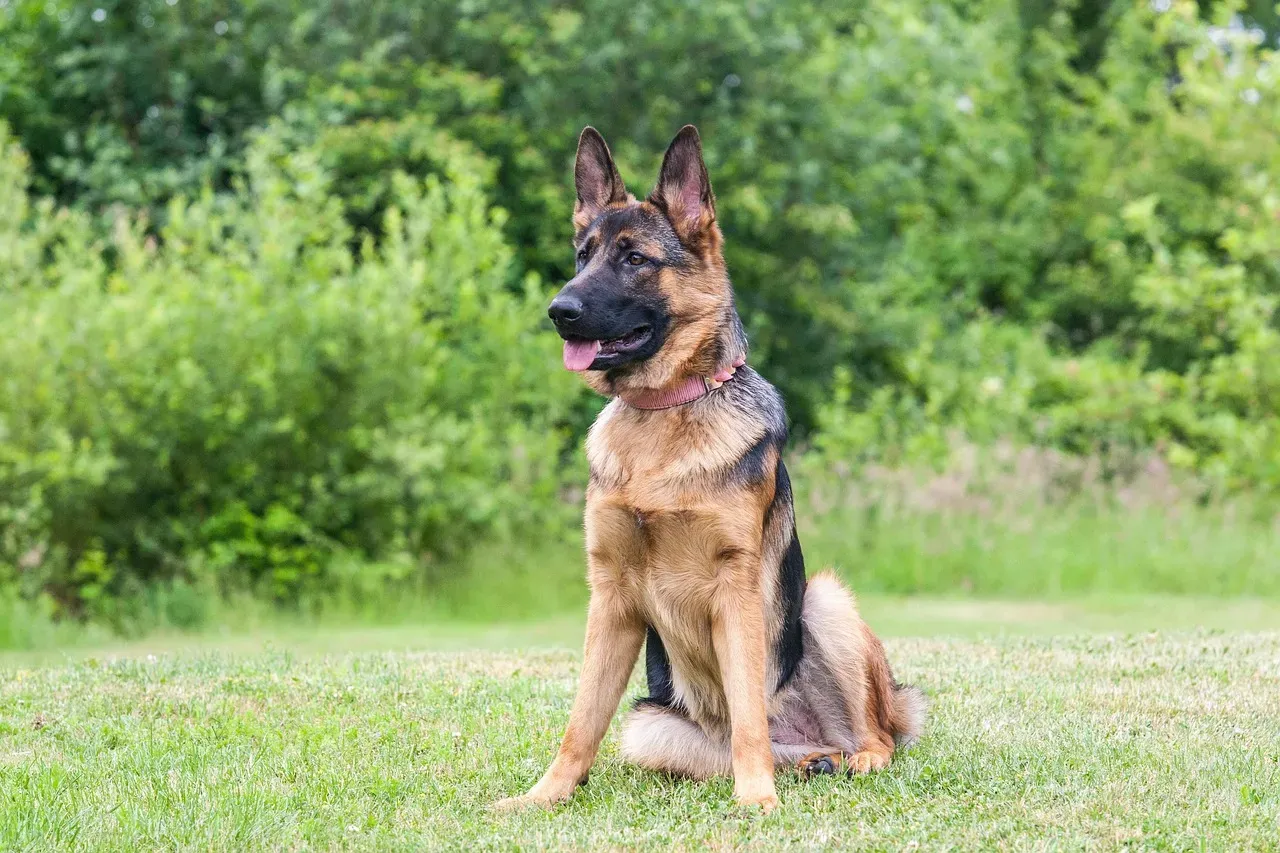
German Shepherds get mythologized as indestructible working dogs. Modern show-line breeding has done them few favors.
Severe hip dysplasia, degenerative myelopathy, and chronic orthopedic disease run rampant in this breed, with rear-end weakness and pain sometimes showing up as early as 5 or 6 years old. By age 8, a large subset need daily pain meds, joint supplements, or mobility aids just to move around comfortably. Degenerative myelopathy – often compared to ALS in humans – is especially devastating, stealing coordination and strength in the hind legs while the dog stays mentally sharp and painfully aware the whole time. Working-line dogs tend to fare somewhat better, but the breed as a whole is struggling, and vets know it.
Quick Compare
- Working-line Shepherds: straighter backs, generally stronger hip and elbow scores, better long-term mobility
- Show-line Shepherds: sloped topline associated with higher rates of hip dysplasia and joint strain
- Degenerative myelopathy can still appear in either line, regardless of conformation
#1 – Neapolitan Mastiff
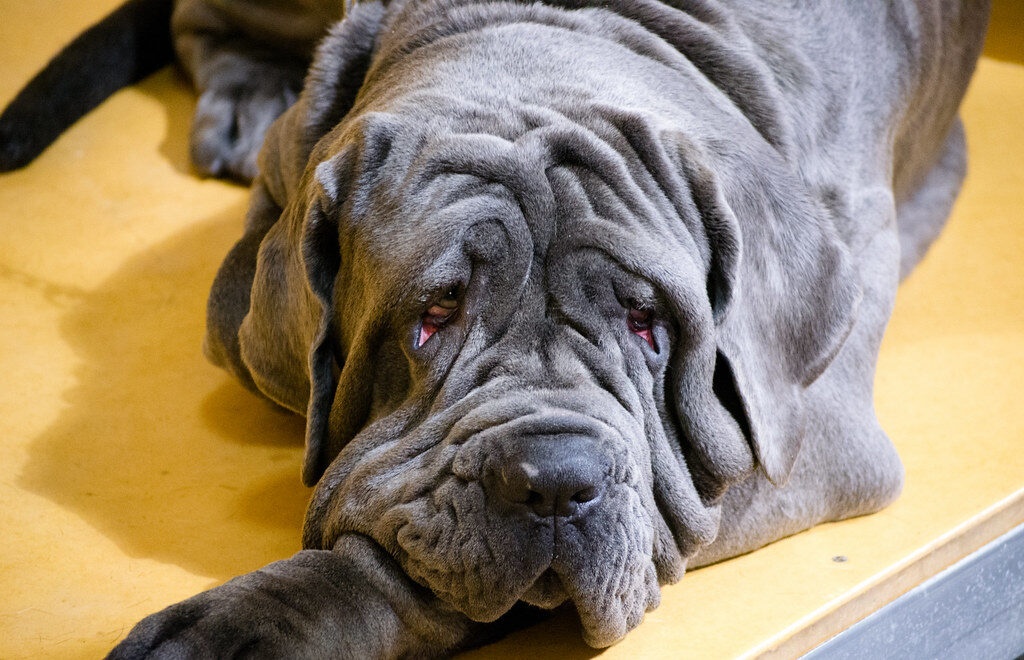
Not as common as Frenchies or Goldens, but quietly one of the toughest breeds to keep truly healthy past 8. They combine extreme size with extreme conformation: massive weight, heavy skin folds, loose joints, and a strong predisposition toward heart disease, orthopedic collapse, and chronic infection.
Many Neos struggle with mobility, entropion (inward-rolling eyelids), and skin fold dermatitis well before they’re ever labeled “senior.” Hip and elbow dysplasia, cruciate tears, and spinal degeneration are everyday realities here, not rare diagnoses. By age 7 or 8, a large percentage are juggling multiple major issues at once – heart meds, pain management, eye surgeries, and skin treatments simultaneously. Vets who genuinely love giant breeds still admit that a comfortable, disease-light 8-year-old Neapolitan Mastiff is rare enough to be almost newsworthy.
The Bottom Line

It’s tempting to blame “bad luck” when a dog falls apart around age 8. For these breeds, luck has almost nothing to do with it.
Their genetics and body design make staying genuinely healthy into senior years the exception, not the rule, no matter how good the food or how loving the home. That doesn’t mean your Rottweiler, your Golden, or your Frenchie won’t be the outlier who ages beautifully – but vets are watching population trends, not just the one miracle dog you grew up with.
If you ask me, this list should embarrass an industry that keeps breeding for looks over lifespan. We’ve normalized snoring Bulldogs, wobbling Shepherds, and Cavaliers on heart pills before they’re even middle-aged, and called it charming. It isn’t charming. It’s a design flaw we keep choosing on purpose, and the dogs are the ones who pay for it.


