
19 Well Known Breed Facts Researchers Printed in Books for Decades and Have Since Withdrawn Completely

Somewhere on a shelf, in a breed guide that looks perfectly respectable, it says pit bulls have jaws that physically lock shut. It says Dobermans go insane because their brains outgrow their skulls. It says Dalmatians can’t be trusted around kids. None of that is true, and none of it was ever true, but for decades it was printed as settled fact in vet textbooks, training manuals, and kennel club literature that nobody thought to question.
What’s unsettling isn’t just that these claims were wrong. It’s how confidently wrong they were, and how long it took anyone to say so out loud. Genetics, behavior science, and mountains of real-world data have quietly torn apart 19 of the most repeated breed “facts” in publishing history. Some are almost funny. A few are genuinely disturbing once you realize how much damage they caused. Here’s what actually happened, one myth at a time.
#1 – “Pit Bulls Have a Locking Jaw Mechanism”

For years, even some veterinary textbooks repeated the idea that pit bull-type dogs have a special jaw that locks shut. It sounded scientific enough that shelters, police departments, and lawmakers all took it seriously. The claim was specific: a unique anatomical structure lets them “lock on” once they bite, in a way no other dog can, making them unusually dangerous and nearly impossible to stop.
When researchers finally compared pit bull skulls and jaw musculature to other breeds, they found no unique locking mechanism whatsoever. The bones, muscles, and ligaments are completely ordinary canine anatomy. Some individual dogs are strong and tenacious, sure, but that’s behavior, not a hidden weapon they’re born with. Ironically, this myth did more damage to pit bulls than any physical trait ever could, fueling breed bans worldwide over a structure that simply doesn’t exist. Bite severity has far more to do with size, training, and human handling than any mythical jaw.
Fast Facts
- Anatomical studies found no locking structure in pit bull-type jaws
- Jaw and skull musculature is standard canine anatomy, not a special mechanism
- Bite outcomes correlate more with size, training, and handling than breed
- The myth directly influenced breed-specific bans in multiple countries
#2 – “Dalmatians Are Naturally Aggressive Toward Children”
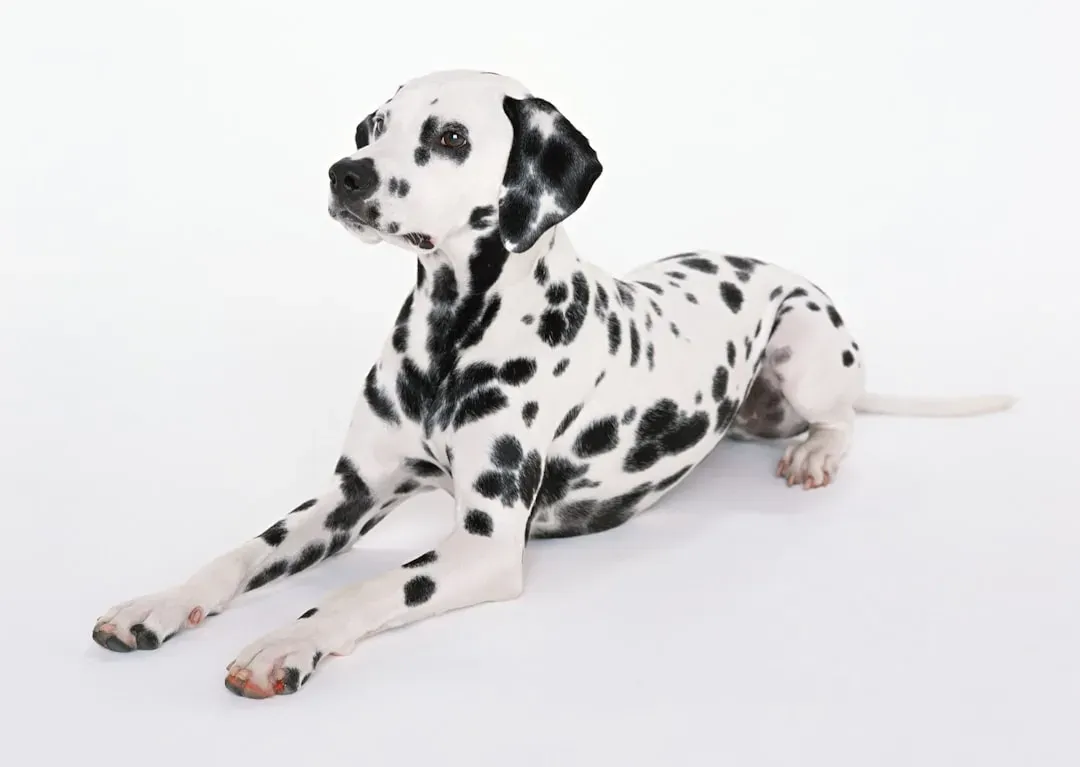
Older breed books warned parents away from Dalmatians with real certainty. These spotted dogs were “unpredictable,” “snappy,” or “not to be trusted with kids,” according to some early temperament summaries that flatly called them “sharp” or “suspicious.” The breed’s movie-fueled popularity from the 1960s through the 1990s made things worse, since overbreeding produced genuinely poor temperaments that seemed to confirm the stereotype.
Then behaviorists started running standardized temperament tests across breeds, and the picture changed completely. Dalmatians often scored in the average, even friendly, range for sociability and tolerance, similar to many sporting and companion breeds. The “child-hating” gene never materialized. What did show up were clear links between poor socialization, undiagnosed pain from deafness (which is more common in this breed), and defensive snapping. Children, a dog that can’t hear them coming, and careless breeding is a recipe for disaster – but it’s a welfare problem, not a breed trait.
#3 – “German Shepherds Always Have Hip Dysplasia”

For decades, German Shepherds were practically the mascot for hip dysplasia in veterinary teaching materials. Breed guides warned that hip problems were “almost inevitable” and that owning one meant simply expecting arthritis. In some countries, people still say they won’t touch a Shepherd because it’s a guaranteed orthopedic nightmare.
Modern screening data tells a very different story. Large registries tracking X-rays and breeding outcomes revealed that rates of hip dysplasia vary dramatically by bloodline and country. In lines with strict health testing, prevalence drops to levels comparable with other large breeds. In poorly bred populations, it really is a disaster – but that’s about breeder choices, not an unchangeable curse baked into the breed itself. Saying “all German Shepherds get hip dysplasia” simply isn’t true anymore, and most careful sources have stopped saying it.
#4 – “Rottweilers Turn on Their Owners Without Warning”

In the 1980s and ’90s, a wave of frightening headlines pushed the idea that Rottweilers were uniquely likely to “turn” on their families. Training manuals leaned into the drama, warning that a Rottweiler could be fine one moment and deadly the next. That line sold a lot of fear, and a lot of strictly dominance-based training along with it.
Careful case reviews told a far more boring story. Most serious Rottweiler bites had clear warning signs that owners and bystanders simply didn’t recognize. Chronic pain, poor socialization, rough handling, and being kept as untrained yard “protection” dogs showed up again and again. The breed’s size and power made every mistake more catastrophic, but the idea of a random, signal-free snap never held up. A hundred-pound dog with no boundaries is dangerous no matter what the registration papers say.
#5 – “Chihuahuas Have Tiny Brains and Are Less Intelligent”

Old popular science books repeated a nasty little claim: because Chihuahuas have such small skulls, they supposedly have “very small brains” and therefore “limited intelligence.” Some texts even suggested they were more instinct-driven and harder to train than “real” dogs. It sounded scientific. It wasn’t.
Brain size doesn’t scale in a simple, linear way with intelligence within a species. A Chihuahua’s brain is smaller in absolute terms, sure, but relative to its body size, it’s well within normal canine limits. Cognitive testing shows small breeds perform just as well on many problem-solving and learning tasks as large ones. The real obstacle is that owners often treat them like accessories instead of training them properly, which quietly created the “yappy, untrained Chihuahua” stereotype people later pointed to as proof. The data never supported it.
#6 – “Golden Retrievers Are Virtually Immune to Aggression”

Golden Retrievers were once described in breed encyclopedias with almost saint-like language. “Goldens simply don’t have an aggressive bone in their body,” one common line went, along with “this is the one breed you can always trust with children.” The implication was clear: aggression just isn’t a concern here.
Modern vets cringe at that wording now. Goldens do score high on sociability and trainability on average, but no breed is immune to fear, pain-induced aggression, or the fallout from poor socialization. Bite incidents involving Golden Retrievers have been documented just like with any other popular breed. Worse, the “perfect temperament” myth made people ignore early warning signs until things escalated. Over-breeding for looks, anxiety, and chronic joint pain can all chip away at that famous easy-going nature, and current literature is far less starry-eyed about it.
#7 – “Siamese Cats Are Inevitably Neurotic and Mean”

In cat circles, Siamese once carried a reputation nearly as bad as pit bulls in dog politics. Older breed books described them as “high-strung,” “jealous,” or “liable to scratch without warning,” with some warning families to keep them away from young children entirely. A striking appearance plus a handful of dramatic anecdotes hardened into claims that sounded scientific but weren’t.
When researchers systematically surveyed cat owners, those sweeping judgments fell apart. Many Siamese are vocal, energetic, and intensely attached to their people, sure. But large-scale data shows huge personality variation within the breed, with plenty of individuals described as affectionate, playful, even dog-like. Current feline behavior texts reframe their traits as “high engagement” rather than “neurotic”: they need stimulation and company, and boredom in a small apartment is more likely to cause trouble than anything hardwired into the breed.
#8 – “Border Collies Are Only Happy on Farms”

For years, breed authorities warned that unless you lived on a farm with livestock, adopting a Border Collie was almost irresponsible. Serious books insisted the breed would inevitably turn destructive or neurotic without daily herding work. Urban adopters were treated as a mismatch by default.
There’s a grain of truth here – Border Collies are intense and extremely trainable – but later research showed the reality is far more flexible. Studies of urban and suburban pet Border Collies found that with structured mental work like agility, obedience, or scent work, plus solid daily exercise, many live stable, content lives far from any sheep. Problems mostly showed up in homes that offered neither structure nor outlets. The old absolute language has been quietly retired in favor of something more useful: activity level and commitment matter more than your zip code.
#9 – “Persian Cats Are Naturally Lazy and Unintelligent”

Persians were traditionally described as “living cushions”: ornamental cats meant to sit and be admired, not to think. Some early texts flat-out questioned whether they were capable of the same problem-solving as more athletic breeds. The flat face and heavy coat apparently fooled people into assuming there wasn’t much going on behind those big eyes.
Cognition researchers found no such thing. Persians, like most cats, show clear learning ability, object permanence, and real individual differences in curiosity and play drive. What often gets in the way isn’t intelligence, it’s their bodies: extreme flat-faced individuals can struggle with breathing and heat regulation, which makes them less eager to sprint around. It’s also worth noting that people who choose calm cats often unintentionally reinforce quiet behavior, which isn’t the same as the cat being dim. Most modern sources have dropped the “lazy and unintelligent” framing entirely.
#10 – “Dobermans’ Brains Outgrow Their Skulls, Making Them Go Mad”

This one sounds almost medieval, yet it appeared in print more than once: the claim that Doberman Pinschers have brains that outgrow their skulls, supposedly triggering a form of adult-onset rage or insanity. In some countries, this myth was actually used to justify harsh training methods, or even bans, with books warning about a “ticking time bomb” once the dog hit a certain age.
Neurologists and veterinary anatomists have long since shredded this idea. There is zero evidence that Doberman brains outgrow their skulls, or that the breed suffers a unique, breed-specific “madness.” When Dobermans do show behavioral changes, the causes are ordinary: pain, degenerative disease, poor socialization, or trauma. The breed is high-drive and protective, yes, but the “brain too big” story belongs in the same bin as werewolf legends. Researchers now consider it a textbook case of pseudoscience being used to justify prejudice.
#11 – “Mixed-Breed Dogs Are Automatically Healthier Than Purebreds”

Older pet guides pushing back against show breeding created their own oversimplified fact: that mixed-breed dogs are inherently healthier and will almost never suffer the genetic issues seen in purebreds. Some presented this as practically a guarantee, as if “hybrid vigor” magically erased inherited disease.
Large genetic datasets found a messier, less romantic reality. Mixed-breed dogs may have slightly lower rates of certain recessive conditions heavily concentrated in specific breeds, but they are not immune to inherited disease. Many common disorders, including some cancers and joint problems, are polygenic and shaped by environment as much as ancestry, so they show up in both pure and mixed populations. What actually matters is the health of the parents and the quality of breeding, not just the label on the paperwork. A well-bred purebred can easily out-health a random mix from unhealthy lines, and vice versa.
#12 – “You Can Predict Any Purebred Dog’s Behavior Just From the Breed”

Twentieth-century breed books were confident to the point of arrogance. Flip to any entry and you’d find a full behavior profile laid out as if every dog were stamped from the same mold. Terriers were “always” scrappy, hounds “always” stubborn, toy breeds “always” fragile and snappy. Purebred status was treated almost like destiny.
Behavior genetics has poured cold water on that confidence. There are real average tendencies between breeds, and they do matter, but modern studies consistently show huge overlap and variation within breeds. Breed can tilt the odds; it doesn’t let you predict how any single puppy will actually turn out. Early experience, training, environment, and individual genetics all play massive roles. Many newer resources now frame breed descriptions as “tendencies” rather than hard rules, a nuance that was almost completely missing from earlier printed guides.
Quick Compare
- Old belief: terriers are “always” scrappy – Modern view: wide behavioral overlap across breeds
- Old belief: purebred status predicts temperament – Modern view: breed only tilts probability
- Old belief: toy breeds are “always” fragile and snappy – Modern view: individual temperament varies widely
- Old belief: breed guides as hard rules – Modern view: breed guides as general tendencies
#13 – “Cats of Certain Breeds Don’t Need Socialization”

Some older cat care books claimed that “naturally gentle” breeds – Ragdolls, Birmans, British Shorthairs – essentially didn’t need much socialization, because they were supposedly “born affectionate.” Genetics alone, the theory went, guaranteed a cuddle bug, so early handling barely mattered compared to spicier breeds.
Modern feline behavior research has pretty thoroughly demolished this. Across every breed, kittens who are gently handled and exposed to varied people and environments during sensitive periods grow up more confident and people-friendly. Genetics may tilt things toward shyness or boldness, but skipping socialization is a risk no matter what the breed label promises. Ironically, believing this myth set some cats up to fail: guardians expected instant affection, offered no support for it, and then labeled the cat “defective” when it hid under the bed for months.
#14 – “Greyhounds Can’t Live Comfortably in Homes Because They Need Constant Running”

For years, articles insisted that Greyhounds, especially retired racers, were ill-suited to domestic life. Supposedly they needed enormous spaces and near-constant high-speed running, making them impractical unless you owned a farm or a private track. The sleek, athletic build seemed to confirm it: these dogs looked like too much for an ordinary home.
Then adoption programs for retired racing Greyhounds exploded, and researchers followed what actually happened. The reality was almost comical next to the myth. Ex-racers turned out to be some of the laziest couch companions in the dog world, perfectly content with regular walks and a soft bed. Adopters started jokingly calling them “45-mph couch potatoes,” a nickname that says everything about how wrong the old advice was. Newer references have flipped the script entirely, praising Greyhounds as surprisingly easy pets.
#15 – “Only Certain ‘Cold-Weather’ Breeds Can Tolerate Snow”

Classic breed manuals insisted that only northern, double-coated breeds – Huskies, Malamutes, Samoyeds – could truly tolerate snow and low temperatures. Other breeds should basically avoid winter altogether, according to cold-weather suitability charts printed as if they were hard science. Thick coat equals winter dog, short coat equals no-go: tidy, intuitive, and incomplete.
Reality is messier. While coat type matters, real-world observation shows that acclimation, body condition, age, and health can matter just as much. Some medium-coated herding or sporting breeds handle winter conditions fine with proper conditioning, while an elderly Husky with arthritis may struggle badly in the exact same weather. Experts have backed away from categorical statements like “this breed can handle any cold” in favor of individual assessment: watch for cold stress, consider paw protection, and remember indoor living changes what any dog is used to.
#16 – “Brachycephalic Breeds Are Just ‘Cute and Snuffly,’ Not Medically Compromised”

Early popular books about Bulldogs, Pugs, and other flat-faced breeds brushed off their snorting and labored breathing as endearing quirks, sometimes calling these breeds “robust” and “hardy” despite mounting clinical evidence to the contrary. The term “brachycephalic obstructive airway syndrome” rarely showed up outside technical veterinary texts.
Those days are over. Large-scale studies now show many extremely flat-faced dogs live with chronic, significant breathing compromise, increased anesthesia risk, and real trouble regulating body temperature. That “cute snore” is frequently a symptom of airway obstruction, not a personality trait. Modern welfare literature is blunt about it, and some of the old “robust and hardy” language has been scrubbed from breed descriptions entirely, with kennel clubs now under real pressure to revise their standards.
At a Glance
- BOAS is now formally recognized in extreme flat-faced breeds
- Common signs: noisy breathing, snoring, exercise intolerance, overheating
- Anesthesia risk is documented as higher in severely affected dogs
- Several kennel clubs are actively revising breed standards over health concerns
#17 – “Guard Breeds Need Harsh Handling to ‘Respect’ You”

Older training books focused on Rottweilers, Dobermans, German Shepherds, and Mastiffs promoted a grim philosophy: if you weren’t tough, sometimes outright rough, these dogs would “take over” and become dangerous. The idea that strong breeds “respect only strength” was treated as common sense and printed over and over.
Behavior science has shredded this dominance-obsessed narrative. Research on stress and aggression shows that harsh, confrontational methods actually increase the risk of fear and defensive biting, especially in already wary dogs. Guard-oriented breeds do need clear boundaries and structure, but they respond exceptionally well to reward-based training and calm consistency. Many modern texts now explicitly warn against the old “alpha roll” advice that once filled their pages, not for political reasons, but because the very methods sold as keeping you safe were making bites more likely.
#18 – “Spayed/Neutered Animals of Any Breed Will Always Be Calm and Easy”

Older pet guidance treated spay and neuter surgery as a universal behavioral cure-all. Fix your dog or cat, any breed, and you’d automatically get calmer behavior, less roaming, and fewer aggression issues. The messaging was so confident that many people still expect a full personality overhaul after surgery.
More nuanced research has complicated that picture considerably. Sterilization can reduce certain hormonally driven behaviors, like roaming in some males, but it is not a guaranteed fix for fear, anxiety, or learned aggression, and in some large breeds done very early it’s been associated with increased reactivity or joint issues. The animal’s underlying temperament, training history, and environment still matter enormously. Careful sources have toned down the “always calms them down” promise, and the blanket guarantees from older books have quietly disappeared from current editions.
#19 – “Breed Determines Everything; Environment Is Just a Footnote”

The most pervasive myth of all might be the simplest: that breed is destiny. Those thick, glossy encyclopedias made it sound like you could open to a page, read a paragraph, and know almost everything important about how a dog or cat would live and love. Environment, training, trauma, and chance were treated as footnotes, if they appeared at all.
Contemporary behavior genetics has smashed that hierarchy. Breed influences real tendencies – energy, coat, many health risks, some aspects of sociability – but environmental factors can drastically reshape how those tendencies actually play out. Early handling, socialization, daily routine, household stress, and medical care can turn the same genetic deck into very different lives. Two littermates of the same breed can diverge wildly depending on what happens to them. Breed information isn’t useless; it’s just one chapter of a much longer story, and the sweeping, deterministic tone of older breed books has largely been dropped in favor of probability, nuance, and humility.
Worth Knowing
- Breed shapes tendencies, not guarantees, across nearly every trait studied
- Socialization, training, and health care often outweigh genetics in daily behavior
- Littermates raised differently can end up with very different temperaments
- Modern breed guides increasingly use “probability” language instead of absolutes
The Bottom Line

The most uncomfortable truth hiding behind all 19 of these withdrawn “facts” is that we wanted breeds to be simpler than they are. We liked the idea that pit bulls had monster jaws, Goldens were saintly, Greyhounds couldn’t live on sofas, and Rottweilers snapped without warning, because clear heroes and villains make for easy decisions and dramatic headlines.
What modern research actually says is less cinematic and more demanding: individuals vary, environment matters, health shapes behavior, and genetics is powerful but never absolute. I’d argue the real red flag was never a particular breed at all. It was anyone selling you an absolute guarantee about one. Past authors were confident and wrong. The best researchers today are cautious, data-driven, and comfortable saying “it depends,” and honestly, that’s the version I trust with an animal’s life. Which old breed “fact” do you think we’re still clinging to the hardest?