

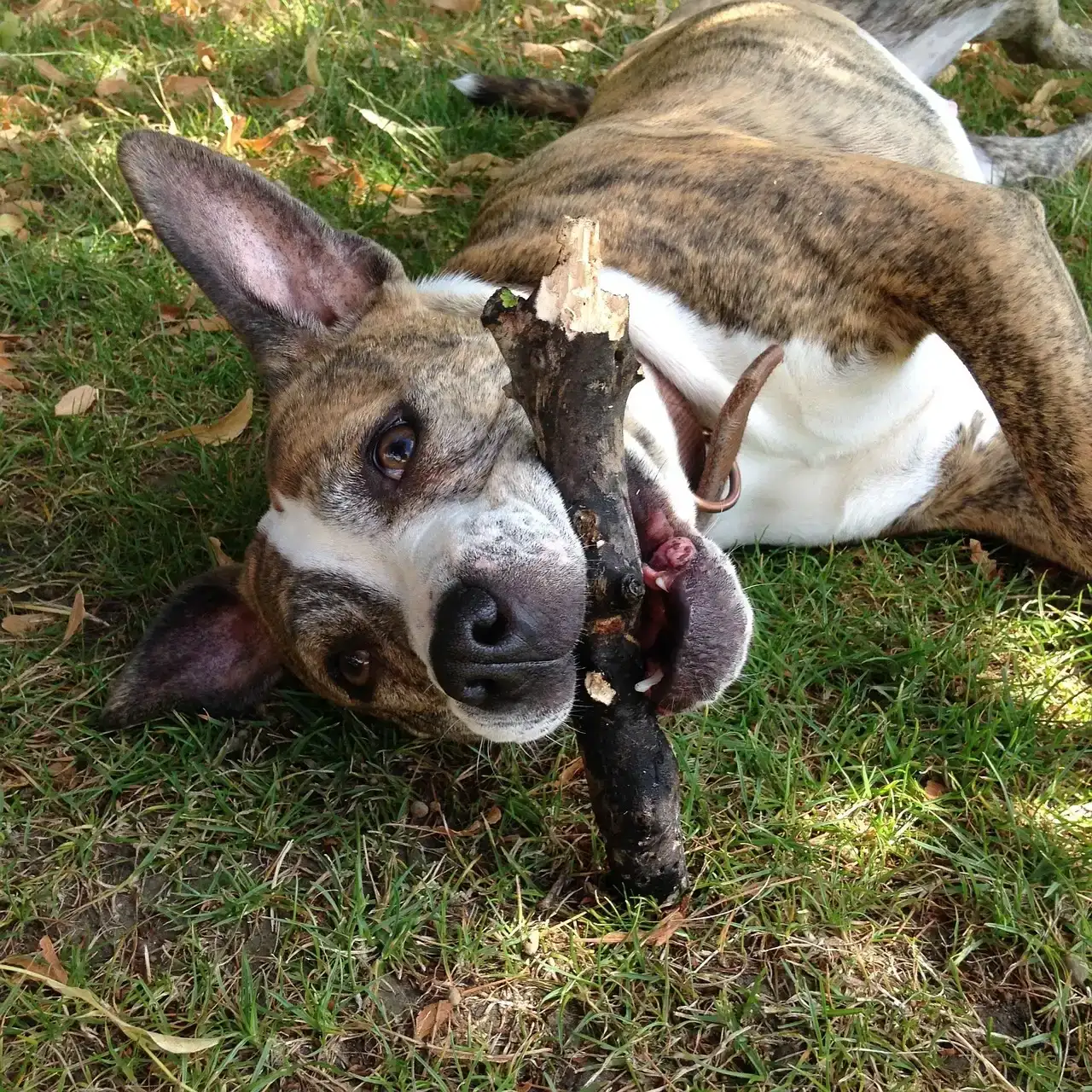
There’s something that happens when an older adult meets a Staffordshire Bull Terrier for the first time. The dog leans in, tail working overtime, and makes eye contact with a kind of warmth that’s almost embarrassing in its honesty. Most people expect a tough dog. What they get is a sensitive, devoted companion who seems almost preternaturally tuned in to their emotions.
Super affectionate, with a kind and gentle nature, Staffordshire Bull Terriers have unfairly gained an unfortunate reputation. While their stocky build gives them a tough appearance, Staffies are actually big softies who adore being at the heart of their human family. For older adults, who often find themselves at a stage of life that’s quieter and sometimes lonelier than they expected, that unguarded affection hits differently. Here are nine deeply emotional reasons why this bond forms so quickly and runs so profoundly deep.
1. They Offer a Love That Asks for Very Little in Return

Staffies don’t have complex emotional requirements. They don’t need you to be successful, youthful, or impressive. These dogs are very affectionate and love to show their devotion through constant companionship and cuddles, and a present, attentive owner is crucial for their well-being. For an older adult who may have recently retired, lost a spouse, or simply felt a quiet shift in how the world sees them, a Staffy’s unconditional acceptance is genuinely restorative.
Dogs provide their owners with purpose and a responsibility to love and care for a living creature, similar to how they loved and cared for family members when they were younger. The dog responds with devotion and affection, as well as its own unique and sometimes puzzling but delightful reactions. The unconditional love from a dog brings a physical and emotional boost. That simple, uncomplicated exchange of care and love is something older adults often find both grounding and deeply meaningful.
2. Staffies Are Emotionally Tuned In Like Few Other Breeds

Staffies are known for their strong emotional bond with humans. They often form deep connections with their owners and can be sensitive to changes in mood or routine. Because of this, they do best in homes where they are treated as part of the family, not left outside or ignored. This emotional attunement is not accidental. It’s bred into them over generations of close human companionship.
They’re confident without being pushy, affectionate without demanding, and incredibly tuned in to the people around them. Personality traits like alertness and playfulness are common, but so is sensitivity. An older adult who is grieving, anxious, or simply having a hard day will often find a Staffy curled up close before they’ve even said a word. That quiet, knowing presence can be more comforting than almost anything else.
3. They Give Seniors a Profound Sense of Purpose
Research findings suggest that the role of pet ownership may benefit community-dwelling older adults by providing companionship, giving a sense of purpose and meaning, reducing loneliness, and increasing socialisation. For many retirees, the transition away from work can quietly erode their sense of value and usefulness. A Staffy changes that equation overnight.
For older adults, maintaining a sense of purpose is essential for mental well-being. A dog introduces small, meaningful responsibilities into daily life, from feeding and grooming to scheduling walks. These activities help fill the day with consistent, rewarding tasks that prevent idle time, which can amplify feelings of loneliness or depression. Knowing that a living creature genuinely depends on you, and loves you for it, is a powerful emotional anchor at any age.
4. They Create Daily Structure That Supports Mental Health

The responsibility of owning a pet is a great way to add structure to your daily routine. Establishing healthy routines for a pet such as daily walks, healthy meals, and active playtime provides many pet owners with a sense of purpose and accomplishment. Staffies, in particular, thrive on routine, which means they reinforce structure in their owner’s life just as much as their owner reinforces it for them.
Having a pet creates a sense of responsibility and purpose, as older adults follow a consistent schedule for feeding, grooming, and walking their furry companions. This routine can contribute to lower stress levels, boosted mental well-being, and improved overall quality of life for seniors. For those who struggle with depression or the formlessness that can follow major life transitions, that rhythm of daily dog care is genuinely therapeutic. It’s a quiet structure that asks to be honored every single day.
5. Staffies Dramatically Reduce Feelings of Loneliness

A meta-analysis of seniors from a number of countries shows that the overall prevalence of major feelings of loneliness is roughly 29 percent, and the prevalence reaches nearly one in three when considering adults aged older than 75. That’s a staggering number. Staffies, with their constant need to be near their people, are almost perfectly designed to fill that emotional gap.
Older adults who own pets report a reduction in stress and loneliness. They also experience an increase in activity and overall quality of life. Additionally, older adults who have strong connections with their pets report lower rates of depression. Staffordshire Bull Terriers thrive on daily human interaction and connection, and they build deep bonds with their families, needing regular companionship to stay emotionally balanced. Their neediness, it turns out, is their greatest gift.
6. They Spark a Powerful Hormonal Bond

Studies have shown a positive feedback loop between humans and dogs powered by the release of the hormone oxytocin, also called the “cuddle hormone.” It is the same chemical reaction produced when a mother looks into the eyes of her infant. That biological reality means the bond between a senior and a Staffy isn’t just emotional. It’s neurochemical, measurable, and real.
Studies have shown that interacting with a dog lowers cortisol levels, the stress hormone, and boosts oxytocin, the “feel-good” hormone, creating a calming effect that can reduce the risks of stress-related health issues like hypertension and insomnia. For older adults managing chronic stress or health-related anxiety, the simple act of stroking a Staffy’s smooth coat and meeting those wide, warm eyes is both comfort and medicine.
7. They Encourage Physical Activity and Social Connection

Dogs typically encourage their owners to get out and walk with them, and such walks may involve socializing with neighbors, passersby, children, and others who might want to stop to admire or pet the dog. A Staffy on a leash is practically a social magnet. Strangers stop, conversations start, and an older adult who might otherwise spend a morning in silence suddenly has a story to tell by noon.
Regular walks with a dog can provide necessary cardiovascular exercise for seniors, helping to maintain a healthy heart and increase mobility. The physical benefits compound quickly. The Baltimore Longitudinal Study of Aging found that older adults who owned pets maintained walking speed and cardiovascular function longer than their non-pet-owning peers. A Staffy doesn’t let you skip the walk. They’ll bring you the lead and look at you with those eyes until you put your shoes on.
8. Staffies Are Loyal in a Way That Feels Deeply Personal

The Staffordshire Bull Terrier is renowned for its loyalty, a trait that shines in every interaction. Once they bond with their family, Staffies become fiercely devoted and protective, making them excellent pets for people seeking an affectionate and dependable companion. They are known for their unique ability to form deep bonds, often seen in their eagerness to be close to their human family members, whether snuggling on the couch or following you around the house.
Staffies can develop a strong bond with one person, often their primary caregiver. They are known for their loyalty and affection towards their family members. For an older adult living alone, having a creature who follows them from room to room, who notices when they sit down differently, who wants to be in the same space simply because that person exists, is more meaningful than it might sound to someone who hasn’t experienced it. Loyalty at that level quietly heals something.
9. They Support Cognitive Health and Emotional Resilience

Studies found that both dog and cat owners experienced less cognitive decline as they aged over a ten-year period compared to non-pet owners. This included everything from memory and processing speed to language function and executive function. Active engagement with a dog, training sessions, play, problem-solving during walks, keeps the mind working in ways that sedentary routines simply don’t.
These benefits may also increase resilience in older adults against mental health disorders, which may positively influence their mental health outcomes. While modern Staffordshire Bull Terriers are widely cherished as family dogs, especially in the UK, misunderstandings persist due to outdated stereotypes. A well-raised Staffy is not defined by aggression, but by confidence, enthusiasm for life, and a strong desire to be involved in everything their people do. That enthusiasm is, for many older adults, genuinely contagious. And that might be the most underrated health benefit of all.
Conclusion: A Bond Built on Exactly What Gets Harder to Find

What older adults often find themselves quietly searching for, as the years move forward, is simple: to feel needed, to feel seen, and to feel loved without conditions. Staffies deliver all three, daily, without asking for much more than your presence and a good walk.
For many older adults, companion animals are more than pets. They are emotional anchors, offering affection, routine, and a sense of purpose. A Staffordshire Bull Terrier brings something specific to that role, a raw, physical warmth, an emotional intelligence that seems almost unfair in a dog, and a loyalty that never waivers. If you’re an older adult considering this breed, or if you love someone who is, know this: the bond you’ve heard about is real, and for many, it turns out to be one of the most nourishing relationships of their later years.


