
Many pet owners have long suspected that their dogs rest easier when allowed to share the bed. Recent explorations in psychology point to measurable shifts in stress markers that support this intuition.
The idea invites a closer look at how nighttime proximity shapes the emotional and physical experience for dogs.
The Science of Canine Stress Responses

Dogs experience stress through the same basic hormonal pathways that humans do. Cortisol rises in response to uncertainty or separation and falls when a sense of safety takes hold. Nighttime offers a long window where these fluctuations can be tracked.
Shared sleeping arrangements appear to keep those levels steadier. The consistent presence of a trusted human provides a reliable cue that the environment remains secure. This steadying effect shows up across multiple nights rather than as a one time occurrence.
Attachment and Security in Shared Sleep

Attachment theory helps explain why some dogs settle more quickly beside their owners. A familiar scent and the sound of steady breathing create a predictable rhythm that reduces vigilance. Over repeated nights this pattern reinforces a feeling of belonging.
Puppies and adult dogs alike show fewer signs of restlessness when they can maintain physical contact. The simple act of curling against a leg or back seems to signal that all is well. Such small comforts accumulate into a calmer overall state by morning.
Oxytocin as a Natural Counter to Cortisol

Close contact triggers the release of oxytocin in both dogs and people. This hormone works directly against the effects of cortisol by promoting relaxation and lowering heart rate. The result is a physiological shift that favors rest over alertness.
Studies of daytime interactions already demonstrate this balance at work. Extending the same closeness through the night simply prolongs the window of reduced stress. The body responds in kind with steadier hormone profiles across the sleep cycle.
Observations from Everyday Dog Behavior
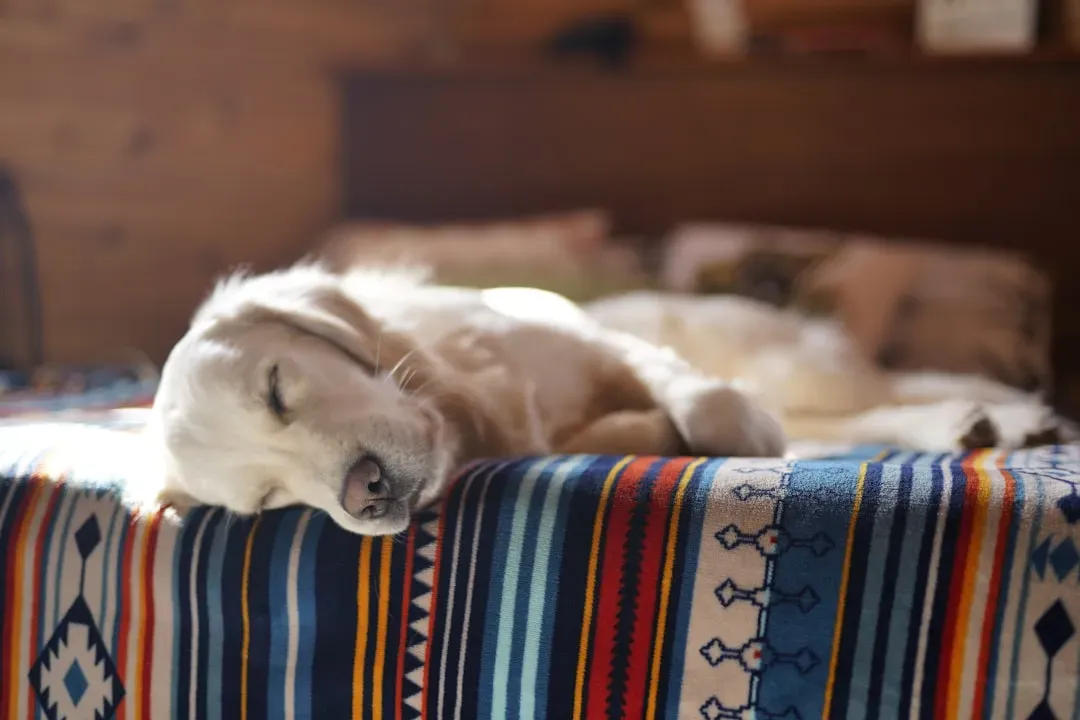
Owners often report that dogs who share the bed wake less frequently and return to sleep more easily after brief disturbances. These patterns suggest the animals feel less need to monitor their surroundings. Subtle changes in posture and breathing support the same conclusion.
Breed differences and individual temperament play a role in how strongly the effect appears. Still, the trend holds across many households where the practice has become routine. The consistency points to a genuine benefit rather than coincidence.
How This Fits Into Broader Pet Psychology

Modern understanding of dog cognition emphasizes the importance of social bonds for emotional regulation. Sleep represents one of the longest periods of potential connection each day. Allowing that connection to continue uninterrupted aligns with what we know about reducing chronic low level stress.
Psychologists note that secure relationships buffer against daily pressures for both species. When dogs experience this security at night their daytime demeanor often improves as well. The night time advantage therefore carries forward into waking hours.
Tips for Making Sleeping Work Well

Start with clear boundaries so the arrangement remains comfortable for everyone involved. A designated spot on the bed or a nearby mat can satisfy the need for closeness without creating conflict. Consistent routines help dogs anticipate the shared rest period.
Monitor for signs that the setup needs adjustment such as excessive movement or disrupted sleep for either party. Small changes like different bedding or positioning often resolve minor issues. The goal remains mutual comfort rather than rigid rules.
Reflecting on Our Shared Nights

The evidence suggests that inviting a dog into the bed can deliver real physiological benefits that extend beyond simple companionship. Lower cortisol through the night represents one measurable outcome of that choice. It also deepens the daily relationship in ways that matter for long term wellbeing.
Ultimately the decision comes down to what feels right for each household. When the arrangement supports calmer nights for the dog it often brings quiet satisfaction to the owner as well. That mutual ease may be the most enduring reward of all.


