
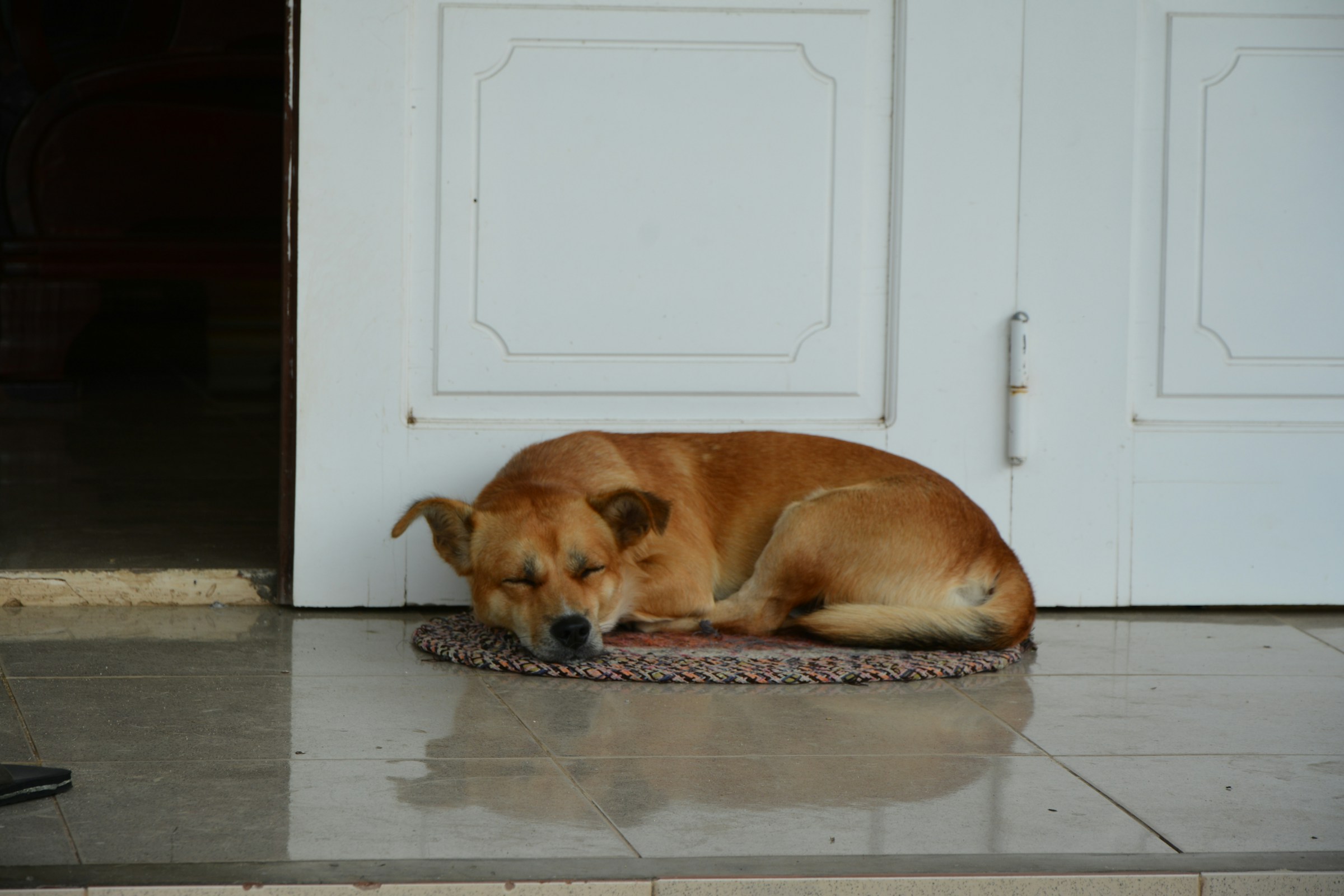
If you have a dog, you’ve probably had this slightly worrying thought: are they sleeping by the door because they secretly want to bolt the second it opens? The scene is almost cinematic – your dog stretched out in the hallway, eyes half-closed, body never too far from the exit like a furry security guard on a night shift.
But what if that spot by the door is not about escape at all, and everything to do with protection, strategy, and emotional closeness? When you see where your dog chooses to rest through the lens of instinct and evolution, that doorway suddenly looks less like an exit strategy and more like mission control. Let’s unpack what is really going on in your dog’s mind and body when they curl up in that liminal space between inside and outside.
The Doorway Is a Tactical Observation Post, Not a Runway
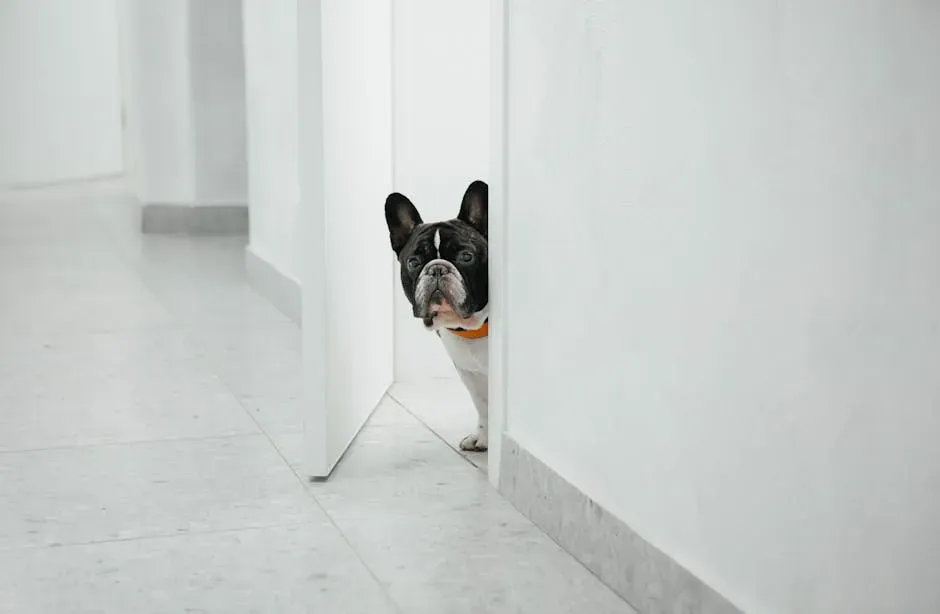
Think about a doorway from a dog’s perspective: it is where the smells change, where sounds get louder or softer, and where people and animals appear and disappear. That threshold is a natural information hub, like a busy intersection where everything important has to pass through. For a species that survived for thousands of years by reading micro-changes in their environment, that makes it prime real estate.
When your dog lies by the door, they are not just resting – they are strategically positioned to monitor two worlds at once: the safety of the home behind them and the unknown of the outside in front of them. It is the perfect compromise between staying close to you and staying alert to what might be coming. To us, it looks casual; to them, it is a quietly efficient patrol route.
Pack Protection Instinct: Your Dog Is Playing Security, Not Prisoner
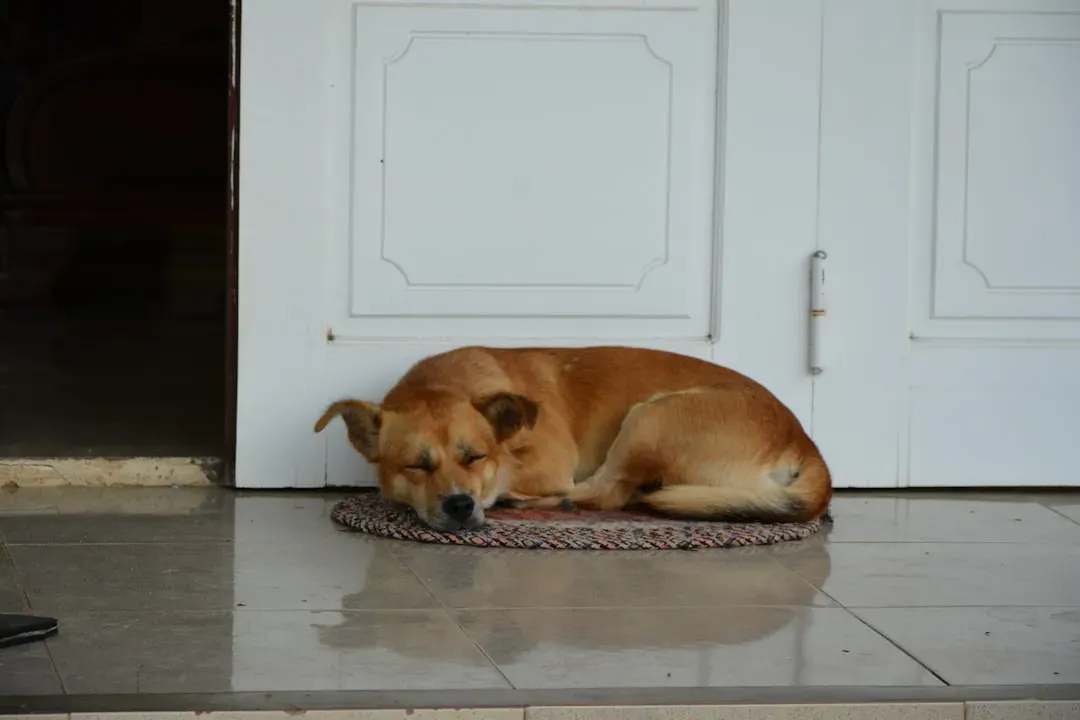
Dogs are social animals with an inbuilt sense of group safety that comes from their canid ancestors. In the wild, it was normal for some members of the group to rest near den entrances or key paths, making sure danger did not slip in unnoticed. Your hallway or front door just happens to be the modern version of that old den opening. They are not guarding a cave anymore – they are guarding your apartment or house.
From that vantage point, they can hear footsteps in the corridor, cars in the driveway, or a delivery truck stopping outside, all while still being in range to respond if you need them. Even the most friendly, goofy family dog usually has a streak of quiet vigilance that shows up in where they choose to lie. Sleeping by the door is often a low-key security assignment they have voluntarily taken on for the good of the pack – which, in their mind, is you.
Why Door Spots Let Them Watch You and the World at the Same Time
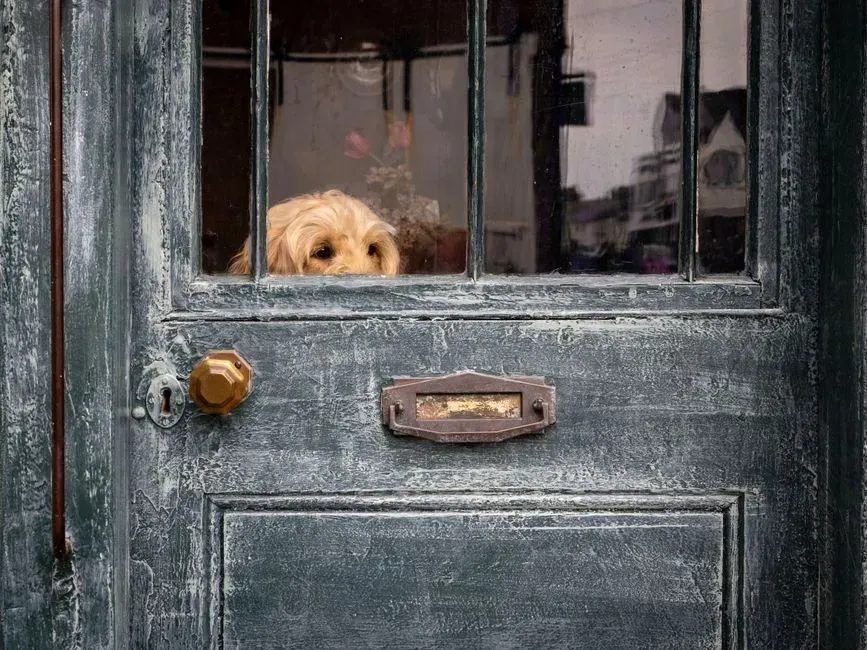
Many doorways sit at the junction of multiple sightlines: one angle gives a view into the living room or bedroom where you hang out, and the other points toward the entrance of the home. For a dog, this is a two-for-one: they can visually or audibly track you while also scanning for strangers, animals, or unusual activity. It is like sitting in the perfect cinema seat where you see the whole screen and the exits at once.
This dual-monitoring setup helps them feel secure because they are not forced to choose between supervising you and supervising the environment. It actually reduces their stress when they know what is happening both inside and out. You may think they are just being weirdly attached to the draftiest possible spot, but from their point of view, it is the smartest compromise on the floor plan.
Temperature, Smells, and Comfort: The Hidden Perks of That Threshold
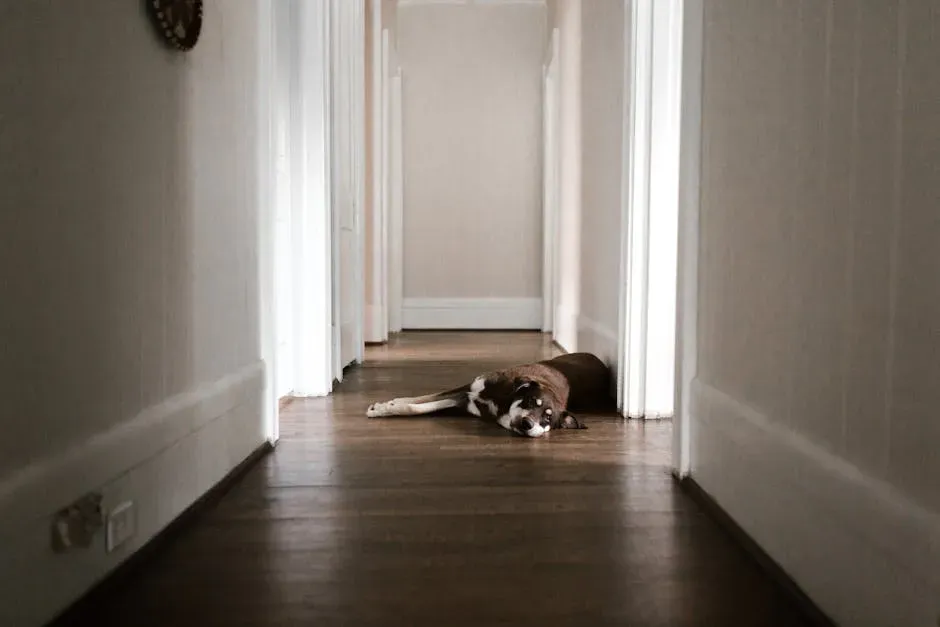
On a more down-to-earth level, that door area is often simply more comfortable. Floors near doors are frequently cooler or warmer depending on the season, and dogs are masters at finding microclimates inside a home. If there is even a tiny draft or a patch of cooler tile, their body will gravitate there long before you consciously notice it. For a fur-covered animal, even a slight temperature difference can make rest more pleasant.
The doorway is also a sensory jackpot: fresh scents drift in, subtle changes in air pressure hint at movement outside, and sounds are clearer and more layered. That sensory richness can be soothing or interesting without being overwhelming, especially for breeds that are naturally more alert or energetic. In a way, lying there is like scrolling a slow, ambient newsfeed of the outside world while still feeling anchored and safe indoors.
Anxiety vs. Instinct: How to Tell If It’s Stress or Just Strategy
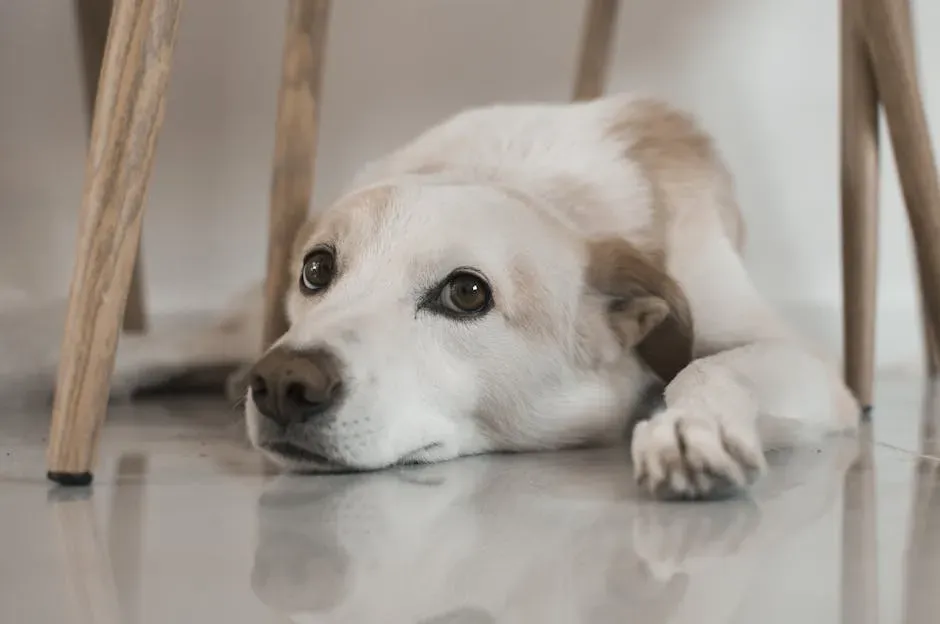
Not every dog by a door is relaxed and on a casual self-assigned watch duty. Sometimes, that position can be more about anxiety or hypervigilance than calm protection. Signs like constant pacing to and from the door, whining, barking at every tiny sound, or struggling to settle can hint that your dog is feeling on edge rather than simply alert. That is less “security guard on a shift” and more “overworked guard who never clocks out.”
If, on the other hand, your dog stretches out, sighs, changes sides, and occasionally glances up at noises without overreacting, you are probably seeing a normal, instinct-driven choice of a comfortable, strategic spot. The key difference is whether their body language looks soft and loose or tight and ready to spring. When in doubt, paying attention to how quickly they can be redirected or how easily they fall asleep there can tell you whether this is a healthy habit or a stress signal that might need addressing with training or professional help.
Why Sleeping by the Door Often Means They Trust You, Not That They Distrust Home
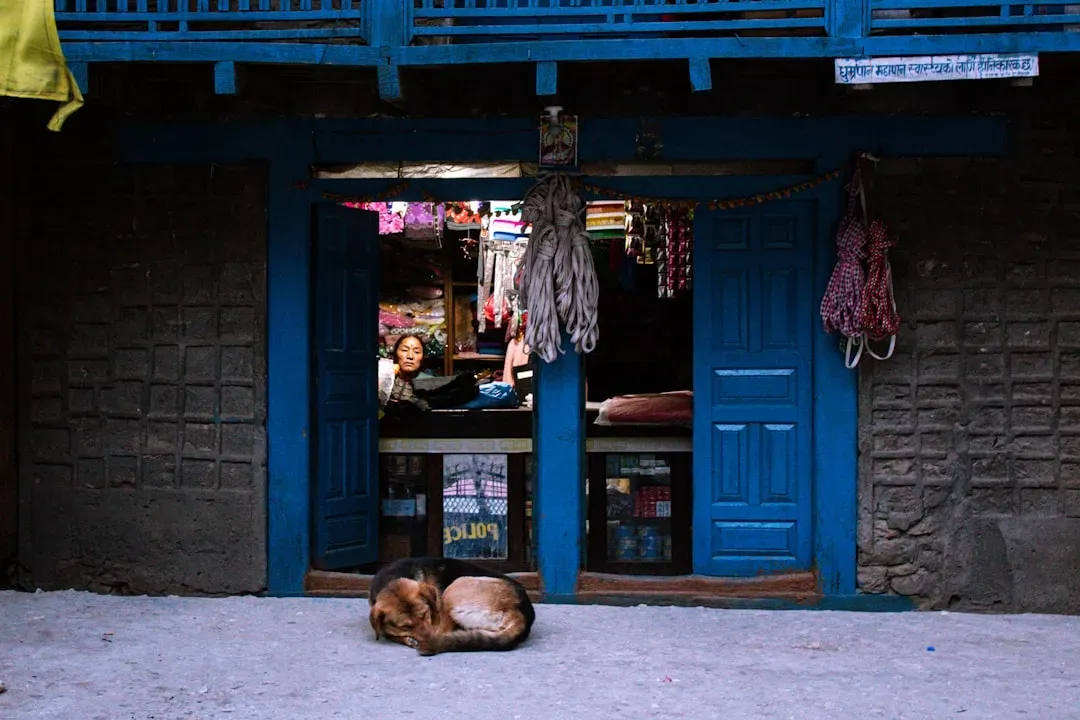
It is easy to project human feelings onto this behavior and assume a dog by the door must feel trapped, restless, or dissatisfied. But in many cases, they feel safe enough with you to “take the outer perimeter” while you rest deeper inside the home. In a pack, the more confident, secure individuals are often comfortable taking up those boundary positions. That doorway nap can actually be a quiet vote of confidence in you and in the household routine.
There is also an emotional closeness in how they choose their routes: they want to be where you are likely to pass. The door is a high-traffic zone, and your dog knows it. When they settle there, they ensure there are more chances for a casual ear scratch, a greeting, or just a glance from you as you walk by. It is less about dreaming of a life on the other side, and more about making sure they do not miss a moment with their favorite person.
When You Should Intervene: Safety, Sleep Quality, and House Rules
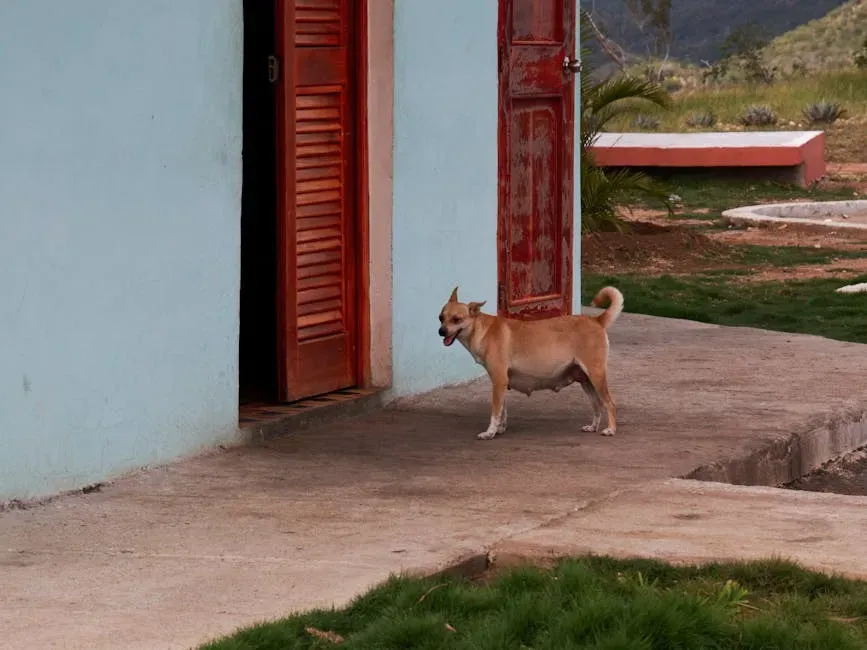
Even if the behavior is natural, there are times when it is worth gently nudging your dog toward a different resting spot. If the door is frequently opening and closing, they risk getting bumped, startled, or having their sleep constantly interrupted. Over time, poor-quality rest can make dogs more reactive and less resilient, just like it does in humans. In busy households with kids or multiple pets, that high-traffic spot can also become a tripping hazard.
If you want to shift the habit, try setting up an alternative “observation post”: a comfy bed near, but not directly in front of, the door with a clear view of key areas. Reward them when they choose that spot on their own, and make sure other family members respect it as their zone. You are not fighting their instinct to monitor; you are just giving that instinct a safer, more practical outlet that fits your home better.
What This Says About Your Relationship: You Are the Center, the Door Is Just the Stage
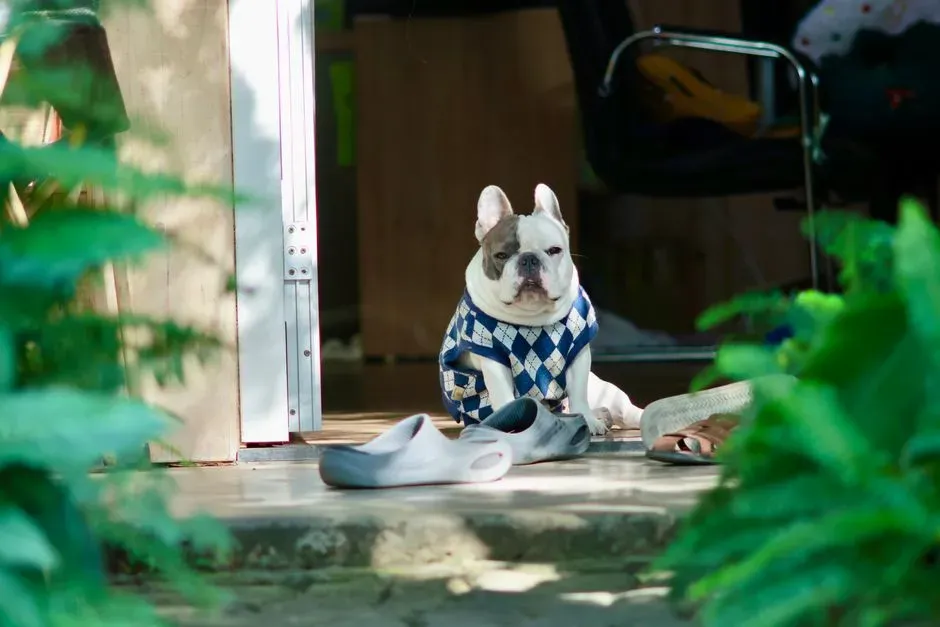
In the end, the fact that your dog chooses a spot where they can see both you and the outside world says a lot about how deeply they include you in their mental map of “things that must be kept track of.” You are not just furniture in the house to them – you are the core of their social universe. The door is simply a smart piece of real estate that lets them keep an eye on the two biggest variables in their life: you and everything that might approach you.
I still remember realizing this with my own dog after years of assuming he was plotting a jailbreak. Once I reframed it as protective, his behavior felt less suspicious and more strangely touching, like he had given himself the night shift no one asked him to take. So the next time you see your dog stretched out by the door, maybe do not worry that they want to leave you behind. Consider the possibility that they are exactly where they want to be: between you and the rest of the world, quietly on duty. Did you ever think a drafty doorway could carry that much meaning?


