

If you’ve ever tried to eat dinner while your dog stares at you with those huge, guilt-inducing eyes, you’ve probably thought, “They just really, really want my food.” But research over the last few years paints a more intriguing picture: many dogs do not beg in a mindless, automatic way. They actually tweak and modify their begging depending on who is present, what that person can see, and whether anyone is actually paying attention.
That sounds simple, but it has huge implications. It means our dogs are not just furry stomachs on legs; they are watching us, reading us, and changing their tactics based on what they think we know and notice. In other words, begging at the table is not only about food. It is also about attention, awareness, and a surprisingly sophisticated understanding of the human mind.
They Watch Us Watching Them
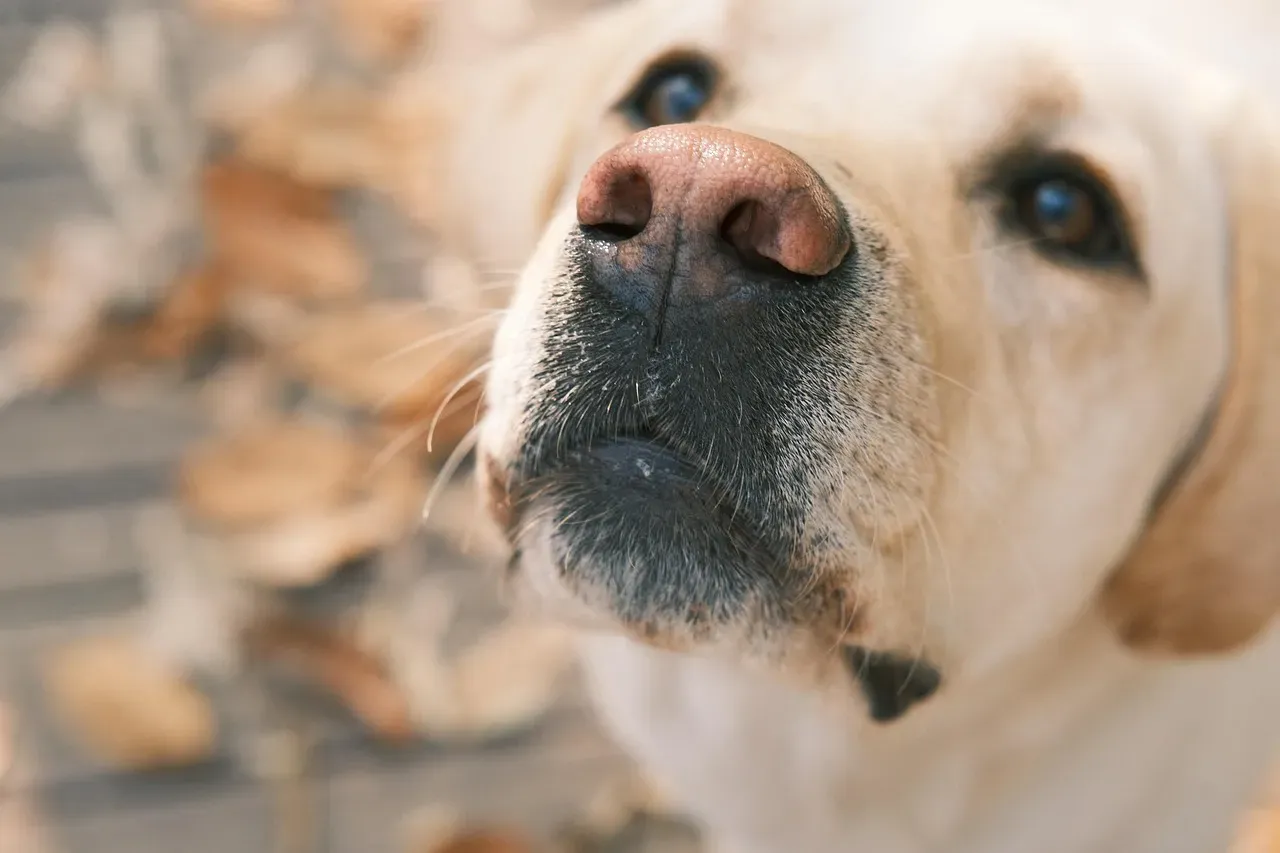
One of the most striking findings in modern dog research is that dogs adjust their behavior depending on whether a human is looking at them. In controlled setups, dogs are more likely to approach forbidden food, or to steal treats, when a human’s eyes are turned away or when the room is dark. When the human is clearly watching, they often hold back or act more cautiously, as if they understand they are being monitored.
Now apply that to your dinner table. Many dogs beg more insistently from the person whose eyes keep drifting toward them, and less from someone who never looks at them at all. This suggests they are sensitive to eye contact itself, not only to the location of the food. Begging, then, becomes a kind of social game: they are tracking who is aware of them and where their best emotional leverage might be.
Begging Changes With Who Is Likely to Share

Another twist is that dogs learn quickly which humans are “soft touches” and which ones are strict. In studies where multiple people sit with food, dogs often beg more from the person who has previously shared or responded to them, even if everyone is holding identical treats. That pattern mirrors what many dog guardians casually notice at home: the dog always sidles up to the grandparent, the child, or the partner who caves most often.
This selective begging shows that dogs are not just responding to the presence of food. They build a rough profile of each human’s behavior over time and then use that information strategically. In a sense, they are running tiny experiments: “If I look pathetic at this person, does food appear? If not, I will redirect my efforts.” That is far more nuanced than simple hunger-driven behavior.
Seeing, Not Just Smelling, Drives Their Strategy

We all know dogs have powerful noses, so you might assume that smell alone is what draws them to the table. But experiments have repeatedly shown that what we can see, and what they think we can see, is just as important. Dogs behave differently when a human’s eyes are covered, when the person faces away, or when a barrier hides the food from the human but not from the dog.
This tells us that dogs track visual perspectives, not just odors or sounds. When they beg more obviously while you are looking and act sneakier when you are not, they are treating your gaze as meaningful information. They are not thinking about “eye contact” in human language of course, but they are treating your line of sight as a signal about what you know and what you might do.
Do Dogs Really Understand Human Attention?
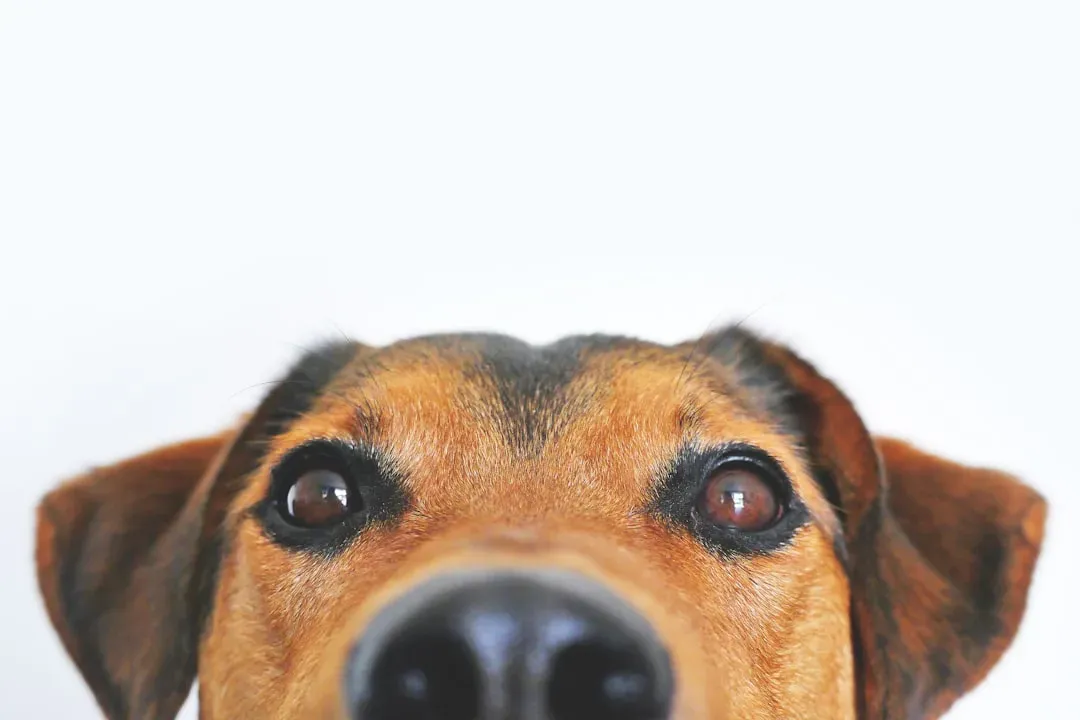
Researchers are careful here: they avoid claiming that dogs have a full, human-like “theory of mind.” That phrase means the ability to attribute complex mental states, like beliefs and intentions, to others. The evidence in dogs is more modest, but still impressive. They seem to understand, at least in a practical way, that humans who are watching are more likely to intervene, share, reward, or scold.
So when a dog shifts from quiet lying-under-the-table mode to full-on puppy eyes the moment you glance down, it is reasonable to say they are responding to your attention. They might not be philosophizing about what you know, but they behave as if your awareness matters. That “as if” is exactly what many scientists look for when they say dogs show sensitivity to human attention.
Training, Culture, and Family Rules Shape Begging Too
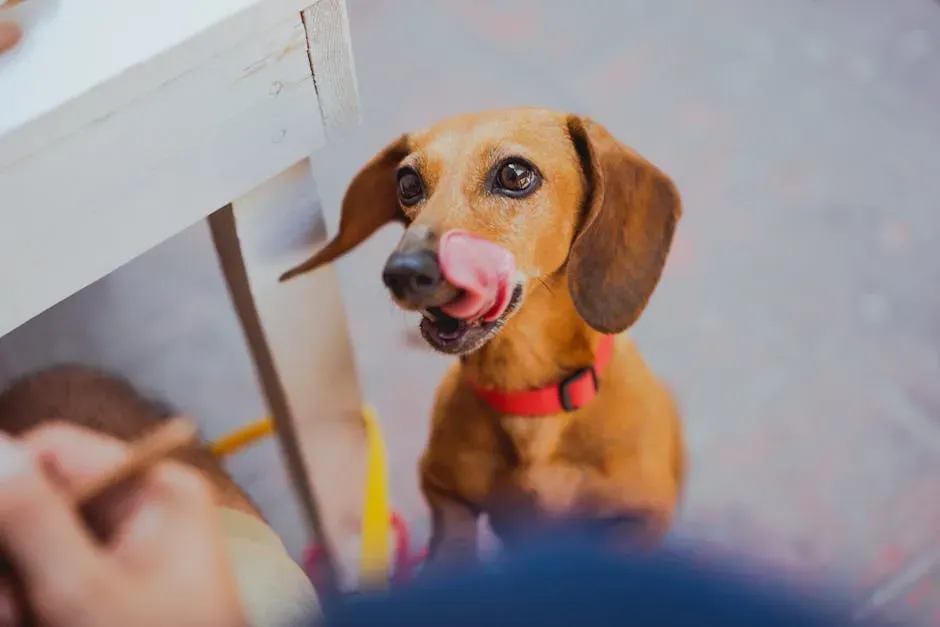
Not every dog begs in the same way, and that is an important part of the story. How you respond to begging, and what your household considers acceptable, has a massive effect. Families who occasionally slip scraps under the table – even “just on holidays” – are often training their dogs without realizing it, teaching them that persistent watching and nudging can pay off eventually.
On the other hand, dogs raised in homes with very consistent rules, where nobody ever feeds from the table and begging is gently redirected, often settle down faster and beg far less. The key here is that dogs are not robots pre-programmed to irritate you during dinner. They are flexible learners. They adapt their begging style to the social culture of the home, blending instinct with experience.
Speaking personally, I once lived with two dogs who were night and day: one sat politely several feet away from the table, the other would inch closer like a tiny, furry glacier. The difference was not personality alone; it was also that the “glacier” dog had learned that my visiting friends were more likely to share. She had, quite literally, mapped out the social weak spots in my dining room.
Begging as Communication, Not Just Annoyance

It’s tempting to think of begging purely as impolite behavior we need to stop, but there is another way to view it: as communication. When dogs sit, whine softly, rest a chin on your knee, or fix you with that intense gaze, they are expressing needs, curiosity, and social connection. Food is the obvious motivator, but the interaction itself is part of the reward for many dogs.
That does not mean you should always give in. But seeing begging as a kind of “conversation starter” can change how you respond. You can acknowledge the dog, ask them to lie on a mat, reward calm behavior with a suitable dog-safe treat after dinner, and still keep firm boundaries about human food. In this framing, you are not shutting down communication; you are teaching a different, more sustainable way of asking.
Practical Ways to Respect Their Minds While Managing the Behavior

Once you accept that begging is shaped by attention and learning, your strategy can become smarter and kinder. Consistency is crucial: decide as a household that no one feeds from the table, not even tiny crumbs, and stick to it. At the same time, give your dog something positive to do, like settling on a mat with a chew or food puzzle while you eat, so they are not just excluded but actively engaged.
It also helps to be aware of your own gaze. Constantly glancing at your dog, talking to them, or reacting dramatically whenever they approach the table can inadvertently reward the very behavior you are trying to reduce. Calmly ignoring begging while rewarding alternative behaviors away from the table sends a clearer message: attention and treats come when you give me space, not when you hover under my fork.
Conclusion: Our Dogs Are Paying More Attention Than We Think

When you pull all this together, the picture is both humbling and a little unsettling: dogs are not just begging because they are hungry. They are watching us closely, reading our attention, remembering who has shared in the past, and adjusting their tactics in real time. To me, that makes begging less of a bad habit and more of a window into just how socially attuned our dogs really are.
My own opinion is that we do dogs a disservice when we dismiss begging as mere nuisance and ignore the intelligence underneath it. If they can pick up on our gaze, our patterns, and our weak spots, then we owe it to them to respond with consistency, clarity, and respect for their minds – not just their stomachs. The next time those eyes lock onto you at dinner, will you see an annoyance, or will you see a thoughtful creature testing what your attention really means?


