
Why Your Dog Sighs the Moment It Lies Down Next to You
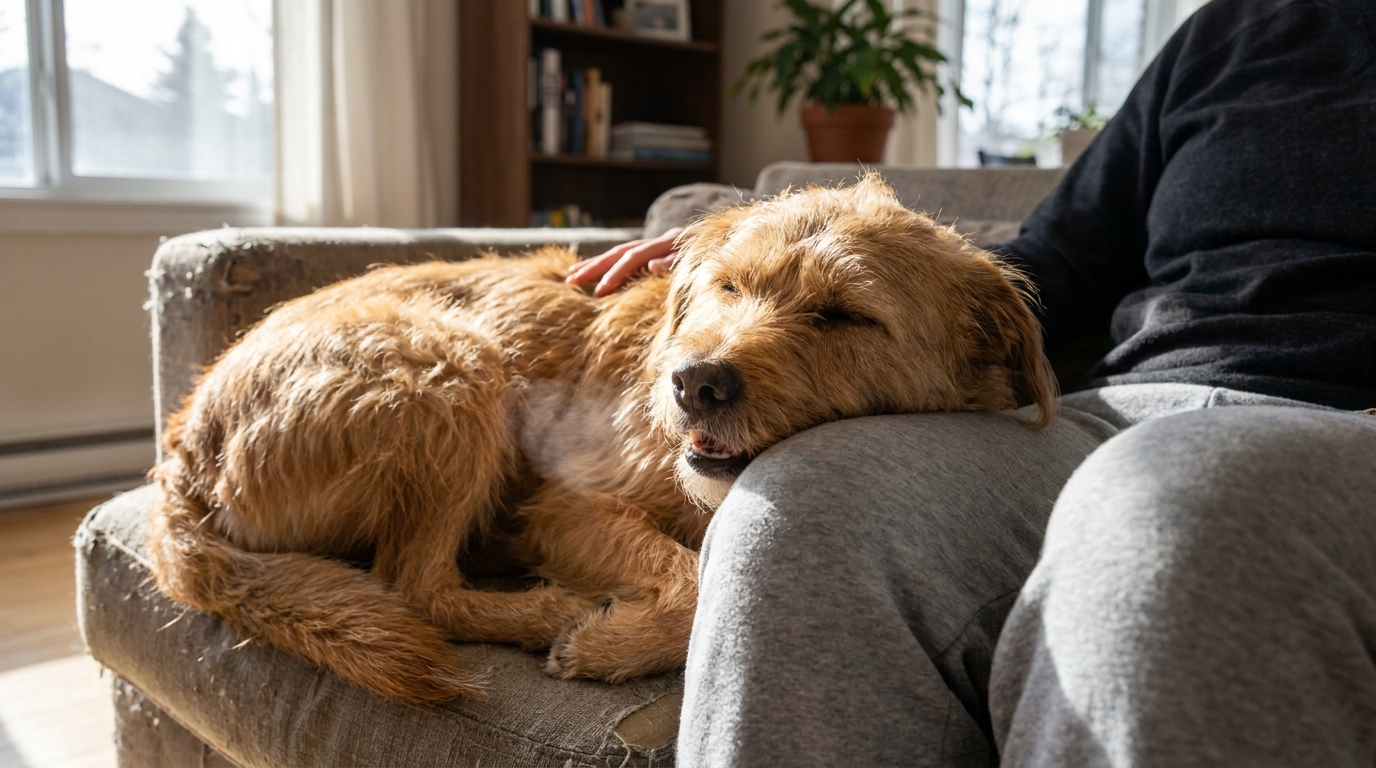
Stick with us to the end: one simple behavior check reveals whether your dog is relaxed or signaling something you need to address.
You’ve probably noticed it a hundred times without thinking much about it. Your dog settles down beside you on the couch or at your feet, and just as they hit the cushion, out comes a long, deliberate sigh.
Most people assume it’s contentment, maybe a little drama, or just the canine version of flopping down after a long day. But that sigh actually carries specific information about your dog’s emotional state, and recognizing the difference between a relaxed exhale and a stress signal can change how you respond in the moment.
Here’s what the data actually says.
#12 — The Exhale Happens in Two Distinct Forms
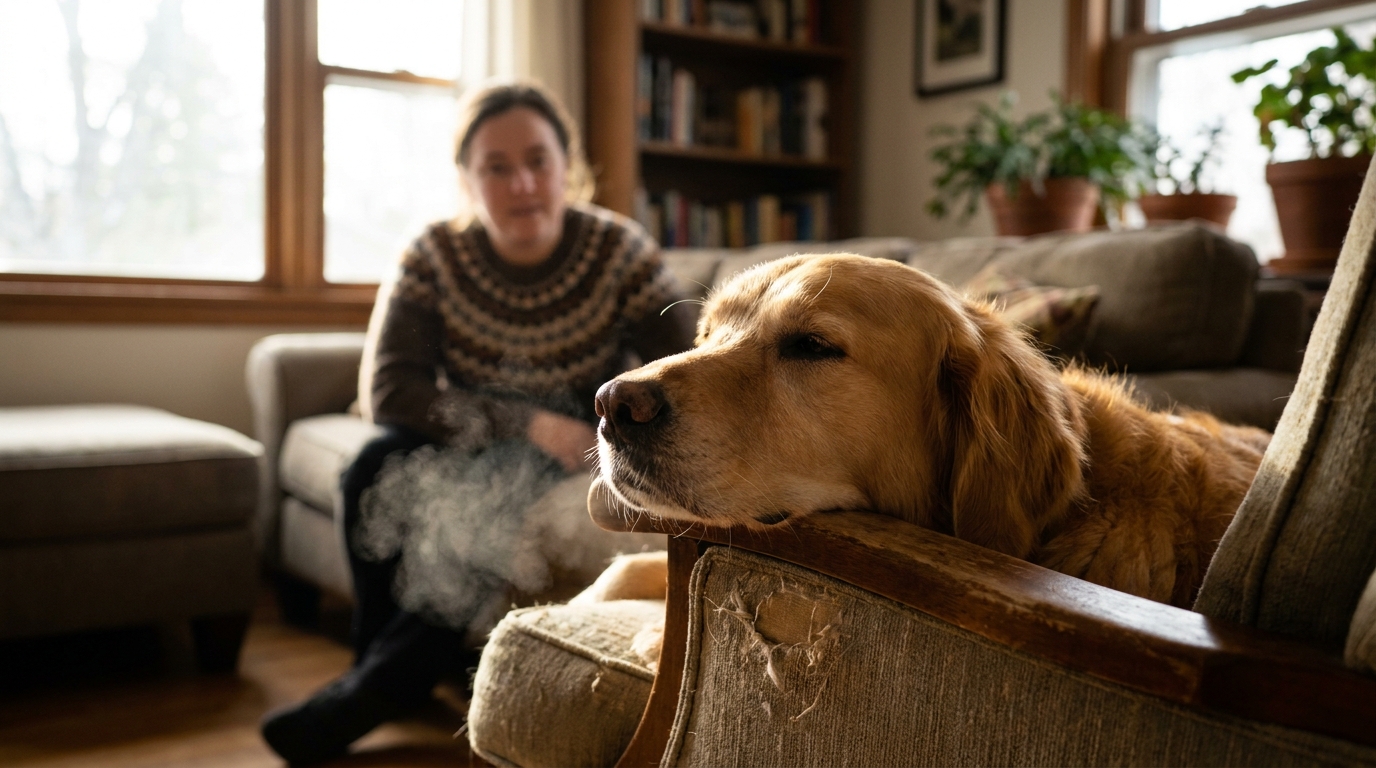
Not all sighs from your dog mean the same thing.
Veterinary behaviorists distinguish between a “settling sigh” and a “displacement sigh,” and the difference comes down to what happened in the ten seconds before your dog lay down. One signals comfort, the other signals low-grade stress or frustration.
The settling sigh is slow, smooth, and happens as the dog’s body relaxes into position. The displacement sigh is sharper, often accompanied by a shift in posture or a glance away, and it follows a moment of indecision or interruption.
Most owners hear the sound but miss the context. A dog that sighs after circling twice and curling up is not in the same state as a dog that sighs after being called away from the window or told to get off the bed.
#11 — The Long Exhale Lowers Heart Rate Quickly
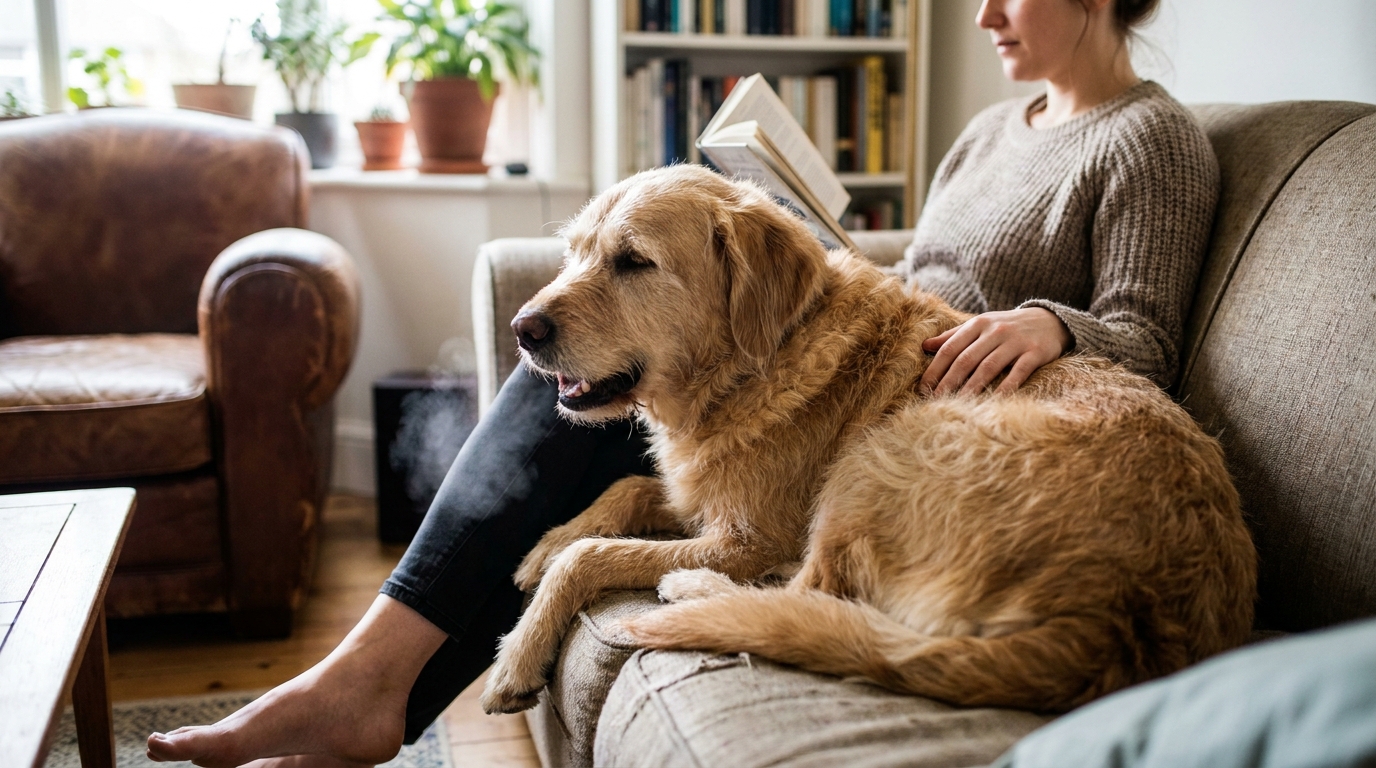
When your dog sighs while settling, it’s a physiological reset.
The extended exhale activates the parasympathetic nervous system, which slows the heart rate and shifts the body out of vigilance mode. It’s the same mechanism humans use when taking a deep breath to calm down, and dogs do it reflexively when they feel safe enough to let their guard down.
This happens because the vagus nerve responds to slow, controlled breathing. A long sigh stimulates that nerve, which in turn tells the body to stop scanning for threats and start conserving energy.
If your dog sighs and then stays still with soft eyes and loose muscles, that exhale just moved them from alert to resting. If they sigh but remain tense or reposition within seconds, the signal didn’t complete.
A sigh that lands means the dog trusts the moment enough to power down.
#10 — It Often Follows a Decision to Stop Monitoring
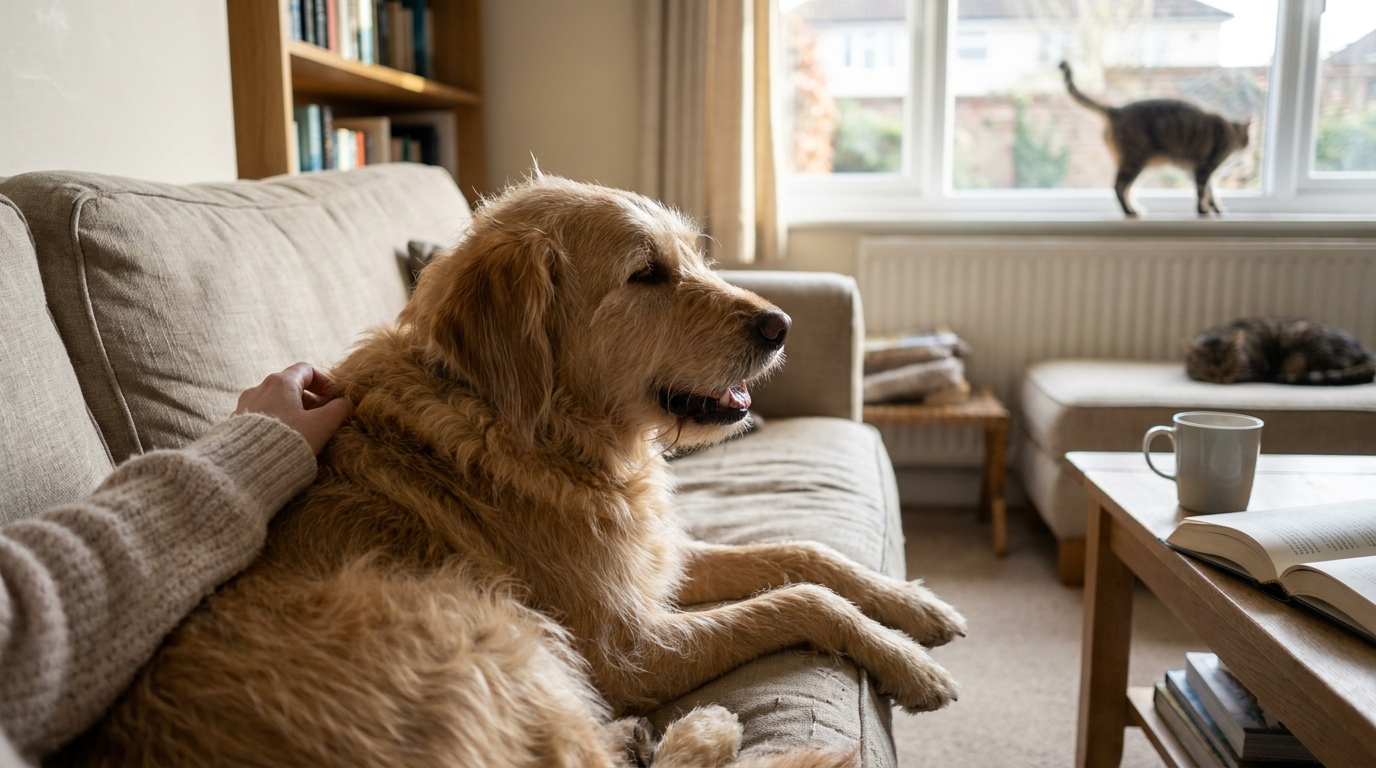
Your dog doesn’t sigh randomly—it usually comes right after they stop tracking something.
The sigh marks the end of a scanning phase, when the dog has decided there’s nothing in the environment that requires their attention. It’s the audible moment they switch from “watching” to “resting,” and it happens most reliably when the room has been quiet and still for a minute or two.
Dogs are hardwired to monitor their surroundings for changes. A sigh often signals they’ve completed that check and found no reason to stay alert.
Watch for this at night: many dogs will settle near their owners, scan the room one last time, and then sigh as they lower their head. That’s not boredom—it’s the sound of a dog deciding the perimeter is secure.
#9 — The Sound Carries More Air Than Normal Breathing
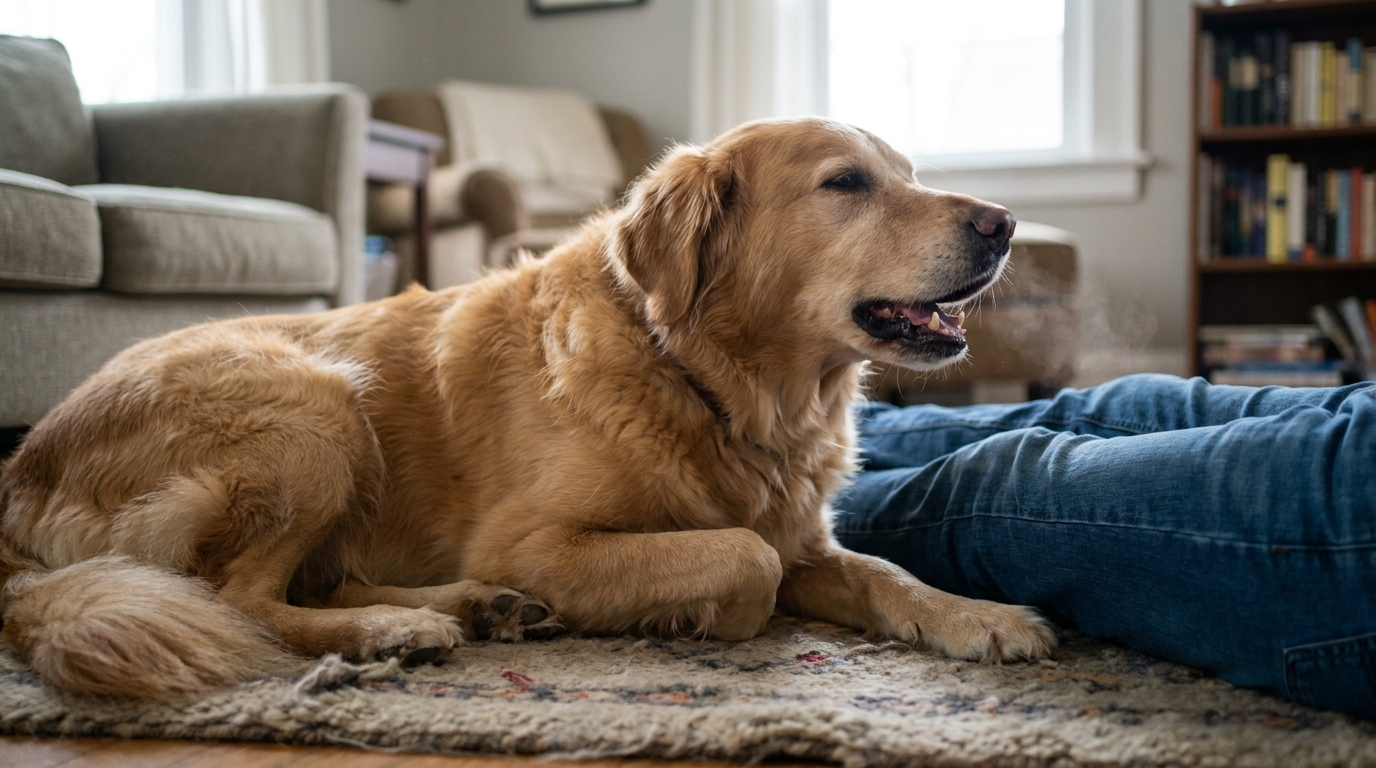
A sigh isn’t just a long breath—it’s a forced, deliberate exhale that empties the lungs more completely than regular respiration.
Dogs take in roughly 15 to 30 breaths per minute at rest, but a sigh moves about three times the volume of air in a single cycle. That extra volume is what makes the sound audible across the room, and it’s also what triggers the calming response in their nervous system.
The deeper the exhale, the more effective the reset. Shallow panting doesn’t produce the same effect because it keeps the respiratory rate high and the body in a state of readiness.
Veterinarians use this principle when calming anxious dogs in the clinic: encouraging slow, deep breathing helps lower stress markers faster than distraction alone. Your dog’s sigh at home is the same tool, applied instinctively.
Fast Facts
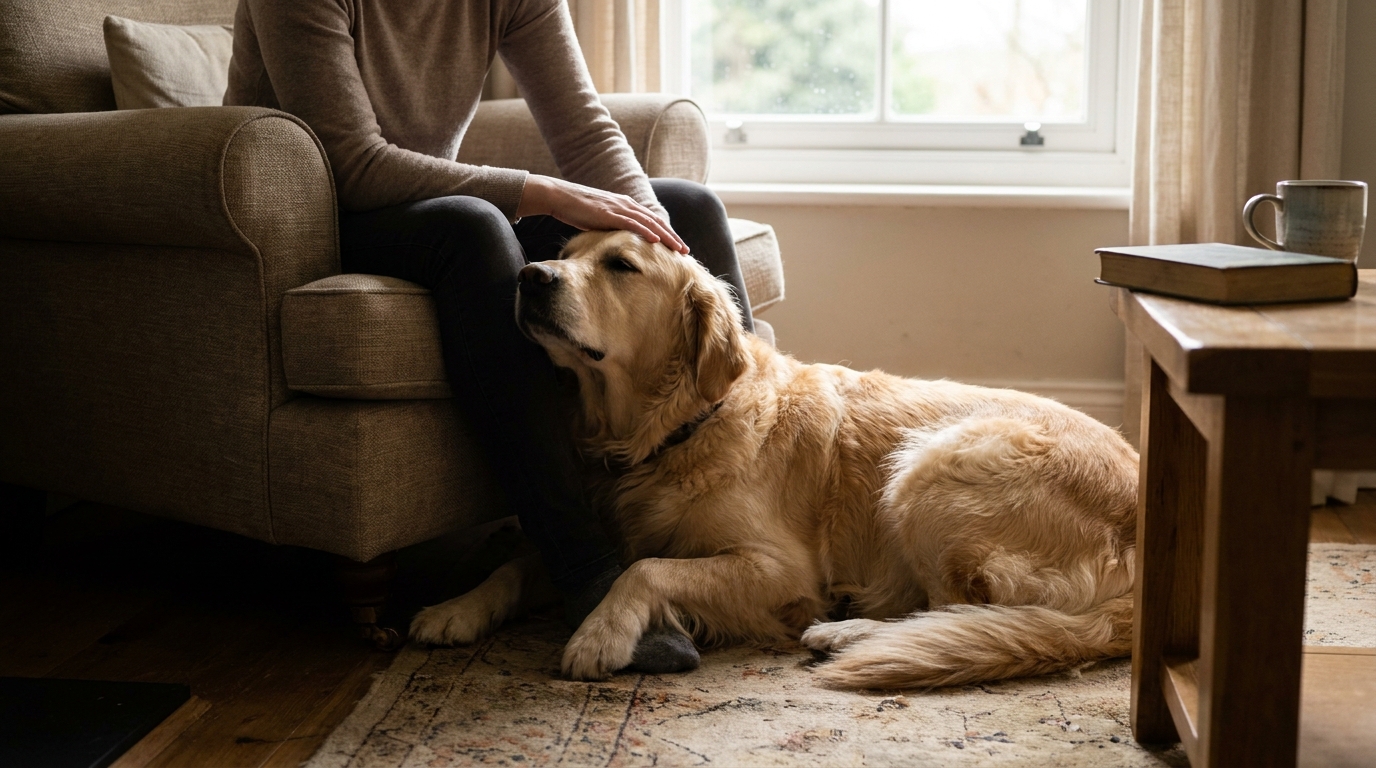
- A resting dog breathes 15–30 times per minute
- A sigh moves roughly three times the normal tidal volume
- The exhale phase of a sigh lasts 2–4 seconds, compared to under one second for regular breathing
- Sighs happen most often in the first two minutes after lying down
#8 — It’s More Common in Dogs That Feel Secure
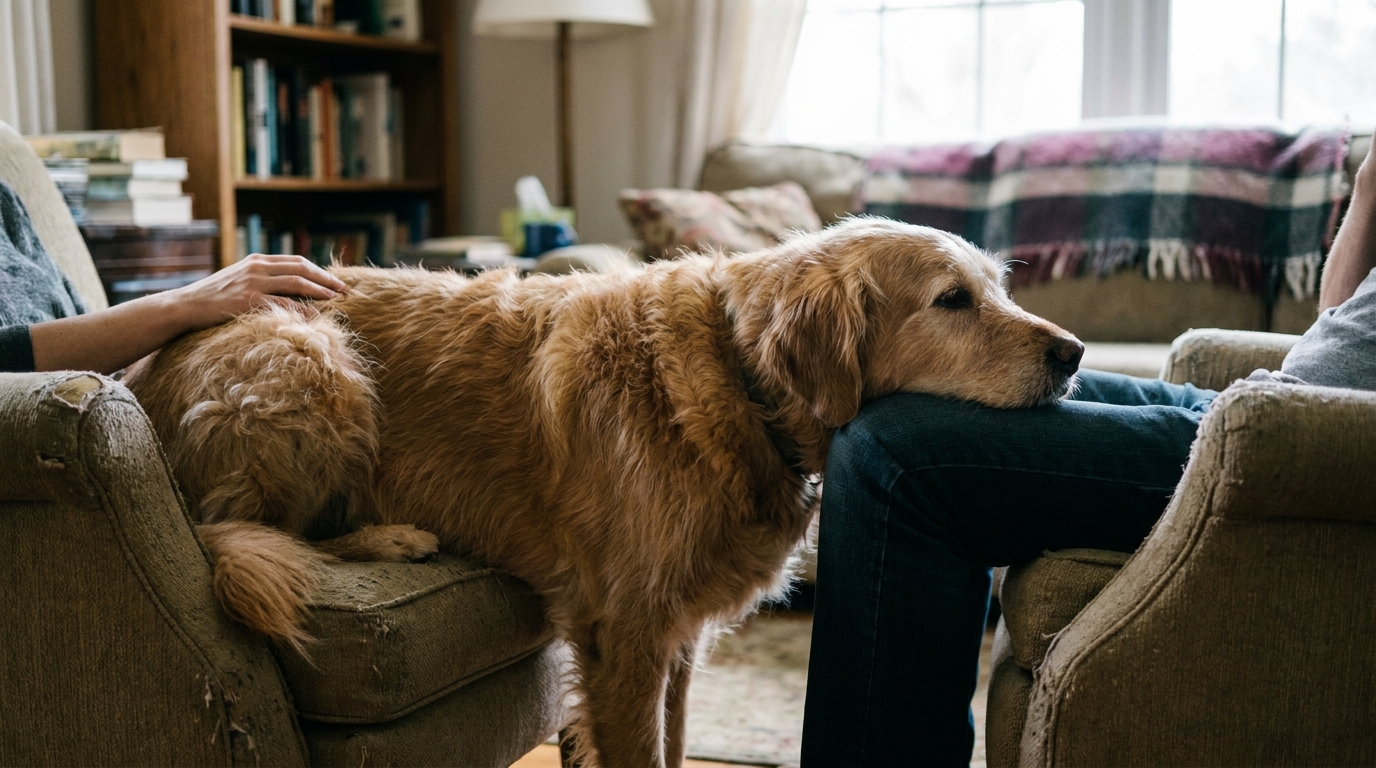
Dogs that sigh frequently when settling are usually dogs that feel safe in their environment.
Behaviorists note that the settling sigh appears more often in dogs with stable routines and predictable households, because the behavior requires a baseline sense of security. A dog that’s uncertain about its surroundings will stay in a light vigilance state and won’t reach the depth of relaxation needed to trigger the full exhale.
This is why newly adopted dogs often take weeks before they start sighing regularly. The sound becomes more common as the dog learns the rhythms of the home and stops anticipating disruptions.
If your dog sighs when they lie down near you but doesn’t sigh when alone in another room, that’s not random. Your presence is part of what allows them to let go.
But #7 reveals a context where the sigh means the opposite…
#7 — A Sharp Sigh Can Signal Frustration or Boredom
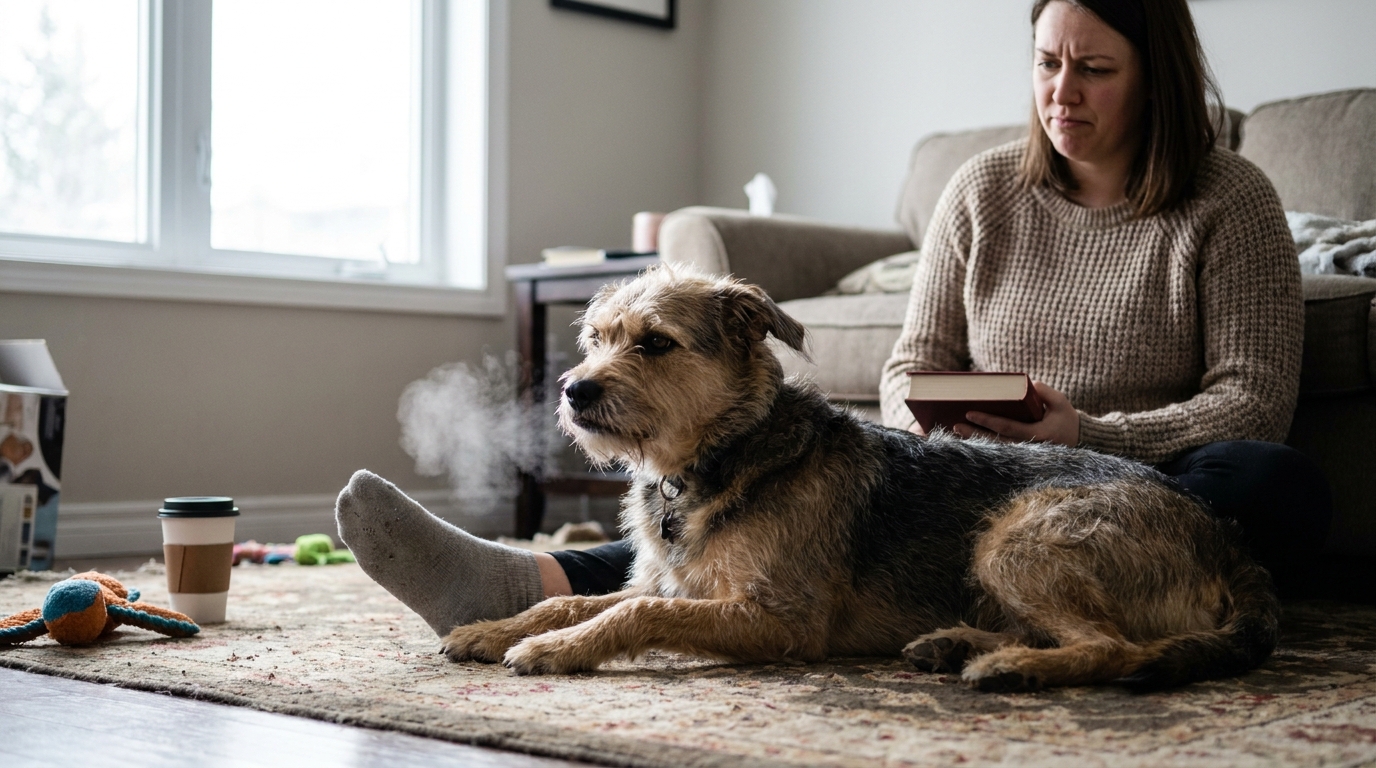
Not every sigh is contentment—some are closer to a huff of annoyance.
A displacement sigh happens when a dog is told to stop doing something they wanted to continue, or when they’ve been waiting for activity and none has come. The sound is shorter, sharper, and often paired with a glance away or a shift in body position that suggests resignation rather than relaxation.
This type of sigh shows up when a dog lies down after being called off the furniture, after a walk ends sooner than expected, or when they’ve been watching you for ten minutes hoping for play and you haven’t responded. It’s a release of tension, but the tension came from mild conflict, not from winding down naturally.
The difference is in what comes next. A content sigh leads to stillness and soft features. A frustration sigh often leads to restlessness—shifting positions, licking, or staring.
#6 — The Timing Reveals Whether It’s Voluntary or Reflexive
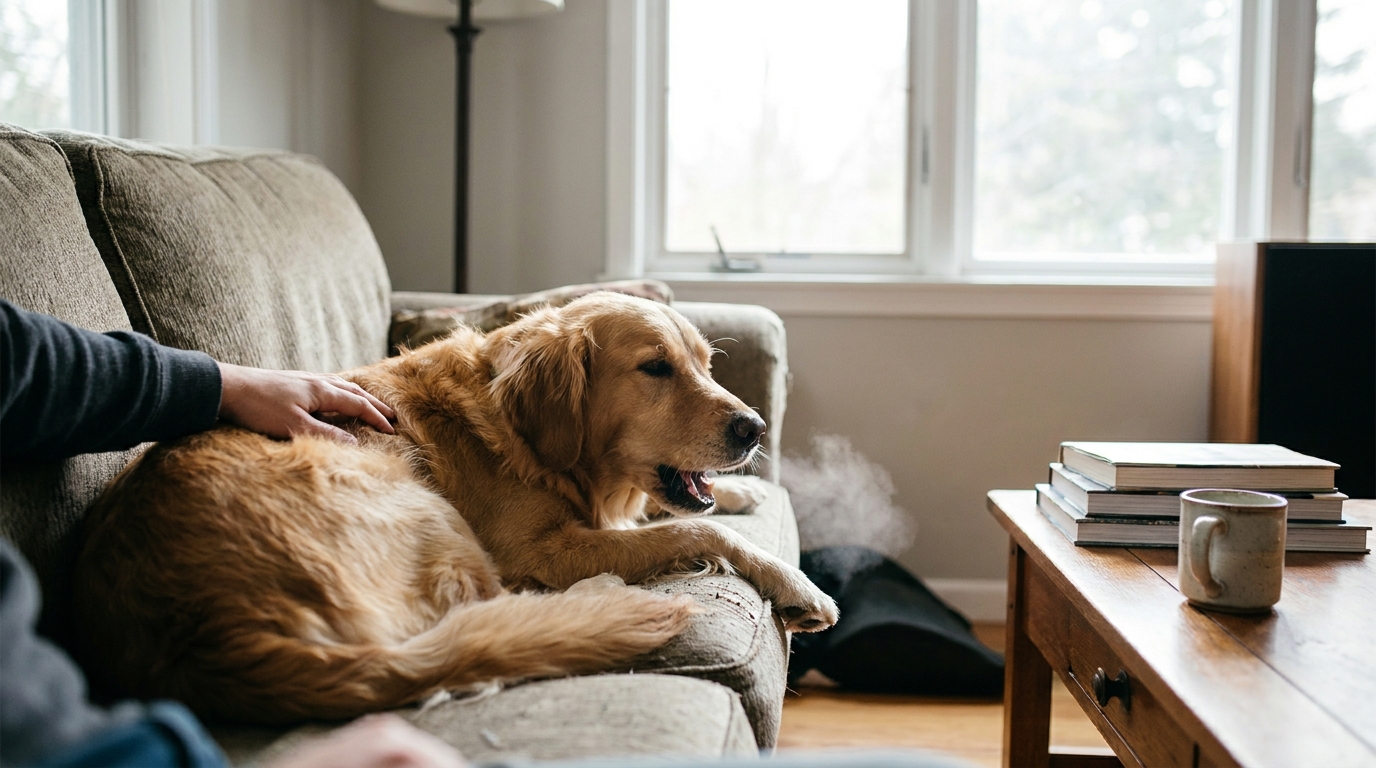
The moment the sigh happens tells you whether your dog chose to settle or was told to.
A sigh that comes three to five seconds after lying down is almost always voluntary, indicating the dog decided on their own that it was time to rest. A sigh that happens within one second of hitting the floor is more reflexive, often triggered by the physical act of lying down rather than an emotional shift.
This distinction matters because voluntary settling is a stronger indicator of comfort. A dog that waits a few beats before sighing has had time to assess the situation and decide it’s safe to relax.
Dogs trained to “go to place” or “lie down” on command will sometimes sigh immediately as they comply, but the rest of their body language—stiff legs, eyes still tracking movement—reveals they haven’t actually relaxed. The sigh in that case is mechanical, not emotional.
#5 — Puppies Sigh Less Often Than Adult Dogs
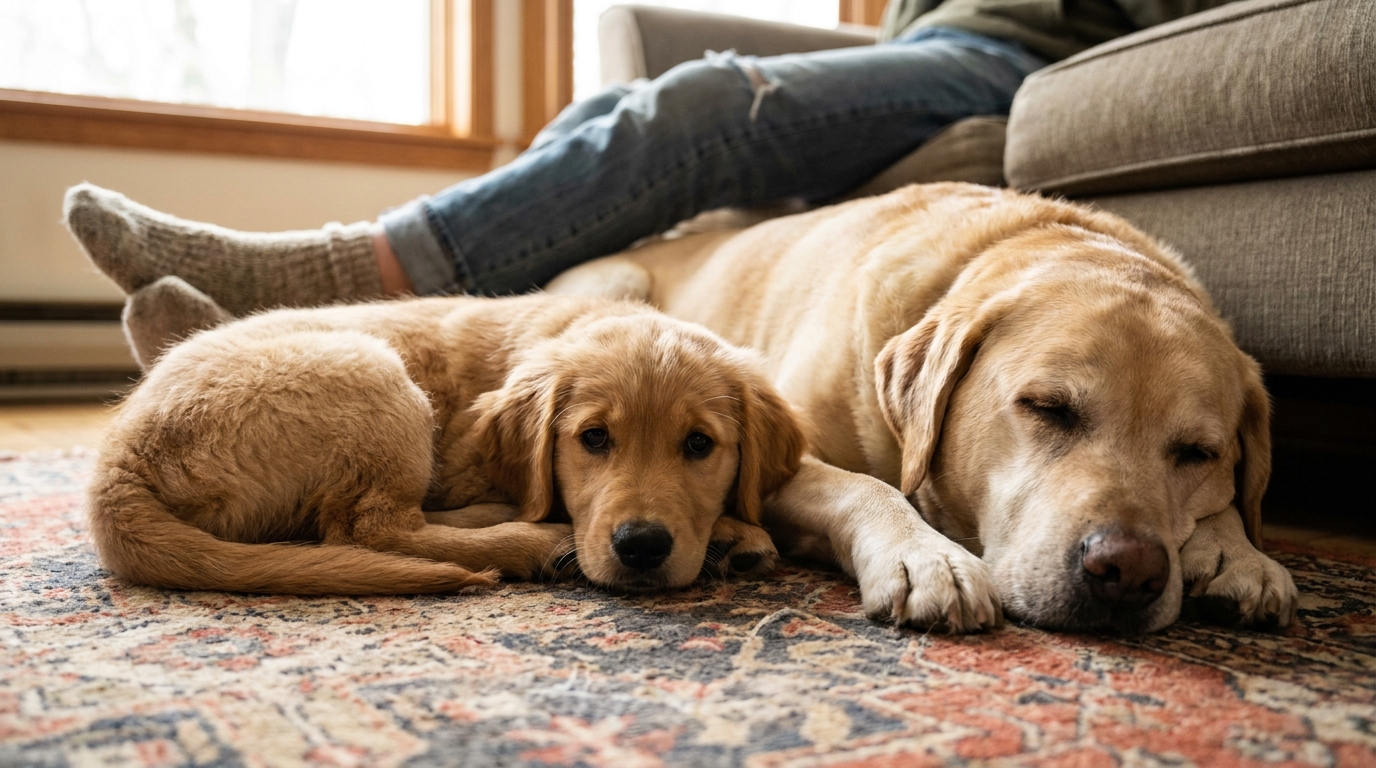
Young dogs don’t sigh with the same frequency or depth as mature dogs.
Puppies spend more time in active sleep cycles and less time in deep rest, so the physiological conditions that produce a settling sigh don’t occur as often. Their breathing patterns are also less regulated, and they’re more likely to shift positions frequently rather than commit to a long rest period.
Most puppies start sighing consistently around six to eight months of age, as their sleep architecture matures and they develop the ability to stay in one position for longer stretches. Before that, the exhales are shorter and less deliberate.
This is one reason puppy owners often report their dog “finally calmed down” at around a year old. Part of that perceived calm is simply the dog’s nervous system maturing enough to produce the behaviors—like sighing—that signal genuine rest.
#4 — It’s Often Paired With Eye Softening and Ear Relaxation
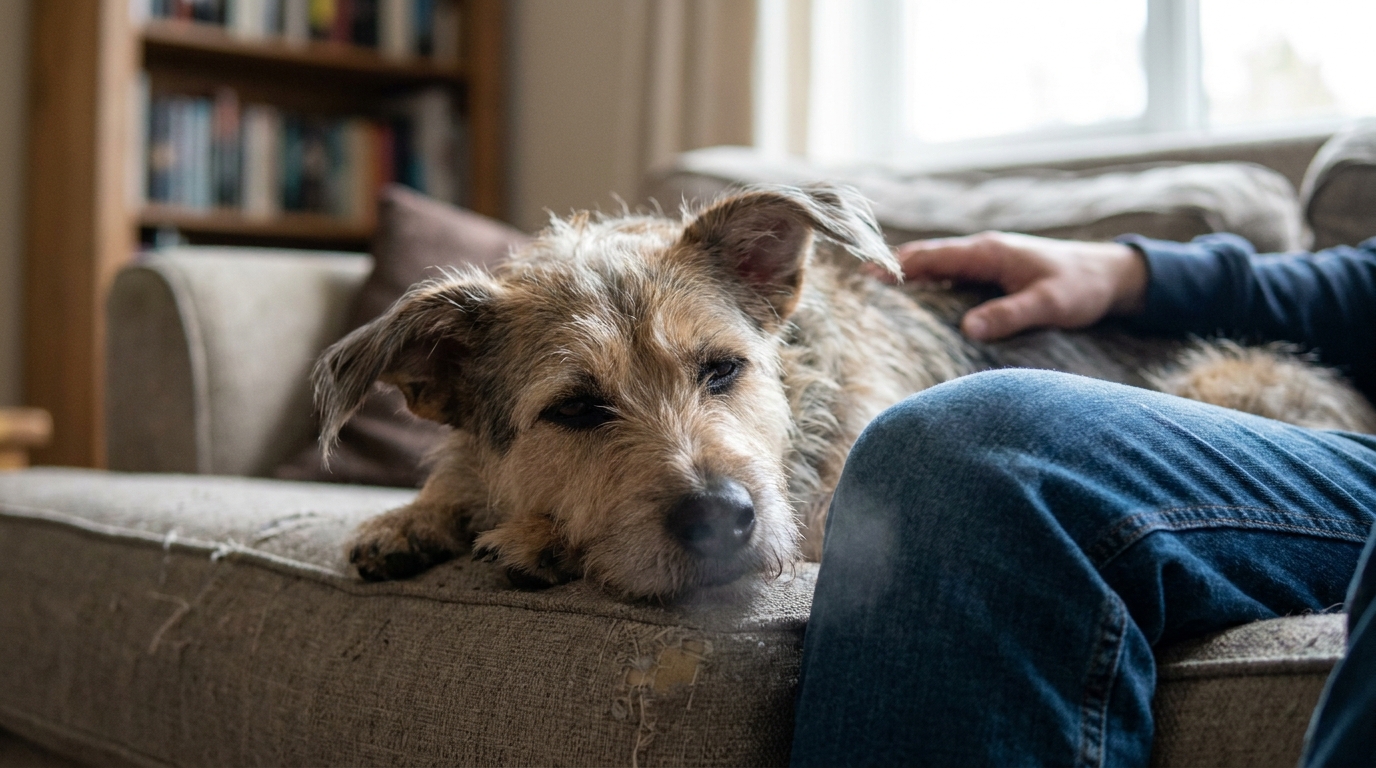
The sigh rarely happens in isolation—it’s part of a cluster of calming signals.
Within seconds of the exhale, a relaxed dog’s eyes will soften, their blink rate will slow, and their ears will shift from forward or scanning to a neutral or slightly back position. All of these changes indicate the sympathetic nervous system is stepping down and the parasympathetic system is taking over.
If the sigh happens but the eyes stay hard or the ears stay pricked, the dog hasn’t fully relaxed. They’re lying down, but they’re not resting, and something in the environment is keeping them on alert.
Trainers use this cluster to assess whether a dog is truly calm or just complying with a command. A sigh plus soft eyes means the dog has let go. A sigh without the facial changes means the behavior is surface-level.
Worth Knowing
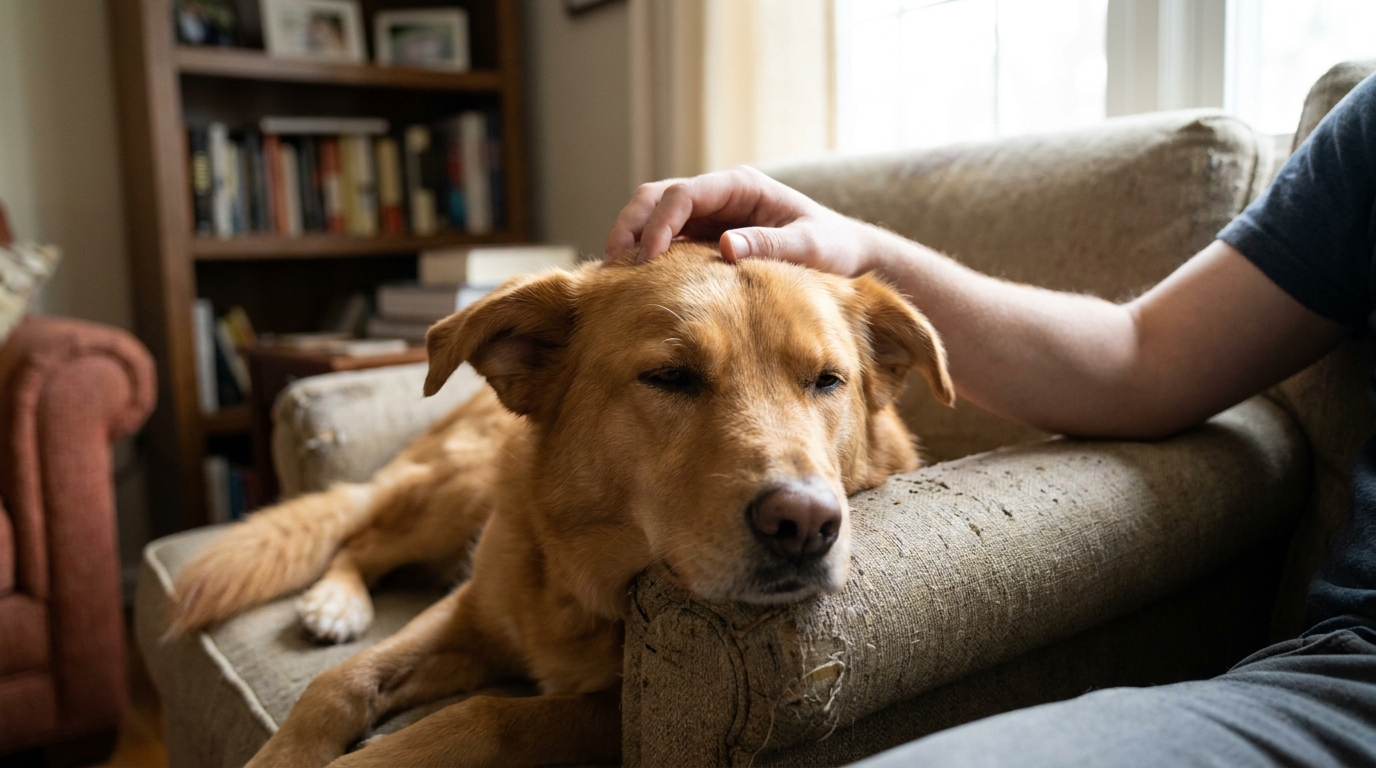
- Soft eyes mean the muscles around the eye relax and the gaze becomes unfocused
- Ear position varies by breed, but relaxed ears sit lower and farther back than alert ears
- A slow blink rate—one blink every 3–5 seconds—indicates low arousal
- These signals appear within 10 seconds of a genuine settling sigh
#3 — The Sigh Deepens If You Stay Still and Quiet
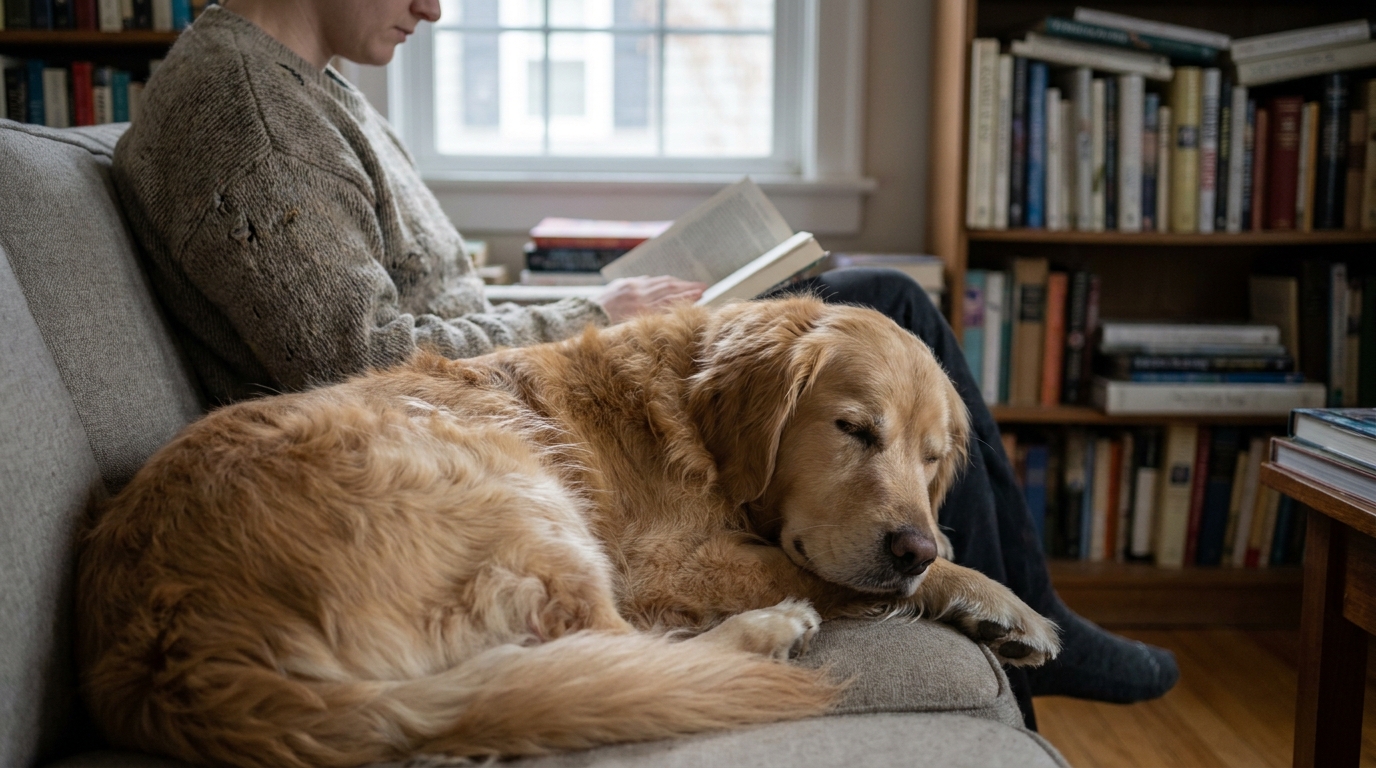
Your behavior directly affects whether your dog’s sigh turns into deep rest.
If you remain calm and motionless after your dog sighs, their breathing will often slow further and their body will sink deeper into the surface they’re resting on. But if you shift, speak, or reach for your phone, many dogs will lift their head or adjust position, which interrupts the relaxation sequence.
This happens because dogs are social resters. They take cues from the people near them about whether it’s safe to fully power down, and movement signals that something might be about to happen.
The deepest rest—and the longest stretches between sighs—happens when both dog and owner are still. If your dog sighs, settles, and then sighs again two minutes later, that second sigh usually means they’ve reached an even deeper level of calm.
#2 — It Can Be Trained as a Cue for Calmness
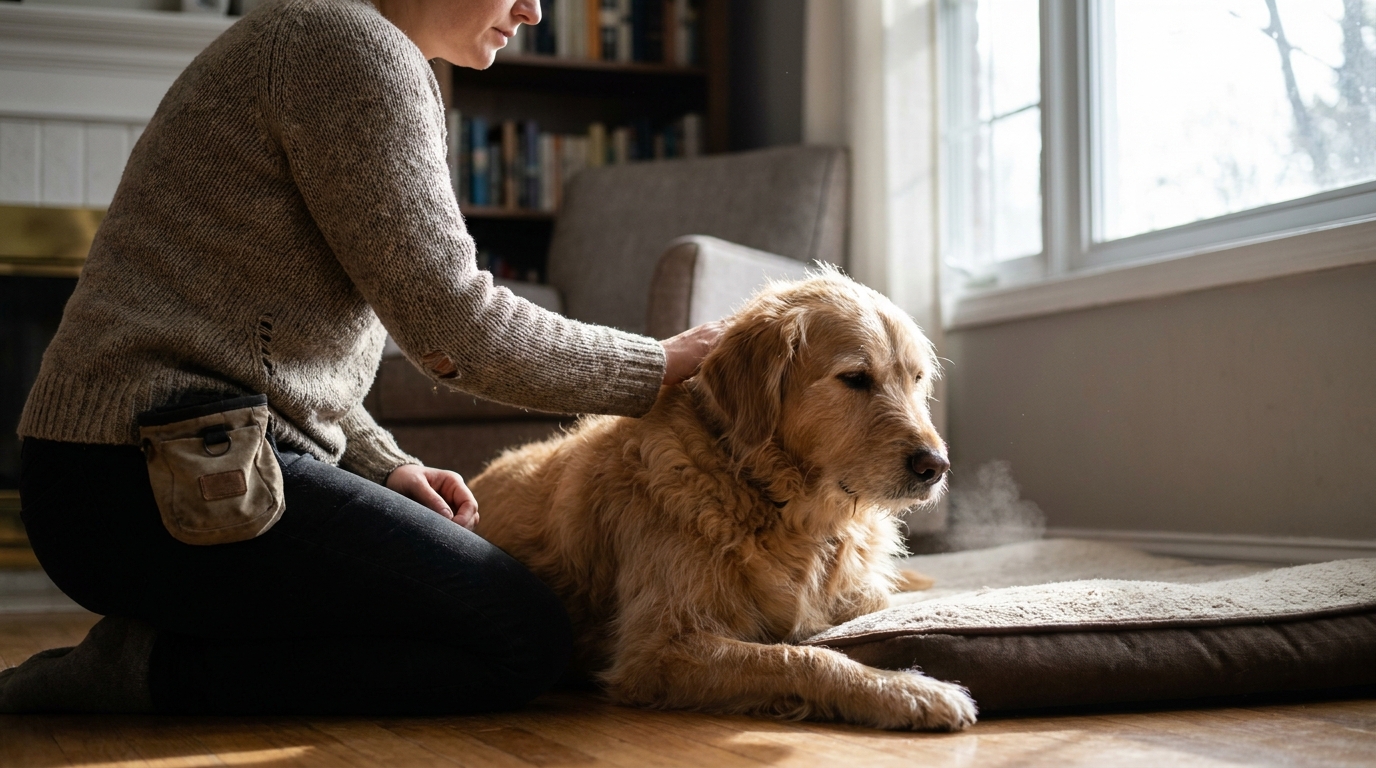
Some trainers deliberately teach dogs to associate the act of sighing with relaxation.
By rewarding a dog immediately after they sigh during a settling exercise, you can increase the frequency of the behavior and strengthen its connection to genuine calm. Over time, the dog learns that sighing itself is part of the wind-down routine, which makes it easier for them to relax in new or stressful environments.
This technique is used with anxious dogs, particularly those that struggle to settle in the clinic, at grooming appointments, or in new homes. The sigh becomes a bridge behavior that helps the dog shift out of vigilance faster.
It’s a subtle intervention, but effective. Dogs that are rewarded for sighing begin to offer the behavior more readily, and because the sigh itself triggers physiological calming, the loop reinforces itself.
Teaching a dog to sigh on cue may sound strange, but it’s one of the fastest ways to build a reliable settle.
#1 — The Absence of a Sigh Can Signal Chronic Stress
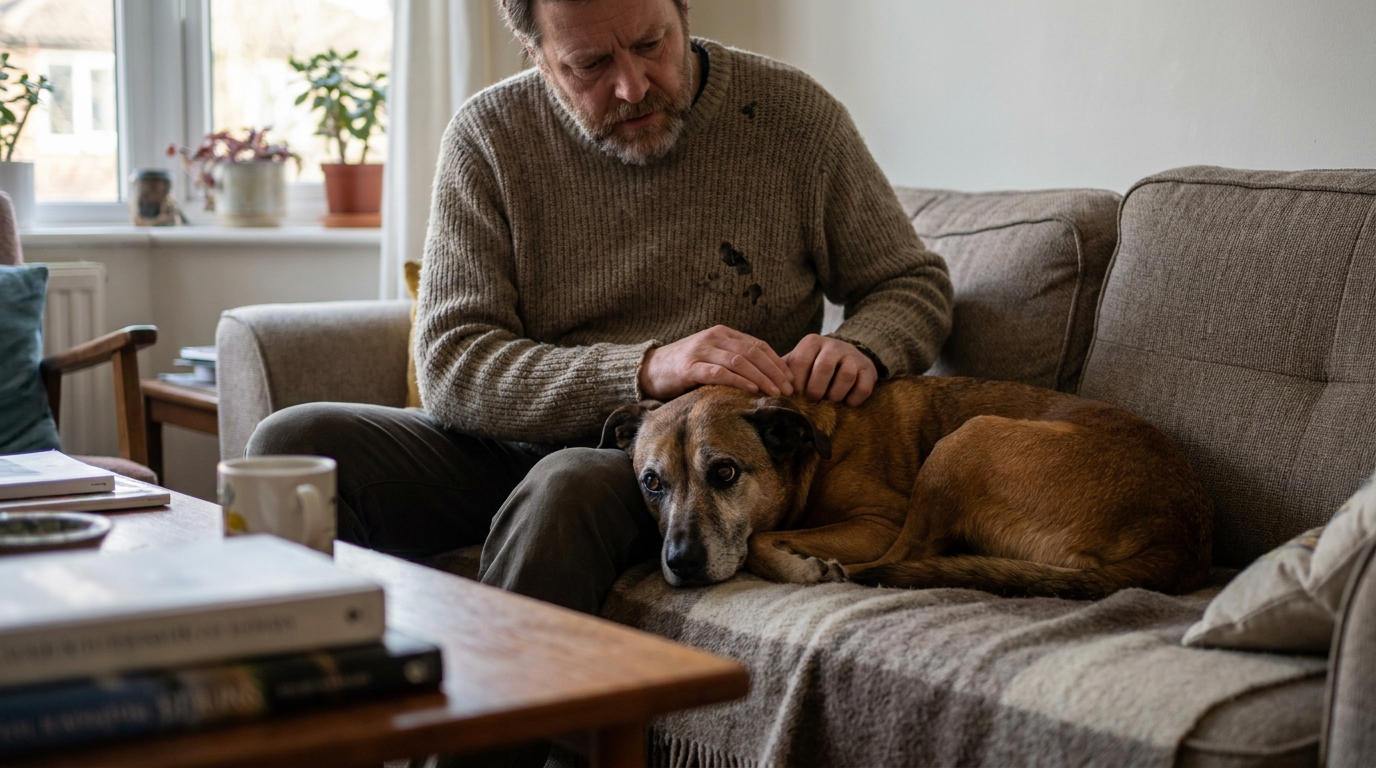
If your dog lies down beside you regularly but never sighs, that’s worth noticing.
A dog that skips the settling sigh is often a dog that isn’t reaching true rest, even when their body is still. They may be lying down out of habit or obedience, but their nervous system hasn’t downshifted, and they’re staying in a light state of alertness that prevents the deep exhale from occurring.
This pattern shows up in dogs with generalized anxiety, dogs in chaotic households, and dogs that have recently experienced a major change like a move, a new pet, or the loss of a family member. The lack of a sigh doesn’t mean the dog is in distress, but it does mean they’re not fully relaxing.
Veterinary behaviorists look for this during consultations. A dog that won’t sigh even in a quiet room with their owner present is a dog that may benefit from environmental changes, a stricter routine, or in some cases, medical support for anxiety.
Why It Stands Out
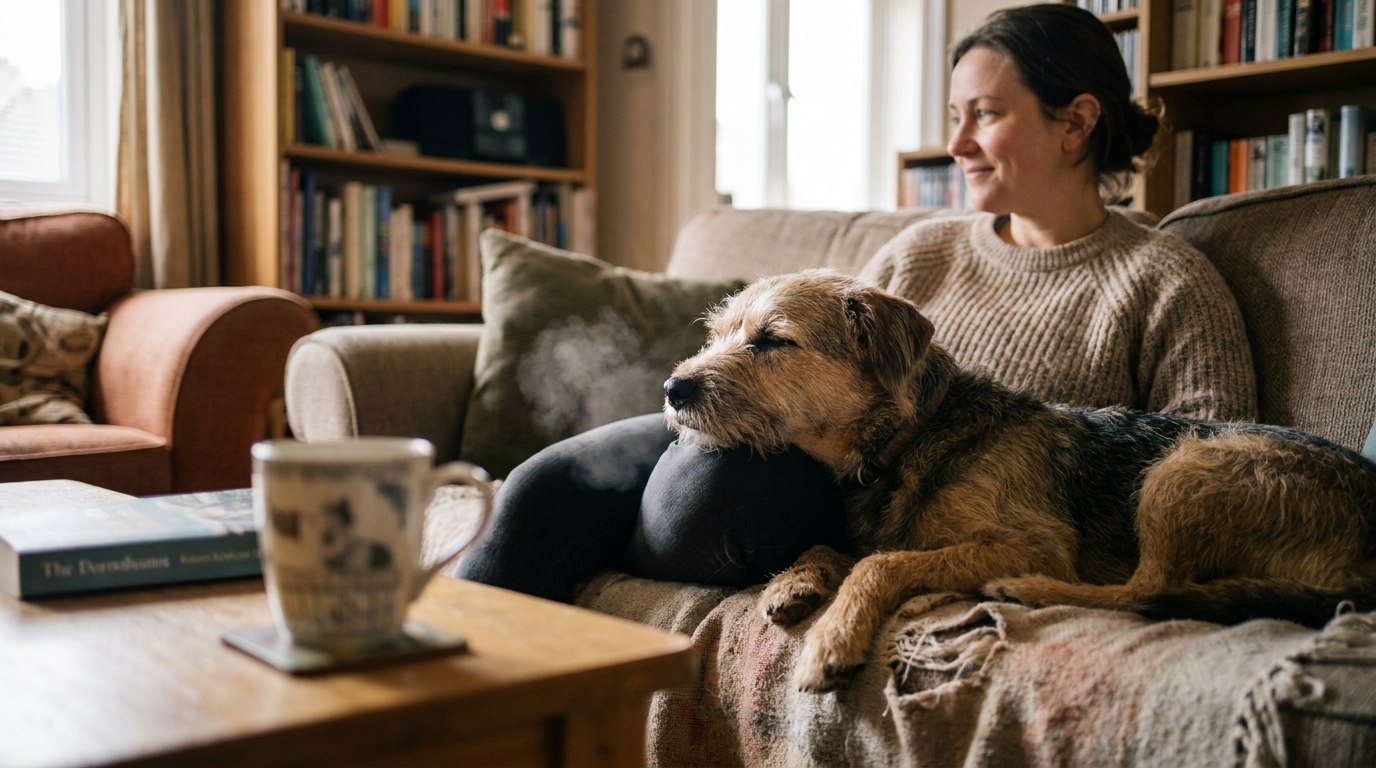
- Most calming signals are visible, but the sigh is audible—you don’t have to watch for it
- It’s one of the few behaviors that directly indicates parasympathetic activation
- The absence of a sigh is as informative as its presence
- It’s a reliable, repeatable sign of a dog’s baseline stress level
The Bottom Line
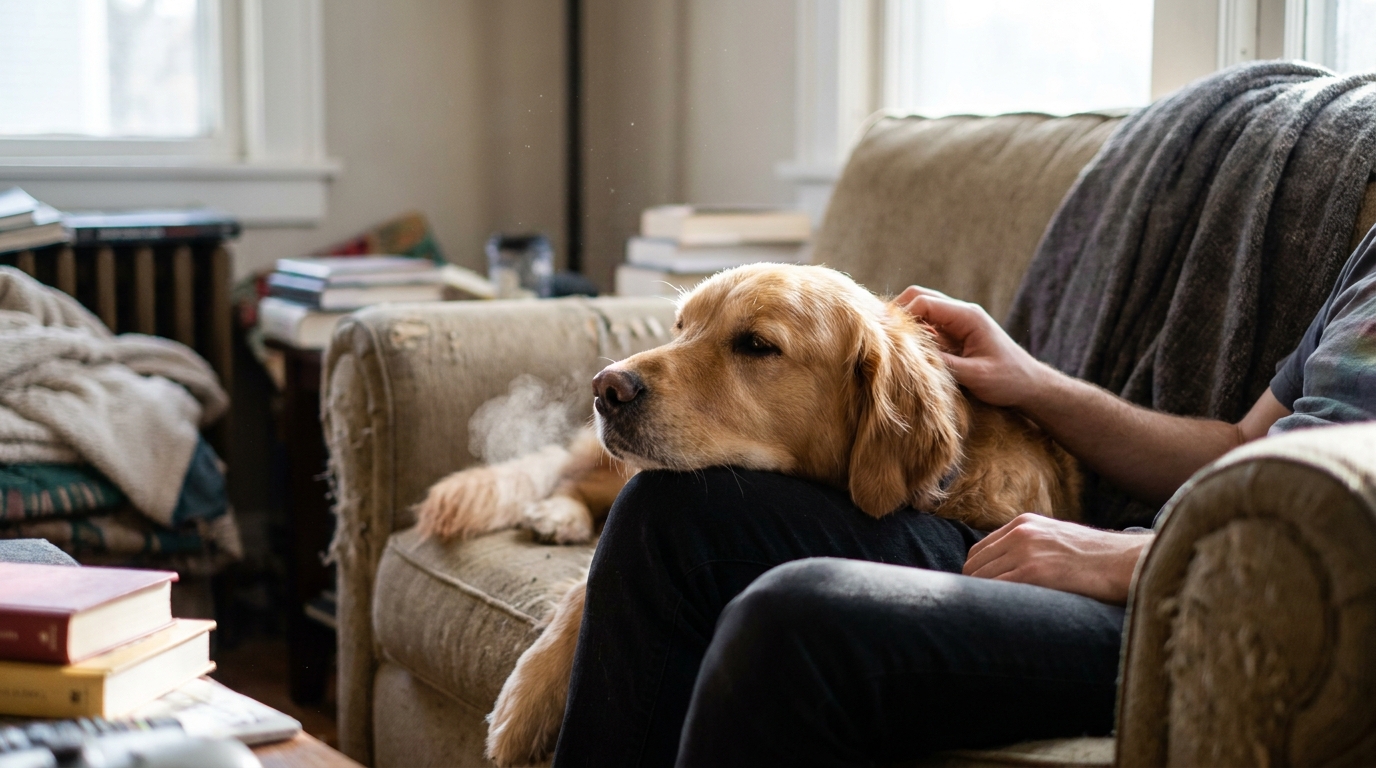
Your dog’s sigh when they lie down beside you is far more than a quirk or a moment of drama. It’s a measurable shift in their physiology, marking the transition from alert to at rest, and the sound itself tells you whether that shift is complete or interrupted.
The settling sigh—slow, deep, and paired with soft eyes and a still body—means your dog feels safe enough to let go. The displacement sigh—shorter, sharper, and followed by restlessness—means something interrupted them or left them mildly frustrated, and they’re complying with the moment rather than choosing it.
If your dog sighs and stays still, they’ve just told you the room feels secure.
The dogs that sigh most reliably are the ones that trust their environment and the people in it. If your dog has stopped sighing, or never started, it’s worth asking what’s keeping them from reaching that deeper rest—and whether a change in routine, environment, or support could help them get there.
Does your dog sigh every time they settle, or only in specific rooms or situations?
Bonus — One Simple Check That Reveals True Relaxation
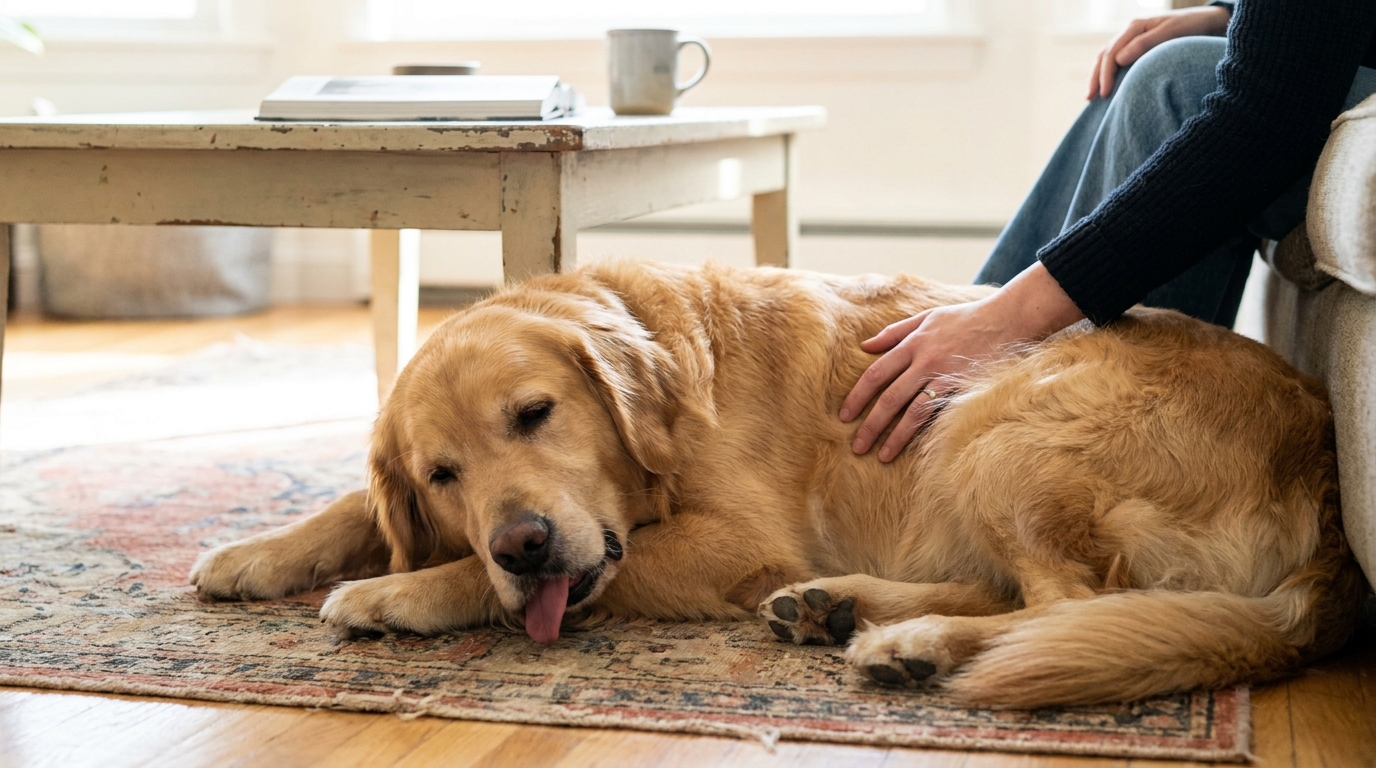
You don’t need a vet visit to tell whether your dog’s sigh means they’re genuinely calm or just going through the motions.
The next time your dog lies down and sighs, wait ten seconds and then run this four-point check. It takes less than a minute, and it tells you everything you need to know about whether that exhale landed or not.
- Watch their eyes: if they soften and the gaze goes distant within 10 seconds, the sigh was real.
- Check their breathing: if it slows to under 20 breaths per minute and stays steady, they’ve relaxed.
- Look at their ears: if they settle back or down from a forward position, the body followed the sigh.
- Note their stillness: if they don’t shift position or lift their head for at least a minute, they’re resting, not waiting.
If all four align, your dog is in genuine rest, and the environment you’ve created is working. If even one is missing—eyes still scanning, breathing still quick, ears still pricked, body still adjusting—they’re lying down but not letting go, and that’s the signal to look at what’s keeping them alert.
READER QUIZ
What Your Dog’s Sigh Really Means
What does a settling sigh indicate about a dog’s nervous system?
- It raises the heart rate temporarily
- It activates the parasympathetic nervous system
- It signals the dog is about to stand up
- It indicates hunger or thirst
How much more air does a sigh move compared to a normal breath?
- About the same amount
- Twice as much
- Roughly three times as much
- Five times as much
At what age do puppies typically start sighing consistently?
- Around 3 months
- Around 6 to 8 months
- Around 12 months
- Around 18 months
What does a displacement sigh usually signal?
- Deep contentment and happiness
- Frustration or mild conflict
- Hunger or need for water
- Preparation for play
What should happen within 10 seconds of a genuine settling sigh?
- The dog should stand up and stretch
- The dog’s eyes should soften and ears relax
- The dog should start panting
- The dog should bark or whine
How often does your dog sigh when lying down next to you?
- Every single time they settle
- Only in certain rooms or situations
- Rarely or never