
14 Things a Dog Rescue Learns About an Adopter in One Visit
Most people walk into a rescue thinking the visit is basically a formality – fill out the form, meet the dog, sign here, go home with a leash and a new best friend. That’s not what’s actually happening on the other side of the desk.
A trained rescue worker isn’t watching the dog nearly as much as they’re watching you. In one 45-minute visit, they can pick apart your stress responses, your marriage, your finances, and your honesty without ever asking a single blunt question. They’re not doing it to be nosy. They’re doing it because the wrong match ends with a scared, confused dog back in a kennel a few months later. Here’s what they actually clock while you think you’re the one doing the evaluating.
#1 – How You Really Handle Stress, Not Just How You Talk About It

Anyone can say they’re patient. Rescues have heard it a thousand times. What they’re actually clocking is what happens the second the dog doesn’t cooperate – the jump, the bark, the accident on the floor.
That’s when the mask slips. Staff have watched plenty of self-described “experienced” adopters snap “no” too loud or yank a leash the moment a dog pulls, and that single reaction tells them more than the entire application did.
Volunteers will sometimes test this on purpose. They might let a dog get a little too excited, or hand you the leash in a room full of distractions, just to see what you do next.
- Do you laugh it off and reset calmly?
- Do you tense up and get embarrassed?
- Do you blame the dog?
“He’s naughty” and “I’m not sure what to do yet” sound similar on the surface, but rescuers hear them as opposite ends of a spectrum – one is blame, the other is growth.
#2 – Whether You Respect Boundaries (Or Think Rules Don’t Apply to You)
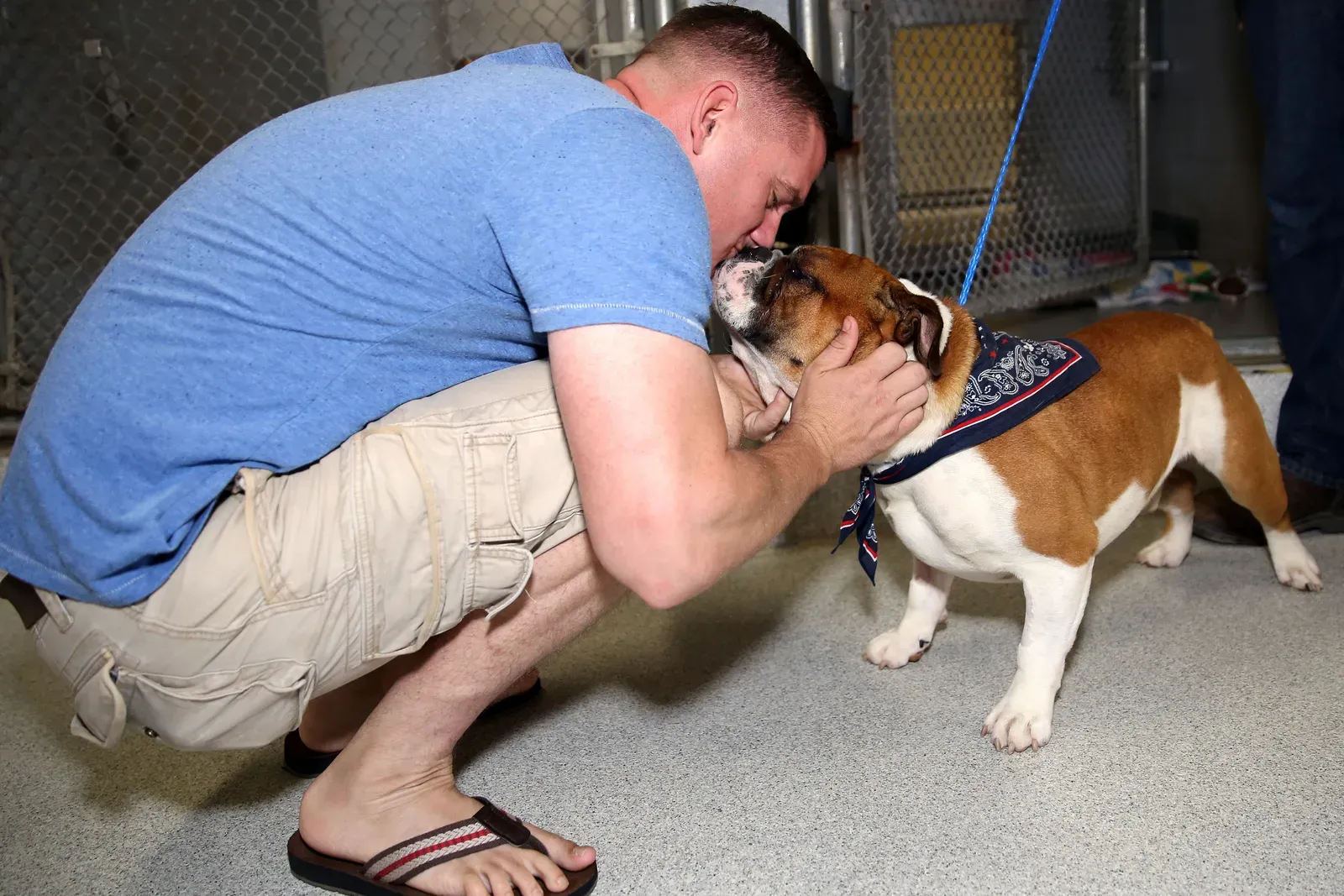
Every visit is quietly loaded with small boundary tests. “Please don’t put your fingers in the kennel.” “Let’s not pick him up yet.” “He’s on medical rest, no walks today.” Simple instructions, but the reaction to them says a lot.
Here’s the logic rescues have learned the hard way: someone who ignores a basic people-rule in front of staff will almost always ignore a dog-safety rule once they’re home alone with the animal.
Some adopters step back immediately and soften their tone. Others insist, “Dogs love me,” and reach in anyway. That second group is the one rescues worry about, because the same instinct to push past a boundary in the building tends to show up later as an off-leash walk near traffic or a “just this once” moment that goes wrong.
- Do they adjust instantly when corrected?
- Do they need to be told twice?
- Do they argue that the rule doesn’t apply to them?
Boundary-respecting people are the ones who use crates and gates correctly later, follow decompression timelines, and don’t treat “just this once” as a loophole.
#3 – Your Actual Lifestyle vs. the One You Think They Want to Hear

On paper, everyone sounds ideal. Active, responsible, home a lot. In person, rescues start quietly reconstructing the real version of your life from the small details you drop without noticing.
They’re not trying to catch you in a lie. They’re trying to match a dog to the life you actually live, not the one you’re describing to sound like a good candidate.
Listen to how differently these land: “Sometimes I’m on call for 14 hours” versus “I work a lot.” Or someone who claims to “hike every weekend” but can’t name a single local trail. Small contradictions like that tell staff you might be over-selling yourself.
- Your schedule and how rigid it really is
- Your actual energy level, not your aspirational one
- Your backup support – family, friends, a walker
A quiet senior dog can thrive with a busy schedule and a reliable walker. A young herding mix left alone ten hours a day cannot, no matter how good your intentions sound.
#4 – How Comfortable You Really Are Around Dogs’ Natural Behaviors

Everyone says they “love dogs,” but that phrase can mean anything from adoring a lap dog that never barks to genuinely thriving with a high-drive working breed. Rescues watch your micro-reactions to normal dog behavior – sniffing, licking, sudden barking, zoomies, even a growl over a toy.
A little startled reaction is normal. Constant flinching or nervous laughter tells them something different: that you might be out of your depth with a dog that isn’t soft and predictable.
Meanwhile, someone who turns sideways instead of staring down a shy dog, or calmly offers a toy instead of grabbing at a mouthy puppy, is broadcasting “experienced handler” without saying a word.
- Do you recoil at a lick or a sniff?
- Do you flinch at a sudden bark?
- Do you panic when a dog mouths your sleeve?
They’re not grading your training skills here. They’re reading your tolerance for the mud, slobber, and occasional growl that come standard with a real dog.
#5 – How You Talk About Your Past Pets (And What You Don’t Say)

Asking about your last dog isn’t small talk. It’s one of the strongest character reads a rescue has, because how you describe an animal you already had predicts how you’ll treat the next one.
They listen for ownership versus blame. “I didn’t know then what I know now” is a green flag. “That dog was impossible” with nothing else attached is not. Vague stories about a dog “running away” more than once, or a pattern of “giving away” dogs for fixable reasons like shedding or normal puppy energy, raise real concern.
A dog is the only thing on earth that loves you more than he loves himself.
Josh Billings
Staff also watch your emotional tone. Genuine sadness about a dog lost years ago shows real attachment capacity. A flat, dismissive tone about multiple animals rehomed or lost is much harder to explain away.
Worth Knowing
- Green flag: “I didn’t know then what I know now.”
- Red flag: A flat “that dog was impossible,” with no follow-up.
- Caution sign: Vague stories about a dog repeatedly “running away.”
- Caution sign: Multiple dogs “given away” for fixable habits like shedding or normal puppy energy.
#6 – The Real Family Dynamics Behind the Adoption
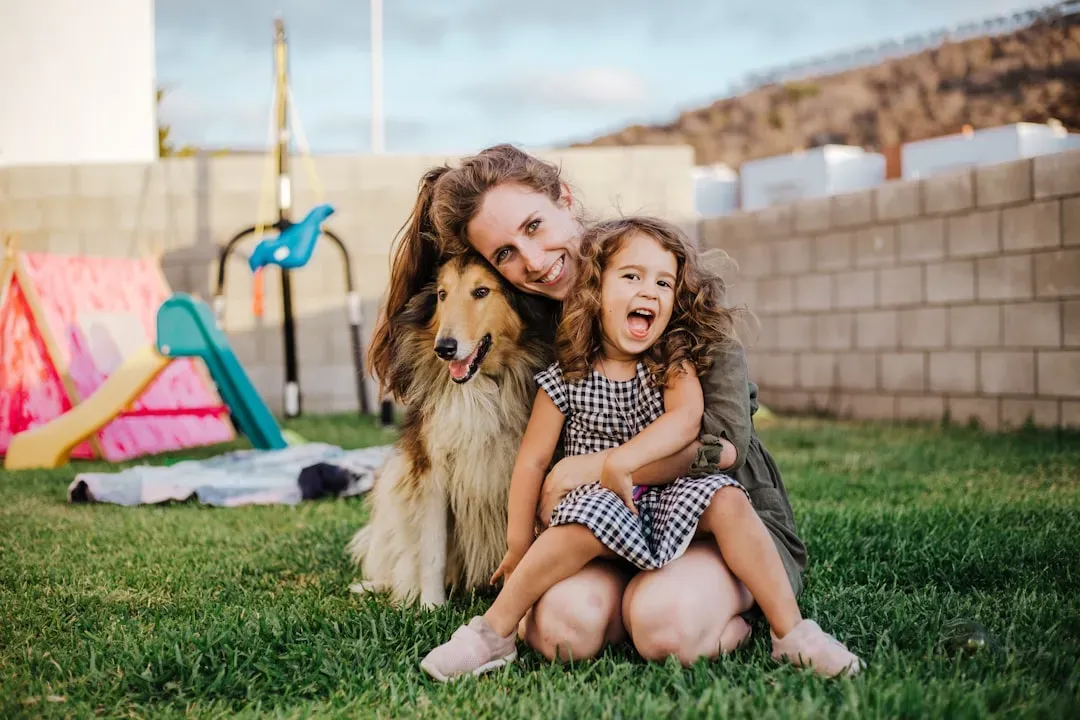
A dog doesn’t join one person, it joins an entire household culture – and rescues watch that culture play out in real time during the visit. Who speaks for the group? Who looks hesitant? Do kids actually listen when a parent says “give him space”?
One of the fastest routes to a returned dog is a “surprise” adoption pushed on a reluctant spouse or teenager. Staff have seen it enough times to spot it immediately – one person enthusiastic, one person clearly being dragged along.
- Does anyone roll their eyes at safety advice?
- Do the adults back each other up in front of the dog?
- Or does someone undercut the rules – “ignore him, he worries too much”?
Underneath it all, they’re really asking one thing: is this family aligned, or will this dog end up as one person’s unwanted chore? Even a perfect dog can’t survive a chaotic, misaligned household.
#7 – Whether You’re Curious and Teachable or Just Shopping for a Fantasy

The questions you ask might matter more than any answer you give. Good adopters are curious, not just charmed. Rescues quietly sort visitors by the kind of questions they ask.
- Consumer questions: “Is he good with kids? Does he shed?”
- Management questions: “What does she do when she’s stressed?”
- Partnership questions: “What’s working for you right now?”
The green flags are easy to spot – asking for a trainer recommendation, wanting to understand the decompression timeline, asking about breed tendencies without stereotyping.
The red flags are just as obvious: zero questions at all, like picking a couch instead of a living creature, or brushing off real explanations with “he’ll be fine once he’s with us.” Staff don’t expect you to know everything. They just need to see that you want to.
#8 – What Your Home Quietly Reveals About Safety and Stability

If a home visit happens, nobody’s judging your furniture. They’re scanning for safety and structure – is the fence actually secure, do the latches close, are doors prone to being left open, is there a chocolate bowl sitting on the coffee table?
The interesting part isn’t the hazard itself. It’s your reaction when it’s pointed out. “Good point, I’ll move that” lands very differently than a shrug or an argument.
- How organized you are for meds, vet visits, and training plans
- Whether you’ve already thought about crate or safe-zone placement
- Whether other pets in the home look healthy and relaxed
A lively, noisy home can still be a great home. Chronic chaos – doors that never close, constant arguing, unpredictable routines – is a different story entirely.
#9 – Your Patience Timeline: Are You In for the First 3 Days, 3 Weeks, and 3 Months?

Ask any rescue worker what actually causes returns, and most will say the same thing: the adopter’s patience ran out before the dog’s adjustment period did.
That’s why they listen closely to phrases like “we can deal with accidents for a while” versus “we need him trained now,” or “we’ll work through the barking” versus “no noise after 8 p.m., period.” These aren’t throwaway comments – they’re previews of what happens on week two.
Many rescues explain the well-known 3-3-3 rule: roughly three days to decompress, three weeks to start settling, three months to actually feel at home. Watch the reaction to that. Relief and understanding is one signal. Visible annoyance or shock is another.
Fast Facts
- Days 1-3: The dog decompresses – expect hiding, low appetite, or a flat affect.
- Weeks 1-3: Routines start to sink in and the dog’s true personality begins to show.
- Months 1-3: Trust solidifies and the dog finally settles into its real self.
- This is often called the “3-3-3 rule” – a rough map, not a hard deadline.
Underneath it all, they’re answering one quiet question: will this person call a trainer when things get hard, or call the rescue to give the dog back?
#10 – Whether You Understand the Real Cost of Dog Ownership

The adoption fee is the smallest number in this whole equation, and rescues know it. What they’re really gauging is whether you understand the years of food, vet visits, preventatives, and the inevitable emergency bill that lands at the worst possible time.
They’ll often ask how you’d handle a sudden $1,000 vet bill, or whether you’re open to pet insurance. Nobody needs to be wealthy – they just need some kind of plan, whether that’s savings, credit, or family backup.
- Yearly vaccines and checkups
- Monthly heartworm and flea prevention
- A budget for training if behavior issues show up
One quiet red flag staff notice: people who haggle hard over a modest adoption fee while casually mentioning an expensive hobby in the same breath. It’s rarely about the money – it’s about priorities.
#11 – Whether You Want *This* Dog or Just a Stereotype in Your Head
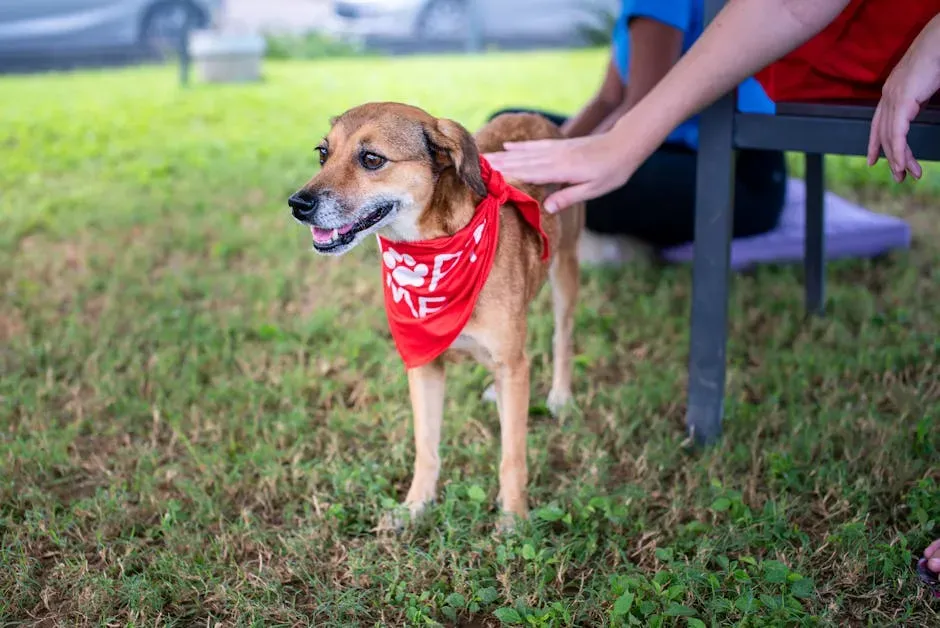
“We want a husky because they’re so pretty” tells a rescue almost everything they need to know. Preferences are normal. Rigid stereotypes built on looks alone are a warning sign.
There’s a real difference between “we’re drawn to shepherd mixes, but we’re open if you think another dog fits better” and “we only want a purebred [trendy breed], nothing else.” One is a preference. The other is a fantasy waiting to be disappointed.
Staff also quietly test realism. Ask for a dog that’s non-shedding, low-energy, great with kids, fully trained, never barks, and fine alone for nine hours, and they know you’re not describing a dog – you’re describing a stuffed animal.
- You ask about temperament more than looks
- You’re open to an adult or senior dog if the match is right
- You’re willing to adjust once you hear the dog’s real needs
#12 – How You React to Imperfections, Disclosures, and Hard Truths
Every rescue has to hand over the unflattering facts eventually: a bite history, separation anxiety, an unknown past, a looming joint issue. How you react in that exact moment is one of the clearest windows into whether you’re the right fit.
Problem-solvers ask what the issue looks like day to day and what’s been helping. Minimizers wave it away with “dogs just need love.” Deflectors change the subject the second it gets specific.
Quick Compare
- Problem-solvers: Ask what the issue looks like day-to-day and what’s helped so far.
- Minimizers: Wave off real concerns with “dogs just need love.”
- Deflectors: Change the subject the moment specifics come up.
Here’s the twist most people don’t expect: the best adopters aren’t always the ones who say yes to every challenge. Sometimes the best answer is, “I don’t think we’re the right home for a highly reactive dog” – said with respect, before anyone gets hurt. Rescues trust that honesty far more than a cheerful adopter who’s underestimating what’s ahead.
#13 – Your Attitude Toward Responsibility, Contracts, and Long-Term Commitment

Most people treat the adoption contract like paperwork to breeze through. Rescues watch that moment closely, because it reveals whether you see the document as a legal formality or a real moral commitment.
Mild pushback like “can you explain this clause?” is completely normal and even welcome. What actually worries staff is different: “Do we really have to call you if we can’t keep him?” or “What if we just give him to a friend instead?”
- Do you read the contract or sign blindly?
- Do you balk at microchipping or registration?
- Do questions come from understanding, or from resentment?
People who treat the contract as an annoying hoop are more likely to treat the dog as property. People who treat it as shared responsibility are the ones who actually call when life falls apart and they truly can’t keep the dog.
#14 – Whether You See a Dog as a Family Member or a Disposable Option

Underneath every question and every test, rescues are chasing one final answer: are you adopting a living, feeling family member, or a lifestyle accessory you can return the moment it clashes with your plans?
Nobody asks that outright. But your behavior answers it anyway. Do you get down on the dog’s level and respect it when he says no with his body language? Do you talk to the dog, or only about him, like he’s not in the room?
Language gives it away too. “If he doesn’t work out” sounds completely different from “when he comes home with us.” People who bring up old age, illness, and end-of-life care are thinking in decades. People who only talk about summer photos are thinking in months.
By the end of the visit, staff rarely make the call based on one dramatic moment. It’s the pile-up of tiny signals that decides whether this dog finally gets a forever home, or just another stopover on the way back to a kennel.
The Bottom Line

Rescues aren’t psychic. They’ve just watched thousands of adoptions go right and thousands go wrong, and patterns don’t lie the way people sometimes do. In one visit, a good rescue can tell whether you handle stress with patience, respect a boundary the first time it’s given, understand the real cost of a dog’s life, and are ready for a three-month adjustment instead of a three-day honeymoon.
Here’s the uncomfortable part: a lot of people want the idea of a rescue dog far more than they want the actual responsibility of one. That’s exactly why the good rescues are picky about who walks out the door with a leash in hand. They don’t owe anyone a dog. They owe the dog a home that won’t send it back.
If any of this felt a little too specific, a little too close to home, that’s not an accident. The best adopters were never the flawless ones – they were the honest ones, willing to be corrected, willing to learn, and willing to say no when the fit wasn’t right instead of finding out the hard way six months later.