
Injured Coyote is Rescued From Muddy Swamp in Long Island
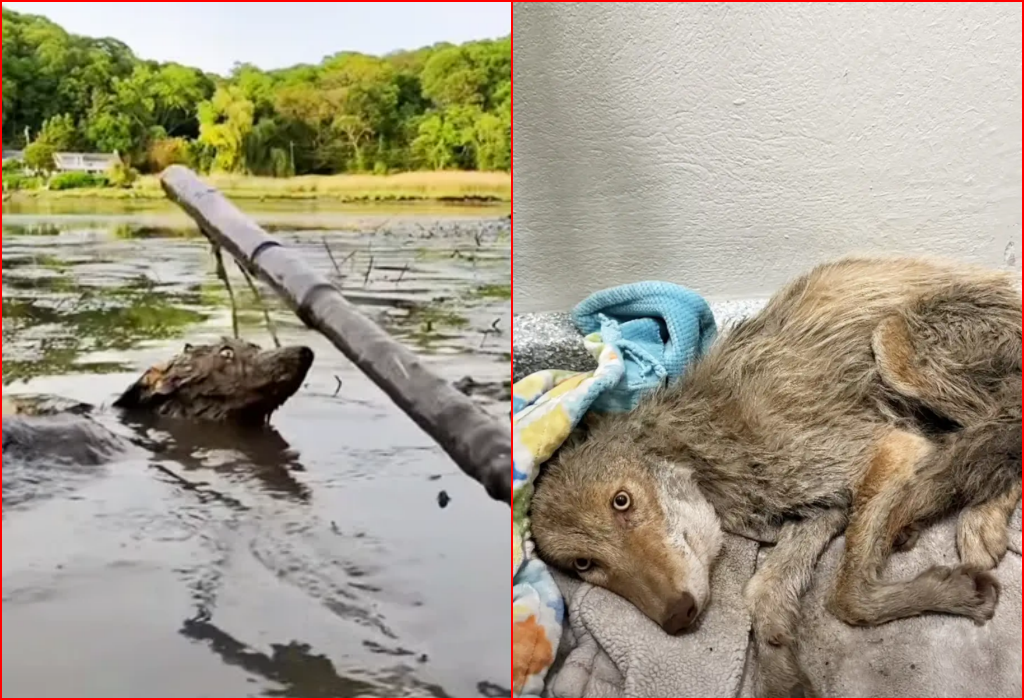
A dramatic wildlife rescue on Long Island has captured attention after an injured coyote was pulled from a nearly four-foot-deep mud hole where it had become trapped and was struggling to stay alive. The rescue took place on June 3 in St. James, New York, after local authorities received reports of a distressed coyote stranded in a swampy marsh.
By the time rescuers arrived, the situation had become critical. The exhausted animal had sunk deep into thick, quicksand-like mud and was barely able to keep its nose above the surface. Rescuers later described the scene as a race against time, with the coyote blowing mud bubbles through its nose just to continue breathing.
Rescuers Faced Dangerous Conditions To Reach The Animal
The rescue effort was coordinated by Strong Island Animal Rescue League and Sweetbriar Nature Center after receiving the emergency call. When teams reached the marsh, they discovered that the mud was nearly four feet deep and extremely unstable, making movement through the area both difficult and dangerous.
One rescuer entered the swamp and carefully navigated the shoulder-deep mud using branches and specialized equipment to avoid becoming trapped himself. Using a long hook and catch pole, he slowly worked his way toward the struggling coyote, which was continuing to sink deeper into the marsh.
Coyote Was Barely Hanging On
Video released by the rescue organizations showed just how dire the situation had become. The coyote’s head was almost completely submerged, with only its nose remaining above the mud. Rescuers said the animal appeared exhausted and was struggling to keep its airway clear.
After carefully securing the animal with a catch pole, rescuers gradually pulled it free from the mud. Working together, team members then placed the coyote into a net and transport carrier before rushing it to Sweetbriar Nature Center for emergency veterinary treatment.
Veterinary Examination Revealed Serious Injuries
Once safely at the wildlife rehabilitation facility, veterinarians discovered that the coyote was suffering from far more than exhaustion. Medical examinations revealed that the animal had a broken leg and several additional injuries believed to be consistent with a vehicle strike.
Wildlife experts believe the injuries likely prevented the coyote from hunting effectively, leaving it severely weakened and malnourished. The animal arrived emaciated and dehydrated, conditions that may have contributed to its inability to escape the marsh after becoming trapped.
The coyote is now receiving intensive care, including fluids, antibiotics, blood work, nutritional support, and treatment for parasites and other health concerns.
Long Road To Recovery Still Ahead
Although the coyote is now stable, wildlife rehabilitators say its recovery journey is only beginning. The broken leg will require surgery, followed by an extensive rehabilitation period before any release back into the wild can be considered.
Rescuers remain optimistic that the animal can eventually recover enough to return to its natural habitat. In the meantime, staff members continue monitoring the coyote around the clock while assessing its progress and response to treatment.
The rescue teams have also highlighted the importance of wildlife rehabilitation efforts, noting that coyotes are a natural part of Long Island’s ecosystem and play an important role in maintaining ecological balance.
A Rescue That Showed The Power Of Teamwork
For the rescuers involved, the operation was one of the most challenging wildlife rescues they have encountered. Between the unstable terrain, the depth of the mud, and the animal’s fragile condition, success was far from guaranteed.
Yet through determination, specialized training, and teamwork, the coyote was given a second chance at life. The dramatic images of the exhausted animal emerging from the mud have since resonated with animal lovers across the country, serving as a reminder that even wild animals in distress can inspire extraordinary acts of compassion.
For now, the coyote’s future remains uncertain, but thanks to the efforts of dedicated rescuers, it has a chance it likely would not have had just days earlier.