
14 Quiet Signs a Vet Uses to Judge Whether a Dog Is Happy
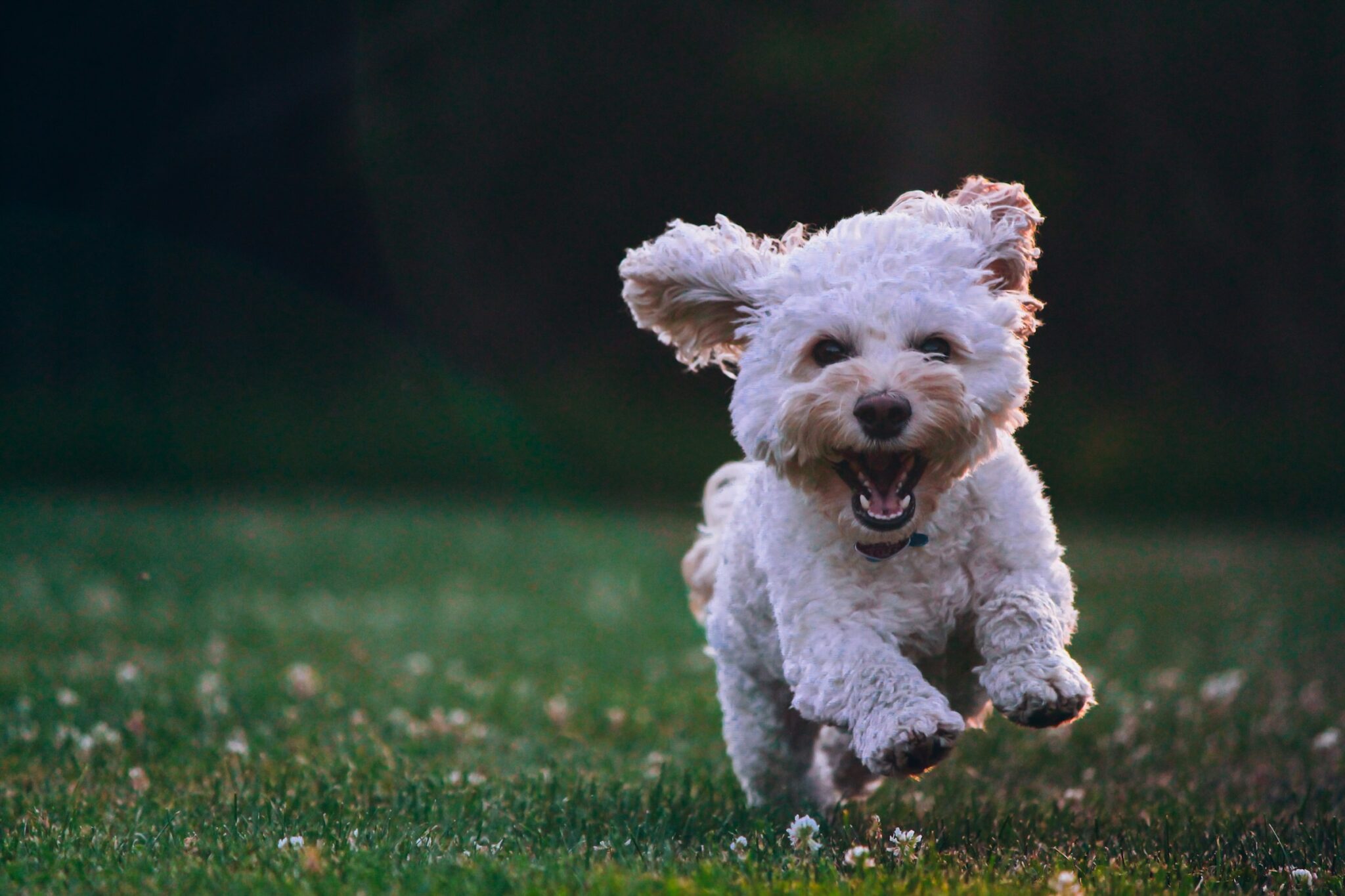
Most dog owners think they can read their pet’s mood in an instant – a wagging tail, a slobbery grin, done. But veterinary behaviorists say that’s often exactly backwards. That same wagging tail can signal fear just as easily as joy, and the goofy “smile” everyone loves might actually be a stress pant wearing a happy costume.
Vets never trust one signal by itself. They read a dog’s whole body as a single conversation – ears, eyes, weight distribution, posture – before they decide anything. Here’s what they’re actually watching for when they’re quietly sizing up whether a dog in the exam room, or curled up on your couch, is genuinely happy. And it starts with a body part most owners never think to check first.
#1 – The Eyes Give It Away Before Anything Else Does
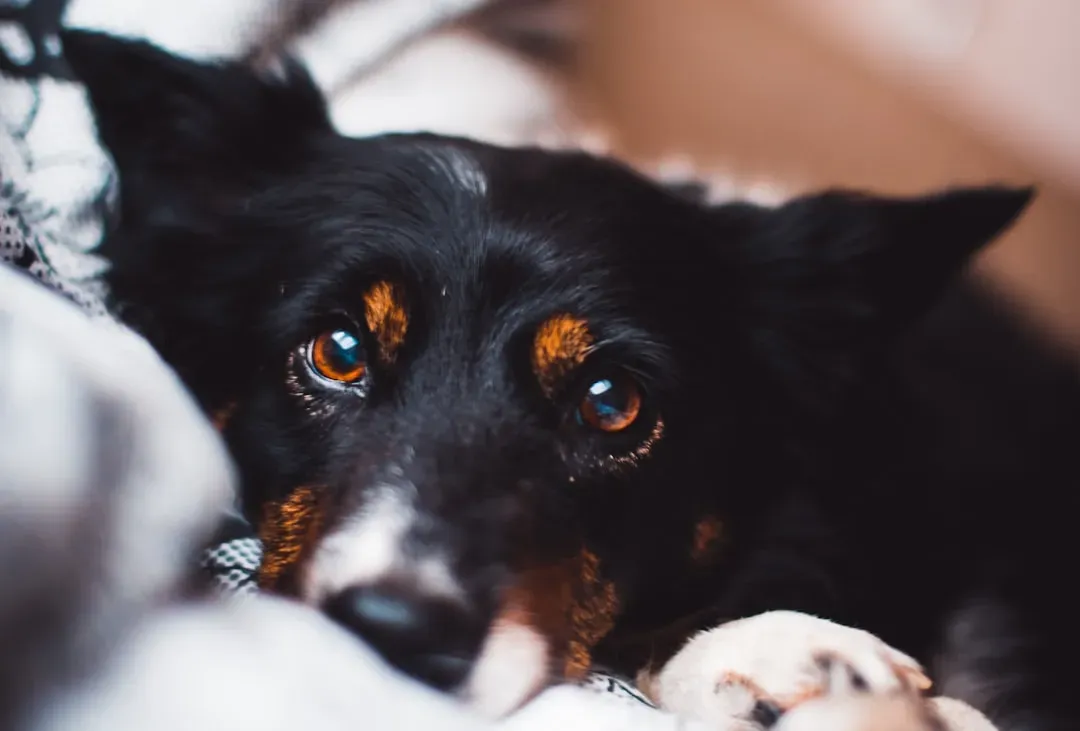
Vets check the eyes first because a dog’s face is harder to fake than its tail. When a dog is happy, their eyes and eyelids will be open and relaxed, their gaze will be soft, and they will blink often. That softness is the tell – not the size of the eyes, but the tension around them.
The opposite is a dead giveaway for stress, not happiness. Narrowed eyes and a hard gaze can indicate aggression, while wide eyes, particularly if the whites are showing, could mean your dog is frightened. Vets call this “whale eye,” and it’s one of the most reliable warning signs in the exam room.
Experts specifically warn against the wide-eyed look many owners mistake for excitement: “We definitely don’t want to see that ‘whale eye’ (also called wide eye and half-moon eye) where the whites of the eyes are being shown. We want soft, relaxed eyes.” That subtle softness is the tell most owners scroll right past. And it gets even more counterintuitive with the ears.
#2 – Relaxed Ears Beat “Perky” Ears Every Time
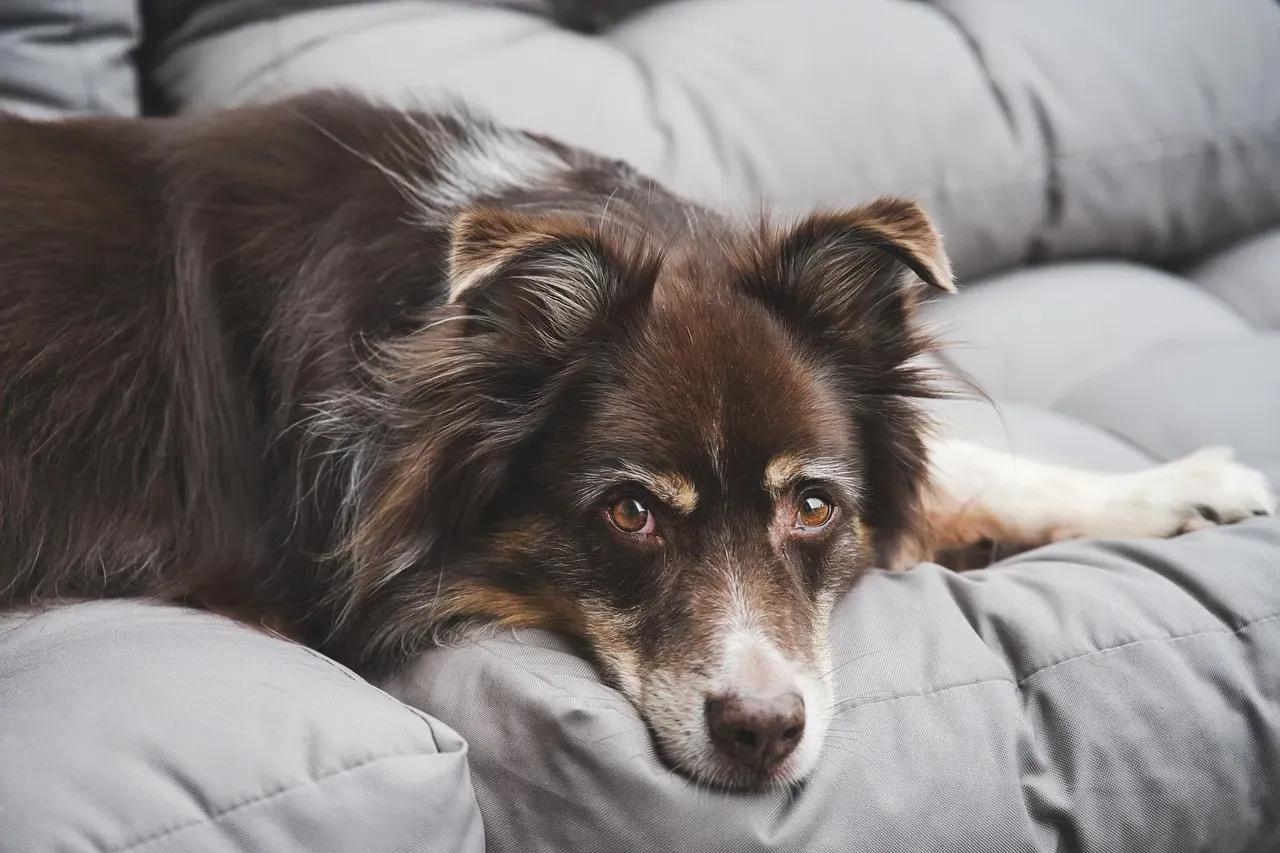
Most owners assume perked-up, forward-facing ears mean an excited, happy dog. Vets say that’s often the opposite of relaxed. Ears pricked sharply forward usually mean alertness or interest in something specific, not contentment.
Ear position is trickier than most charts suggest because it depends heavily on breed. Ear position can indicate how a dog is feeling, but this is hard to read since canine ears come in so many shapes and sizes – a relaxed ear on a German Shepherd or a Doberman won’t look the same as a relaxed ear on a Labrador. Vets simply want to see ears that look loose, not too tense, and not pinned backward or straining forward.
The real warning sign is tension, not position. If a dog’s ears are pulled back or stiff with hyper-alertness, that’s usually a sign of a stressed or fearful dog. A truly content dog’s ears just hang against the skull, floppy or soft, without any pinning or rigidity. That subtle looseness is exactly what trained eyes hunt for. Now brace yourself, because the tail – the one signal everybody trusts – turns out to be the least reliable of all.
#3 – The Tail Wag Everyone Gets Wrong
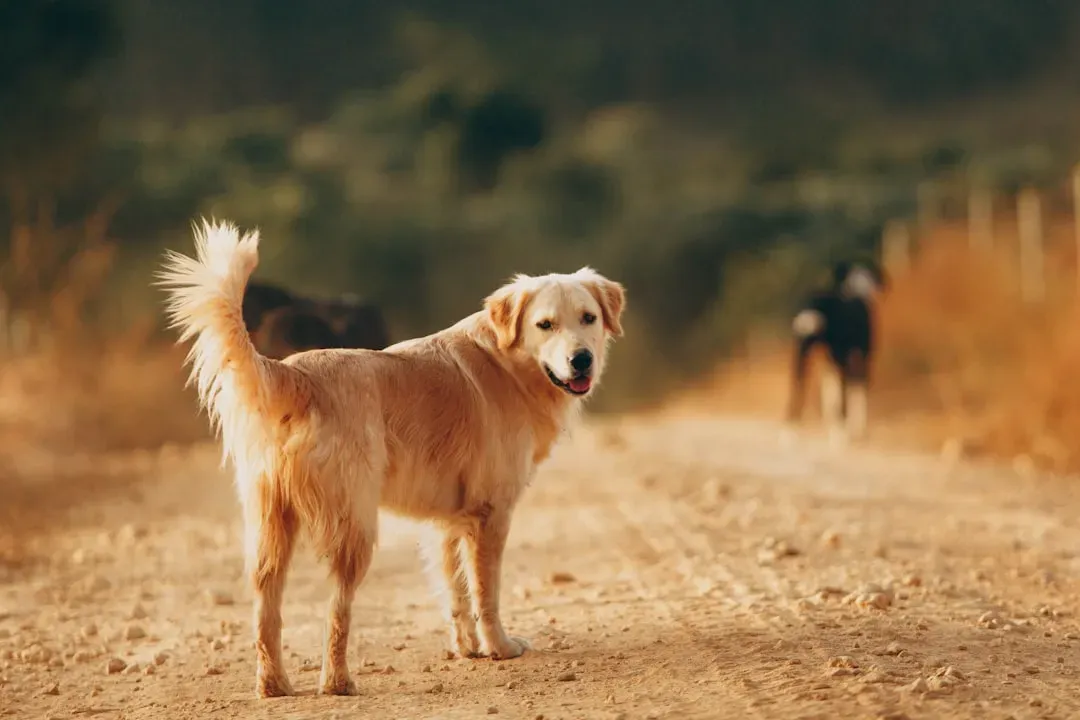
Here’s a controversial opinion vets keep repeating: a wagging tail is not proof of happiness. It’s proof of arousal – and arousal can mean joy, fear, or aggression depending entirely on the shape of the wag.
Speed and stiffness matter more than motion itself. If a dog’s tail is stiff, standing upright, and wagging rapidly or in short bursts, that might signal fear or aggression. A happily wagging tail, by contrast, is relaxed and makes broad strokes – slower broad strokes suggest shyness, while faster broad strokes suggest excitement. Even trainers admit this nuance gets lost constantly.
Quick Compare: Happy Wag vs. Warning Wag
- Happy wag: Loose, wide, broad strokes with the tail sitting near a relaxed, neutral height.
- Excited wag: Same broad, sweeping motion but faster, with a relaxed body behind it.
- Fearful or aggressive wag: Stiff, upright tail moving in short, rapid bursts.
- Shy wag: Slower, broad strokes paired with a lowered body posture.
The true happy wag has a specific shape vets look for: “Happy dogs tend to wag with the tail in a neutral position, which can vary by breed,” with “wide, loose swings and very little muscle tension.” Height matters too – a happy dog’s tail typically sits at a normal angle to the body, something close to 90 degrees, or just relaxed. That’s a lot more math than “wagging equals happy.” Up next is an expression almost every owner misreads completely.
#4 – The “Smile” That’s Actually a Warning Sign
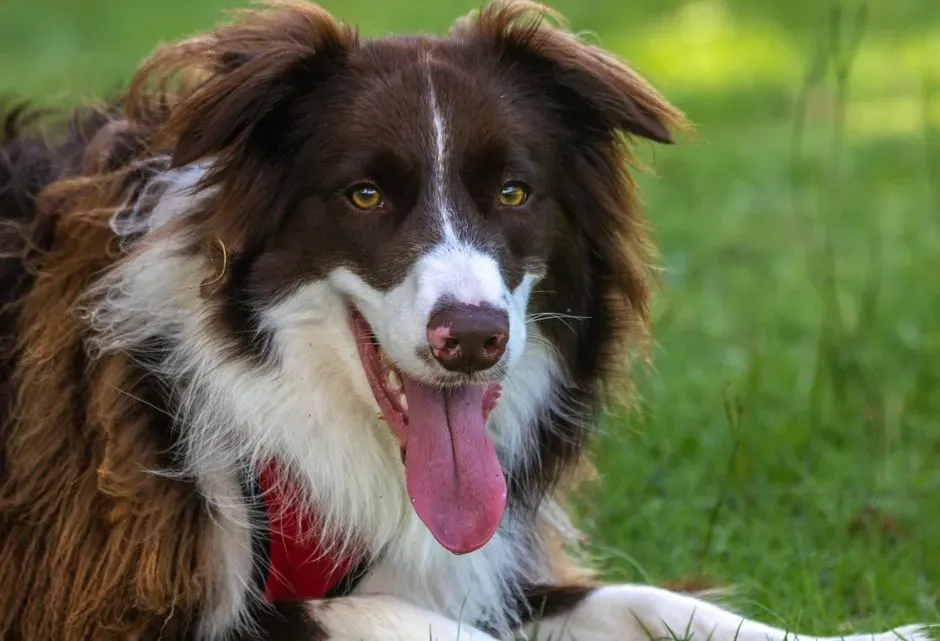
This is one of the more controversial facts vets bring up: the open-mouthed doggy grin everyone adores can secretly mean the opposite of happiness. Context is everything here, and most owners never bother to check it.
The genuine happy expression has specific features. A relaxed, open mouth with the tongue lolling to the side and soft, easy panting usually signals a dog who’s comfortable and at ease.
But that same open mouth can lie. What looks like a happy grin might actually be a stress response – panting because the dog is overheated, overwhelmed, or anxious. Vets tell the difference by checking jaw tension and breathing rhythm, not just whether the mouth is open. A soft, loose jaw with slow, easy panting reads as contentment; a tight jaw with rapid, shallow panting reads as distress. That’s the kind of detail most owners never think to check. The next sign has nothing to do with the face at all – it’s about how a dog stands.
#5 – How a Dog Distributes Its Weight Tells the Real Story
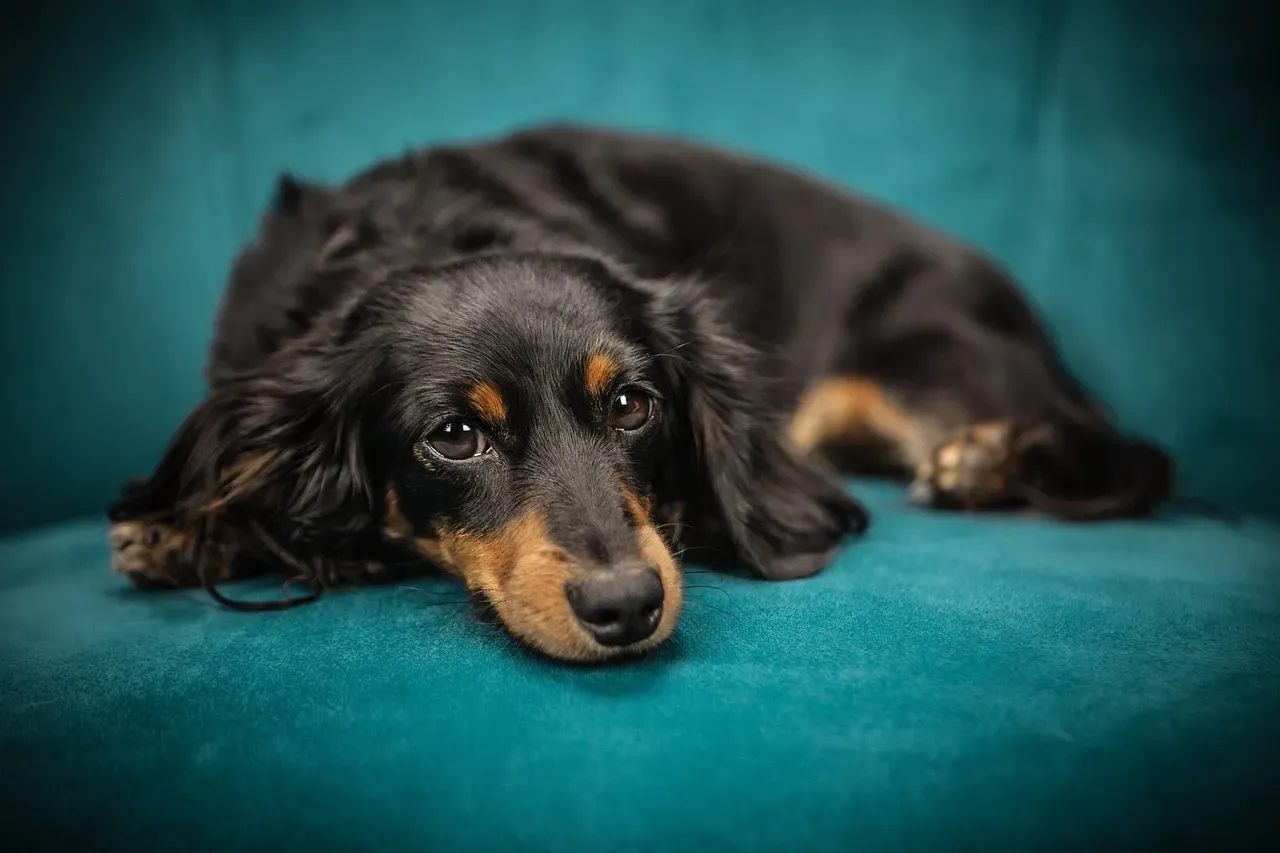
Here’s a sign most owners have literally never heard of, and vets use it constantly. Weight distribution across all four paws is one of the quietest, most reliable happiness indicators there is.
A veterinary source lays it out plainly: a dog’s weight should be evenly distributed on all four limbs – they shouldn’t be leaning back or standing with a paw raised. Leaning back suggests hesitation or discomfort; a raised paw often signals uncertainty rather than calm confidence.
The gold-standard image vets use internally is almost embarrassingly simple: “We can think of the dogs just laying out in the yard in the sun, just laying on their side with their body all relaxed – that’s, to me, a sign of a happy or content dog.” No tension in the limbs, no bracing, no readiness to flee, just gravity doing its job. That’s the opposite of the alert, weight-forward stance most people mistake for excitement. The next behavior, though, is the one vets say is almost impossible to fake.
#6 – The Play Bow Is the Universal “I’m Having Fun” Signal
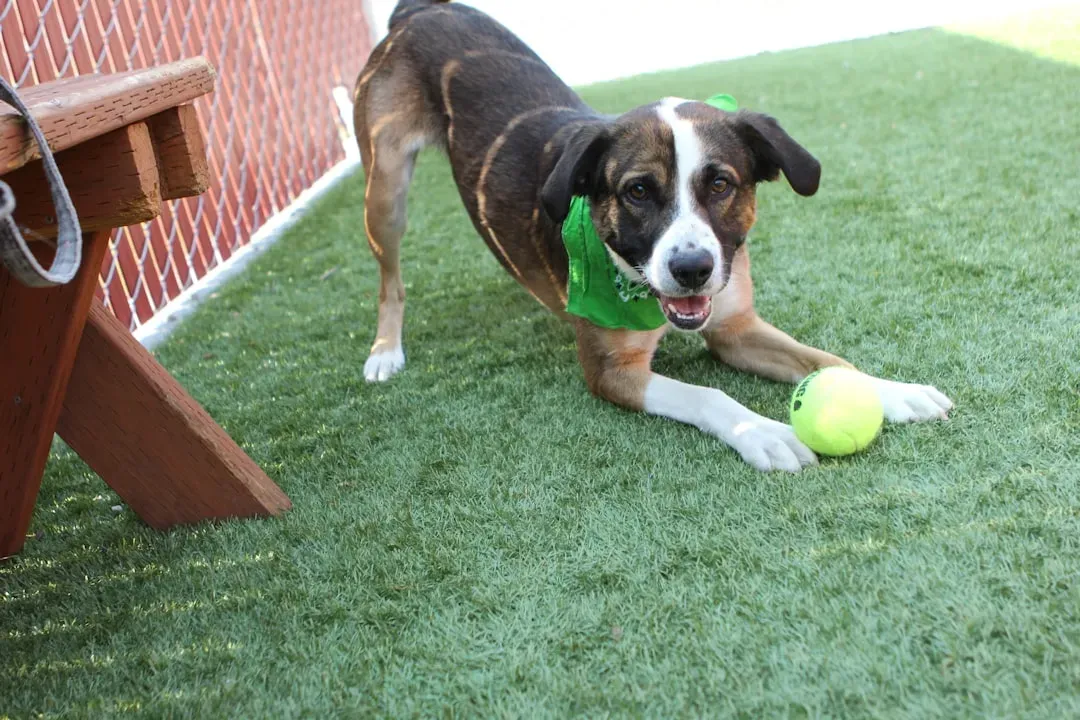
If there’s one gesture vets consider nearly impossible to fake, it’s the play bow. Front legs stretched forward, chest low, rear end in the air, tail going – it’s essentially a dog announcing good intentions before anything else happens.
Veterinarians specifically flag this posture as a marker of genuine wellbeing. A dog’s happy body posture is “relaxed, free of tension,” and if the dog is excited or engaged in play, “you may see a play bow or full-body wiggles.” It’s a deliberate invitation, not an accident of movement.
What makes the play bow especially trustworthy is that it looks almost identical across breeds, and even shows up in wild canids, meaning it’s baked into dog communication rather than trained into it. It says “everything I do next is playful,” which is why dogs use it before mock-chasing, before wrestling, and even before grabbing a toy a little too roughly. Vets rarely see it faked. That same looseness, it turns out, shows up in how a happy dog moves through an entire room.
#7 – When a Dog Moves Like “A Noodle,” Something Is Right
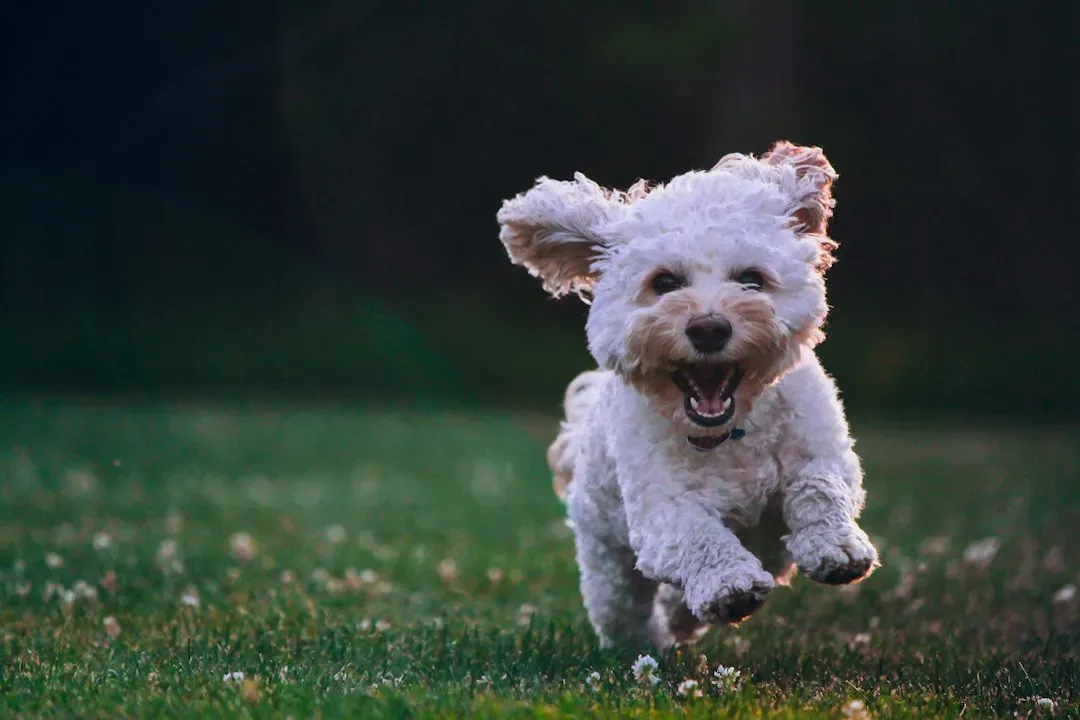
Veterinarians have an oddly specific but telling phrase for this one. A genuinely happy dog doesn’t just hold still calmly – it moves calmly too, with none of the stiffness that stress produces.
One veterinarian described it in strikingly casual terms: your dog is likely pretty happy if their movements are “loose and they look like noodles.” That looseness runs through the whole spine, not just the tail or the legs.
This ties directly into the full-body wiggles vets watch for during routine exams – a happy dog’s entire hindquarters can sway along with the tail, rather than the tail moving in isolation while the rest of the body stays rigid. Stiffness anywhere in that chain – shoulders locked, spine straight, legs braced – undercuts the “happy” reading no matter what the tail is doing. It’s a full-system check, not a single data point. Oddly enough, the next sign shows up when the dog is completely asleep.
#8 – Sleep Posture Reveals More Than You’d Expect
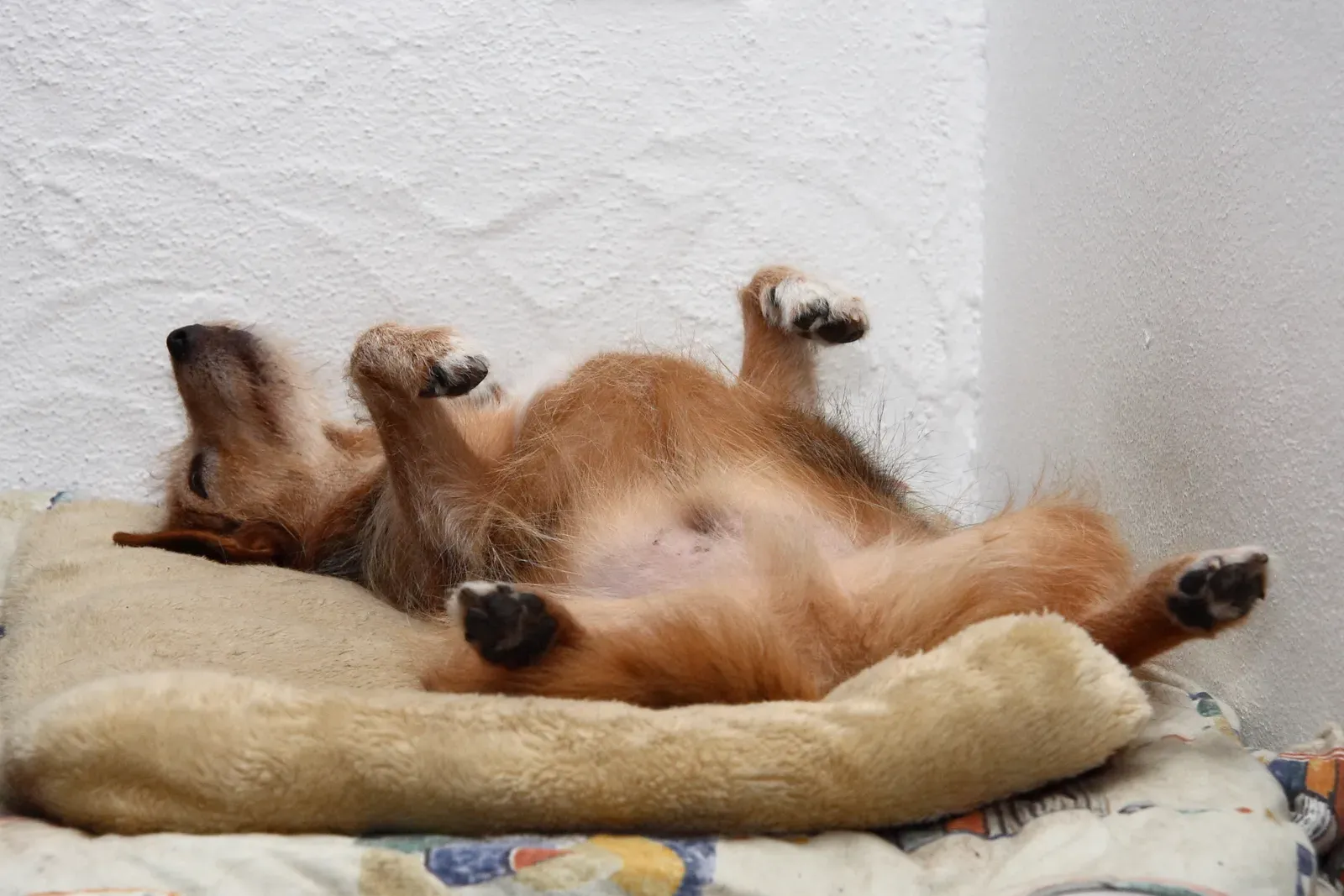
Here’s a sign most people never think to check, simply because it happens while the dog is unconscious. How a dog sleeps is one of the most honest signals of trust and contentment there is, because sleeping dogs can’t perform for an audience.
The posture vets look for is specific. A dog that sleeps belly-up with legs splayed, or fully stretched out on its side rather than curled tight, is showing one of the clearest physical signs of feeling safe. A dog curled into a tight ball, nose tucked, is still guarding itself even in rest.
Fast Facts
- Belly-up with legs splayed signals total trust and a fully relaxed nervous system.
- Fully stretched out on one side is another strong sign of feeling safe.
- A tight curl with the nose tucked means the dog is still guarding itself, even at rest.
- Sleep vulnerability is costly for any prey-adjacent species, so a relaxed pose is a real trust signal, not just a cute one.
This matters because sleep vulnerability is costly for a prey-adjacent species – a relaxed, exposed sleeping position means the dog’s nervous system has fully downshifted out of alert mode. Most owners assume any nap means a content dog, but vets say it’s the position of that nap that tells the truth. Awake, that same trust shows up in a much more physical way.
#9 – Leaning Into You Is a Bigger Deal Than It Looks
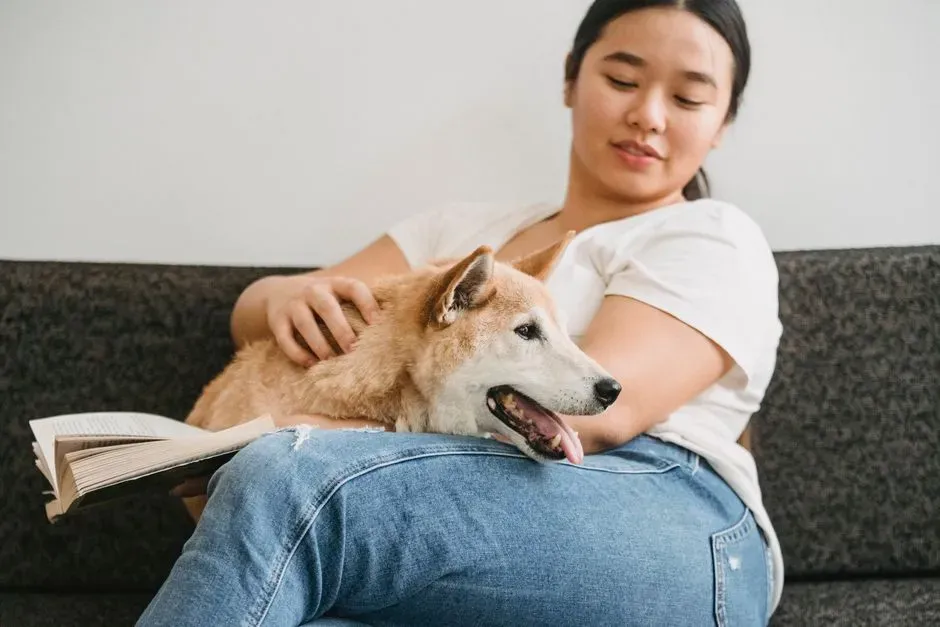
A slightly controversial but increasingly common vet opinion: leaning is a stronger trust signal than tail wagging. It’s rarely flagged on basic body-language charts, yet behaviorists treat it as one of the more meaningful gestures a dog offers.
The reasoning comes down to vulnerability. Consistent, relaxed leaning over time is one of the more reliable indicators of a secure bond between a dog and its owner, since it requires the dog to feel safe enough to lower its guard and physically commit its weight to another creature.
That’s a meaningfully higher bar than tail wagging, which can happen even around strangers or in mildly stressful situations. A dog that regularly presses its body weight against your leg on the couch, or leans in during a nail trim, is making a repeated, deliberate statement of security, not just reacting to a passing stimulus. Vets increasingly weigh this behavior heavily during temperament assessments. From there, trust shows up in an even stranger place – what a dog chooses to hand you.
#10 – Bringing You Toys Is a Social Signal, Not Just Play
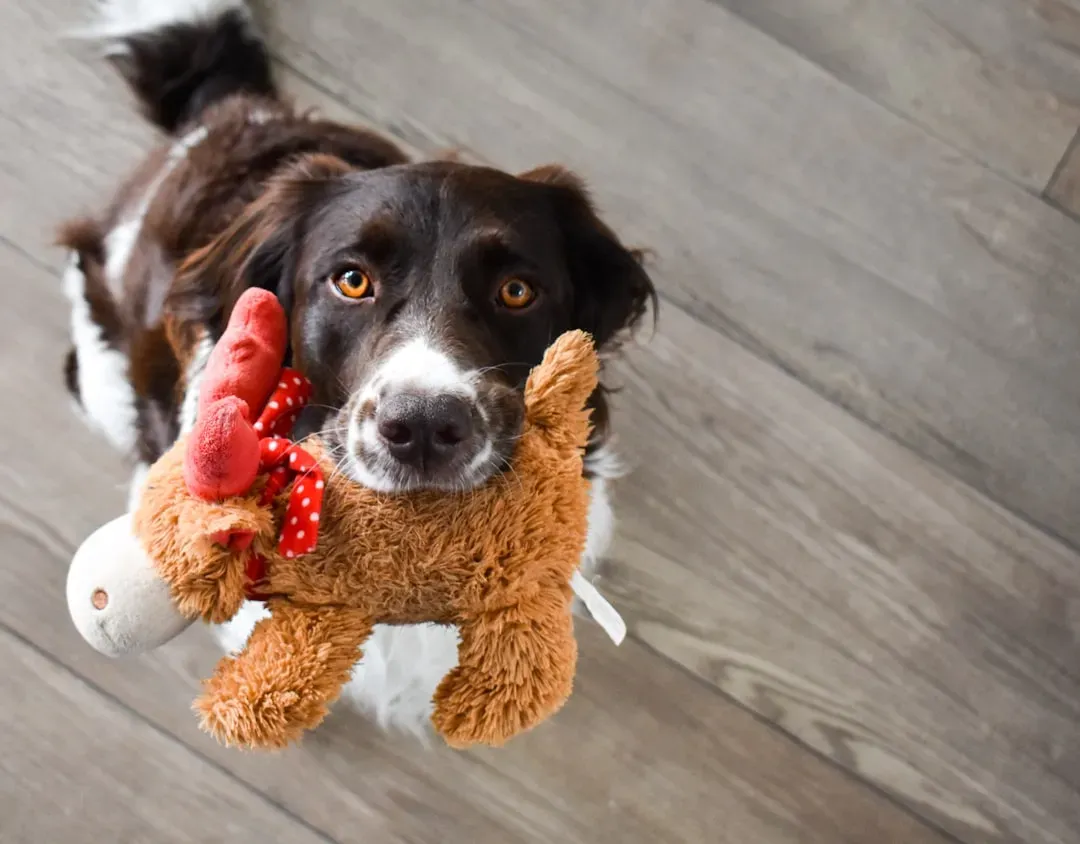
Most owners think a dog dropping a ball at their feet just wants a game of fetch. Vets frame it as something slightly deeper – a genuinely social, bond-driven gesture.
The behavior is rooted in connection, not just play. A dog that regularly brings a toy, ball, or other object directly to a person is engaging in a social, affiliative behavior rooted in a desire to interact, rather than simply offloading an item.
This is a distinctly different motivation than a dog simply carrying a toy around alone, which can be closer to possessive or self-soothing behavior. The act of choosing to deliver an object specifically to a person – repeatedly, across different toys and different days – signals that the dog sees that person as a meaningful partner in its daily routine, not just a food source. It’s a small habit that says more than most owners realize. The next sign is so quick most owners never catch it happening at all.
#11 – The Slow Blink Nobody Notices
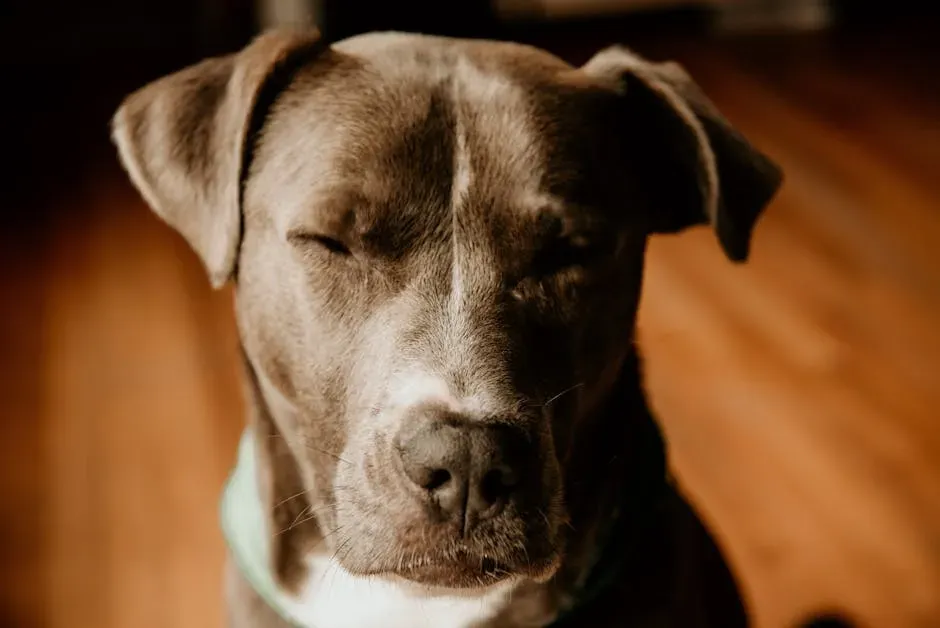
This is arguably the most overlooked happiness signal on the entire list, mostly because it happens in under a second and most owners are staring at the tail instead.
Vets describe it as a quiet echo of bigger, more obvious happy signals. A dog with soft, relaxed eyes and the occasional slow blink toward its owner is showing a low-key version of the same contentment that shows up more visibly in a loose tail or a play bow.
Worth Knowing
- Eye muscles are far harder for a dog to consciously control than tail or posture.
- A slow blink usually pairs with soft, relaxed eyes rather than a wide, alert stare.
- It typically happens in under a second, so most owners miss it entirely.
- Vets treat it as a small-scale echo of bigger signals like the play bow or a loose tail.
Because eye muscles are much harder for a dog to consciously control than posture or tail movement, this signal is considered unusually honest. It’s easy to miss during a quick glance, but it tends to be one of the more truthful signals a dog gives. A dog that slow-blinks at you across the room is essentially giving you a relaxed, trusting glance in slow motion. Vets take that same logic and apply it to a part of the face almost nobody thinks to look at.
#12 – The Forehead Test Vets Swear By
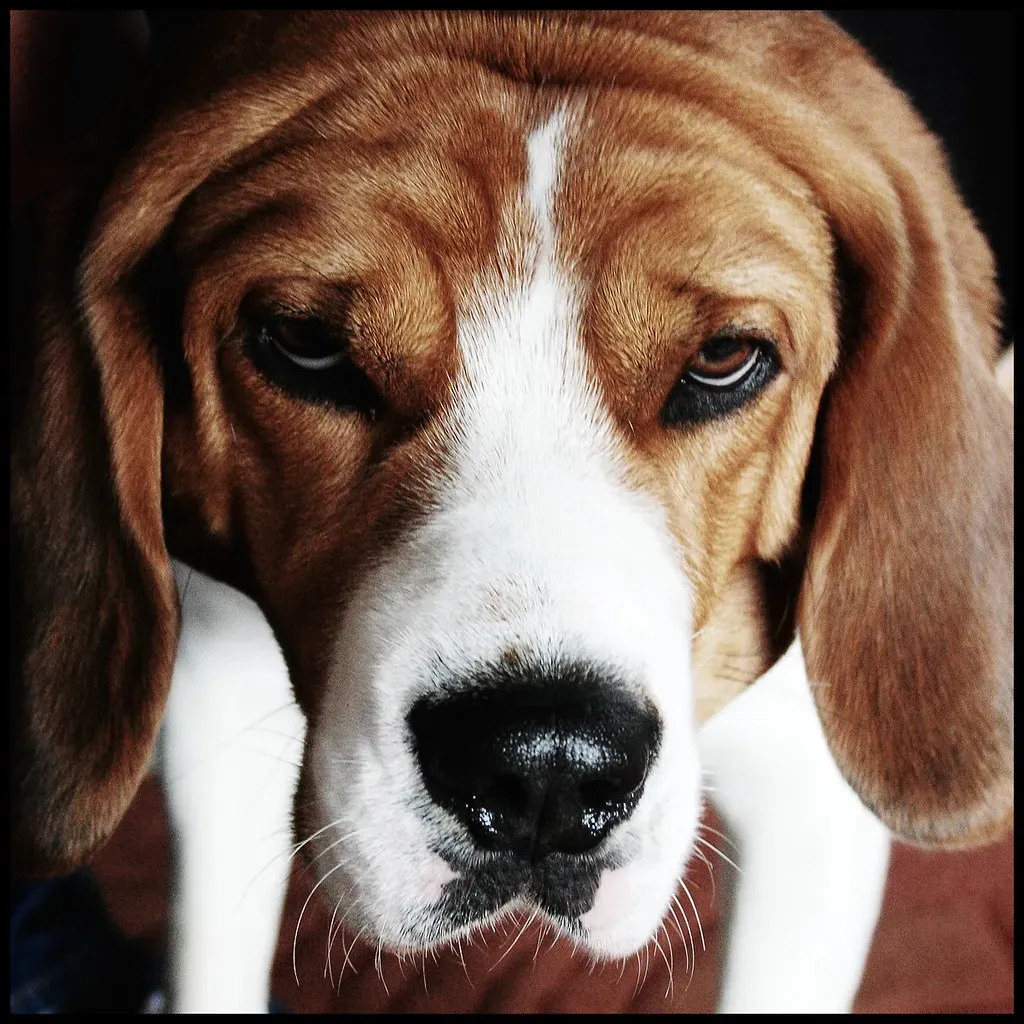
Most people have never once looked at a dog’s forehead to gauge mood – but vets do it constantly. A smooth brow versus a furrowed one can reveal stress long before the tail or ears ever change.
The signal is subtle but consistent. Furrowed brows, tightened muscles above the eyes, or a permanently raised inner brow can indicate stress even when the rest of the face looks neutral. A relaxed dog’s forehead, by contrast, is smooth, without the tight creasing that shows up when a dog is anxious, alert to a threat, or in pain.
This is exactly why vets rarely trust a single cue in isolation – a wagging tail attached to a furrowed brow tells a completely different story than a wagging tail with a smooth, relaxed forehead. Because facial muscles are subtle, this sign is most reliable when read alongside the rest of the body: a soft mouth paired with soft eyes, loose ears, and a relaxed tail gives a much clearer picture than the mouth on its own. That’s the layered thinking vets apply every single time. The next sign has nothing to do with the face, though – it shows up on walks.
#13 – Curiosity on Walks Is an Underrated Happiness Clue
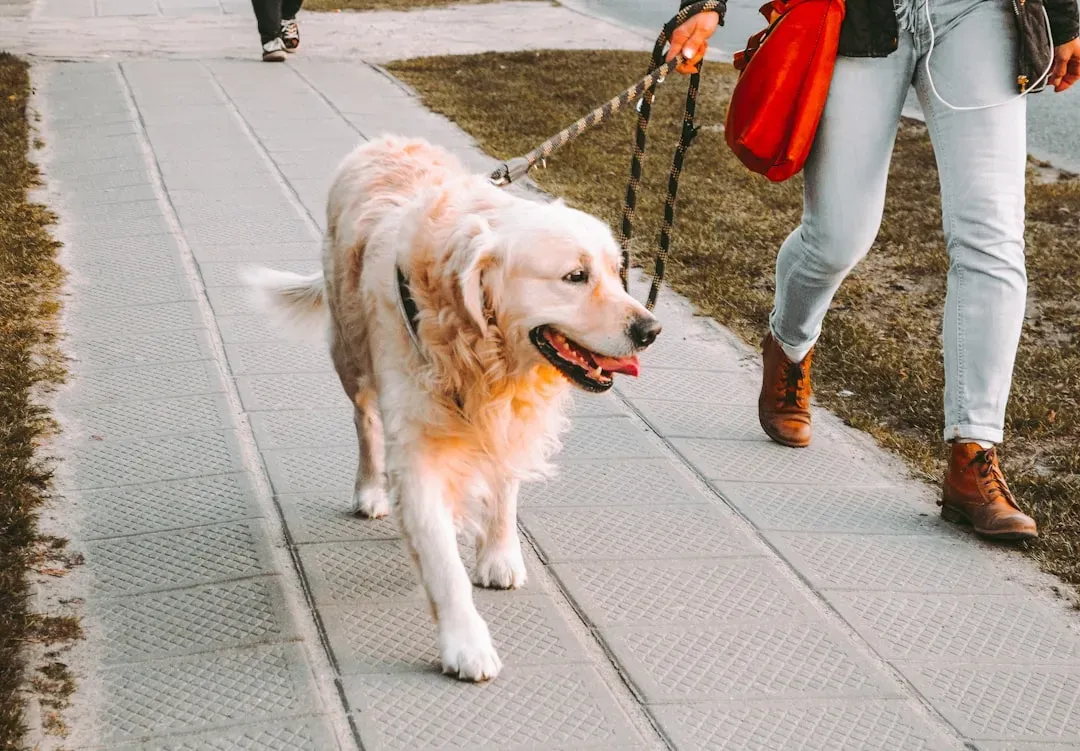
Here’s an opinion that might ruffle some feathers: a dog that ignores everything on a walk and just plods forward isn’t necessarily “well-behaved” – it might be under-stimulated or checked out.
Vets increasingly look at environmental engagement as a wellbeing marker, not just a training outcome. Behaviors like “the zoomies” and regular “check-ins” with an owner during walks are also indicators of a content, well-adjusted dog.
A dog that pauses to sniff, glances back at its owner periodically, and shows interest in new sights or sounds is displaying healthy mental engagement rather than anxiety-driven scanning. That kind of active curiosity – investigating a new toy, greeting a visitor with interest instead of avoidance – reflects a nervous system that feels safe enough to explore rather than shut down. Vets read a disengaged, head-down walking dog very differently than most owners do. But #14 saves the most joyful – and most misunderstood – behavior for last.
#14 – Zoomies Are Real Joy, But Only Sometimes
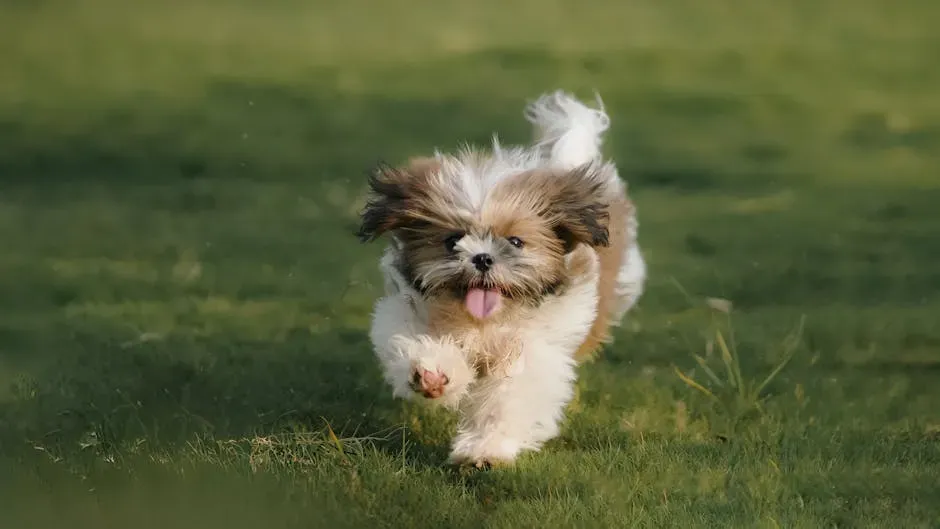
Zoomies are the most obviously “happy” behavior on this entire list, and yet they’re also one of the most commonly misread. That sudden explosive sprint around the yard can mean pure joy – or it can mean something else entirely.
Behaviorists are careful to separate the two. Zoomies are often happy and excited, but they can also be a way for a dog to release pent-up energy or anxiety. The context – what happened right before the sprint – matters as much as the sprint itself.
At a Glance
- Likely pure joy: Zoomies right after a fun game, a reunion at the door, or an exciting walk.
- Likely stress release: Zoomies right after a bath, a vet visit, or a long stretch of crating.
- Check the body: Loose, wiggly movement alongside the sprint points to celebration, not release.
When zoomies follow a bath, a stressful vet visit, or a long stretch of crating, they may be releasing built-up tension rather than pure joy. When they follow a fun game, a reunion at the door, or an exciting walk, they’re almost always a straightforward celebration. “The play bow, full-body wiggles, and zoomies” are often a sign of healthy dog play, according to veterinary sources – but vets always check the loose, wiggly body language alongside the sprint itself before calling it happiness rather than release.
The Bottom Line
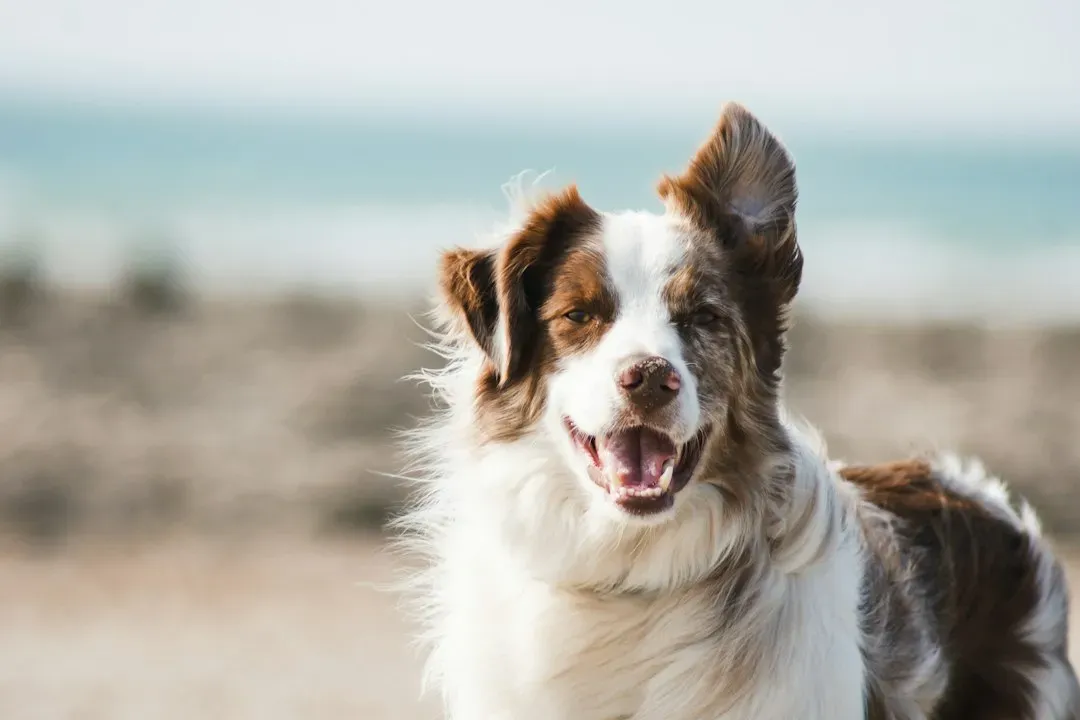
The biggest myth about dog happiness is that one signal – a wagging tail – tells the whole story. It doesn’t. Vets stack up soft eyes, loose ears, relaxed jaws, even weight distribution and forehead tension before making a call, because any single cue can be misread in isolation.
The most surprising takeaway is that sleep posture, slow blinks, and forehead tightness are quieter – and often more honest – than the big, obvious behaviors most owners obsess over. A truly content dog isn’t the one performing the most excitement; it’s the one showing the least tension, everywhere, all at once.
Go watch your own dog tonight with fresh eyes. Skip the tail for once, and check the forehead, the jaw, the way they sink into the couch. You might realize you’ve been reading them wrong for years.