
Why a Dog Refuses One Room in an Otherwise Ordinary House
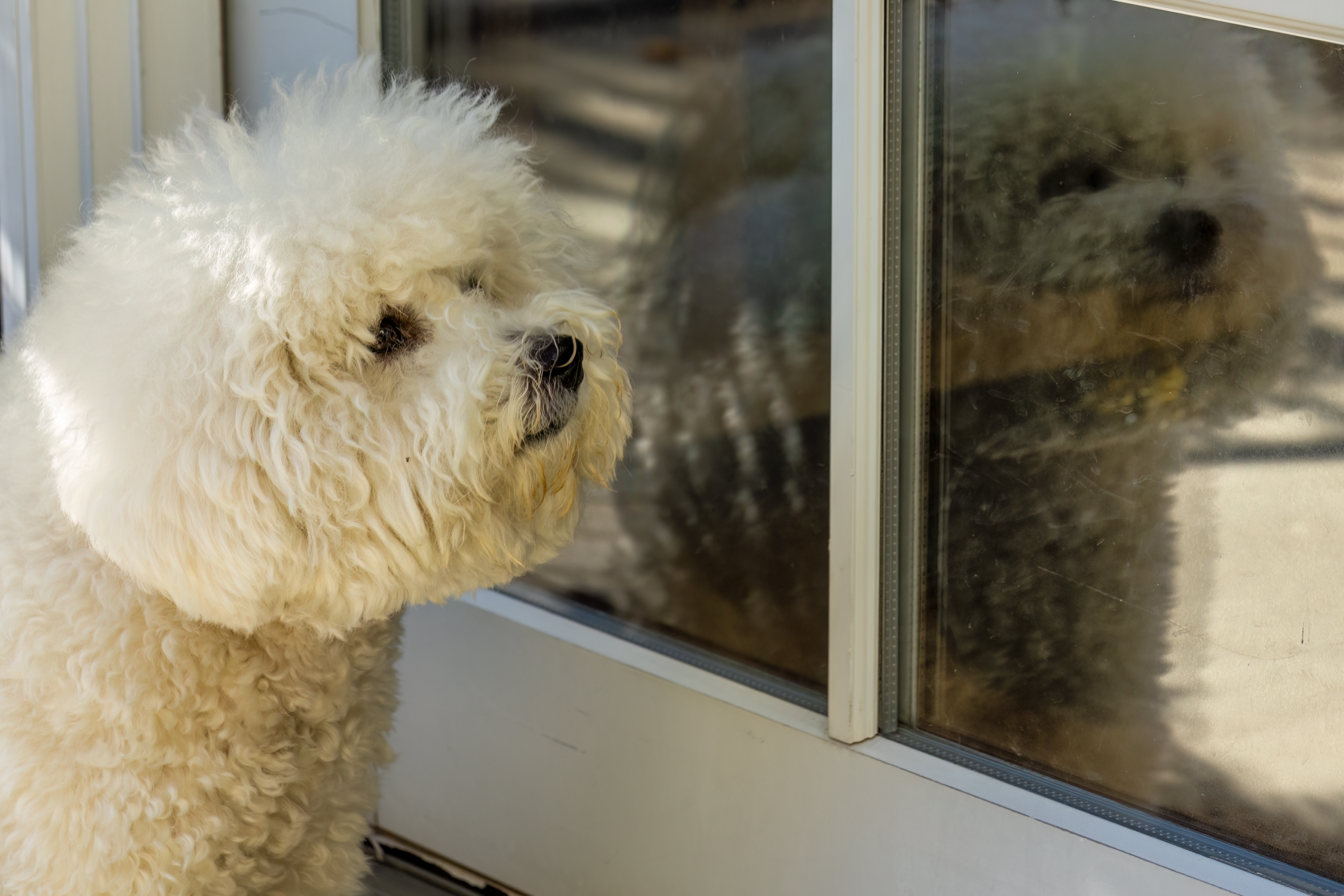
Picture this: a perfectly normal house, nothing haunted, nothing broken, nothing out of place. Except for one room. The dog walks toward it, stops dead at the threshold, and simply will not go in. Not with treats. Not with coaxing. Not even when its favorite human walks in first.
Most owners laugh it off as a quirky habit, but veterinarians, animal behaviorists, and even acoustic engineers say something very real is usually going on behind that refusal. It’s rarely random, and it’s almost never “just a dog being weird.” What follows are the twelve most credible explanations experts point to, ranked from mildly annoying to genuinely important, and the last one might make you rethink every time your dog has ever avoided a spot in your home.
#1 – The Ultrasonic Hum Humans Can’t Hear

A dog’s hearing range can stretch up to 65,000 Hz, compared to a human ceiling of about 20,000 Hz. That gap is enormous, and it’s often the first thing behaviorists check when a dog avoids a specific room with no obvious trigger.
Smoke detectors, older CRT-style monitors, certain LED dimmer switches, and even some Wi-Fi routers emit high-pitched electronic whines well above what we can register. To us, the room is silent. To a dog, it might be screaming.
Owners are frequently stunned to learn the “haunted” room in question is the one with the home office, the server closet, or the laundry room with an aging chest freezer humming in the corner. Turns out, it’s not the room. It’s the noise the room makes.
Fast Facts
- Dogs hear up to roughly 65,000 Hz; the human ceiling is about 20,000 Hz
- Silent dog whistles typically operate in the 23,000-54,000 Hz range, invisible to human ears
- Common household ultrasonic sources: smoke detectors, CRT-style monitors, LED dimmer switches, aging routers
- Puppies and younger dogs usually retain sharper high-frequency hearing than senior dogs
But that electronic whine is nothing compared to what might be hiding in the walls of reason #2.
#2 – Leftover Scent From Pests Long Gone

A dog’s nose contains up to 300 million scent receptors, compared to a human’s mere 6 million, making their sense of smell somewhere between 10,000 and 100,000 times more sensitive. That means a pest problem solved years ago can still leave behind a chemical signature strong enough to repel a modern-day dog.
Mice, termites, and even long-departed raccoons in a crawlspace leave pheromone trails and waste residue embedded deep in wood, drywall, and insulation. Exterminators may clear the infestation, but the scent molecules can linger far longer than most homeowners ever realize.
Dogs can detect concentrations of odor molecules in parts per trillion, a sensitivity so extreme it’s used in search-and-rescue and cancer-detection training. A room that “smells fine” to a family may reek of old rodent activity to the family dog.
Most owners never think to check the crawlspace – but what they find in reason #3 is even more surprising.
#3 – A Previous Pet’s Territorial Marking

Homes with a history – previous owners, previous tenants, or a previous dog or cat – often carry scent markers that never fully disappear, even after professional cleaning. Urine, in particular, bonds to porous materials like subflooring, grout lines, and baseboards in ways standard cleaning products can’t fully neutralize.
Dogs interpret these lingering scent signatures as territorial claims from another animal. Depending on temperament, that can trigger anything from curious over-marking to outright avoidance.
A submissive or anxious dog may refuse to enter a space it perceives as “already owned” by another animal, even one that hasn’t lived there in years. This is especially common in older homes or recently purchased properties where the new owners have no idea about the pet history.
It’s not a haunting. It’s a chemical memory. And a strong one – but static electricity might explain even more cases than scent does.
#4 – Static Shock From Certain Flooring

Rooms with synthetic carpet, especially in dry climates or during winter months when indoor heating runs constantly, can build up significant static charge. Every time a dog walks across that surface, tiny shocks may occur – invisible to humans but sharply felt through paw pads.
Dogs that experience even one uncomfortable static shock often develop a lasting aversion to that specific flooring or room, sometimes after just a single incident. This is a classic case of one-trial learning, where animals form strong associations from a single negative event rather than repeated exposure.
Owners often notice the pattern is seasonal – a dog may happily enter a room in summer but refuse it entirely once the heater kicks on and humidity drops. If your dog’s avoidance seems to come and go with the weather, static could be the invisible culprit.
But temperature itself, not just static, plays its own dramatic role in reason #5.
#5 – The Cold Spot Your Dog Feels But You Never Will

Dogs are remarkably sensitive to subtle temperature shifts, partly because their body temperature regulation differs significantly from ours. A basement room that feels merely “cool” to a person might feel genuinely uncomfortable to a dog, especially breeds with short coats or low body fat.
Cold drafts from poorly sealed windows, uninsulated exterior walls, or gaps around old doors can create a temperature difference of several degrees that humans barely register but dogs actively avoid. Similarly, attic rooms or spaces near HVAC returns can trap uncomfortable heat that makes a dog choose literally anywhere else to lie down.
This is one of the more mundane explanations, but it’s also one of the most common – and easiest to fix with a draft stopper or a space heater.
Mundane, though, is not the word for what’s happening in reason #6.
#6 – A Frightening Memory Tied to That Exact Spot

Dogs are exceptional at associative learning, meaning they connect specific locations with specific emotional experiences. If a dog was scolded harshly in a room, startled by a loud noise like a dropped pan or a vacuum cleaner, or experienced pain there – a nail trim gone wrong, for instance – that room becomes permanently tagged as “unsafe” in the dog’s memory.
This kind of location-based fear conditioning can last for years, even after the triggering event is long forgotten by the humans involved. Behaviorists call this “single-event learning,” and it’s remarkably resistant to correction without deliberate counter-conditioning.
The tricky part is that owners rarely remember the triggering incident, especially if it happened months or years earlier. The dog remembers. The room remembers, in a sense. The humans usually don’t.
Reason #7 takes this fear-based theory and adds a reflective twist.
#7 – The Reflection That Looks Like an Intruder

Rooms with large mirrors, glossy furniture, or floor-to-ceiling windows at night can create confusing visual reflections that unsettle some dogs, particularly puppies or older dogs experiencing early cognitive decline. Unlike humans, dogs don’t automatically understand that a reflection isn’t another animal.
A dog catching its own reflection unexpectedly – especially in dim lighting – may interpret it as an unfamiliar dog invading its territory, triggering either aggressive posturing or, more commonly, complete avoidance of the room. This reaction tends to fade with repeated safe exposure, but some dogs never fully adjust.
Senior dogs are particularly prone to this due to declining eyesight and cognitive changes, making a once-familiar room suddenly feel foreign and threatening.
Worth Knowing
- Canine cognitive decline typically becomes more noticeable in dogs over age 10
- Common signs include disorientation, disrupted sleep patterns, and increased anxiety in familiar spaces
- Reflection-related fear usually eases with slow, low-pressure reintroduction to the room
- Punishing the avoidance tends to backfire and can deepen the fear instead of resolving it
Vision confusion is strange, but what dogs pick up through vibration in reason #8 is even stranger.
#8 – Vibrations From Plumbing or HVAC Systems
Dogs feel vibration through their paws far more acutely than humans do, thanks to specialized sensory structures in their feet and legs. A room positioned near main water lines, sump pumps, or HVAC ductwork can transmit low-frequency vibrations that hum constantly, even when the system seems “off” to human ears.
Older homes with cast iron plumbing or aging HVAC compressors often produce a subtle rhythmic vibration that dogs find genuinely distressing, even with no audible sound present. This is especially common in laundry rooms, utility closets, and rooms built directly above a furnace or water heater.
Because the sensation is constant rather than occasional, dogs may simply learn to avoid the room entirely rather than tolerate ongoing discomfort.
As unsettling as constant vibration sounds, chemical residue in reason #9 might be worse.
#9 – Embedded Cleaning Chemicals or Mothball Residue

Certain cleaning products, particularly ammonia-based formulas, bleach, and older mothball treatments, leave behind scent residues that can remain detectable to a dog’s nose for months or even years after application. What smells “clean” to a human nose can smell overwhelming or irritating to a dog.
Mothballs, in particular, contain naphthalene, a compound with an intensely sharp odor that dogs find genuinely unpleasant even in trace amounts long after the mothballs themselves are gone. Storage rooms, closets, and attics are the most common offenders, since these are the spaces most likely to have been treated for moths or pests in the past.
Owners renovating older homes are often surprised to discover their dog refuses a newly finished room – not because of anything visible, but because of what was sprayed there a decade earlier.
Chemical memory is powerful, but faulty wiring introduces a whole different kind of invisible threat in reason #10.
#10 – The Buzzing Only Your Dog Notices Before the Electrician Does

Dogs can detect the faint buzzing sound produced by failing electrical connections, flickering fluorescent bulbs, or overloaded circuits – frequencies that often fall just outside typical human hearing range. This buzzing, while barely noticeable to people, can be a constant low-grade irritant to a sensitive canine ear.
In several documented cases, dogs avoiding a specific room turned out to be the first warning sign of an electrical fault later confirmed by an electrician, making the dog’s refusal an unintentional but valuable safety signal. Flickering lights, warm outlet covers, or a faint burning smell are often present alongside the buzzing, even if homeowners hadn’t consciously noticed them.
This is one of the rare cases where a dog’s stubborn refusal isn’t quirky behavior. It’s a legitimate early warning system.
Quick Compare
- Normal: a faint, consistent hum from a transformer or dimmer switch that’s always been there
- Warning sign: new buzzing that wasn’t present before, especially near an outlet or panel
- Normal: occasional light flicker during a storm or power surge
- Warning sign: warm or discolored outlet covers, a burning smell, or frequent breaker trips
As useful as that warning sounds, reason #11 covers flooring discomfort that’s purely physical.
#11 – Slippery or Uncomfortable Flooring

Hardwood, tile, and laminate flooring can be genuinely difficult for dogs to navigate confidently, particularly for larger breeds, senior dogs, or dogs with joint issues like early arthritis. A single slip-and-fall incident on a slick floor can create lasting hesitation about entering that room again.
Dogs that have slipped once on hardwood or tile often develop a cautious, stiff-legged gait or refuse the room entirely, even after the floor has been treated with rugs or traction strips. This is especially common in dogs with short fur on their paw pads, which offers less natural grip than breeds with thicker paw fur.
Age plays a major role here too. Younger dogs tend to recover confidence faster, while senior dogs may develop a permanent aversion after just one bad experience.
None of these compare, though, to the most serious possibility in reason #12.
#12 – Detecting Something Dangerous Before Humans Can

The most compelling – and most important – explanation involves a dog’s ability to detect environmental hazards long before humans notice anything wrong. Gas leaks, carbon monoxide buildup, mold colonies behind walls, and even electrical fires in early stages all produce faint odors or particulate changes that a dog’s nose can pick up far sooner than a human sense of smell or a standard home detector.
There are documented cases of pet dogs consistently avoiding a specific room days or weeks before a gas leak or carbon monoxide issue was officially discovered and confirmed by professionals. Mold growth behind drywall, in particular, produces musty compounds that dogs find aversive well before visible spores or a noticeable smell reach human detection.
This is the explanation experts take most seriously, because unlike static shocks or old scent markers, this one carries genuine safety implications. A persistently avoided room, especially one near gas lines, water heaters, or areas prone to moisture, deserves a real inspection – not dismissal as odd pet behavior.
At a Glance: Red Flags Worth Checking
- Gas leak: a faint rotten-egg smell near appliances, stoves, or gas lines
- Carbon monoxide: no smell at all – check that detectors are installed and not expired, since most last only 5 to 7 years
- Mold: a musty odor, visible discoloration, or a history of leaks or water damage in that room
- If avoidance lasts more than a week or two with no obvious cause, it’s worth scheduling a professional inspection
The Bottom Line

A dog refusing to enter a room is rarely random, and it’s almost never supernatural. The real explanations range from harmless – static shock, old scent markers, a scary memory – to genuinely serious, like faulty wiring, gas leaks, or hidden mold.
The uncomfortable truth is that most owners never investigate. They dismiss the behavior as “just a dog thing” instead of treating it as the sensory data point it actually is.
Given how vastly superior a dog’s hearing, smell, and vibration sensitivity are compared to ours, dismissing their avoidance outright is arguably the real mistake here – not the dog’s stubbornness. If your dog has a room it refuses to enter, it’s worth taking seriously before assuming it’s nothing.
Does your dog avoid a specific room in your house? Tell us which room – and what you eventually discovered – in the comments.